Primebook’s vision for India’s next-gen computing: building an adaptive, AI-powered laptop ecosystem for young users


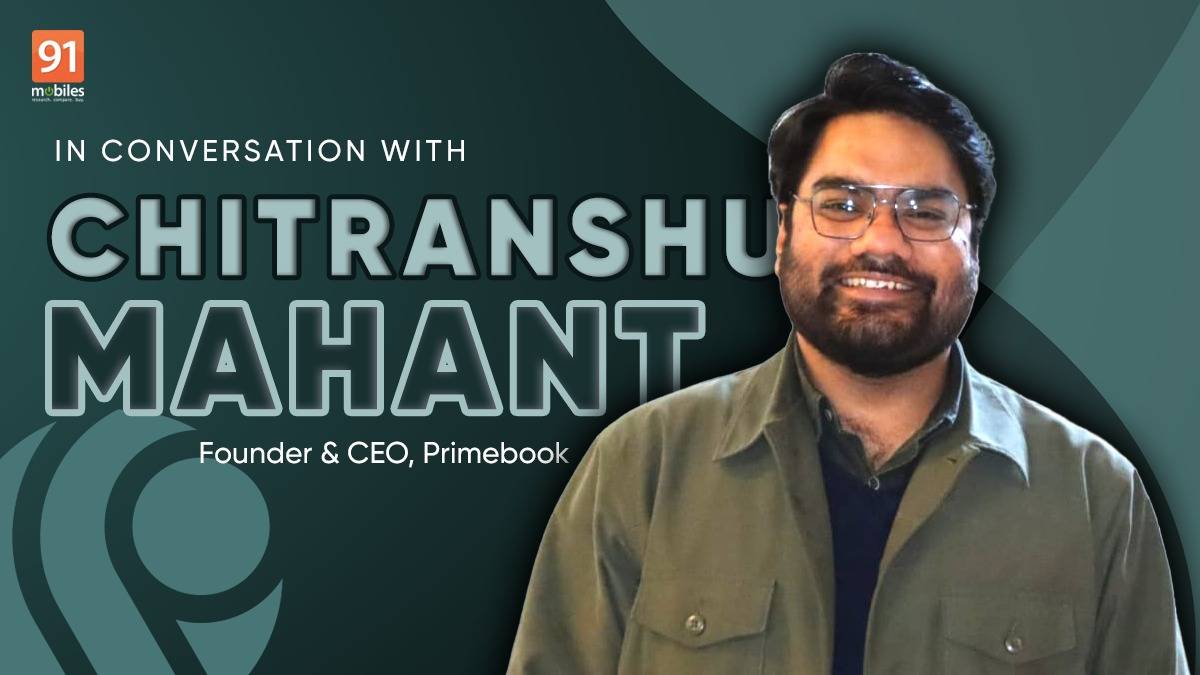
Primebook is one of those few successful Shark Tank startups that have made an impact in the industry. What started as an idea for a lightweight Android-based laptop operating system has flourished into a diverse portfolio of budget-friendly laptops. We had a conversation with Chitranshu Mahant, the brand’s Founder and CEO, to discuss how the brand is focusing on working professionals and creators, and he also shared some details about upcoming products, including a detachable two-in-one device.
Q. Given the growing popularity of Chromebooks and the ubiquity of budget Windows laptops in India, how specifically does PrimeOS offer a superior price-to-performance ratio and user experience for consumers compared to the established operating systems?
A. Budget Windows laptops often feel slow, while Chromebooks can feel limited. PrimeOS removes this trade-off by using an Android-first architecture built for laptops, delivering faster performance, better battery efficiency, and smooth multitasking on affordable hardware. It combines Android familiarity with laptop productivity through desktop tools, windowed apps, keymapping, and a large app ecosystem.
AI is built in as a live on-screen assistant powered by Gemini, helping users summarise, search, or act on content instantly. Global Search and Cloud PC integration further extend the capability by connecting apps, files, settings, web results, and even Windows or Linux environments when needed. The result is a cohesive system where OS, apps, AI, and cloud work together.
PrimeOS is not about specs alone. It redefines computing for young India: adaptive, intelligent, and practical per rupee.


Q. How does PrimeOS ensure a cohesive user experience and address the need for desktop-like multitasking and productivity that a standard mobile OS might struggle with? Can you share the roadmap for the next generation of PrimeOS, particularly what new features or AI integration (apart from the Gemini live) consumers can expect?
A. PrimeOS turns Android familiarity into a full laptop experience built for long study or work sessions. Apps run in resizable windows, multitasking is seamless via taskbar switching, and tools like a desktop browser, file manager, and keyboard-trackpad optimisation make workflows natural.


The AI assistant supports work without breaking flow by explaining or summarising on-screen content, while Global Search finds anything instantly across apps, files, settings, and the web.

Next-gen PrimeOS will upgrade to Android 16, bringing performance, security, and large-screen improvements. Upcoming additions include browser extension support, deeper Cloud PC integration, and Operator Mode, an AI layer that can perform routine actions such as organising files or navigating apps. The focus is on reducing effort, not just improving speed.
Q. What are the key hardware choices (e.g., processor, display, battery life) that allow Primebook to offer a quality product at a price point similar to a smartphone or tablet, thus addressing the gap in affordable, quality computing in lower-tier cities?
A. Primebook’s hardware choices are driven by the operating system, not the other way around. PrimeOS is designed first around how people actually study, work, and multitask on a laptop, and the hardware is then selected to best support that experience at an accessible price point. The final layer is tight OS-level optimisation, which allows the system to extract maximum performance from cost-effective components.
At the core is the MediaTek Helio G99, which balances performance and efficiency with the lightweight OS, enabling smooth everyday multitasking. UFS storage ensures faster boot times and app launches than typical budget laptops using eMMC.
A Full HD anti-glare IPS display supports long sessions comfortably, and a 60.3Wh battery delivers reliable all-day use. Features like a backlit keyboard reinforce laptop practicality. Tight OS-hardware optimisation allows strong real-world performance at smartphone-level pricing, especially impactful in Tier-2 and Tier-3 markets where one device often serves an entire household.

Q. What are the key strategies for expansion into Tier-2 and Tier-3 cities, and how are you tailoring your approach to effectively reach and cater to the first-time learners and the first job market in Tier 2 and Tier 3 cities across India?
A. Our expansion strategy in Tier-2 and Tier-3 cities is built around trust, relevance, and access, especially for students and young users buying their first laptop for learning or work.
At a communication level, we work closely with micro and regional creators, teachers, exam mentors, coding trainers, and local ed-tech influencers, who already have deep credibility within their communities. Their content focuses on real demonstrations and everyday use cases, not lifestyle storytelling, helping first-time laptop buyers clearly understand how Primebook fits into online classes, exam preparation, skill development, and early professional work.

Our messaging is often tailored to Tier-2 and Tier-3 realities, where we prioritise regional languages, clear use cases, and comparison-led communication that explains why Primebook works better at the same price. This approach helps remove hesitation around operating systems, performance, and long-term usability.
While Primebook remains digital-first in sales, we actively build offline touchpoints across these markets. We work with schools, ITIs, coaching centres, NGOs, and government-led institutions where users can physically experience the product and understand PrimeOS before making a purchase decision.
Demand in these cities is highly intent-driven. Users actively search for terms like “laptop for students,” “online classes laptop,” or “laptop under ₹20,000.” So, we focus on vernacular SEO, marketplace optimisation on Amazon and Flipkart, and high-intent search advertising, rather than broad, top-of-funnel branding spends.
Going forward, we are expanding partnerships with local electronics and IT stores in Tier-2 and Tier-3 cities that function as experience centres. Users can try Primebook in-store, understand the PrimeOS ecosystem, and then choose to purchase either offline or online, whichever they are more comfortable with.
Q. How does the physical form factor of a laptop, coupled with PrimeOS, serve as a more serious, efficient, and easy-to-use tool than a smartphone or tablet?
A. Primebook treats Android as a laptop platform, not a scaled mobile interface. The form factor itself enables serious computing through a keyboard, trackpad, ports, a wide screen, and multi-window workflows that are difficult to sustain on touch devices.
PrimeOS is the differentiator. It rebuilds Android for laptops with windowed multitasking, file management, desktop browsing, shortcuts, and system-level intelligence designed for real work. While priced like mobile devices, Primebook functions as a full personal computer built for how young India studies, works, and creates.
Q. How is Primebook planning to target the audience beyond students and first-time users? How does PrimeOS bridge the gap between the mobile app ecosystem and the heavy-duty multitasking required for modern professional workflows?
A. Primebook is no longer a student-only device, and that’s already reflected in how Primebook 2 is being used today. While our first generation helped establish access to computing for students and learners, a significant share of Primebook 2 users are already freelancers, creators, coders, and young professionals who rely on the laptop for daily work, not just learning. This shift happened because PrimeOS was designed from the start to scale beyond student needs.


Users can run multiple apps simultaneously, manage files across workflows, and work for long sessions without interruptions. Android apps cover most modern professional tasks, and PrimeOS enhances them with proper windowed behaviour and multitasking. When heavier tools are needed, Cloud PC enables access to Windows or Linux environments. The platform supports both learning and professional work on the same device.


Q. For a young professional, what are the specific productivity-first features within PrimeOS that allow it to outperform traditional budget laptops in daily tasks like content creation, digital marketing, or administrative work?
A. PrimeOS is designed around how work actually happens today, across multiple apps, files, tabs, and long sessions, and it actually removes the everyday struggles that traditional budget laptops introduce. This becomes especially clear across everyday professional workflows like content creation, digital marketing, and administrative work.
- Multi-window support lets users manage writing, research, analytics, and documents simultaneously without lag.
- Keyboard-first input ensures efficient editing and navigation during long sessions.
- Integrated file management keeps assets organised across apps, while the desktop-class browser supports multiple tabs and web tools smoothly.
- Built-in Live AI assists with ideation, research, and execution without context switching.
- Cloud PC extends capability further for advanced tasks. Together, these make PrimeOS faster and more reliable for daily professional work than typical budget laptops.


Q. The company is backed by prominent VCs and is looking to attract further investments. How will this funding be utilised to scale the vision of making meaningful computing truly accessible, particularly in terms of infrastructure, marketing, and team hiring?
A. The capital we’ve raised recently and what follows hereon is being and would be deployed with a clear objective: to scale Primebook as a youth-first personal computing ecosystem that makes meaningful, modern computing accessible across India. This spans deep investments in product infrastructure, people, and distribution, rather than short-term growth levers.
On the product and infrastructure side, a significant portion of the funding is going into strengthening our R&D capabilities. We are enhancing PrimeOS’s screen-aware, contextual AI to better understand real-time user tasks and provide more relevant assistance. Alongside this, we are building a foundational AI layer that can perform routine actions on behalf of users, moving AI from being informative to operational.
We are also investing in AI research talent, data security frameworks, and cloud optimisation to support hybrid AI workflows that combine on-device efficiency with cloud intelligence. In parallel, we continue to deepen Cloud PC integration, enabling seamless handoff between local apps and cloud-based Windows or Linux environments as users’ computing needs grow.
Beyond the core product, resources are also going toward after-sales infrastructure, selective offline expansion, creator-led marketing, premium content production, and user education around features and data privacy. The team is growing across engineering, design, product, AI, and operations to build long-term capability. The goal is sustainable growth and strong foundations, not short-term scale.
Overall, the funding is being used not just to grow faster, but to build Primebook the right way.
Q. What was the singular, most impactful moment or observation that galvanised you and Aman Verma to start Primebook?
A. The moment that truly galvanised us came much before Primebook existed, during our time working with the National Service Scheme (NSS) in college.


As part of NSS, we spent time in government schools, where students were eager to learn but lacked access to usable computers. Many relied only on shared smartphones or outdated desktops. The real problem was not hardware alone but operating systems that could not run well on affordable devices.
That insight led to building PrimeOS first, an Android-based laptop OS designed to stay smooth and adaptable across learning and work. Primebook hardware followed as its first expression of PrimeOS. It was intentionally deployed with a student focus to address the most visible access gap. As PrimeOS reached real users at scale, its broader relevance became evident. The same system was being adopted by young professionals, freelancers, creators, and first-time workers who needed a reliable computer for everyday work, not just learning.
That’s when the mission expanded, not because PrimeOS changed, but because its original design proved capable of supporting much more. What began with students grew into a wider vision: to make high-performing, dependable personal computing accessible to all of young India, across different stages of life and work. Primebook today reflects that evolution, still rooted in accessibility, but built to grow with users as their needs and ambitions evolve.
Q. Beyond the current product, what do you see as the “next big leap” in purpose-built computing hardware for the Indian Youth in the next three to five years?
A. At Primebook, we believe this shift starts with the operating system but becomes most visible through hardware. From day one, our conviction has been that access gaps in India cannot be solved by hardware alone. That’s why we built PrimeOS as a laptop-optimised, Android-first system designed to scale across learning, work, and creation. That foundation now allows us to think differently about hardware itself.
The next leap will come from adaptive hardware powered by intelligent software rather than just faster specs. With AI-native systems and seamless cloud integration, devices will become more flexible and longer-lasting.


First, convertible and flexible laptops, including Yoga-style bendable designs, that work effortlessly between typing, presenting, reading, and creative work. For students, professionals, and creators alike, this flexibility reduces the need for multiple devices while keeping productivity intact.
Second, detachable two-in-one devices that combine the portability of a tablet with the functionality of a laptop when docked. With PrimeOS and cloud capability underneath, these devices can handle structured work when needed and remain lightweight and intuitive.
Third, a stronger emphasis on design, identity, and durability. For young users, a laptop is not just a tool; it’s a personal asset they carry, use publicly, and grow with. Future Primebook devices will focus on thoughtful design, reliable build quality, and longevity, ensuring that devices remain relevant across multiple life stages instead of being replaced every few years.
Alongside these, we are also building a dedicated digital paper device designed for distraction-free reading, writing, and deep thinking, offering a focused alternative to screen-heavy workflows. It is meant to complement a laptop, not replace it, giving users a calm, intentional surface for thinking, learning, and long-form work.
Underneath, deeper system intelligence and hybrid computing will allow the capability to scale without costly hardware upgrades. The vision is adaptive devices built on smart software that support learning, work, and creation as users grow.
In essence, the next big leap in purpose-built computing for Indian youth isn’t about chasing premium specs or copying legacy PC designs. It’s about adaptive hardware built on intelligent software, where capability scales faster than cost, form factors adapt to real life, and a single ecosystem can support learning, work, and creation as ambitions grow. That’s the future Primebook is building toward.