Durability improvements by phone brands are not a threat; they’re a filter: Spigen’s Darren Nam


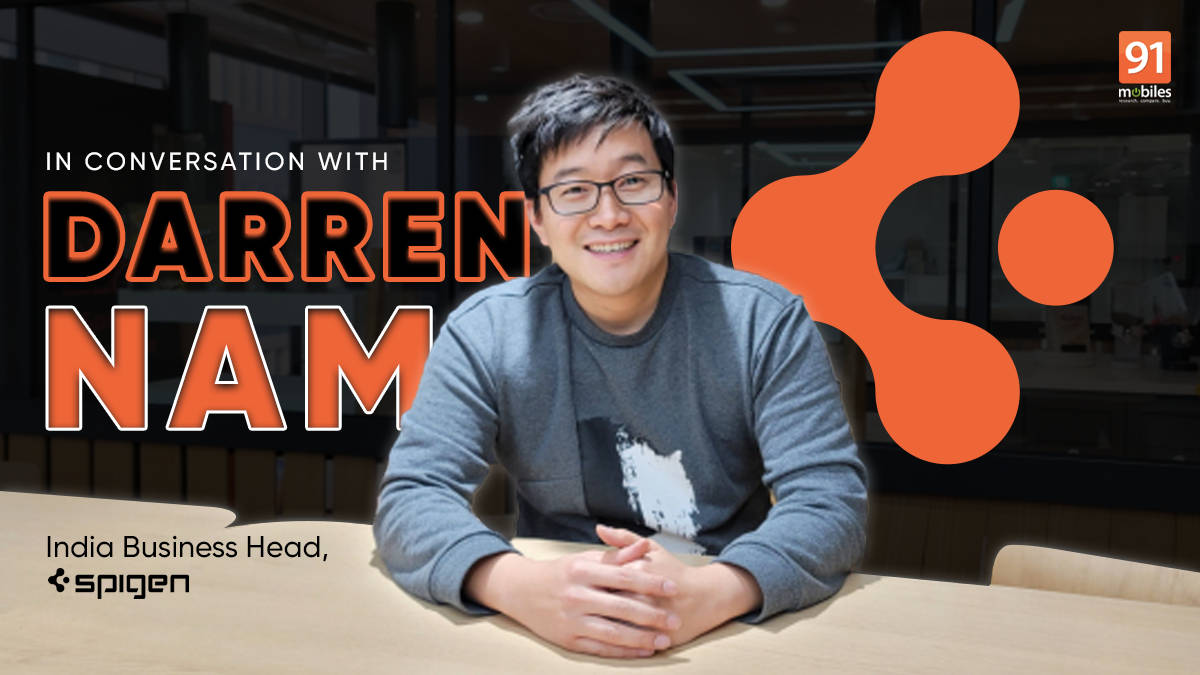
Spigen is really the first name that comes to mind when talking about premium smartphone cases. The Korean brand scores high not just in terms of style and design, but also in protection. Apart from cases, it offers various other accessories such as chargers, power banks, selfie sticks, etc, and has also forayed into audio with TWS earbuds. We sat down with Darren Nam, the brand’s India Business Head, to talk all things Spigen.
Q. Please give us a brief history of Spigen and the brand’s core philosophy.
A. The name “Spigen” is derived from two German words: “spiegel” (mirror) and “gen” (gene). The combination is intended to reflect the company’s philosophy of creating products that mirror customer needs and provide a “perfect-fit” solution.
The business traces its roots to a South Korean mobile-accessory maker originally known as SGP Korea, established in 2004. The global brand “Spigen” officially launched around 2008. As the company expanded internationally, it changed its formal name to “Spigen Korea” (in November 2013) to reflect its broader presence.
Spigen’s mission and guiding values are captured quite explicitly:
Reflection of user needs (“mirror + gene”): The brand’s name itself signifies its dedication to delivering solutions that directly reflect what users need — a “perfect fit.”
Simplicity and smart design: Spigen defines “good design” as being simple and intelligent — packing functionality without unnecessarily complicating or bulking up the device.
Quality and continuous improvement (“advancing quality”): The company emphasises rigorous standards and constant evolution: they create what they consider “the best,” then push themselves further to exceed prior benchmarks.
Empowering technology to fit lifestyle: Spigen aims to “turn tech into a form” that integrates seamlessly into people’s lifestyles — enhancing usability without undermining original device design or user experience.
Q. The smartphone cases and accessories segment is extremely fragmented. As a premium brand, what are the key challenges you face, and how do you differentiate yourself from others?
A. How we differentiate ourselves from others?
1. Engineering-Driven Product Design
Spigen’s core positioning is technical protection meets slim form factor. Differentiators include:
- Air Cushion Technology: Proprietary corner-impact absorption engineering.
- Hybrid Polymer Structures: Balancing rigidity (PC) with elasticity (TPU).
- MIL-STD drop test standards applied consistently.
- Anti-yellowing materials with enhanced UV-resistance for clear cases.
These are not easily replicated by low-cost manufacturers.


2. Consistent Quality and Reliability
- Spigen has a decade-plus track record of high repeat-purchase loyalty.
- Customers trust the product to protect an expensive device.
- Even as form factors change, Spigen has maintained consistency in product performance.
3. Global R&D and Rapid Launch Preparedness
Spigen prepares for upcoming flagship devices months in advance through:
- CAD modeling
- Prototype testing
- Fit engineering
- Multi-round validation
- Official Partnership with Brands (Samsung, Google etc.)
This results in accessories that fit perfectly on Day 1 of launch, something unbranded sellers rarely achieve.
4. Strong IP Protection and Legal Enforcement
Spigen is known for aggressively defending its patents, designs, and trademarks. This discourages direct copying and positions the brand as a premium, legitimate innovator.
5. Strong Global Distribution and Reviews
Thousands of verified reviews globally reinforce perception on Amazon. Partnerships with major marketplaces (United States, Canada, Poland and Turkey etc) and offline retailers increase credibility.
Any trends you’ve witnessed in the smartphone space, especially from a design and build quality perspective?
From a design and build perspective, smartphones are getting
- More expensive and precisely engineered
- Increased IPX ratings, bigger displays and narrower bezels
- Increased use of titanium and advanced alloys.
- However, less forgiving to impacts.
Therefore, I see more potential in our brand.

Phone brands have increased their focus on durability and are also offering higher IP ratings. Is that something that could impact the smartphone case segment in the long term?
Yes, I believe improved durability and higher IP ratings will structurally rearrange the segmentation of the smartphone case market in the long term. Because it will change why consumers buy cases, which types of cases win, and change their value towards protection.
Rising device costs increase risk aversion. Flagship phones now cost ₹80,000–₹1,50,000+.
As replacement cost rises, consumers become more protective, not less.
Also, IP ratings increase confidence to use phones more freely. Users will become less cautious, more adventurous in usage. However, glass is still glass and it will break, and alloys will bend. Paradoxically, this increases drop and impact exposure — reinforcing case demand.
Durability improvements are not a threat; they are a filter. They will eliminate low-value, fear-based protection and increase demand for thoughtful, engineered, design-aligned cases
Spigen’s positioning—slim protection, material engineering, reliability, and trust—is structurally aligned with where the market is going.


How do you see India as a market?
India is a very promising market as it is one of the largest smartphone user bases globally, with rapid growth in upper-midrange and premium devices. With Amazon, Flipkart and many quick commerce platforms, India has a strong digital commerce infrastructure. India has young, brand-aware, value-conscious consumers.
Also, Korea has a good relationship with the Indian government; both nations have signed a Comprehensive Economic Partnership Agreement (CEPA).
Therefore, I see India as a strategic long-term growth market, not a tactical one.