Rising prices keep India’s smartphone growth flat in 2025: IDC


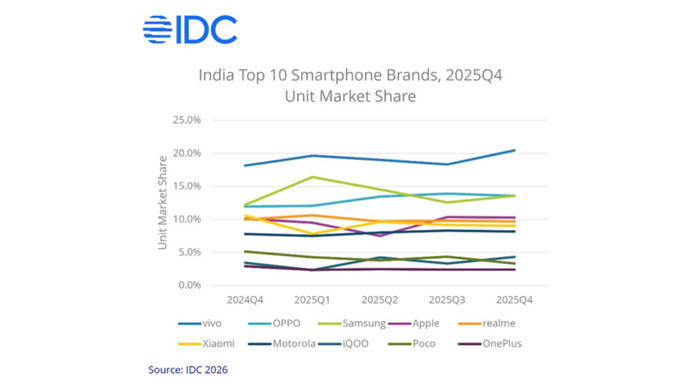
India didn’t buy many more smartphones in 2025 but it definitely paid more for them. Shipments grew just 0.5 percent year over year to 152 million units, according to IDC, making it a largely flat year for the market. Demand was uneven – a slow start, a mid-year pickup, and then another slowdown. In the October–December quarter, shipments fell 5 percent to 34 million units as post-festive inventory clean-ups and cautious spending cooled upgrade plans.
What however changed was pricing. The average selling price of a smartphone in India rose 8 percent to a record USD 282 (around Rs 25,600), pushed up by higher component costs, rising memory prices, and a weaker rupee. Even the festive quarter, which is usually packed with discounts, saw prices inch upward, which likely made many buyers hold on to their phones a little longer.
At the same time, more people who did upgrade leaned toward premium devices. Phones priced between USD 600 (around Rs 54,400) and USD 800 (around Rs 72,600) grew 37 percent year over year, while the USD 400 – USD 600 segment expanded 23 percent. Apple benefited the most from that shift, shipping a record 14 million units in India, up 16 percent from 2024. The company ranked fifth by volume with a 10 percent share but led the market by value with 29 percent, thanks to strong demand for both new iPhones and older models selling at lower prices.


At the other end of the spectrum, the sub-USD 100 segment grew 18 percent as first-time buyers and budget users entered the market. Xiaomi and Vivo led this category, while Motorola posted the fastest growth. Meanwhile, the largest segment — phones priced between USD 100 and USD 200 — shrank 8 percent, suggesting buyers are either delaying upgrades or stretching budgets to buy more expensive devices.
Where people bought their phones also shifted. Offline stores had their strongest year in six years, with shipments rising 12 percent and share climbing to 57 percent. Online sales declined, especially for entry-level devices, as festive promotions focused more on premium phones.
The vendor rankings themselves didn’t change: Vivo stayed on top, followed by Samsung and OPPO. Xiaomi lost share, while Realme, Motorola, and iQOO gained ground. Nothing stood out as the fastest-growing brand, with shipments jumping 45 percent year over year.
Looking ahead, IDC expects shipments to dip in 2026 due to a global memory shortage. Even so, strong demand for premium devices and easy financing options could keep the overall value of the market growing — even if fewer phones are sold.