India’s tablet market had a mixed year in 2025, with consumer demand staying strong even as overall shipments declined. According to International Data Corporation, total tablet shipments in the country stood at 4.49 million units, down 21.7 percent year over year.
The drop was largely due to a sharp fall in the commercial segment, which offset steady growth on the consumer side. After a slow start to the year, the market did see some recovery in the final quarter, with shipments growing 11.3 percent year over year in Q4 2025.
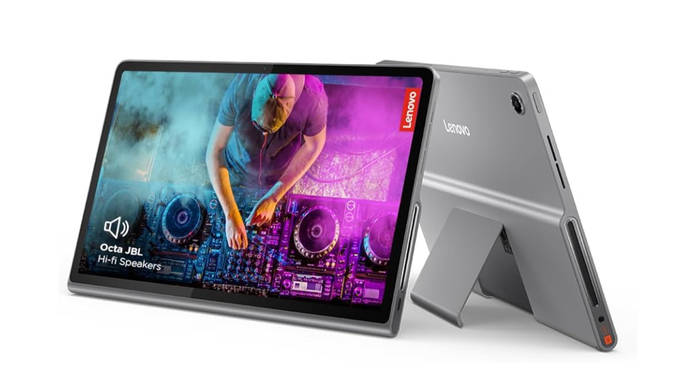
Samsung retained the top spot with a 37.2 percent market share, driven by a mix of consumer sales and large public-sector projects. Lenovo followed with a 14.8 percent share, seeing strong growth in the consumer segment. Xiaomi ranked third with 12.8 percent, supported by aggressive pricing and festive demand, while Apple held a 12 percent share, with steady demand for its premium iPad lineup. Acer rounded out the top five with 7.5 percent.
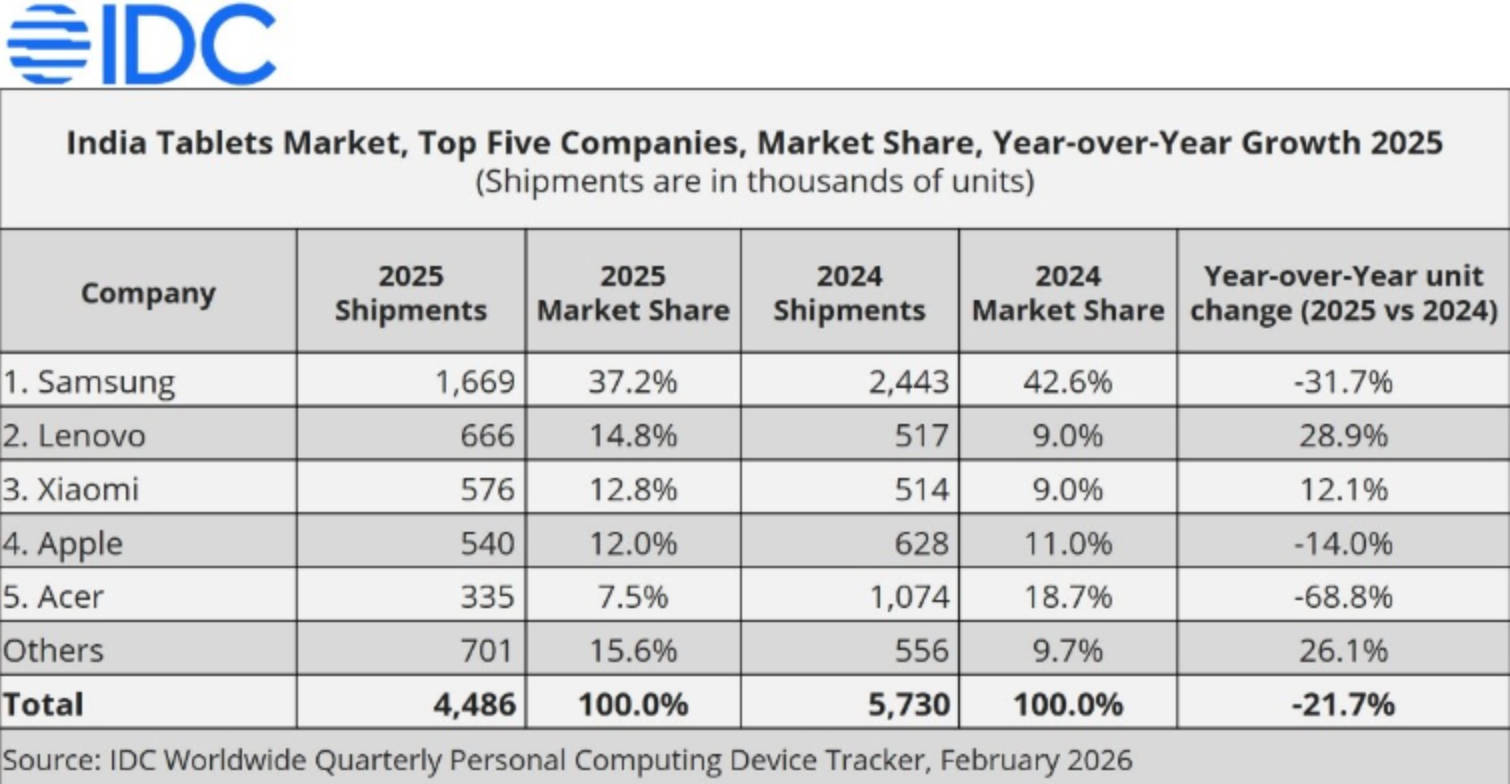
Consumer demand holds, commercial segment weakens
The consumer segment grew 19.7 percent in 2025, supported by festive sales, wider retail availability, and continued demand for entertainment and learning use cases. Growth remained strong in the final quarter as well, with consumer shipments rising 27.1 percent year over year.
In contrast, the commercial segment declined 55.1 percent, mainly due to delays in government and education-related orders. Shipments in the education segment fell 62.2 percent, while government orders dropped 55 percent. The slowdown continued into Q4, with commercial shipments down 17.3 percent.
IDC noted that this gap reflects a shift in how tablets are being used. On the consumer side, tablets are increasingly seen as devices for streaming, studying, and light productivity. In the commercial space, however, demand remains tied to large institutional orders, which were delayed through much of the year.
Detachables gain traction
Within the market, detachable tablets grew 20.1 percent year over year, while traditional slate tablets declined 34.6 percent. The shift suggests growing interest in hybrid devices that can handle both media consumption and basic productivity tasks. IDC said features like 5G connectivity, AI-led tools, and stylus support are helping position tablets beyond just content consumption. Rising notebook prices are also pushing some buyers, particularly students and young professionals, toward detachable tablets as a more affordable alternative.
IDC expects consumer demand to remain steady, though rising component costs could push prices up and slow upgrades at the entry level. At the same time, delayed government orders may return, which could help stabilise the commercial segment in the coming cycles.