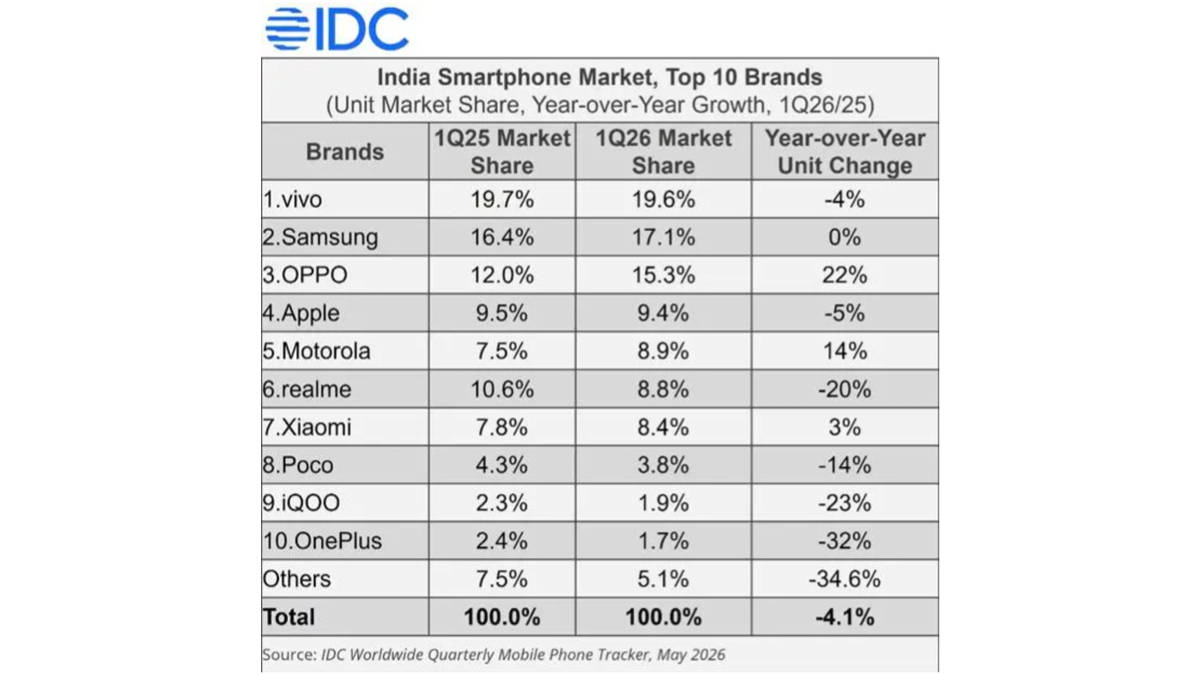
India’s smartphone market declined 4.1 percent year-on-year in the first quarter of 2026, with total shipments falling to 31 million units, according to new data from IDC. The slowdown comes at a time when smartphone prices are steadily rising due to increasing memory and component costs.
The biggest impact was visible in the entry-level segment. IDC says shipments of smartphones priced below USD 100 (around Rs 9,600) dropped sharply by 59 percent during the quarter as rising costs made ultra-budget devices harder to sustain for brands. At the same time, the average selling price of smartphones in India rose 10.4 percent year-on-year to USD 302 (around Rs 29,000), showing that brands are increasingly focusing on higher-priced models to protect margins.
The report suggests the market is no longer slowing only because of weaker consumer demand. Component inflation, especially around memory, is also changing how brands build and price smartphones globally. IDC has already forecast a major decline in global smartphone shipments in 2026 because of rising memory costs linked to growing AI infrastructure demand.
Despite the broader slowdown, premium phones continued to perform relatively better than the budget segment. Brands are increasingly shifting attention toward mid-range and premium devices where profit margins remain healthier.
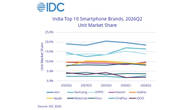
Among smartphone brands, Vivo led the Indian smartphone market in Q1 2026 with a 21 percent share, helped by a wider product portfolio and strong performance in the mid-premium segment. OPPO was the fastest-growing brand among the top five players with 8 percent year-on-year growth, while Nothing recorded 47 percent growth overall.
The report also reflects a broader trend already visible across recent launches in India. Smartphone brands are packing larger batteries, more AI features, faster charging, and higher-end camera hardware into devices priced above Rs 30,000, while the budget segment continues to shrink.
For buyers, this likely means affordable smartphones may continue getting more expensive over the next few quarters, especially as brands reduce focus on entry-level models. At the same time, competition in the premium segment is becoming more aggressive, with companies increasingly using cameras, AI features, and battery life to justify higher pricing.