The Find X10 series is relevant across professional creators, photographers and youth – OPPO’s Goldee Patnaik on the new flagship


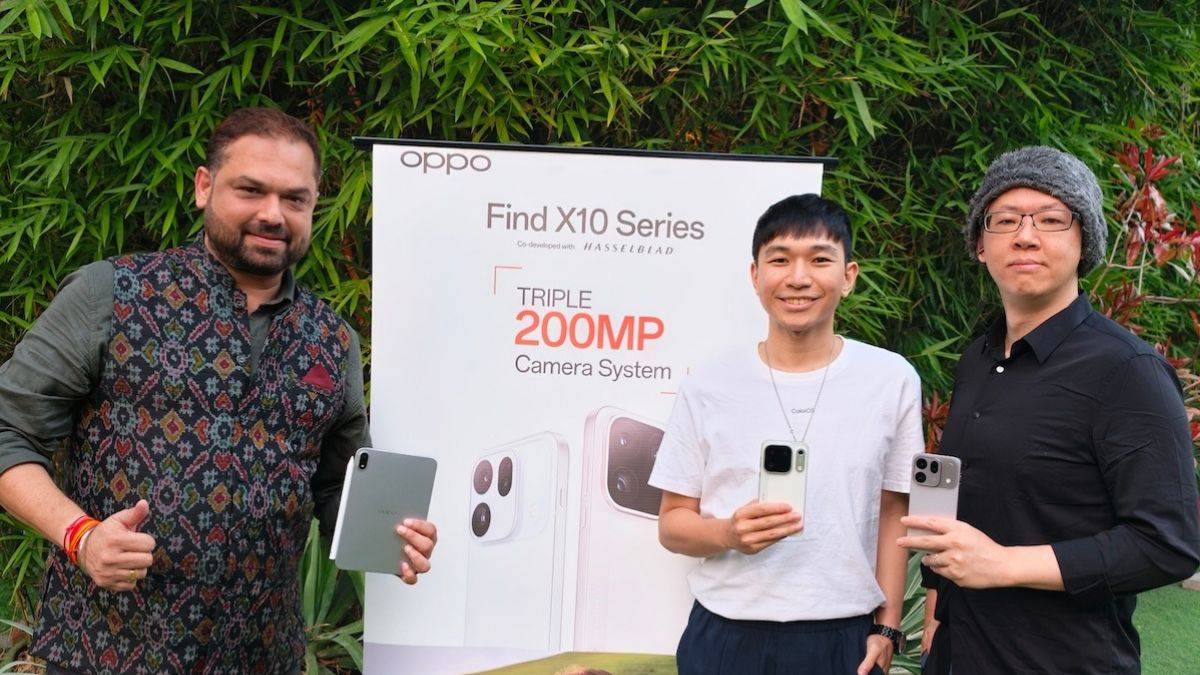
Most camera makers talk about accuracy. OPPO is talking about memory. Ahead of the Find X10 launch in India, Goldee Patnaik, Head of Communication, OPPO India, Simon Liu, Global Imaging Director, and Ellis Tai, Software Product Director, sat down with journalists to explain where the 10th-generation Find is headed. Here are the key takeaways.
Table of Contents
“True to Life” means true to memory
Imaging is one of the key pillars of the new flagship, so the camera features and photography were discussed in detail during the session. As per Simon Liu, OPPO’s imaging goal is no longer just reproducing the scene. It is matching what people recall afterwards. His example was a beach sunset, which is often less perfect in reality than in your head, and the photo should meet the version in your head. He said, “We chose the word ‘Life’ because life is about memories and emotions. It’s not about what you see in the moment; it’s what you think back to 30 seconds later, what’s in your mind. That’s what we’re trying to match.”
Because memory is shaped by culture, OPPO has spent time studying Indian preferences, so expect a slight shift in tone for India. Simon placed OPPO’s photo output somewhere between a natural and a heavily processed look.
The camera hardware is the big upgrade


OPPO is pitching an industry-first triple 200MP camera system on the Find X10 Pro Max. As per Simon, more pixels mean more flexibility, and the camera can use the centre pixels for high zoom or combine pixels for wide-angle and low-light shots. Earlier, it could only do one of the two. The biggest gains should show up in zoom ratios and low light. OPPO also showcased a telephoto kit, though it remains to be seen whether it will be available for purchase.
AI is on-device, agentic and proactive
Ellis Tai, who’s the Software Product Director for OPPO, responded to queries on ColorOS, AI features, and software in general. Answering a query on the AI experiences offered by the Find X10 series, he said the 2nm Dimensity 9600 powers an on-device agent that understands your pictures and files and then organises them and follows up. ColorOS 17, debuting on the Find X10, adds two directions: agentic AI that completes tasks from one prompt, thanks to the Manus partnership, and proactive features like AI Suggest, which handles reminders and a morning brief. For privacy, he said, “We try to keep data on the device as much as possible, and where the chip’s capability lets us process on-device while keeping the best user experience, we do that. Where we need the cloud, we de-identify the data before the cloud computation.”
A phone is part of the family for us Indians
When asked how OPPO is ensuring it’s able to deliver a great flagship experience to users with the Find X10 series, Goldee had a detailed response. As per him, the Find X8 came to India in 2024, and the X9 series in 2025, and the feedback and response the brand got surprised them. In fact, the 9th generation did 3x more business than the previous edition, and they’re bullish about the Find X10 doing even better. “There has been wonderful feedback about how we’re defining flagship in the true sense. That doesn’t mean just imaging, though imaging always stays at the core, with true-to-life imaging and natural tones. Beyond that, there’s the work on the hardware, the integration of software and image processing, and a tick against the entire checklist, including design aesthetics.”

As per Goldee, this edition has the biggest battery yet (8,000mAh). There’s OPPO SuperVOOC, the Dimensity 9600, durability features, and ColorOS 17. “A smartphone becomes part of your family; people now invest in a phone as a member of the family, so it’s a long-term investment, not a show-off, and it has to stay relevant to your needs. There’s also a huge resurgence of creators, professional and otherwise. The conditions you need in a studio, a Dandiya night or a concert are very different, and that’s where our global team of experts and popular photographers, content creators and influencers work together to find insights: what works, what natural skin tones look like, and what the conditions are in different scenarios. The goal is that creation, editing and sharing happen in one flow, because as a creator you don’t want to spend the whole day editing. That’s why the Find series is relevant across professional creators, photographers and youth.”, Goldee said.
Service and retail are part of the pitch
OPPO is leaning on offline retail, with double-digit footprint growth, and on service. It has more than 630 company-owned service centres across 500-plus towns, with 100-plus upgraded Service Centre 3.0 Pro outlets that offer digital queues and real-time repair status. Claims on battery longevity (80% capacity after 5 years) and update support (5 OS upgrades, 6 years of security patches).