Galaxy S26 and the Agentic AI era: Won-Joon Choi, Samsung Mobile COO, on what comes next


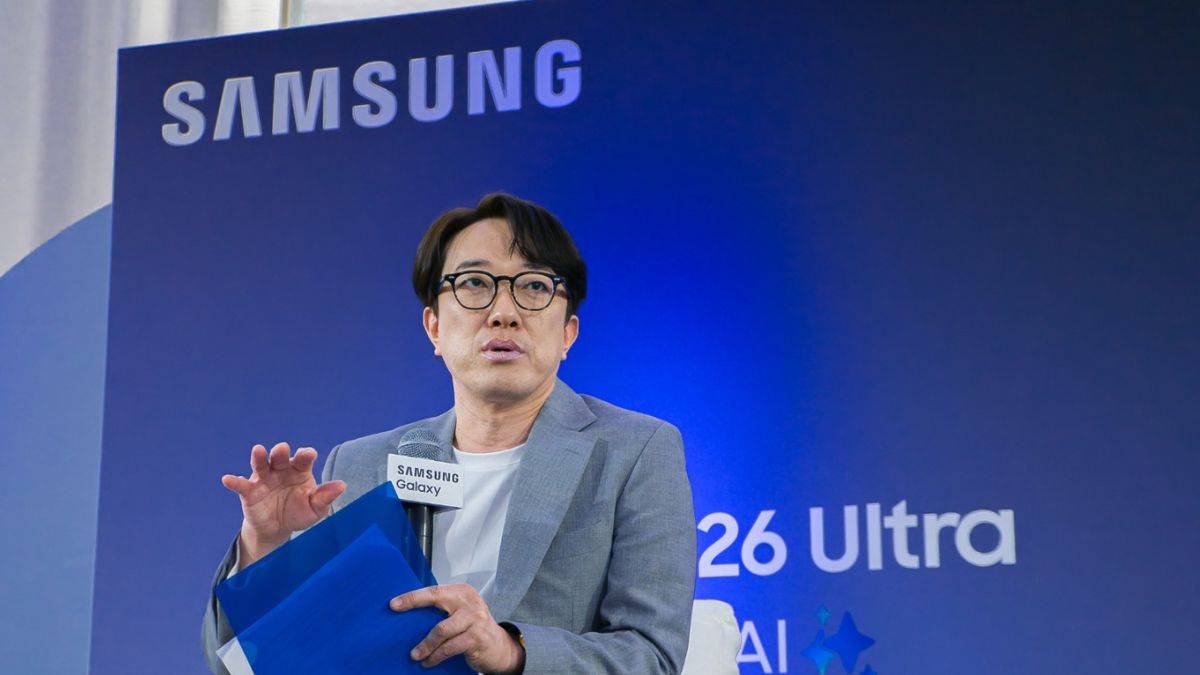
The Galaxy S26 series launch in San Francisco was Samsung’s most ambitious Unpacked in recent memory, and not just because of the hardware. The bigger story is the software philosophy underpinning it: a shift from reactive AI to agentic AI. On the sidelines of the event, I participated in a media roundtable with Won-Joon Choi, COO of Samsung’s Mobile eXperience (MX) Business, and JB Park, President & CEO of Samsung Southwest Asia, for a wide-ranging Leadership Talk. The conversation covered everything from the future of apps to a post-screen world. Here are the highlights.
Table of Contents
The move from apps to Agentic AI
When asked about the future of third-party partnerships and the difference between an “AI Agent” and “Agentic AI,” Samsung’s leadership painted a clear picture of a less manual future.
Beyond reactive chatbots: Choi explained that while a standard AI agent (like ChatGPT) just answers questions, Agentic AI takes over the “thinking, planning, and execution” of a task without user intervention.
The partnership roadmap: Samsung is working closely with Google on an “AI OS” framework. While only a handful of apps like Uber, DoorDash, and Starbucks are supported at launch in English and Korean, the plan is to scale this across more services by the time new foldables arrive later this year.
Will apps disappear?: Utility-focused apps (reminders, task organisers) might vanish as AI agents explore your calendar and files to perform tasks on your behalf. However, content-heavy platforms like Netflix or Spotify will remain, as users still need a dedicated surface for entertainment.
The future of apps: While gaming and music apps will keep their roles, other services may move “below the surface,” with a voice or visual AI interface becoming the primary way we interact with them.

The “unavoidable” AI revolution
Discussing whether the industry is prepared for the disruption AI brings, or if the “AI” label will eventually become redundant, the sentiment was one of normalisation.
Broader Impact: Unlike the mobile or internet revolutions, AI will impact every sector—from medical to legal. Samsung believes the current investment “hype” is just the beginning of a macro-level shift.
The Death of the “AI” Tag: Just as we no longer think of “Touch UI” as a special feature, Choi predicts a time when we won’t even call these features “AI”. It will simply be the natural way a device helps its user.
A post-screen environment?
In a futuristic look at “ambient” computing—where screens might not be the centre of the universe, Samsung is placing its bets on wearable synergy.
Interaction shifts: While voice and vision (via glasses or earbuds) will become primary interfaces, Choi believes the screen will actually matter more than ever for consuming rich content.
Complementary devices: Rather than replacing the smartphone, new form factors like smart glasses (both with and without displays), rings, and watches will be developed to save users from the “cumbersome” act of pulling a phone out of their pocket.


Other key takeaways
Privacy display on foldables: Asked if the Ultra’s new privacy feature would come to the Fold or Flip, Choi noted that while the foldable structure is a challenge, the plan is to propagate the tech once it matures.
Automotive integration: Regarding deeper car-tech, the focus remains on a seamless Android Auto experience using the Galaxy ecosystem (watches/phones) rather than building a standalone automotive OS.
Video vs. stills: Addressing the perceived shift toward video, Samsung clarified that pictures, selfies, and video are equally prioritised, but hardware and software (like OIS and exclusive SoC IPs) are being pushed because users are simply shooting more video now.
New foldable form factors: On the maturity of foldables, Samsung confirmed they have been working on Tri-folds and rollables for years, but will only launch them when they can provide a truly unique user experience.
Privacy display tech specs: Choi confirmed that the Privacy Display has no impact on battery life and that the pixel structure has been optimised so users won’t feel a drop in resolution when it’s active.
Disclosure: this writer attended Unpacked 2026 in San Francisco on Samsung India’s invitation