
Xiaomi Redmi Note 7S 64GB
+ Compare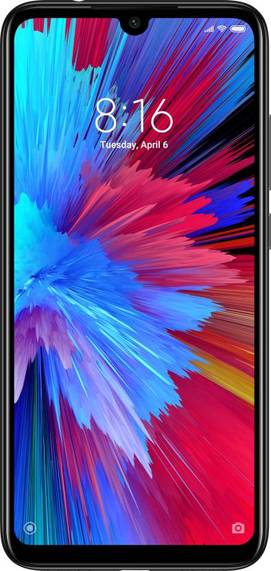





-
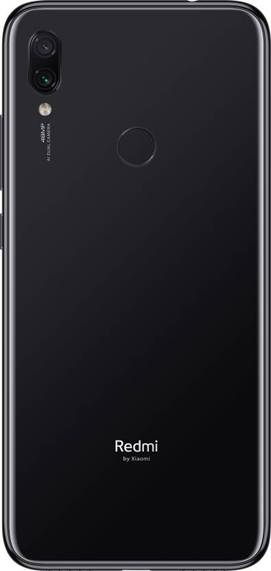
Design17

-
Rear Camera8

-
360° View

-
UI Screenshot17
![UI Screenshot]()
-
Benchmarks3
![Benchmarks]()
-
Videos1
![Videos]()



Key Specs
Performance
-
Qualcomm Snapdragon 660 -
Octa core (2.2 GHz, Quad Core + 1.84 GHz, Quad core) -
3 GB / 4 GB RAM, LPDDR4X
Display
-
6.3 inches (16 cm); IPS LCD -
1080x2340 px (FHD+) -
Gorilla Glass 5 Protection -
Bezel-less with waterdrop notch
Rear Camera
-
Dual Camera Setup - 48 MP Primary Camera
- 5 MP Depth Camera
-
LED Flash -
Full HD @30 fps Video Recording
Front Camera
-
13 MP -
Full HD @30 fps Video Recording
Battery
-
4000 mAh, Li-Polymer -
Quick Charging v4.0; USB Type-C port
General
-
SIM1: Nano, SIM2: Nano (Hybrid) -
5G Not Supported -
32 GB / 64 GB Storage, Expandable upto 256 GB -
Water Resistant
Xiaomi Redmi Note 7S 64GB Prices in India
 Flipkart
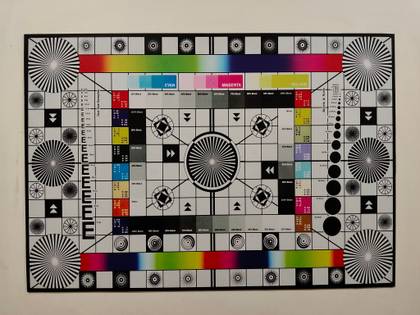
Xiaomi Redmi Note 7S 64GB Compare Camera Samples









Xiaomi Redmi Note 7S 64GB Expert Review Summary
Expert Rating:
![Prateek Pandey]()
Verdict
Here s where things get tricky. The pricing for the Redmi Note 7 starts at 999 Yuan (~Rs 10K) for the base variant in China and the device is expected to be launched in India next month. As is customary with Xiaomi, we can expect the phone to be priced competitively (preferably under Rs 15K ) in India, which would make it a phenomenal deal. However, if you re in a rush to buy a new smartphone and can t wait until the launch day, then you won t be short on options. There are plenty of devices with enticing features in the market right now, the likes of which include the OPPO K1 (first impressio...
Read Full Verdict
Pros
- Stunning design
- Great performer
- Excellent cameras
- Long lasting battery and USB Type-C port
Cons
- Selfies have washed out colours
- Display exhibits muted colours
- 48MP shots aren't dramatically better than 12MP
Specs at a glance
+
Display
Read More
Design and Display
+
Here's the thing – the Redmi Note 7, to me, is one of the best-looking smartphones from Xiaomi's stables, especially when compared to the other affordable handsets from the company. I spoke at length about the handset's stunning design in my first impressions of the device but, at the expense of sounding like a broken record, the Redmi Note 7 looks like no other Xiaomi device in the market right now. In fact, the smartphone draws parallels to pricier offerings from Huawei and Honor with its gorgeous gradient-finish back, which shimmers ever so slightly when light bounces off it. Much like most other competing phones in the market, the Redmi Note 7 too sports a glass-sandwich design which is held together by a metal trim. But for some reason, the smartphone feels uniquely premium and it's every bit as luxurious to hold as say, the Samsung Galaxy S9 Plus (review). It is about as one-hand friendly as the S9 Plus too, which means that you'll basically have to use the device with both hands.Now, if you're worried about the Note 7 creating a bulge in your pockets, then fret not. The handset is relatively sleek and sports rounded corners, which ensure that the device doesn't bite your thigh while it's in your pocket. The smartphone has just the right amount of weight to it, but it is top-heavy. And, despite some claims about the phone being fragile, I didn't feel that the chassis would bend easily. In fact, I mostly put away the phone in my back pocket and after inadvertently sitting on it a couple times a day for a week, I didn't notice any bend in the smartphone's frame.Adding to the list of pros, the gradient finish on the smartphone doesn't attract fingerprints, but that could be limited to the vibrant blue hue I reviewed. If you pick up the smartphone in the black colourway, your mileage could vary. What's more, unlike most smartphones launched nowadays, the Redmi Note 7 ships with an old-fashioned capacitive fingerprint sensor, as well as a headphone jack. I am glad Redmi didn't jump on the in-display fingerprint sensor bandwagon because as it stands, a capacitive sensor is much more accurate and responsive. During my time with the device, the sensor didn't falter once and unlocked the phone the second I put my index finger on it.Redmi even gives you the option to unlock the Note 7 by using face recognition, which works fine too. The method is a tad bit slower, but I found it to be more convenient, so there's that. And lest I forget, the smartphone features a USB Type-C port for charging – talk about leaving a lasting impression.For display, the Redmi Note 7 ships with a 6.3-inch FHD+ IPS panel which sports a waterdrop notch. Therefore, not only will you be able to enjoy the smartphone's high-res display to the fullest, you won't have to deal with an obnoxious cutout staring at you in the face either. The panel itself is quite good, and boasts excellent viewing angles and minimal colour shift when you tilt the device. I was satisfied with the display's peak brightness levels too, and you won't have to squint your eyes to read messages when you're out and about.Now, if you've looked up the Redmi Note 7 online, then you'll know that the device ships with a sealant of sorts which prevents miniscule water droplets from entering the smartphone and damaging its innards. Now, as per Redmi, the smartphone isn't IP certified, so you'll have to take this information with a pinch of salt. I did test the claim and sprayed the smartphone with a few sprinkles of water and it worked fine afterwards. But, I'd suggest users exercise caution when handling the phone near a pool or in the bathroom.
Read More
Cameras
+
Xiaomi is known to offer extremely good camera phones in the affordable segment, and the same is true for the company's latest debutant too. The USP of the Redmi Note 7 is the presence of a 48MP, f/1.8 aperture sensor on the back, which has been paired with a 5MP, f/2.4 aperture depth sensor. For selfies, the smartphone comes equipped with a single 13MP front shooter. Now, unlike the Honor View 20, the Redmi Note 7 doesn't use Sony's IMX586 sensor and instead, employs Samsung's ISOCELL GM1 sensor. That said, both the sensors work on the same quad-Bayer principle, wherein four adjacent pixels combine to give light a bigger surface area to impact on, thereby capturing more information whilst outputting a 12MP image.Therefore, for the most part, the 48MP sensor actually functions like a 12MP unit and you'll have to head over to the pro mode to capture images in glorious 48MP resolution. Now, having tested the camera intensively, I can confirm that the 48MP sensor is no gimmick and you will be able to see more details in the shots upon zooming in. However, the difference between a 12MP shot and a 48MP shot is not night and day, and during my review period, I was finding it harder and harder to justify clicking images in 48MP resolution.Don't get me wrong, if you've got a penchant for landscape photography, then the smartphone's 48MP sensor will serve you well. But, for my usage and photography style, capitalising on the sensor's full resolution wasn't just pointless, but cumbersome as well.Having said that, the Redmi Note 7 is a phenomenal pocket shooter and I was more than satisfied with the smartphone's camera prowess. To make things easier for you to understand, I'll try to sum up my experience with the camera in bullet points, so here we go-The Redmi Note 7's cameras are backed by AI enabling which, the sensors will capture a really tasteful image with punchy colours. It's noteworthy that unlike the snappers on some other phones, the AI on the Redmi Note 7 doesn't boost the colours too much.For some odd reason, pictures clicked in HDR mode exhibited muted colours and consequently, I turned the setting off. I also noticed that the dynamic range wasn't the best with HDR enabled, which was especially evident in scenes with a cloudy sky.Pictures clicked in normal mode (without HDR) had ample amount of details and showcased vibrant colours. Macro shots had a clean, natural bokeh effect which made the pictures more pleasing to the eyes. That said, the focus gets finicky if you're trying to get up close to small objects.Thanks to the presence of a dedicated depth sensor, the rear-facing cameras on the Redmi Note 7 click fantastic portrait images, with well-defined edges and a convincing blur effect.As I mentioned previously, images clicked in 48MP have noticeably more details, which is apparent if you zoom into the trees in the landscape shot I've attached. The leaves are visibly sharper, as is the pattern on the building. That being said, I noticed that the camera app force closes if you try to click images in 48MP resolution continuously.The Redmi Note 7 captures really good selfies which are rich in details with its 13MP front camera. Unfortunately, try as I might, the pictures felt – for the want of a better word – lifeless, since the colours in the selfies were slightly washed out. Making matters worse, enabling the HDR or AI mode didn't make a huge difference either. Consequently, you'll have to use an editing app to make the selfies more presentable.The lowlight performance of the Note 7 is fantastic too. Thanks to the presence of a dedicated night mode, the camera is able to retain more detail in shots captured in lowlight scenarios. Moreover, unlike some budget offerings, the Note 7's camera managed to keep a lid on lens flaring too. As for selfies, I found the front camera to be a bit slow to focus on the face in the dark. But, once it locked onto my face, I was quite satisfied with the quality of the selfies. Despite wearing a dark coloured sweater, the camera didn't muck up the details by blending it with the background when I snapped a picture in a dimly-lit street.
Read More
Performance and Software
+
The Redmi Note 7 is a star performer, which should come as little surprise when you glance at the device's specs. My test unit of the device shipped with a Snapdragon 660 processor which worked alongside 3GB of RAM and 32GB of built-in, user expandable storage. However, the smartphone will also be available in higher RAM/storage SKUs. Regardless, I didn't find any bottlenecking issues with the smartphone's three gigs of memory. Apps opened swiftly and the device managed to keep around five applications in memory at all times, including some resource hungry apps like Instagram, Twitter and Facebook.The gaming performance of the smartphone was excellent too and I could comfortably run PUBG Mobile on medium graphics settings. There were some frame drops every now and then but for the most part, the game ran smoothly. Flip the page over to something less demanding such as Clash Royale or Alto's Adventure and the handset didn't show any signs of struggle. The Redmi Note 7 is fuelled by a 4,000mAh battery which comfortably saw me through the end of a busy work day. To give you a clearer picture, my usage involved playing two classic matches in PUBG (both of which lasted well over 25 minutes), browsing through my social media feeds, texting on WhatsApp and watching some videos on YouTube. What's more, in our battery test, the smartphone managed to play a full HD video on loop for 15 hours, which is quite nice. Lastly, the Redmi Note 7 comes with support for fast wired charging as the device adheres to Qualcomm's Quick Charge 4.0 standard. The caveat here is that the device - at least the Chinese unit - doesn't ship with a fast charger out-of-the-box, and you'll have to buy one separately. As for software, the handset ships with Xiaomi's proprietary MIUI v10 which runs on top of Android Pie. Now, as I mentioned at the beginning of my review, the unit I'm testing has been imported from China and consequently, it shipped with a ton of bloatware. Moreover, the smartphone didn't come with Google's suite of applications either, so I had to manually install them. Barring that, the software experience is like any other Xiaomi phone launched in India. Features like Dual apps, Quick ball and support for various gestures can be found on the Redmi Note 7, and you can even apply custom EQ presets for when you connect headphones or earphones to the phone. As is customary with most other phones from the company's stables, the Redmi Note 7 too comes with support for themes which you can apply to change the overall look of the UI. I'll update the article once I get my hands on an Indian retail unit to highlight the differences between the two firmwares, so stay tuned.
Read More
Read full Review

Verdict
Here s where things get tricky. The pricing for the Redmi Note 7 starts at 999 Yuan (~Rs 10K) for the base variant in China and the device is expected to be launched in India next month. As is customary with Xiaomi, we can expect the phone to be priced competitively (preferably under Rs 15K ) in India, which would make it a phenomenal deal. However, if you re in a rush to buy a new smartphone and can t wait until the launch day, then you won t be short on options. There are plenty of devices with enticing features in the market right now, the likes of which include the OPPO K1 (first impressio... Read Full Verdict
- Stunning design
- Great performer
- Excellent cameras
- Long lasting battery and USB Type-C port
Pros
- Selfies have washed out colours
- Display exhibits muted colours
- 48MP shots aren't dramatically better than 12MP
Cons
Specs at a glance
+Display
Read MoreDesign and Display
+Here's the thing – the Redmi Note 7, to me, is one of the best-looking smartphones from Xiaomi's stables, especially when compared to the other affordable handsets from the company. I spoke at length about the handset's stunning design in my first impressions of the device but, at the expense of sounding like a broken record, the Redmi Note 7 looks like no other Xiaomi device in the market right now. In fact, the smartphone draws parallels to pricier offerings from Huawei and Honor with its gorgeous gradient-finish back, which shimmers ever so slightly when light bounces off it. Much like most other competing phones in the market, the Redmi Note 7 too sports a glass-sandwich design which is held together by a metal trim. But for some reason, the smartphone feels uniquely premium and it's every bit as luxurious to hold as say, the Samsung Galaxy S9 Plus (review). It is about as one-hand friendly as the S9 Plus too, which means that you'll basically have to use the device with both hands.Now, if you're worried about the Note 7 creating a bulge in your pockets, then fret not. The handset is relatively sleek and sports rounded corners, which ensure that the device doesn't bite your thigh while it's in your pocket. The smartphone has just the right amount of weight to it, but it is top-heavy. And, despite some claims about the phone being fragile, I didn't feel that the chassis would bend easily. In fact, I mostly put away the phone in my back pocket and after inadvertently sitting on it a couple times a day for a week, I didn't notice any bend in the smartphone's frame.Adding to the list of pros, the gradient finish on the smartphone doesn't attract fingerprints, but that could be limited to the vibrant blue hue I reviewed. If you pick up the smartphone in the black colourway, your mileage could vary. What's more, unlike most smartphones launched nowadays, the Redmi Note 7 ships with an old-fashioned capacitive fingerprint sensor, as well as a headphone jack. I am glad Redmi didn't jump on the in-display fingerprint sensor bandwagon because as it stands, a capacitive sensor is much more accurate and responsive. During my time with the device, the sensor didn't falter once and unlocked the phone the second I put my index finger on it.Redmi even gives you the option to unlock the Note 7 by using face recognition, which works fine too. The method is a tad bit slower, but I found it to be more convenient, so there's that. And lest I forget, the smartphone features a USB Type-C port for charging – talk about leaving a lasting impression.For display, the Redmi Note 7 ships with a 6.3-inch FHD+ IPS panel which sports a waterdrop notch. Therefore, not only will you be able to enjoy the smartphone's high-res display to the fullest, you won't have to deal with an obnoxious cutout staring at you in the face either. The panel itself is quite good, and boasts excellent viewing angles and minimal colour shift when you tilt the device. I was satisfied with the display's peak brightness levels too, and you won't have to squint your eyes to read messages when you're out and about.Now, if you've looked up the Redmi Note 7 online, then you'll know that the device ships with a sealant of sorts which prevents miniscule water droplets from entering the smartphone and damaging its innards. Now, as per Redmi, the smartphone isn't IP certified, so you'll have to take this information with a pinch of salt. I did test the claim and sprayed the smartphone with a few sprinkles of water and it worked fine afterwards. But, I'd suggest users exercise caution when handling the phone near a pool or in the bathroom.
Read MoreCameras
+Xiaomi is known to offer extremely good camera phones in the affordable segment, and the same is true for the company's latest debutant too. The USP of the Redmi Note 7 is the presence of a 48MP, f/1.8 aperture sensor on the back, which has been paired with a 5MP, f/2.4 aperture depth sensor. For selfies, the smartphone comes equipped with a single 13MP front shooter. Now, unlike the Honor View 20, the Redmi Note 7 doesn't use Sony's IMX586 sensor and instead, employs Samsung's ISOCELL GM1 sensor. That said, both the sensors work on the same quad-Bayer principle, wherein four adjacent pixels combine to give light a bigger surface area to impact on, thereby capturing more information whilst outputting a 12MP image.Therefore, for the most part, the 48MP sensor actually functions like a 12MP unit and you'll have to head over to the pro mode to capture images in glorious 48MP resolution. Now, having tested the camera intensively, I can confirm that the 48MP sensor is no gimmick and you will be able to see more details in the shots upon zooming in. However, the difference between a 12MP shot and a 48MP shot is not night and day, and during my review period, I was finding it harder and harder to justify clicking images in 48MP resolution.Don't get me wrong, if you've got a penchant for landscape photography, then the smartphone's 48MP sensor will serve you well. But, for my usage and photography style, capitalising on the sensor's full resolution wasn't just pointless, but cumbersome as well.Having said that, the Redmi Note 7 is a phenomenal pocket shooter and I was more than satisfied with the smartphone's camera prowess. To make things easier for you to understand, I'll try to sum up my experience with the camera in bullet points, so here we go-The Redmi Note 7's cameras are backed by AI enabling which, the sensors will capture a really tasteful image with punchy colours. It's noteworthy that unlike the snappers on some other phones, the AI on the Redmi Note 7 doesn't boost the colours too much.For some odd reason, pictures clicked in HDR mode exhibited muted colours and consequently, I turned the setting off. I also noticed that the dynamic range wasn't the best with HDR enabled, which was especially evident in scenes with a cloudy sky.Pictures clicked in normal mode (without HDR) had ample amount of details and showcased vibrant colours. Macro shots had a clean, natural bokeh effect which made the pictures more pleasing to the eyes. That said, the focus gets finicky if you're trying to get up close to small objects.Thanks to the presence of a dedicated depth sensor, the rear-facing cameras on the Redmi Note 7 click fantastic portrait images, with well-defined edges and a convincing blur effect.As I mentioned previously, images clicked in 48MP have noticeably more details, which is apparent if you zoom into the trees in the landscape shot I've attached. The leaves are visibly sharper, as is the pattern on the building. That being said, I noticed that the camera app force closes if you try to click images in 48MP resolution continuously.The Redmi Note 7 captures really good selfies which are rich in details with its 13MP front camera. Unfortunately, try as I might, the pictures felt – for the want of a better word – lifeless, since the colours in the selfies were slightly washed out. Making matters worse, enabling the HDR or AI mode didn't make a huge difference either. Consequently, you'll have to use an editing app to make the selfies more presentable.The lowlight performance of the Note 7 is fantastic too. Thanks to the presence of a dedicated night mode, the camera is able to retain more detail in shots captured in lowlight scenarios. Moreover, unlike some budget offerings, the Note 7's camera managed to keep a lid on lens flaring too. As for selfies, I found the front camera to be a bit slow to focus on the face in the dark. But, once it locked onto my face, I was quite satisfied with the quality of the selfies. Despite wearing a dark coloured sweater, the camera didn't muck up the details by blending it with the background when I snapped a picture in a dimly-lit street.
Read MorePerformance and Software
+The Redmi Note 7 is a star performer, which should come as little surprise when you glance at the device's specs. My test unit of the device shipped with a Snapdragon 660 processor which worked alongside 3GB of RAM and 32GB of built-in, user expandable storage. However, the smartphone will also be available in higher RAM/storage SKUs. Regardless, I didn't find any bottlenecking issues with the smartphone's three gigs of memory. Apps opened swiftly and the device managed to keep around five applications in memory at all times, including some resource hungry apps like Instagram, Twitter and Facebook.The gaming performance of the smartphone was excellent too and I could comfortably run PUBG Mobile on medium graphics settings. There were some frame drops every now and then but for the most part, the game ran smoothly. Flip the page over to something less demanding such as Clash Royale or Alto's Adventure and the handset didn't show any signs of struggle. The Redmi Note 7 is fuelled by a 4,000mAh battery which comfortably saw me through the end of a busy work day. To give you a clearer picture, my usage involved playing two classic matches in PUBG (both of which lasted well over 25 minutes), browsing through my social media feeds, texting on WhatsApp and watching some videos on YouTube. What's more, in our battery test, the smartphone managed to play a full HD video on loop for 15 hours, which is quite nice. Lastly, the Redmi Note 7 comes with support for fast wired charging as the device adheres to Qualcomm's Quick Charge 4.0 standard. The caveat here is that the device - at least the Chinese unit - doesn't ship with a fast charger out-of-the-box, and you'll have to buy one separately. As for software, the handset ships with Xiaomi's proprietary MIUI v10 which runs on top of Android Pie. Now, as I mentioned at the beginning of my review, the unit I'm testing has been imported from China and consequently, it shipped with a ton of bloatware. Moreover, the smartphone didn't come with Google's suite of applications either, so I had to manually install them. Barring that, the software experience is like any other Xiaomi phone launched in India. Features like Dual apps, Quick ball and support for various gestures can be found on the Redmi Note 7, and you can even apply custom EQ presets for when you connect headphones or earphones to the phone. As is customary with most other phones from the company's stables, the Redmi Note 7 too comes with support for themes which you can apply to change the overall look of the UI. I'll update the article once I get my hands on an Indian retail unit to highlight the differences between the two firmwares, so stay tuned.
Read MoreCompetitors For Xiaomi Redmi Note 7S 64GB
View Alternatives






Popular Comparisons


Xiaomi Redmi Note 7S 64GB Specifications
General |
|
|---|---|
| Launch Date | May 23, 2019 (Official) |
| Operating System | Android v9.0 (Pie) |
| Custom UI | MIUI |
Performance
(Good)
|
||||
|---|---|---|---|---|
| Chipset | Qualcomm Snapdragon 660 MSM8956 | |||
| Processor | Octa core (2.2 GHz, Quad core, Kryo 260 + 1.84 GHz, Quad core, Kryo 260) | |||
| Architecture | 64 bit | |||
| Fabrication | 14 nm | |||
| Graphics (GPU) | Adreno 512 | |||
| RAM | 3 GB / 4 GB | |||
| RAM Type | LPDDR4X | |||
|
Gaming Test Results

* after 30 mins of gaming
|
||||
Benchmark Screenshots
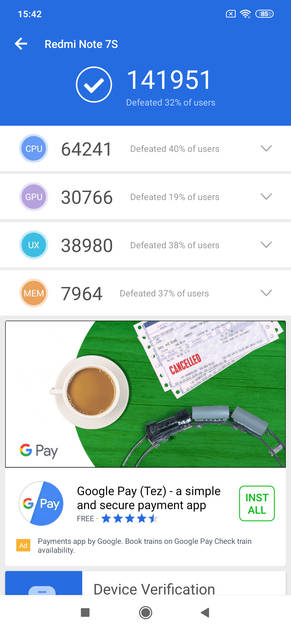
AnTuTu Benchmark
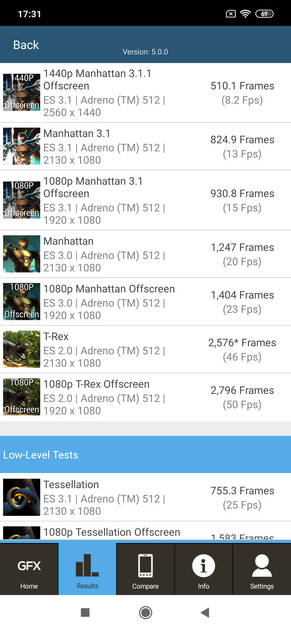
Graphics Benchmark
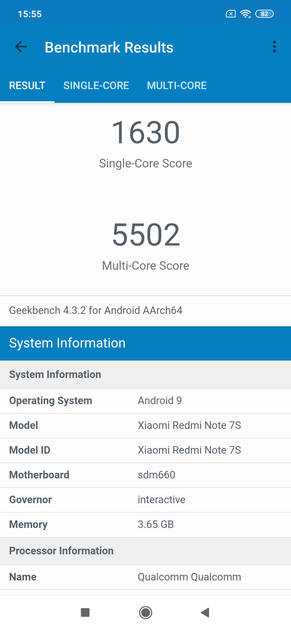
Geekbench4 Benchmark
|

Display
(Excellent)
|
|
|---|---|
| Display Type | IPS LCD |
| Screen Size | 6.3 inches (16 cm) |
| Resolution | 1080x2340 px (FHD+) |
| Aspect Ratio | 19.5:9 |
| Pixel Density | 409 ppi |
| Screen to Body Ratio (calculated) | 81.21 % |
| Screen Protection | Corning Gorilla |
| Bezel-less Display | Yes with waterdrop notch |
UI Screenshots
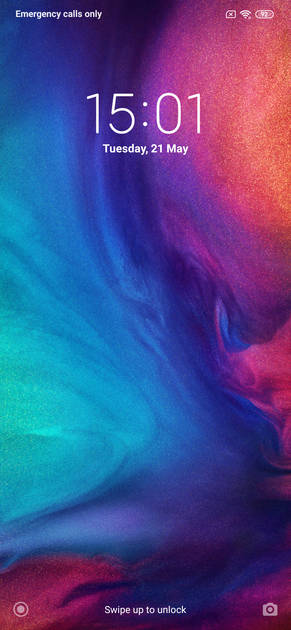
Lock Screen
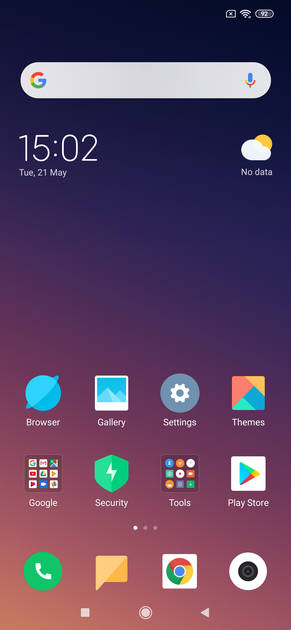
Home Screen
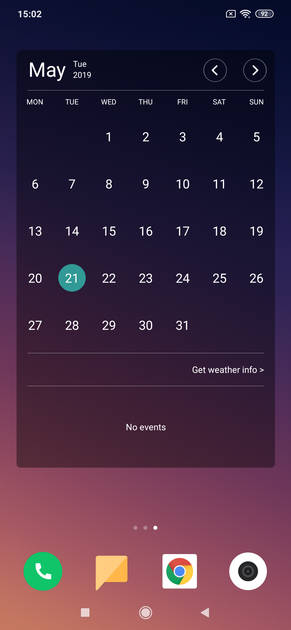
Screen With Widgets

Dialer Screen
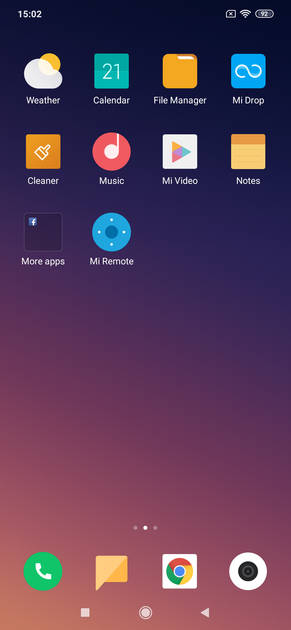
App Drawer
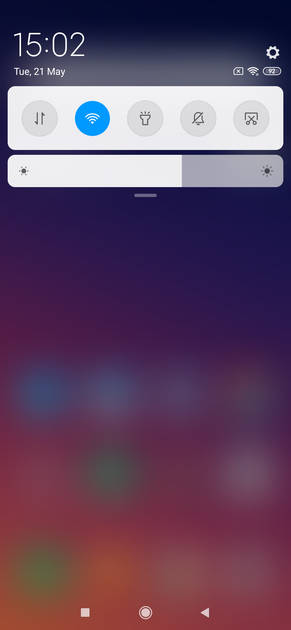
Notification Panel
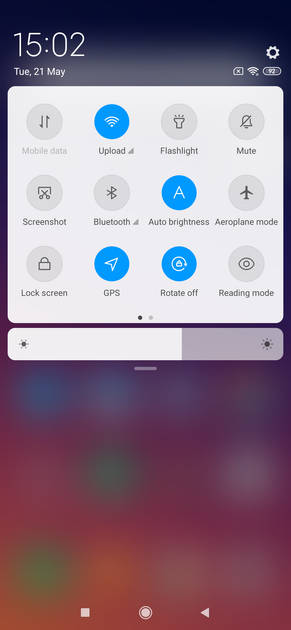
Quick Settings Panel
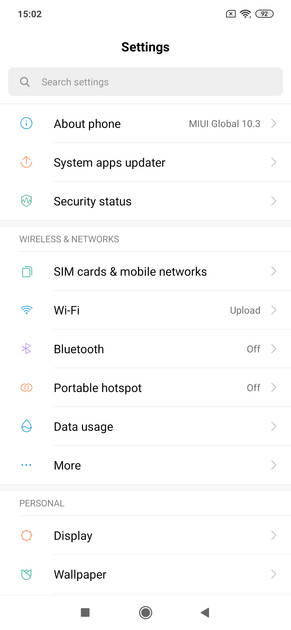
Settings Screen
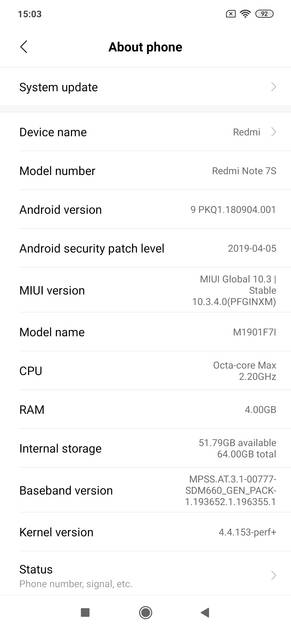
OS Version
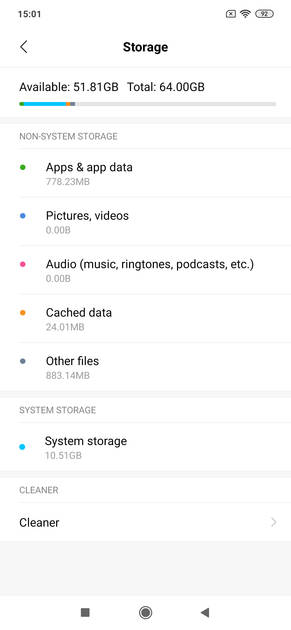
Storage
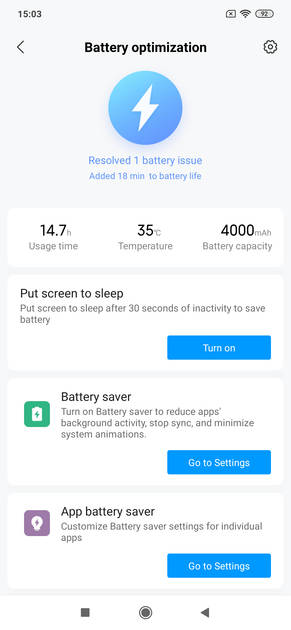
Battery

Camera On
Camera Options
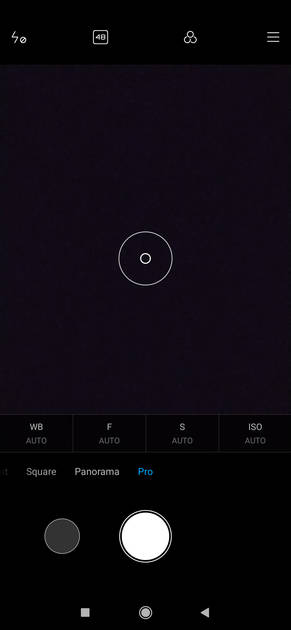
Camera Modes
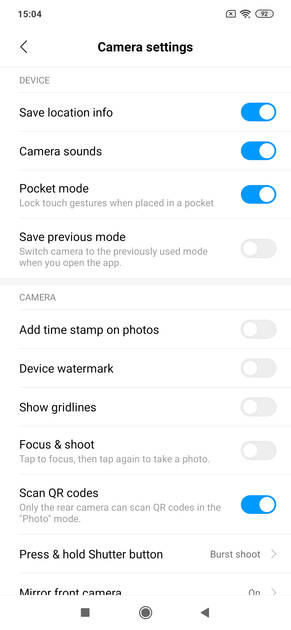
Camera Settings
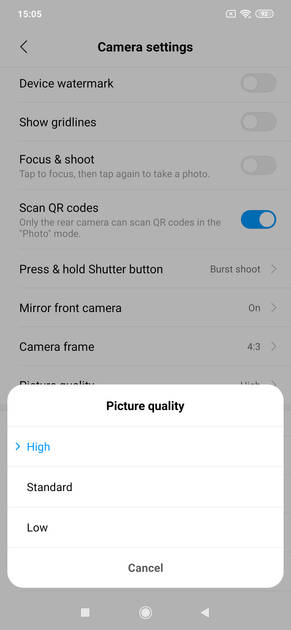
Picture Size Options
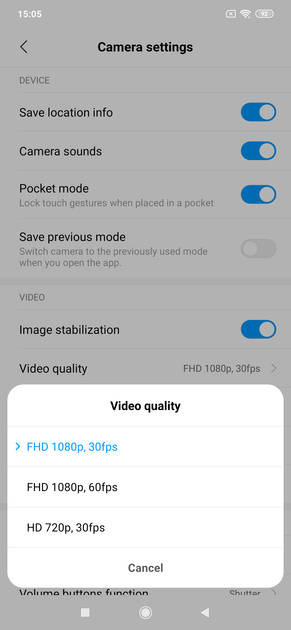
Video Size Options
|
Design |
|
|---|---|
| Height | 159.2 mm |
| Width | 75.2 mm |
| Thickness | 8.1 mm |
| Weight | 186 grams |
| Build Material | Back: Gorilla Glass |
| Water Resistance | Yes, Splash proof |
|
Click to View

|
Rear Camera
(Good)
|
|||||||||||||||||||||
|---|---|---|---|---|---|---|---|---|---|---|---|---|---|---|---|---|---|---|---|---|---|
| Resolution | |||||||||||||||||||||
|
|||||||||||||||||||||
| Autofocus | Yes, Phase Detection Autofocus | ||||||||||||||||||||
| Flash | Yes, LED Flash | ||||||||||||||||||||
| Image Resolution | 8000 x 6000 Pixels | ||||||||||||||||||||
| Settings | Exposure compensation, ISO control | ||||||||||||||||||||
| Shooting Modes |
Continuous Shooting High Dynamic Range mode (HDR) |
||||||||||||||||||||
| Camera Features |
Digital Zoom Auto Flash Face detection Touch to focus |
||||||||||||||||||||
| Video Recording |
Full HD @30 fps HD @30 fps |
||||||||||||||||||||
Rear Camera Samples

Close Up

Low Light

Low Light With Flash

Colour Variance
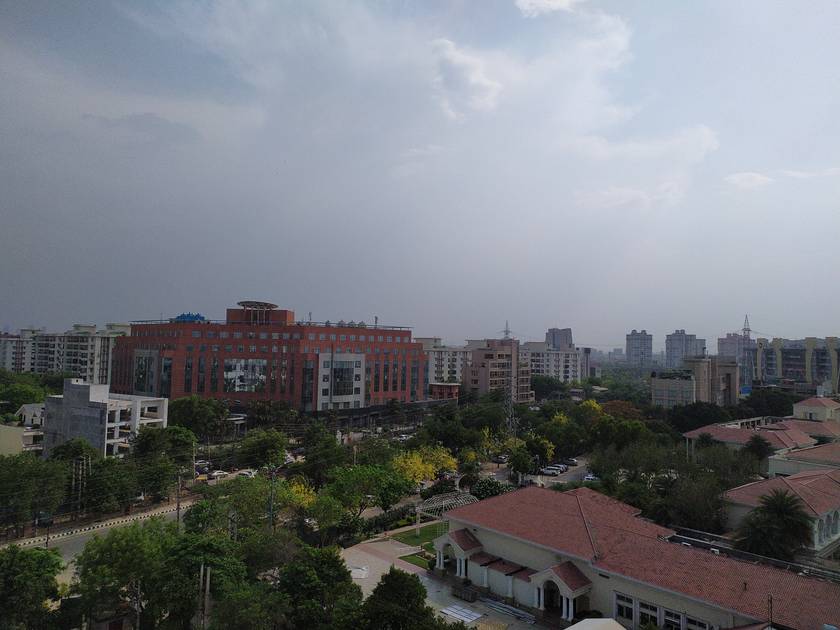
Long Shot
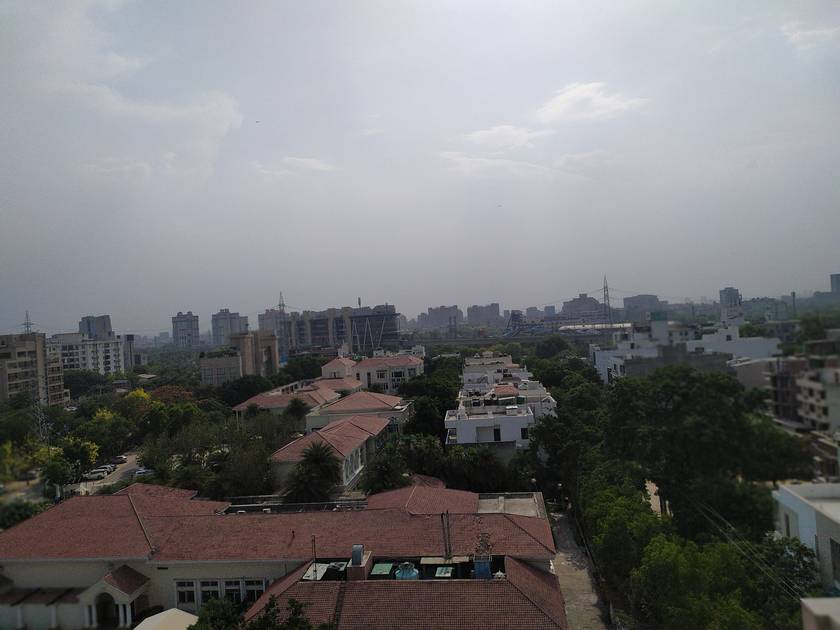
HDR Off
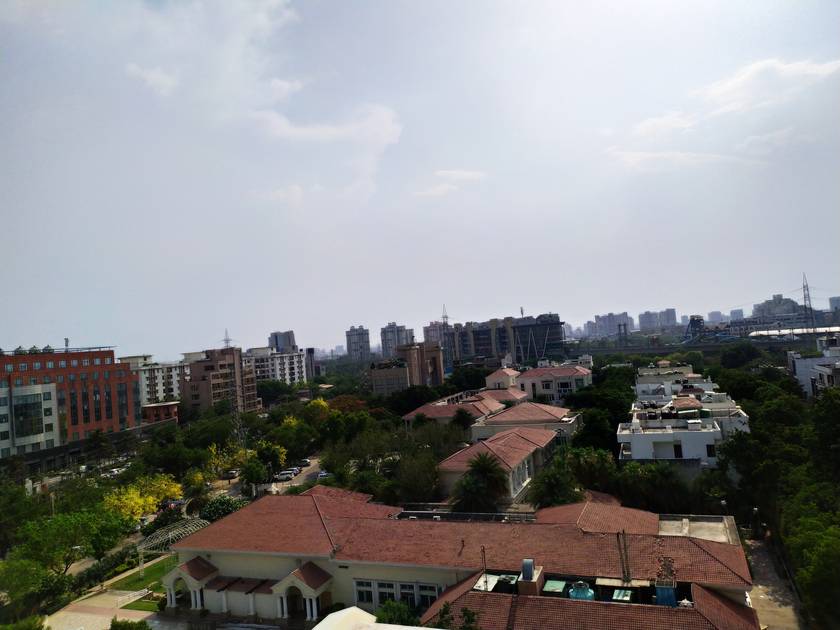
HDR On

Front Shot
|
Front Camera
(Very Good)
|
||||||||||
|---|---|---|---|---|---|---|---|---|---|---|
| Resolution | ||||||||||
|
||||||||||
| Video Recording | Full HD @30 fps |
Battery
(Very Good)
|
||||
|---|---|---|---|---|
| Capacity | 4000 mAh | |||
| Battery Type | Li-Polymer | |||
| TalkTime | Up to 23 Hours(2G) | |||
| Quick Charging | Yes Quick Charging v4.0 | |||
|
Battery Test Results
|
Storage |
|
|---|---|
| Internal Storage | 32 GB / 64 GB |
| Storage Type | eMMC 5.1 |
| Expandable Storage | Yes, Up to 256 GB |
Network & Connectivity |
|
|---|---|
| SIM Slot(s) | Dual SIM |
| SIM Type | SIM1: Nano, SIM2: Nano (Hybrid) |
| Network Support | 5G Not Supported, 4G |
| VoLTE | Yes |
| SIM 1 |
4G bands
Expand
|
| SIM 2 |
4G bands
Expand
|
| Wi-Fi | Yes, Wi-Fi 5 (802.11 a/b/g/n/ac) 5GHz |
| Wi-Fi Features | Wi-Fi Direct, Mobile Hotspot |
| Bluetooth | Yes, v5.0 |
| GPS | Yes with A-GPS, Glonass |
Multimedia |
|
|---|---|
| Audio Jack | 3.5 mm |
Sensors |
|
|---|---|
| Fingerprint Sensor | Yes |
| Fingerprint Sensor Position | Rear |
| Other Sensors | Light sensor, Proximity sensor, Accelerometer, Compass, Gyroscope |
Xiaomi Redmi Note 7S 64GB User Reviews
Xiaomi Redmi Note 7S 64GB Key Highlights
| Processor | Qualcomm Snapdragon 660 MSM8956 |
| RAM & Storage | 3 GB RAM + 32 GB 4 GB RAM + 64 GB |
| Display | 6.3", 1080 x 2340 Resolution |
| Rear Camera | 48 MP + 5 MP |
| Front Camera | 13 MP |
| Battery | 4000 mAh |





















Xiaomi Redmi Note 7S Price In India
| Product Name | Store | Price |
|---|---|---|
| Xiaomi Redmi Note 7S (3 GB + 32 GB) | Flipkart | ₹11,999 |
| Xiaomi Redmi Note 7S (4 GB + 64 GB) | Flipkart | ₹9,999 |
Popular Links
- All Upcoming Phones
- Upcoming Xiaomi Phones
- Xiaomi phones under 10k
- Xiaomi phones under 20k
- vivo V80 5G
- OPPO F35 Pro
- vivo S2 FE 5G
- OPPO F35
- Samsung Galaxy F70 5G
- Samsung Mobiles
- Motorola Mobiles
- vivo Mobiles
- OPPO Mobiles
- Tecno Mobiles
- realme Mobiles
- Xiaomi Mobiles