
Movie |
Cuba | Mutiny
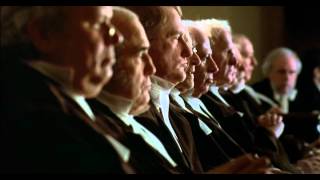
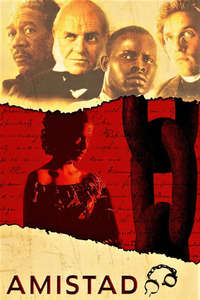
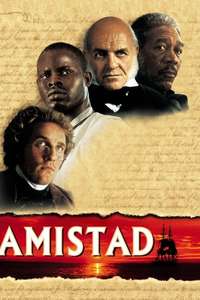
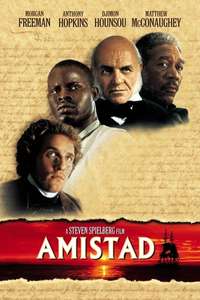
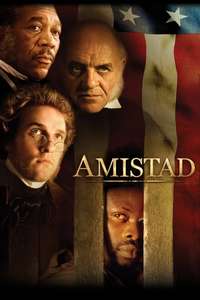
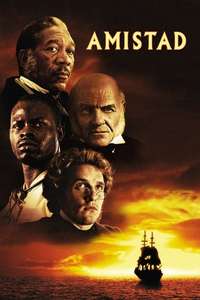
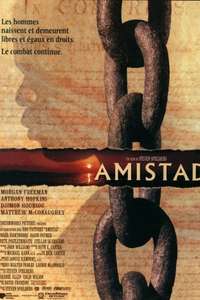
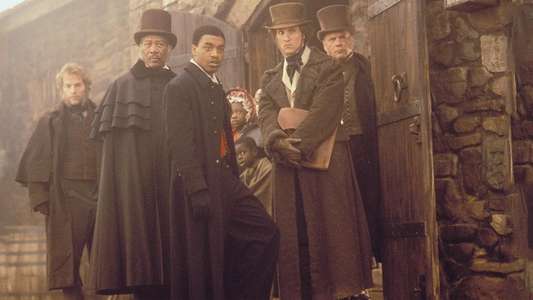
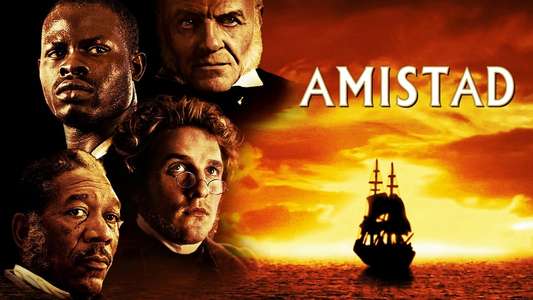
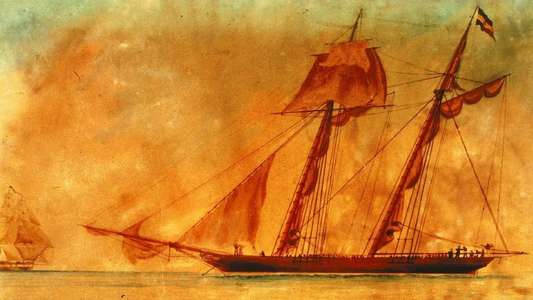
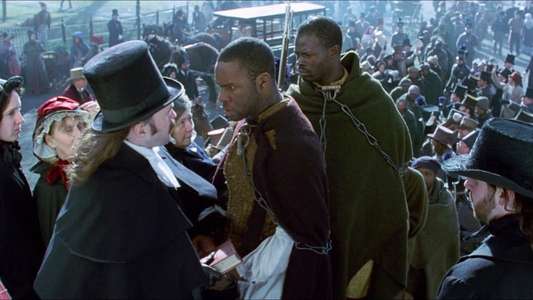
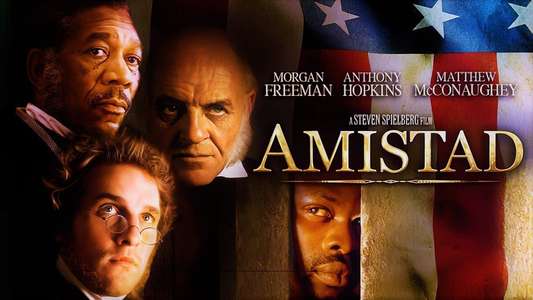
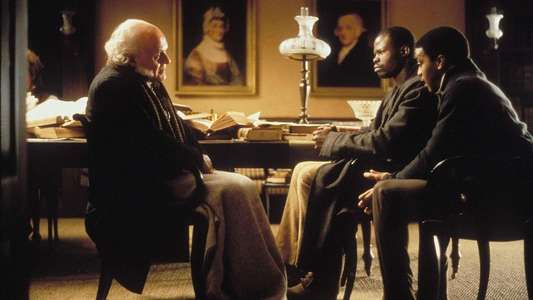
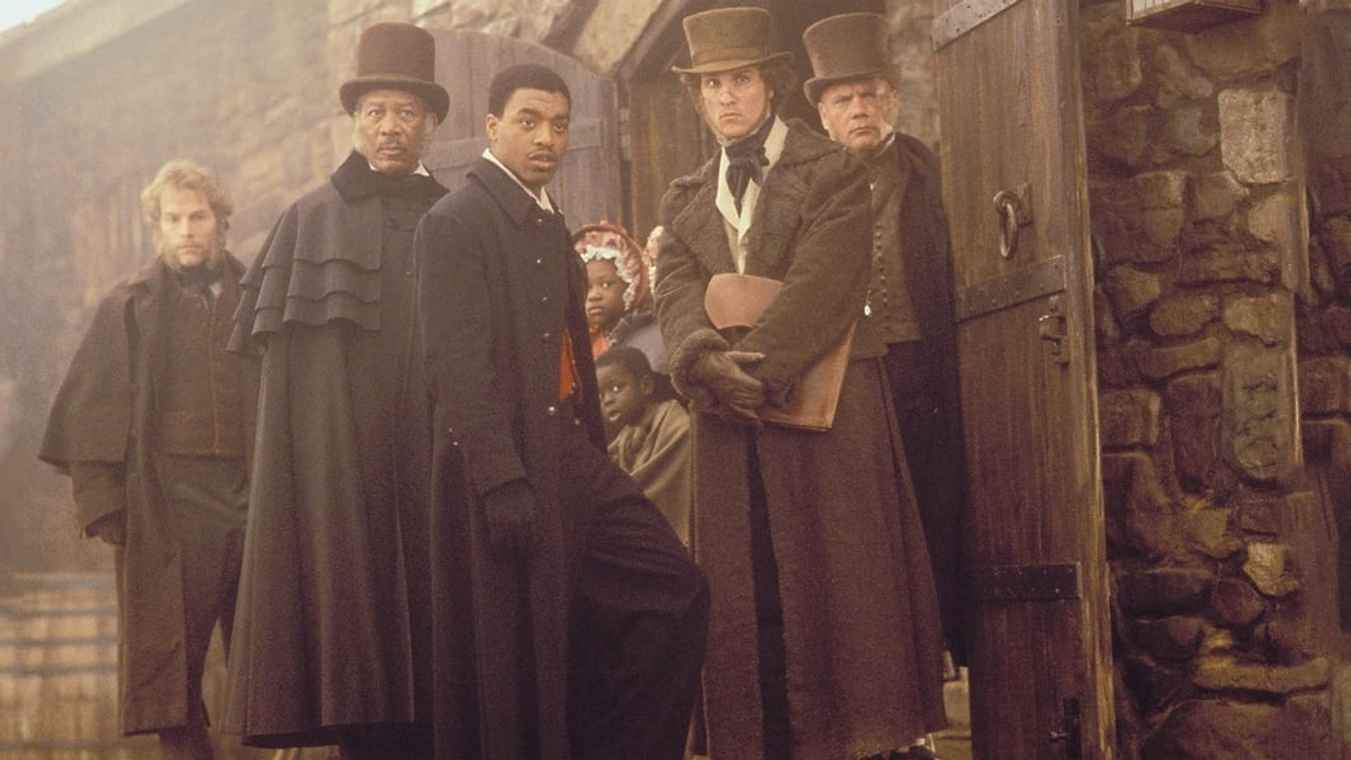
In 1839, the slave ship Amistad set sail from Cuba to America. During the long trip, Cinque leads the slaves in an unprecedented uprising. They are then held prisoner in Connecticut, and their release becomes the subject of heated debate. Freed slave Theodore Joadson wants Cinque and the others exonerated and recruits property lawyer Roger Baldwin to help his case. Eventually, John Quincy Adams also becomes an ally.
Disclaimer: All content and media belong to original content streaming platforms/owners like Netflix, Disney+ Hotstar, Amazon Prime Videos, JioCinema, SonyLIV etc. 91mobiles entertainment does not claim any rights to the content and only aggregate the content along with the service providers links.









In 1839, the slave ship Amistad set sail from Cuba to America. During the long trip, Cinque leads the slaves in an unprecedented uprising. They are then held prisoner in Connecticut, and their release becomes the subject of heated debate. Freed slave Theodore Joadson wants Cinque and the others exonerated and recruits property lawyer Roger Baldwin to help his case. Eventually, John Quincy Adams also becomes an ally.
For | 1998 | Stellan
Outstanding Lead Actor in a Motion Picture | 1998 | Djimon
Outstanding Supporting Actor in a Motion Picture | 1998 | Morgan
Best Supporting Actor | 1998 | Anthony
Theatrical Motion Pictures | 1998 | Steven
Best Cinematography | 1998 | Janusz
Top Ten Films of the Year | 1998
Best Breakthrough Performance Male | 1998 | Djimon
Best Movie for Mature Audiences | 1998
Most Inspiring Movie | 1998
Best Costume Design | 1998 | Ruth E.
Best Music Original Dramatic Score | 1998 | John
Best Cinematography | 1998 | Janusz
Best Actor in a Supporting Role | 1998 | Anthony
Best Motion Picture Drama | 1998
Best Director Motion Picture | 1998 | Steven
Best Performance by an Actor in a Motion Picture Drama | 1998 | Djimon
Best Performance by an Actor in a Supporting Role in a Motion Picture | 1998 | Anthony
Best Instrumental Composition Written for a Motion Picture or for Television | 1999 | John
Best Motion Picture Drama | 1998 | Colin
Best Actor in a Motion Picture Drama | 1998 | Djimon
Best Director | 1998 | Steven
Best Screenplay Adapted | 1998 | David
Best Film Editing | 1998 | Michael
Best Art Direction | 1998 | Rick
Best Costume Design | 1998 | Ruth E.
Best Original Score | 1998 | John
Best Archival Release | 2023
Best Costume Design | 2018 | Ruth E.
Best Production Design | 1998 | Rosemary
Best Film Editing | 1998 | Michael
Best Cinematography | 1998 | Janusz
Best Supporting Actor | 1998 | Anthony
Best Drama Actor | 1998 | Djimon
Best Music Original Dramatic Score | 1998 | John
Outstanding Achievement in Cinematography in Theatrical Releases | 1998 | Janusz
Best Supporting Actor | 1998 | Anthony
Outstanding Performance by a Male Actor in a Supporting Role | 1998 | Anthony
Outstanding Producer of Theatrical Motion Pictures | 1998 | Colin
Expos | 1998
Feature Film | 1998 | Rick
Period Film | 1998 | Easton Michael
Best Picture | 1998
Best Foreign Film Miglior Film Straniero | 1998 | Steven
Outstanding Directorial Achievement in Motion Pictures | 1998 | Steven
Outstanding Motion Picture | 1998
Best Cinematography | 1997 | Janusz
Best Costume Design | 1997 | Ruth E.
Best Original Score | 1997 | John
Honorable Mentions | 1997
Budget 36,000,000 USD
Box Office Collection 44,229,441 USD
Sir Anthony Hopkins astounded the crew by delivering the entire seven-page courtroom speech in a single take. Steven Spielberg was so in awe, he couldn't bring himself to call him Tony, and insisted on addressing him as Sir Anthony throughout the shoot.
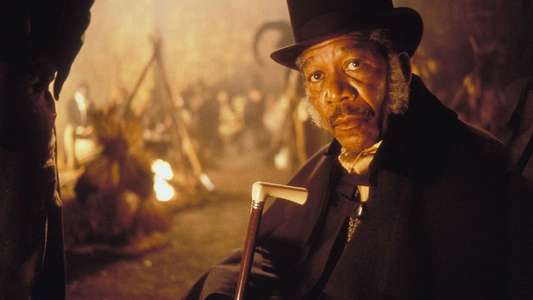
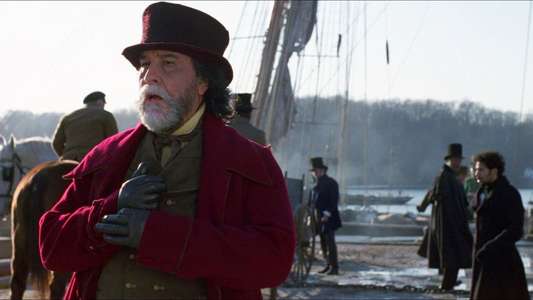
Theodore Joadson (Morgan Freeman) is a fictional creation. In real life, it was Josiah Willard Gibbs, Sr. (Austin Pendleton), a Yale professor of theology and sacred literature, who discovered Ensign James Covey (Chiwetel Ejiofor), the Mende sailor who served as a translator for the Amistad captives. As depicted in this movie, Gibbs learned to count to ten in Mende, and wandered around the docks of New York City repeating the numbers, until Covey heard and recognized his own language, and spoke to the Professor.
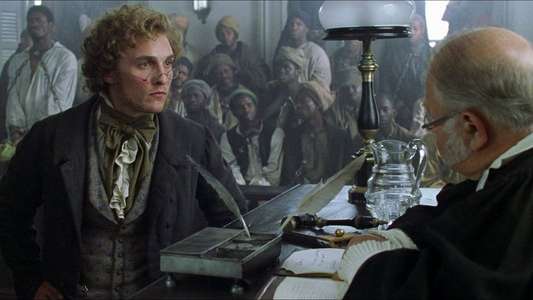
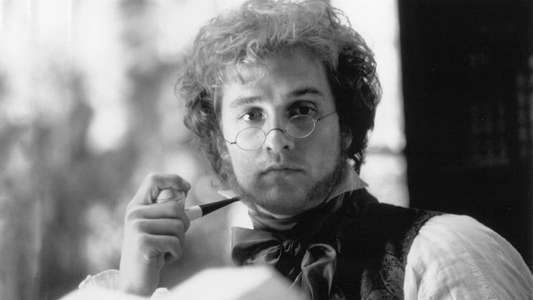
In real life Roger Sherman Baldwin (Matthew McConaughey) was an older, more experienced lawyer than his character is in the movie. A grandson of Roger Sherman (the only person to sign all four great state papers of the U.S.: the Continental Association; the Declaration of Independence; the Articles of Confederation; and, the Constitution). Baldwin was in his late 40s and a member of the Connecticut State Senate when he took the defense of the Amistad captives. After the Amistad case, Baldwin was elected Governor, and later U.S. Senator, for the state of Connecticut. He died in 1863.
Djimon Hounsou (Cinque) learned Mende for his role.
Theatrical movie debut of Chiwetel Ejiofor (Ensign James Covey).
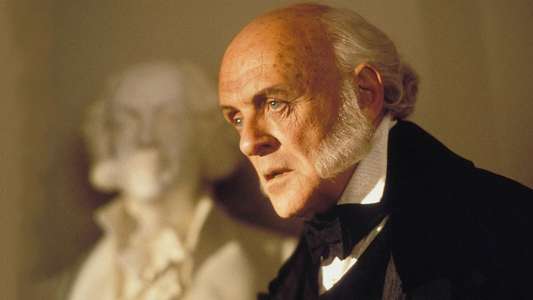
"John Quincy Adams: [to the Court] This man is black. We can all see that. But can we also see as easily that which is equally true: that he is the only true hero in this room? Now, if he were white, he wouldn't be standing before this court fighting for his life. If he were white and his enslavers were British, he wouldn't be standing, so heavy the weight of the medals and honors we would bestow upon him. Songs would be written about him. The great authors of our times would fill books about him. His story would be told and retold, in our classrooms. Our children, because we would make sure of it, would know his name as well as they know Patrick Henry's. Yet, if the South is right, what are we to do with that embarrassing, annoying document, The Declaration of Independence? What of its conceits? "All men created equal," "inalienable rights," "life, liberty," and so on and so forth? What on Earth are we to do with this? I have a modest suggestion. [tears papers in half]"
"Yamba: [looking at a Bible] Joseph Cinque: You don't have to pretend to be interested in that. Nobody's watching but me. Yamba: I'm not pretending. I'm beginning to understand it. [outside, a priest blesses himself] Yamba: Their people have suffered more than ours. Their lives were full of suffering. [turns to a picture of the newborn Jesus Christ] Yamba: Then he was born, and everything changed. Joseph Cinque: Who is he? Yamba: I don't know, but everywhere he goes he is followed by the sun. [turns to a picture of Jesus healing a man] Yamba: Here he is healing people with his hands... [shows Jesus defending Mary Magdalene] Yamba: protecting them... [shows Jesus and the children] Yamba: being given children... Joseph Cinque: [sees Jesus walking on water] What's this? Yamba: He could also walk across the sea. But then something happened. He was captured, accused of some sort of crime. [shows Jesus with Pontius Pilate] Yamba: Here he is with his hands tied. Joseph Cinque: He must have done something. Yamba: Why? What did we do? Whatever it was, it was serious enough to kill him for it. Do you want to see how they killed him? [shows the crucifixion of Jesus] Joseph Cinque: This is just a story, Yamba. Yamba: But look, that's not the end of it. [shows the disciples taking Jesus' body down] Yamba: His people took his body down from this... thing... this... [signs the cross in the air] Yamba: They took him into a cave. They wrapped him in a cloth, like we do. [shows the Resurrection of Jesus] Yamba: They thought he was dead, but he appeared before his people again and spoke to them. Then, finally, he rose into the sky. [shows the Ascension of Jesus] Yamba: [the priest prays in the background] Yamba: This is where the soul goes when you die. [shows a picture of Heaven in the clouds] Yamba: This is where we're going when they kill us. It doesn't look so bad..."