

Movie |
Agriculture | Rural Area
Disclaimer: All content and media belong to original content streaming platforms/owners like Netflix, Disney+ Hotstar, Amazon Prime Videos, JioCinema, SonyLIV etc. 91mobiles entertainment does not claim any rights to the content and only aggregate the content along with the service providers links.

Best Documentary Feature | 2016 | Laura
Documentary Feature | 2016 | Lee
2016 | Laura
2016 | Laura
Documentary Feature | 2016 | Laura
Though his face is not visible, co-producer Nick Offerman can be seen making a three-legged claro walnut stool by hand in the film.
Audio from a now historic debate at Manchester College, Indiana between between Earl Butz (Former US Secretary of Agriculture) and Wendell Berry was discovered and restored for use in this film.
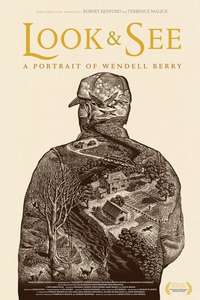
The film features many original hand engraved illustrations. These were created by Wesley Bates, the same artist who illustrates most of Wendell Berry's letterpress poetry releases.
Though not overtly connected, the film is a 'spiritual prequel' to Laura Dunn's 2008 documentary "The Unforeseen". That film is firmly grounded in urban concerns, while "The Seer" is grounded in rural ones. Both heavily feature the writing and voice of author Wendell Berry.
A prototype unit of the world's most advanced automated tobacco harvester (the GCH Gold Harvester) is seen in the film. Only 3 units in the world are in use. The manufacturer estimates it enables 2 people to do the work of 27.
"Mary Berry: It's the lack of imagination that my father talks about. It's not really looking at what's happening. It's not really counting the cost. It's some kind of dream or ideal that is false. It serves an economy that is false. And it works against nature so it's not in any way sustainable and it's made slaves out of a lot of people."
"Wendell Berry: We all come from divorce, now. This is an age of divorce. Things that belong together have been taken apart, and you can't put it all back together again. What you do is the only thing that you can do: you take two things that ought to be together and you put them back together. Two things, not all things. That's the way the work has to go."