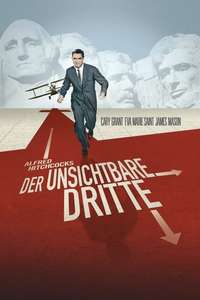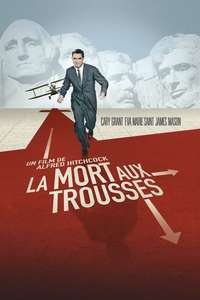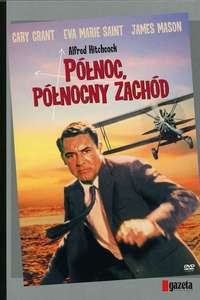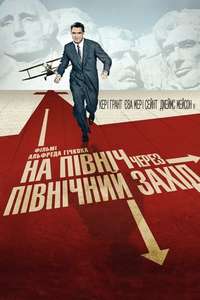

Movie |
Deception | Cliché
Disclaimer: All content and media belong to original content streaming platforms/owners like Netflix, Disney+ Hotstar, Amazon Prime Videos, JioCinema, SonyLIV etc. 91mobiles entertainment does not claim any rights to the content and only aggregate the content along with the service providers links.







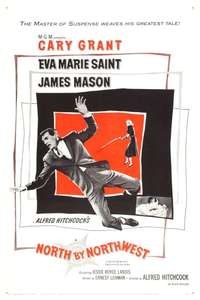
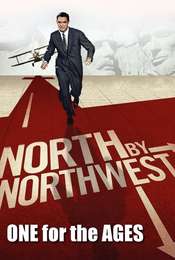
1959 | Alfred Hitchcock
Best Foreign Actor Migliore Attore Straniero | 1960 | Cary Grant
Best Motion Picture | 1960 | Ernest Lehman
Best Writing Story and Screenplay Written Directly for the Screen | 1960 | Ernest Lehman
Best Film Editing | 1960 | George Tomasini
Best Art DirectionSet Decoration Color | 1960 | Robert F. Boyle
Outstanding Directorial Achievement in Motion Pictures | 1960 | Alfred Hitchcock
Best Film | 1959 | Alfred Hitchcock
Best Written American Comedy | 1960 | Ernest Lehman
Best DVD Original Retrospective DocumentaryFeaturette | 2001 | Peter Fitzgerald
Budget 4,000,000 USD
Box Office Collection 13,275,000 USD

Amazon Music

Apple Music

Spotify

Wynk

Youtube Music
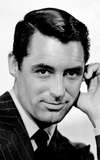
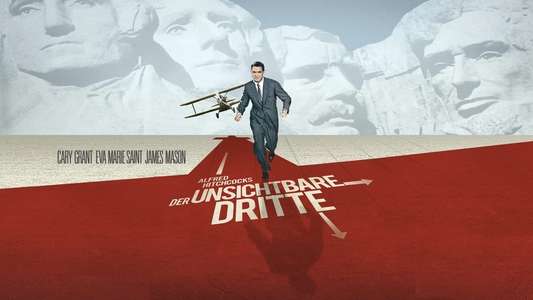
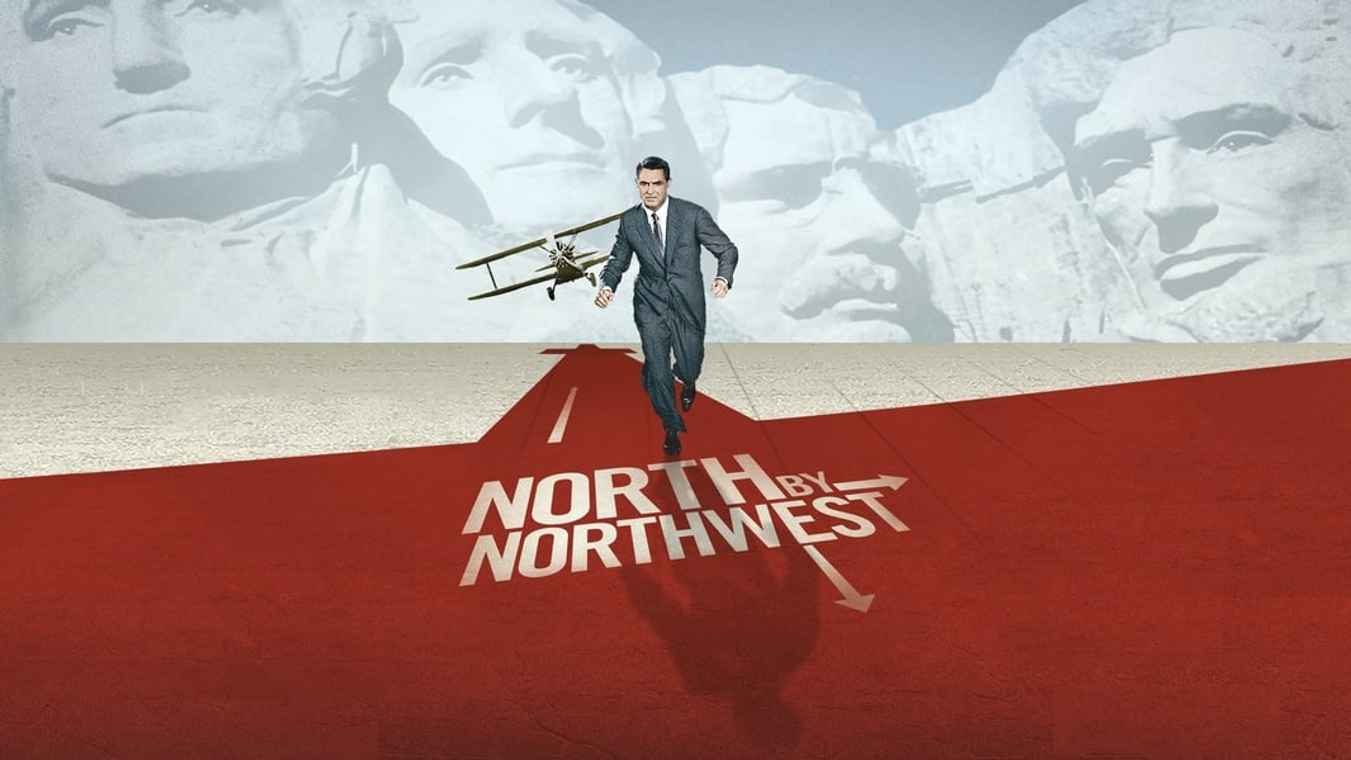
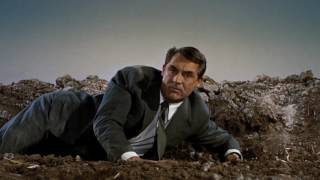
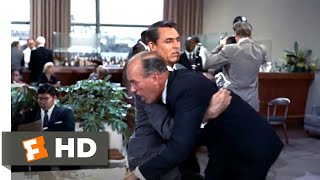
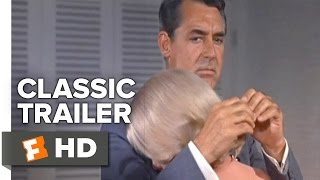
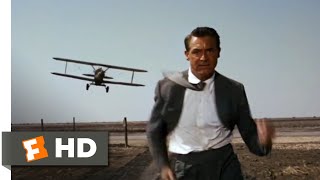
While filming Vertigo (1958), Sir Alfred Hitchcock described some of the plot of this project to frequent Hitchcock leading man and "Vertigo" star James Stewart, who naturally assumed that Hitchcock meant to cast him in the Roger Thornhill role, and was eager to play it. Actually, Hitchcock wanted Cary Grant to play the role. By the time Hitchcock realized the misunderstanding, Stewart was so anxious to play Thornhill that rejecting him would have caused a great deal of disappointment. So Hitchcock delayed production on this movie until Stewart was already safely committed to filming Otto Preminger's "Anatomy of a Murder (1959)" before "officially" offering him the role in this movie. Stewart had no choice but to turn down the offer, allowing Hitchcock to cast Grant, the actor he had wanted all along.
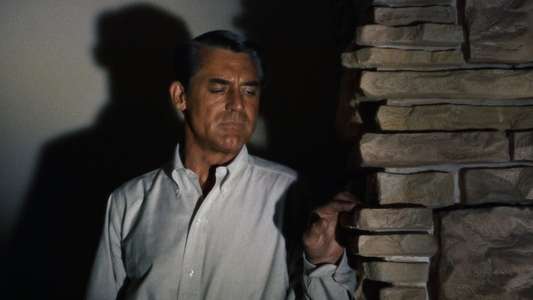
Cary Grant found the screenplay baffling, and midway through filming told Sir Alfred Hitchcock, "It's a terrible script. We've already done a third of the picture and I still can't make head nor tail of it!" Hitchcock knew this confusion would only help the movie; after all, Grant's character had no idea what was going on either. Grant thought the movie would be a flop right up until its premiere, where it was rapturously received.
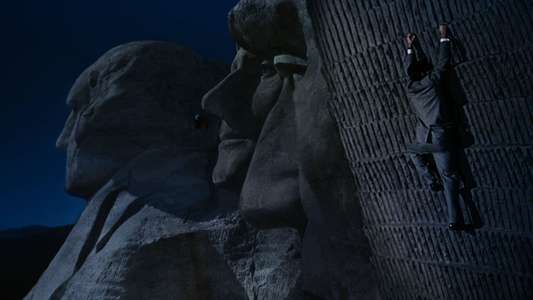
While on location at Mt. Rushmore, Eva Marie Saint discovered that Cary Grant would charge fans fifteen cents for an autograph.
Sir Alfred Hitchcock couldn't get permission to film inside the U.N., so footage was made of the exterior of the building using a hidden camera, and the rooms were later re-created on a soundstage.
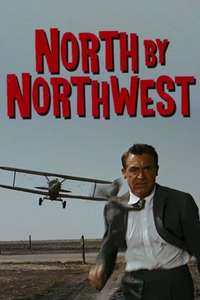
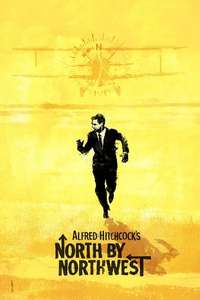
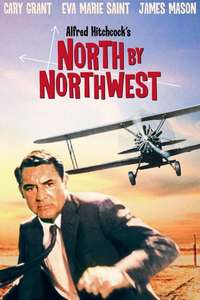
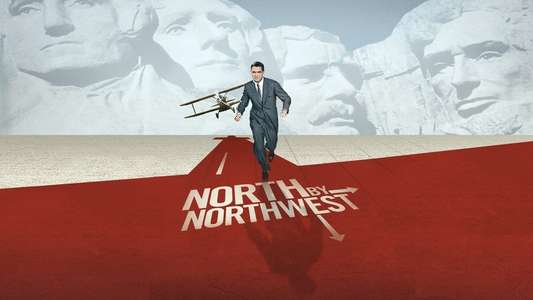
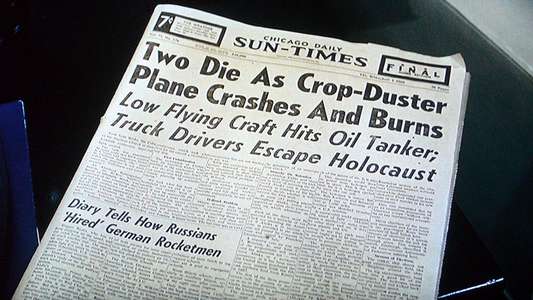
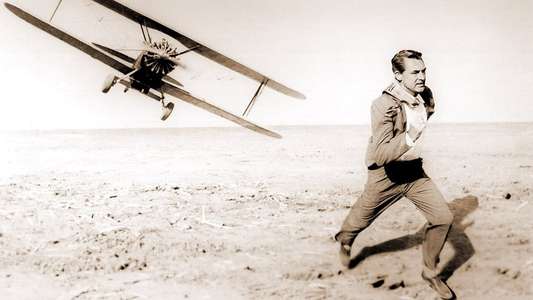
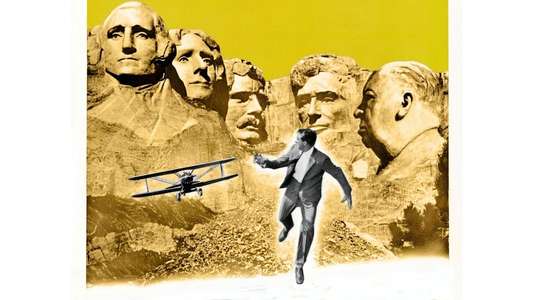
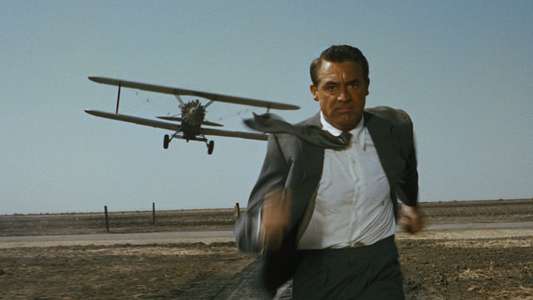
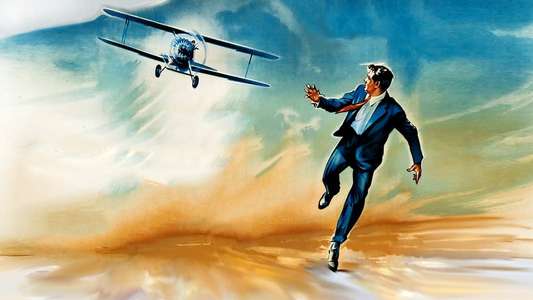
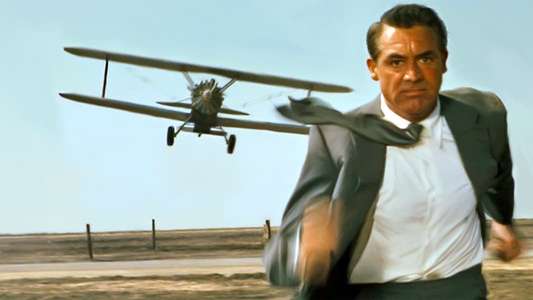
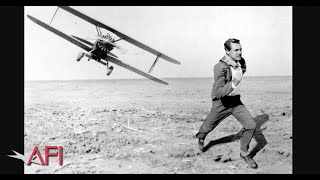
This movie has been referred to as "the first James Bond film" due to its similarities with splashily colorful settings, secret agents, and an elegant, daring, wisecracking leading man opposite a sinister yet strangely charming villain. The crop duster scene inspired the helicopter chase in From Russia with Love (1963). And another Bond nod to this film is the person in a couchette scene, used in a slightly different way in the 1973 007 film "Live and Let Die."
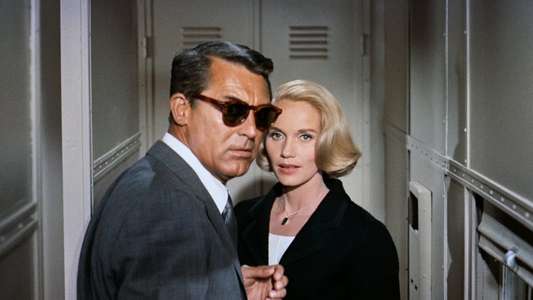
"[Thornhill is wearing sunglasses to hide his identity] Ticket Seller: Something wrong with your eyes? Roger Thornhill: Yes, they're sensitive to questions."
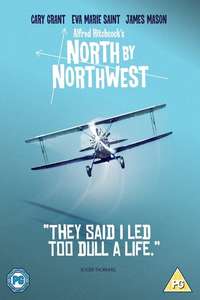
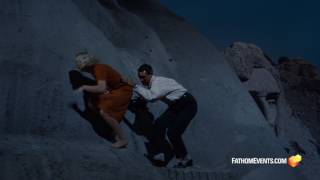
"Eve Kendall: [Hanging by their fingers from Mount Rushmore] What happened with your first two marriages? Roger Thornhill: My wives divorced me. Eve Kendall: Why? Roger Thornhill: They said I led too dull a life."