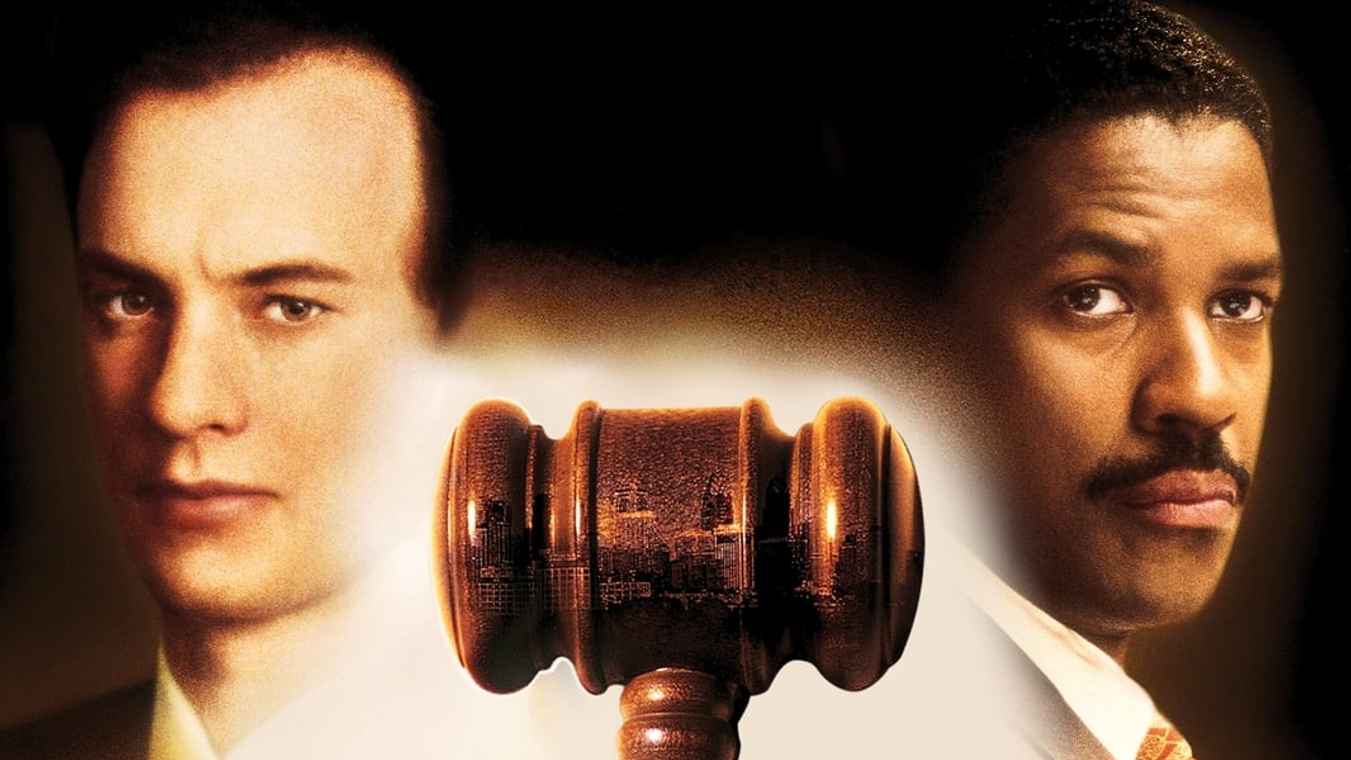

Movie |
Lawyer | Philadelphia, Pennsylvania
Disclaimer: All content and media belong to original content streaming platforms/owners like Netflix, Disney+ Hotstar, Amazon Prime Videos, JioCinema, SonyLIV etc. 91mobiles entertainment does not claim any rights to the content and only aggregate the content along with the service providers links.








Best Performance by an Actor in a Motion Picture Drama | 1994 | Tom
Best Original Song Motion Picture | 1994 | Bruce
Best Song Written Specifically for a Motion Picture or for Television | 1995 | Bruce
Outstanding Film | 1994
Top Box Office Films | 1995 | Howard
Most Performed Songs from Motion Pictures | 1995 | Bruce
Best Motion Picture | 1993 | Jonathan
Best Makeup Hairstyling | 1993 | Carl
Best Original Screenplay | 1993 | Ron
Best Actor in a Leading Role | 1993 | Tom
Best Cast Ensemble | 1993
Top Ten Films | 1993
Best Actor | 1994 | Tom
Best Male Performance | 1994 | Tom
1994
Best Writing Screenplay Written Directly for the Screen | 1994 | Ron
Best Makeup | 1994 | Alan
Best Music Original Song | 1994 | Neil
Best Screenplay Motion Picture | 1994 | Ron
Best Screenplay Original | 1995 | Ron
Best Original Song | 2014 | Neil
Best Picture | 2014
Best Director | 2014 | Jonathan
Best Original Screenplay | 2014 | Ron
Best Screenplay Written Directly for the Screen | 1994 | Ron
Best Foreign Film | 1994
Human Rights | 1994
1994 | Jonathan
Best Casting for Feature Film Drama | 1994 | Howard
Best Achievement in Directing | 1993 | Jonathan
Best Actor in a Leading Role | 1993 | Denzel
Budget 26,000,000 USD
Box Office Collection 206,678,440 USD
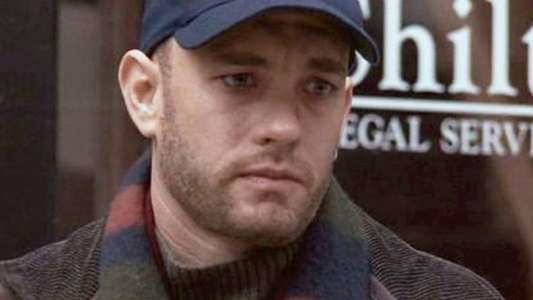
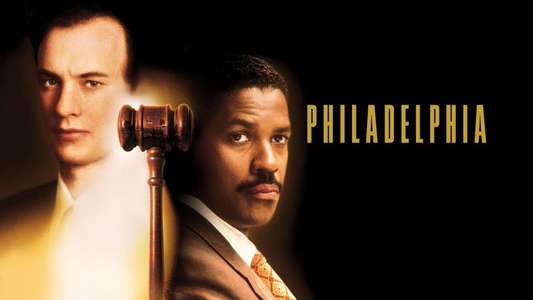
Tom Hanks had to lose almost thirty pounds to appear appropriately gaunt for his courtroom scenes. Denzel Washington, on the other hand, was asked to gain a few pounds for his role. Washington, to the chagrin of Hanks, who practically starved himself for the role, would often eat chocolate bars in front of him.
Director Jonathan Demme wanted people not familiar with AIDS to see his film. He felt Bruce Springsteen would bring an audience that would not ordinarily see a movie about a gay man dying of AIDS. The movie and the song "The Streets of Philadelphia" did a great deal to increase AIDS awareness and take some of the stigma off the disease.
Based in part on the AIDS discrimination lawsuit by Geoffrey Bowers, a young lawyer working for a prominent multinational law firm. On December 4th, 1986 he was fired by a vote of the directors and departed the firm the following day. The directors originally decided to fire him in July of that year, sidestepping company policy by not interviewing his supervisors, asking for a list of his clients, or ascertaining his billable hours. His supervisors protested, which delayed his firing, but the partners voted again that October, twelve votes to three. The initial vote in July to fire him took place two months after Bowers received good marks on a routine performance evaluation. The vote of dismissal took place one month after the positive evaluation and one month before firing Bowers. As with Hanks' Andrew Beckett character, Bowers also suffered from the visible lesions caused by Kaposi's sarcoma. The case took six years in all.
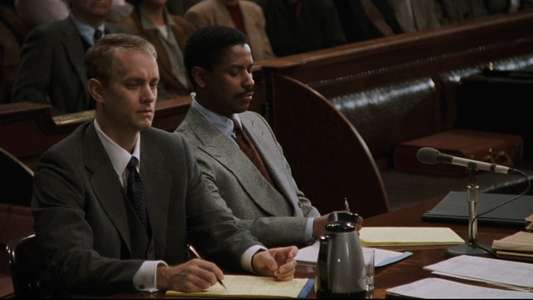
The courtroom scenes were filmed in an actual courtroom that the city let the filmmakers use. It was not a set.
According to a 1994 Entertainment Weekly profile of Ron Vawter by Stephen Schaefer, Jonathan Demme had to convince TriStar Pictures to hire Vawter to play Bob Seidman. TriStar wanted Demme to hire someone else because Vawter was HIV-positive and the insurance company covering the film refused to extend coverage to him. Demme managed to convince TriStar to allow the hiring of Vawter anyway, both because Vawter was the actor that Demme wanted, and because refusing to hire an actor because of his HIV-positive status would have been particularly ironic in the context of a movie that is premised on the injustice of a lawyer being fired because he is HIV-positive.
"[Andrew transcendentally describes his favorite opera,slowly walking around his apartment, closing his eyes, looking up] Andrew Beckett: Do you like opera? Joe Miller: I'm not that familiar with opera. Andrew Beckett: This is my favorite aria. This is Maria Callas. This is "Andrea Chenier", Umberto Giordano. This is Madeleine. She's saying how during the French Revolution, a mob set fire to her house, and her mother died... saving her. "Look, the place that cradled me is burning." Can you hear the heartache in her voice? Can you feel it, Joe? In come the strings, and it changes everything. The music fills with a hope, and that'll change again. Listen... listen..."I bring sorrow to those who love me." Oh, that single cello! "It was during this sorrow that love came to me." A voice filled with harmony. It says, "Live still, I am life. Heaven is in your eyes. Is everything around you just the blood and mud? I am divine. I am oblivion. I am the god... that comes down from the heavens, and makes of the Earth a heaven. I am love!... I am love.""
"Joe Miller: Have you ever felt discriminated against at Wyatt Wheeler? Anthea Burton: Well, yes. Joe Miller: In what way? Anthea Burton: Well, Mr. Wheeler's secretary, Lydia, said that Mr. Wheeler had a problem with my earrings. Joe Miller: Really? Anthea Burton: Apparently Mr. Wheeler felt that they were too..."Ethnic" is the word she used. And she told me that he said that he would like it if I wore something a little less garish, a little smaller, and more "American." Joe Miller: What'd you say? Anthea Burton: I said my earrings are American. They're African-American."