

Movie
Disclaimer: All content and media belong to original content streaming platforms/owners like Netflix, Disney+ Hotstar, Amazon Prime Videos, JioCinema, SonyLIV etc. 91mobiles entertainment does not claim any rights to the content and only aggregate the content along with the service providers links.
Outstanding Sound Editing for Nonfiction Programming Single or MultiCamera | 2005
2004 | Michael J.
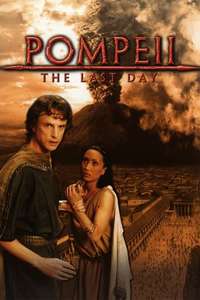
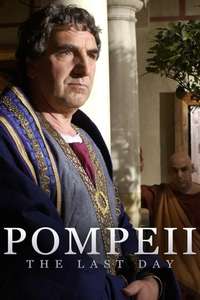
The film takes place from August 24 to August 25, 79 AD.
As stated in the official BBC press release, the story is based on historical and forensic evidence of the buildings and remains of actual people excavated in Pompeii and Herculaneum. For instance, apart from the detailed witness account of Pliny the Younger, inscriptions on the walls show Julius Polybius and Celadus the Thraex gladiator really existed, and Stephanus was most likely a fuller. However, whether they were honorable or dishonest is pure speculation. All the other filmed dramatizations of the last days of Pompeii have featured purely fictional characters.
Producer Ailsa Orr said that the effects of the eruption had to be filmed in the controlled environment of the Ealing Studios for three weeks. Because it was mostly shot in the dark, with all the billowing smoke, dust and rubble, cast and crew had to wear gas masks eighty per cent of the time.
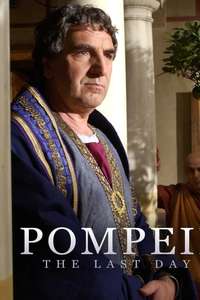
The historical TV films Colosseum: Rome's Arena of Death (2003) and Pompeii: The Last Day (2003) were made following the formula of Building the Great Pyramid (2002), a very successful BBC production with the highest-ever audience up to then for a history program on British television. All three are just short of one hour, and combine documentary footage with fact-based dramatizations and digital reconstructions.
About seven minutes were cut from the BBC DVD release for a number of international versions. The deleted scenes show more interaction between the various characters, such as Stephanus discussing the bracelet with his slave Hedone, Stephanus running into the contractor's little daughter Claudia, more footage from the gladiator's barracks, and Pomponianus about to flee from his villa with Pliny the Elder. They also depict more details about the volcanic eruption. Some of the dialogue from the cuts can be heard at the very end as voice-overs during the tour of the present-day excavated locations.
"Alisdair Simpson - Narrator: The people of Pompeii have never seen anything like this before. There is no word in Latin for 'volcano.""
"Alisdair Simpson - Narrator: Vesuvius has never again erupted with the same volcanic force as on that hot summer day in A.D. 79. According to the experts, Plinian eruptions of this scale only happen every 2000 years. The next one is due."