
Movie |
Nosferatu | Movie Business
Disclaimer: All content and media belong to original content streaming platforms/owners like Netflix, Disney+ Hotstar, Amazon Prime Videos, JioCinema, SonyLIV etc. 91mobiles entertainment does not claim any rights to the content and only aggregate the content along with the service providers links.


Best Screenplay | 2001 | Steven
Best Supporting Actor | 2001 | Willem
Best Actor | 2000 | Willem
2000 | E. Elias
USA | 2000 | E. Elias
Screenplay | 2000 | Steven
Outstanding Creative Performance | 2000 | Willem
Best Supporting Actor | 2000 | Willem
Best Actor | 2001 | Willem
Best Actor in a Supporting Role | 2001 | Willem
Best Performance by an Actor in a Supporting Role Comedy or Musical | 2001 | Willem
Best Supporting Actor | 2001 | Willem
Best Supporting Male | 2001 | Willem
Best Performance by an Actor in a Supporting Role in a Motion Picture | 2001 | Willem
Best Supporting Actor | 2002 | Willem
Best Titles Sequence | 2001
Best Sound Editing Foreign Feature | 2001 | Nigel
Outstanding Performance by a Male Actor in a Supporting Role | 2001 | Willem
Best Movie | 2001
Best Makeup | 2001 | Katja
2001 | Lou
Best Supporting Actor | 2001 | Willem
Best Supporting Actor | 2001 | Willem
Best Film | 2001 | E. Elias
Best Cinematography | 2001 | Lou
Best Supporting Actor | 2001 | Willem
Best Supporting Actor | 2001 | Willem
2000 | E. Elias
2000 | E. Elias
2000 | E. Elias
Best Supporting Actor | 2000 | Willem
Best Actor in a Supporting Role | 2000 | Willem
Best Supporting Actor | 2000 | Willem
Best Director | 2000
Best Screenplay Original | 2000
Budget 8,000,000 USD
Box Office Collection 8,279,017 USD
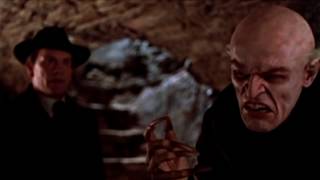
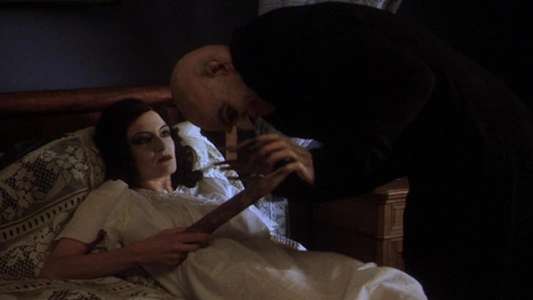
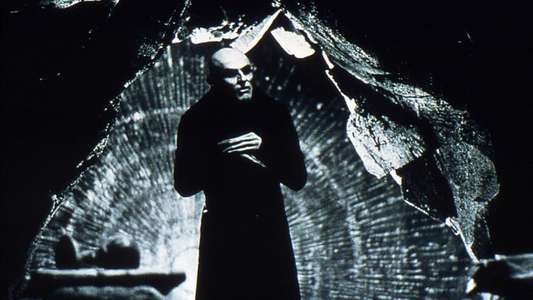
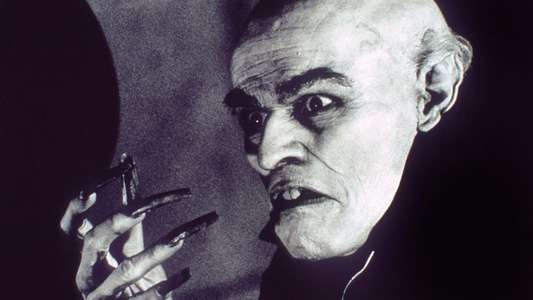
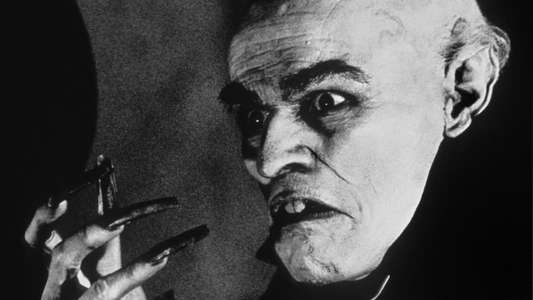
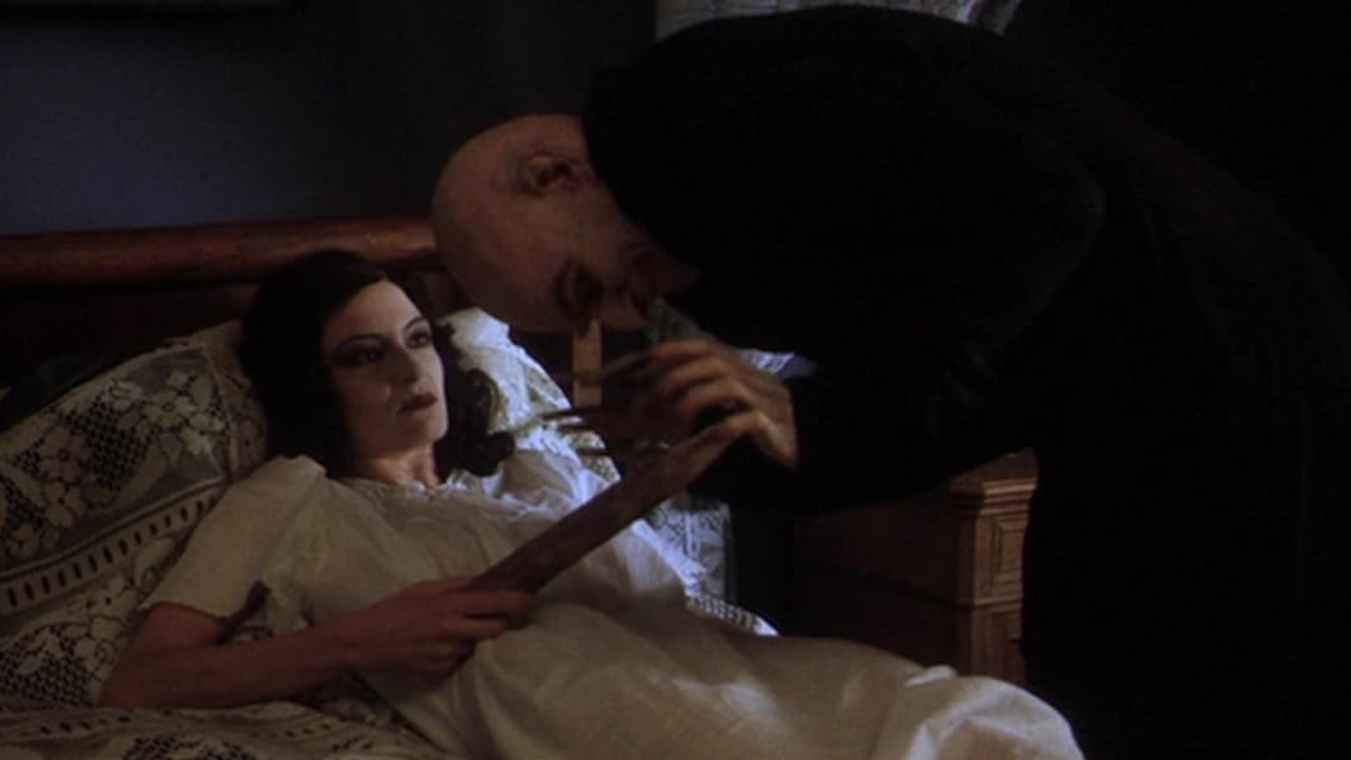
Based in part upon a legend that Max Schreck was in reality a vampire which is why he played the role of Orlock/Dracula so well. Some variations of the legend suggest that Nosferatu (1922) was the only film Schreck made, though in reality he was already a stage and screen veteran by the time Nosferatu was shot, and would appear in many non-vampiric roles before his death in 1936.
Murnau's line, "If it isn't in the frame, it doesn't exist", is a paraphrase of a piece of advice the real Murnau gave to the young Alfred Hitchcock when the latter visited the Ufa Studios in Berlin before becoming famous. Hitchcock never forgot this advice and was still quoting it when making his final movie in the mid-1970s. The use of the quotation in the context of "Shadow Of The Vampire" is a distortion of what the real Murnau meant.
The locomotive that conveys the film crew to Czechoslovakia is named "Charon". In Greek myth, Charon was the ferryman who conveyed the souls of the dead across the river Styx.
Willem Dafoe was hired as The Green Goblin in Spider-Man (2002) after the producers watched his performance in this film.
The music played on the phonograph to set the mood for the actors in some of the scenes is the soundtrack of Dracula (1979) written by John Williams.
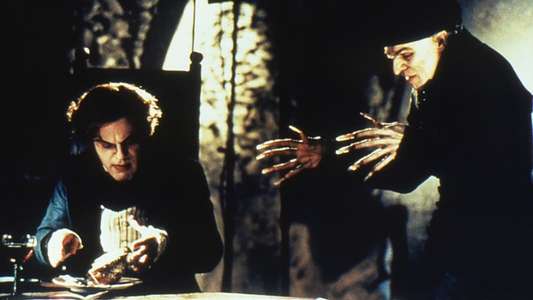
"[Asked what he thought of the book, Dracula] Max Schreck: It made me sad. Albin: Why sad? Max Schreck: Because Dracula had no servants. Albin: I think you missed the point of the book, Count Orlock. Max Schreck: Dracula hasn't had servants in 400 years and then a man comes to his ancestral home, and he must convince him that he... that he is like the man. He has to feed him, when he himself hasn't eaten food in centuries. Can he even remember how to buy bread? How to select cheese and wine? And then he remembers the rest of it. How to prepare a meal, how to make a bed. He remembers his first glory, his armies, his retainers, and what he is reduced to. The loneliest part of the book comes... when the man accidentally sees Dracula setting his table."
"F.W. Murnau: Our battle, our struggle, is to create art. Our weapon is the moving picture. Because we have the moving picture, our paintings will grow and recede; our poetry will be shadows that lengthen and conceal; our light will play across living faces that laugh and agonize; and our music will linger and finally overwhelm, because it will have a context as certain as the grave. We are scientists engaged in the creation of memory... but our memory will neither blur nor fade."