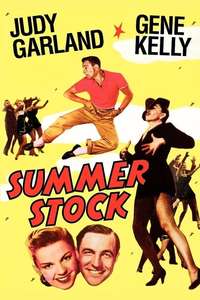

Movie |
Barn | Musical
Disclaimer: All content and media belong to original content streaming platforms/owners like Netflix, Disney+ Hotstar, Amazon Prime Videos, JioCinema, SonyLIV etc. 91mobiles entertainment does not claim any rights to the content and only aggregate the content along with the service providers links.
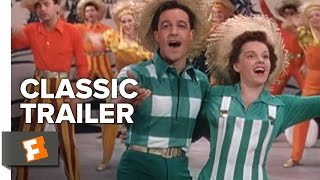
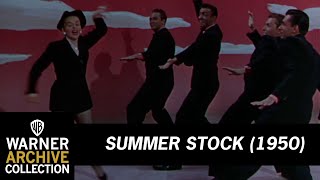
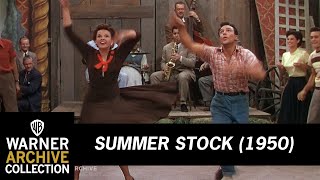
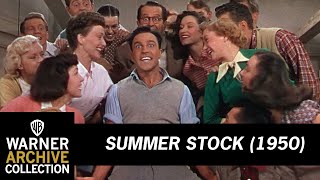
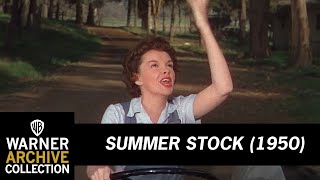

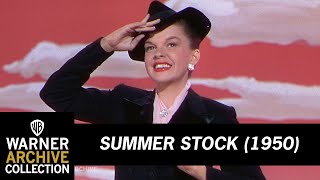

Best Written American Musical | 1951
Top Female Comedy Performance | 1951
Top Female Musical Performance | 1951 | Judy
Top Male Musical Performance | 1951 | Gene
Budget 2,025,000 USD
Box Office Collection 3,357,000 USD
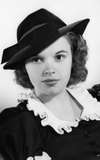
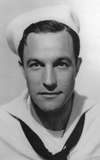
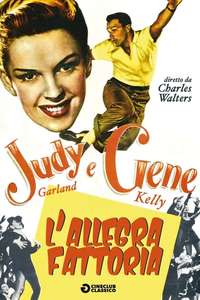
On one particular day of filming, when it became apparent that Judy Garland was not fit to work, Gene Kelly reputedly feigned an injury of his own so that she would be able to take the day off. Kelly had remained devoted to Garland since she guided him through his paces in the making of his very first film, For Me and My Gal (1942).
Judy Garland is said to have been at the height of her drug addiction throughout filming, resulting in her weight changes, mood-swings, and unexplained illnesses. It was due to this behavior that MGM fired her after filming completed.
By 1950, with On the Town (1949) in release and An American in Paris (1951) in pre-production, Gene Kelly could essentially write his own ticket at MGM. The slender thread of Summer Stock (1950) held no creative appeal to him, but he accepted the assignment out of devotion to Judy Garland, realizing that this was her last chance to save her flailing film career. However, despite its anemic plot, a throwback to Garland's barnyard vehicles with Mickey Rooney, Kelly managed to concoct one of his most fondly remembered routines, the dance with the newspaper and squeaky floor board set to "You Wonderful You."
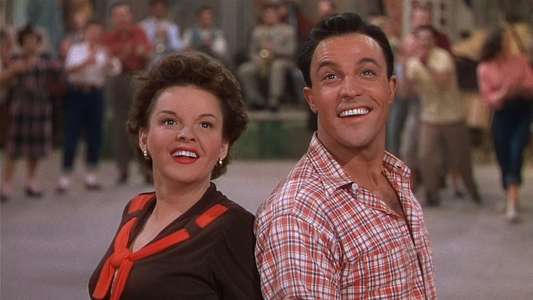
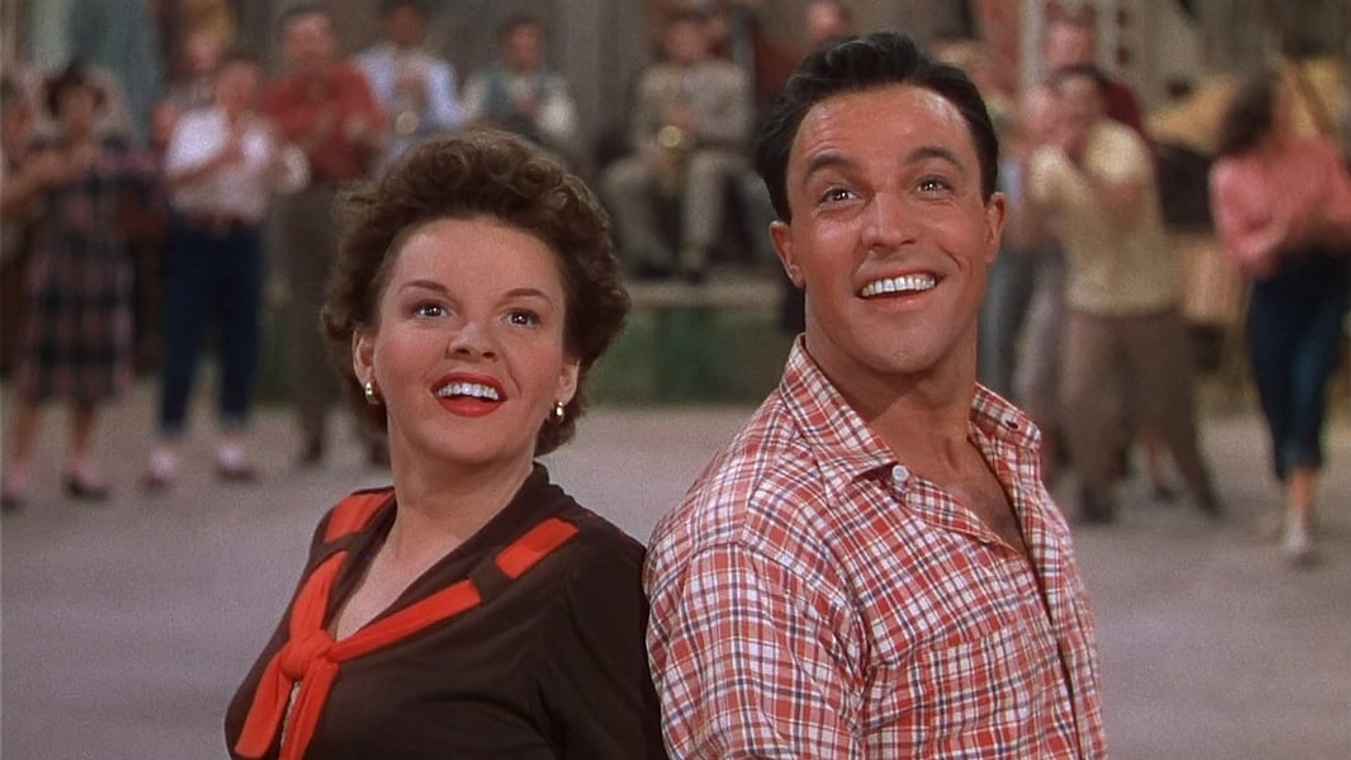
Despite the obvious difficulties Judy Garland was experiencing during the making of this film, her professionalism shines through as she matches Gene Kelly tap for tap in the challenging "Portland Fancy" dance sequence.
The number "Get Happy" was filmed several months after the rest of the film. During that time, Judy Garland lost considerable weight, which led to a longtime legend that the number was shot for a different film. In fact, Garland had worn the exact same costume in a deleted musical number from Easter Parade (1948), which also contributed to the false legend.
"Joe D. Ross: We're trying to tell a story with music, and song, and dance. Well, not just with words. For instance, if the boy tells the girl that he loves her, he just doesn't say it, he sings it. Jane Falbury: Why doesn't he just say it? Joe D. Ross: Why? Oh, I don't know, but it's kind of nice."
"Jane Falbury: You really love this, don't you? Joe D. Ross: What? Show business? There's nothing else in the world."