
Movie |
Budapest, Hungary | Hungary
Disclaimer: All content and media belong to original content streaming platforms/owners like Netflix, Disney+ Hotstar, Amazon Prime Videos, JioCinema, SonyLIV etc. 91mobiles entertainment does not claim any rights to the content and only aggregate the content along with the service providers links.



International Competition | 1959
Box Office Collection 19,873 USD
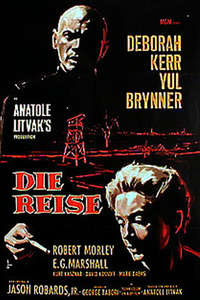
During filming, Yul Brynner's hand was cut by a former crazed lover who traveled across Europe to find him. There are scenes where Brynner's bandaged hand is not shown on-screen, and there are scenes where he is holding a prop to camouflage the hand.
This film was Jason Robards's screen debut, the son of character actor Jason Robards (1892-1963). Ron Howard had appeared in an unbilled part in the 1956 film Frontier Woman, but The Journey marked his first credited appearance; he was billed as Ronny Howard.
While a guest on the interview podcast "WTF with Marc Maron" in 2016, Ron Howard told Maron that as a child on the set of this movie, Yul Brynner made a vivid impression on him. Howard was especially transfixed while watching Brynner shoot a scene in which his character was supposed to bite into a drinking glass, and to the astonishment of the then-five-year-old Howard, Brynner actually did it. After the shot was over, however, Brynner (who had noticed how impressed the little boy was with the scene) called Howard over to explain to him that the "glass" was actually an edible prop made out of sugar, and to warn the child that he should never actually bite a real glass.
Rance Howard plays an uncredited soldier very early in the movie.
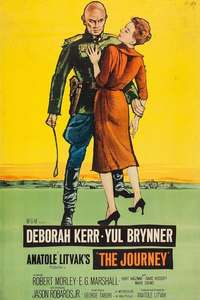
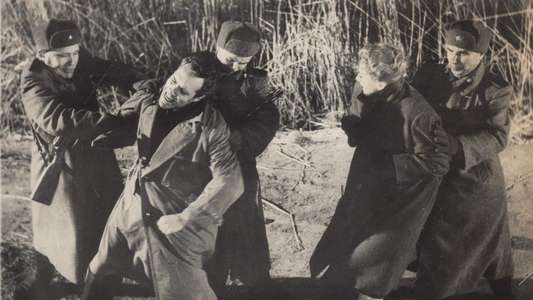
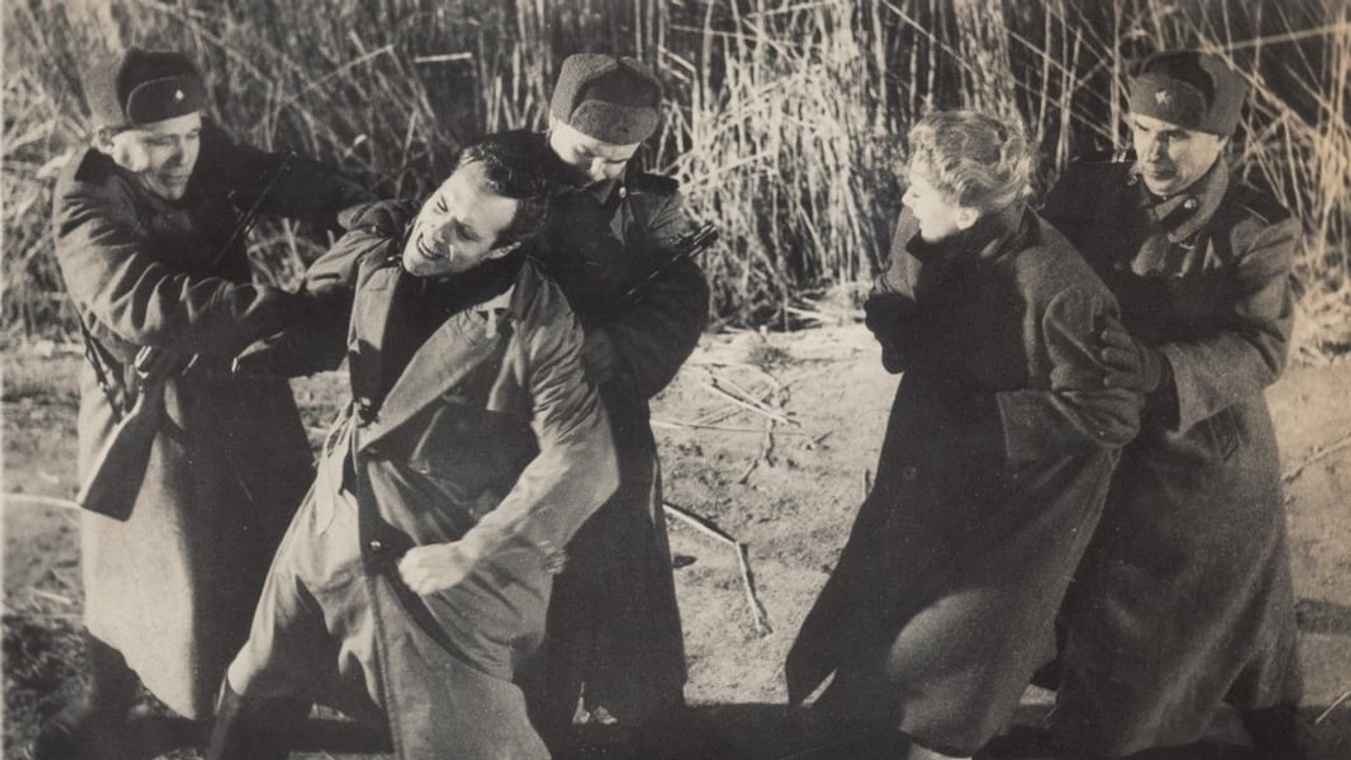
Loosely based on the short story by Guy de Maupassant, "Boule de suif" (literally "Ball of Fat," though "Dumpling" or "Butterball" might be better translations). Set during the Franco-Prussian War, it's been used as the basis for other films/TV episodes as well. In this case, Deborah Kerr's Lady Ashmore is quite different than the prostitute "Dumpling" in the original story, but while Yul Brynner's Major Surov has more depth and humanity than the Prussian officer in Maupassant's story, the basic motivation for his attraction is similar, though perhaps less vulgar. In both cases, her fellow travelers selfishly and ignobly pressure "Dumpling"/"Lady Ashmore" to sacrifice herself to the officer for their freedom.
"Diana Ashmore: [Dancing with the Major] You're drunk! Major Surov: Yes, I am. And it's marvelous! Half my life I've been a soldier. Five campaigns, four scars, a shattered hip. And all that time, the Army's been my wife. A mean, old, possessive, insatiable, glorious bitch! And tonight I am cheating on her. And it's wonderful. Like picking flowers on a battlefield!"
"Major Surov: Anything goes when people meet for the last time. Diana Ashmore: What do you mean? Major Surov: Go to any railway station - that's what I mean. You'll see people doing things they'd never do, ordinarily. They kiss, they cry, they wave. That's the sickness of our time: people waving... Nobody waves back."