
Movie |
Whiskey | Exhilarated
Disclaimer: All content and media belong to original content streaming platforms/owners like Netflix, Disney+ Hotstar, Amazon Prime Videos, JioCinema, SonyLIV etc. 91mobiles entertainment does not claim any rights to the content and only aggregate the content along with the service providers links.

Best Supporting Actor | 1966
Best British Film | 1967 | Martin
Best British Actor For | 1967
Best British Art Direction BW | 1967
Best British Cinematography BW | 1967 | Oswald
Top Ten Films | 1966
1966 | Oswald
Best Foreign Actor Migliore Attore Straniero | 1966 | Richard
Best Motion Picture | 1966
Dramatic Performance Male | 1966 | Richard
Best Art DirectionSet Decoration BlackandWhite | 1966 | Josie
Best Actor in a Leading Role | 1966 | Richard
Best Written American Drama | 1966
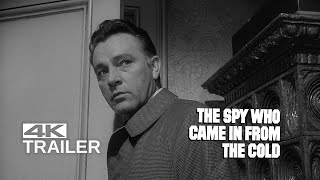
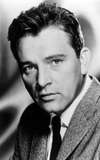
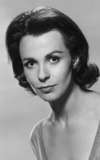
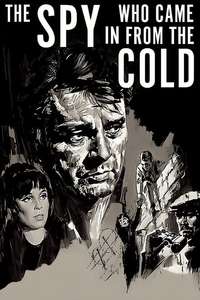
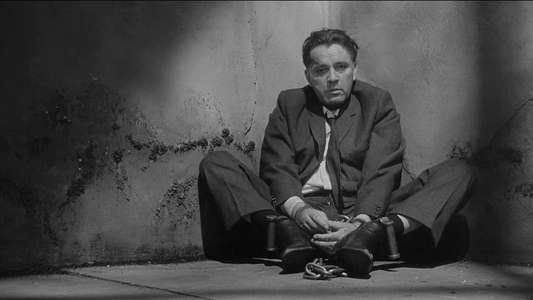
After Richard Burton became a superstar, he insisted on casting his friends from his days at the Old Vic and West End (London's equivalent to New York City's Broadway). Friends of Burton's cast in this movie included Michael Hordern and Robert Hardy. Burton's former leading lady (on-stage and in two movies) Claire Bloom, however, was cast by Martin Ritt. This caused friction for several reasons: Burton had wanted his wife, Elizabeth Taylor, in the role, and he and Bloom had been an item in the 1950s. John le Carré remembers that "off-screen Bloom preserved a dignified distance in her caravan".
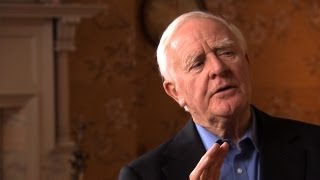
John le Carré said in an interview with The Guardian on April 13, 2013: "I wrote 'The Spy Who Came in from the Cold' at the age of thirty under intense, unshared, personal stress, and in extreme privacy. As an intelligence officer in the guise of a junior diplomat at the British Embassy in Bonn, I was a secret to my colleagues, and much of the time to myself. I had written a couple of earlier novels, necessarily under a pseudonym, and my employing service had approved them before publication. After lengthy soul-searching, they had also approved 'The Spy Who Came in from the Cold'. To this day, I don't know what I would have done if they hadn't."
In a 2016 article for The Guardian, John le Carré revealed fond memories of the shoot: "The director and I got along fine. I enjoyed an amiable relationship with the screenwriter [i.e. Paul Dehn], who as a former instructor in the black arts at a British spy school during World War II, turned out to know much more about espionage than I did. No great liberties were taken with my story, although I no longer see that as a criterion, and my only job was to provide the odd grace note to the screenplay while befriending Richard Burton and keeping a beady eye on his alcohol consumption." Although he recalled "open hostility" between Burton and Martin Ritt, he believed this "fed Burton's sense of alienation, and gave force to his performance."
Author John le Carré worked for British Intelligence MI5 and MI6 during the 1950s and 1960s and worked in Berlin where this movie is partially set. Le Carré was there when the Berlin Wall was being constructed. Le Carré drew on this real-life experience when he wrote the novel of "The Spy Who Came in from the Cold". The novel is set about a year after the Berlin Wall was built.
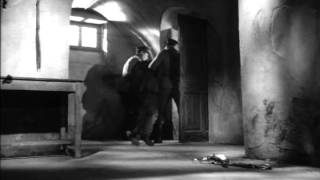
John le Carré in an article for the New Yorker remembered that the presence of Elizabeth Taylor on the set was incredibly disruptive. The Checkpoint Charlie set was re-created at Dublin's Smithfield Market and because these were nighttime shoots, huge crowds would turn out to watch and inevitably delay the filming. The Taylor-Burtons occupied an entire floor of Dublin's Gresham Hotel, and visitors to the set included Franco Zeffirelli and Yul Brynner, whose son, Rock Brynner, was studying in Dublin's Trinity College at the time. On more than one occasion, filming was delayed by the arguing and drunken behavior of Burton and Taylor.
"Alec Leamas: It was a foul, foul operation, but it paid off. Nan Perry: Who for? Alec Leamas: What the hell do you think spies are? Moral philosophers measuring everything they do against the word of God or Karl Marx? They're not! They're just a bunch of seedy, squalid bastards like me: little men, drunkards, queers, henpecked husbands, civil servants playing cowboys and Indians to brighten their rotten little lives. Do you think they sit like monks in a cell, balancing right against wrong? Yesterday I would have killed Mundt because I thought him evil and an enemy. But not today. Today he is evil and my friend. London needs him. They need him so that the great, moronic masses you admire so much can sleep soundly in their flea-bitten beds again. They need him for the safety of ordinary, crummy people like you and me... Nan Perry: You killed Fiedler! Alec Leamas: How big does a cause have to be before you kill your friends? What about your Party? There's a few million bodies on that path!"
"Alec Leamas: She offered me free love. At the time, that was all I could afford."