007 First Light PC Performance Review: License to thrill


Grab the tailored tuxedo, strap on the Omega Seamaster, and make sure the Q-Branch gadgets are fully charged. IO Interactive, the studio behind the legendary Hitman franchise, is finally stepping into the Bond universe with 007 First Light. Instead of retelling familiar movie moments, the game goes for a fresh origin story centered around a younger, rougher, and slightly reckless 26-year-old James Bond, played by Patrick Gibson.

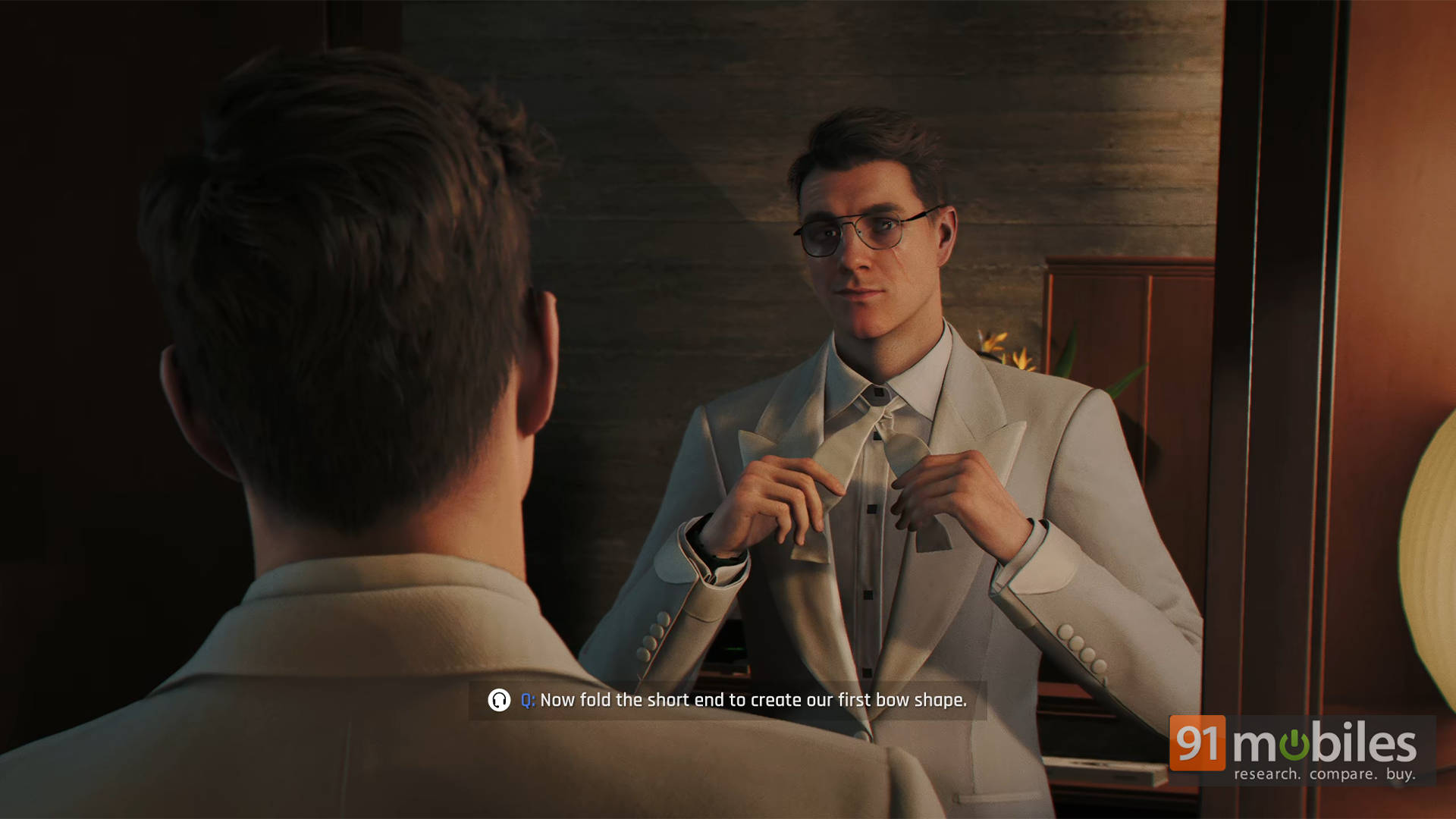
Unlike Hitman’s slower sandbox stealth formula, First Light leans heavily into cinematic action, explosive set pieces, and momentum-driven gameplay. Naturally, that also means the Glacier engine had to evolve in a big way. To see how well the PC version actually holds up, I spent time digging through the settings menu, testing performance across multiple configurations, and putting IO Interactive’s revamped tech through its paces.
Table of Contents
Glacier Engine Gets a License Upgrade
IO Interactive has done some serious engineering wizardry with the Glacier engine this time around. One of the biggest changes comes down to CPU utilization. Instead of piling AI calculations, physics, and world simulation tasks onto a single main thread, the engine now offloads a lot of that workload across dedicated worker threads. The result is exactly what PC gamers want to see: high GPU utilization without the usual CPU bottlenecks dragging performance down.

What’s especially impressive is how scalable the lighting pipeline feels. Rather than relying entirely on expensive hardware ray tracing from day one, IO has built a proprietary software-based real-time global illumination system that works surprisingly well across modern hardware. Even at native rendering, the lighting quality looks excellent, especially in indoor scenes and fog-heavy environments.

That said, the current build is only the beginning. NVIDIA has already confirmed that a Summer 2026 update will introduce full Path Tracing alongside DLSS Ray Reconstruction. If the current version already looks this good with hybrid lighting techniques, the future upgrade could genuinely turn First Light into one of the most visually advanced PC titles around.
MI6 Graphics Garage
IO Interactive has packed the PC version with a surprisingly detailed graphics menu. The UI itself is clean, responsive, and thankfully avoids the usual clutter seen in modern AAA games. One particularly useful addition is the live VRAM usage monitor sitting in the corner, which gives a quick idea of how demanding certain settings actually are. At 1440p Ultra settings, the game hovered around 7.6GB of VRAM usage during my testing, which is perfectly manageable for modern 12GB and 16GB GPUs, though older 8GB cards could start feeling the pressure.

The settings themselves are split into sensible categories. Here is a breakdown of the graphical parameters you can customize:
- Scalability Options (Textures, Geometry, Terrain): These define the raw geometry and surface details of Bond’s globe-trotting environments. Pushing textures to “Ultra” makes Bond’s tailored suits look incredibly crisp, but it’s a VRAM-hungry setting.
- Lighting (Shadows, Volumetric Fog/Effects, Global Illumination): This is where the engine flexes its muscles. Given that early missions involve sneaking around foggy military bases, the volumetric settings can heavily impact your GPU load.
- Reflections: Controls the screen-space ray-casting reflections.
- Post Effects: Granular toggles for Motion blur, Film grain, and Chromatic aberration.

There are a few odd omissions, though. The lack of an FOV slider is genuinely disappointing, especially for PC players using ultrawide monitors or sitting close to larger displays. Even stranger is the complete absence of traditional graphics presets. Everything has to be adjusted manually.

Also, one thing I noticed in my testing is that lowering settings from Ultra to Low doesn’t improve performance nearly as much as expected. In fact, most of the real performance gains come from using upscaling technologies instead of tweaking individual settings.
The Upscaling Arsenal
Because 007 First Light is heavily partnered with NVIDIA, Team Green users definitely get the VIP treatment here. The game ships with native support for DLSS 4.5 alongside Dynamic Multi-Frame Generation, allowing frame interpolation scaling all the way up to 6x. Once the Path Tracing update arrives later, DLSS Ray Reconstruction will also join the mix.

AMD and Intel users, however, don’t get nearly the same level of attention. The game includes AMD FSR 3.1.5, but there’s no AMD Frame Generation support whatsoever. Intel XeSS is missing entirely, which feels like a strange omission in 2026, especially for a major AAA PC release.

The funny thing is that you genuinely want to use upscaling in this game anyway. Glacier’s native TAA implementation is fine, but running the game at native resolution introduces noticeable shimmer and grain, especially around hair, foliage, and fine geometry. Switching to DLSS Quality instantly cleans up the image while simultaneously boosting framerates. In many situations, DLSS Quality honestly looks better than native rendering itself, which is not something I expected going in.
Hitting the Streets: Performance Results
For testing, I paired an Intel Core i9-13900K with an NVIDIA GeForce RTX 5070 Ti, alongside 32GB of DDR5 memory and a Gen4 NVMe SSD. Everything was maxed out at Ultra settings while running at 1440p resolution.

Even without any AI upscaling enabled, the Glacier engine performs remarkably well. During heavier sequences involving dense volumetric fog and large environmental effects, GPU utilization stayed consistently high while framerates comfortably hovered in the 70 to 80 FPS range natively. That alone is already impressive, considering how cinematic the game can get during action-heavy encounters.

Things get even more interesting once DLSS enters the picture. Enabling DLSS Quality immediately stabilized performance into the mid-80 FPS range while cleaning up most random dips. But the real showcase here is Frame Generation. Even basic 2x Frame Gen pushed framerates close to 130 FPS on my 144Hz panel, while the absurd 6x mode somehow managed to hit nearly 300 FPS without turning into a latency nightmare. More importantly, responsiveness during combat and traversal still felt surprisingly solid, which is something I definitely couldn’t say about earlier aggressive Frame Generation implementations like Cyberpunk 2077.
Verdict: Mission Accomplished
007 First Light already feels like one of the most polished AAA PC releases in recent memory. IO Interactive’s shift from Hitman’s slower sandbox gameplay to a more cinematic Bond experience clearly pushed the Glacier engine in a big way, and the results are genuinely impressive. The game runs remarkably smoothly, offers excellent scalability, and gives players plenty of control over how they want to balance visuals and performance.

There are a few annoyances, like the missing FOV slider, weak native TAA, and lack of proper graphics presets, but DLSS 4.5 largely fixes the visual issues while massively boosting framerates. More importantly, the overall experience feels incredibly stable, with zero shader compilation stutters, no major traversal hitching, and surprisingly good Multi Frame Generation implementation. Path Tracing and Ray Reconstruction could change things later, but right now, First Light stands out as one of the strongest technical showcases on PC this year.
Editor’s Rating: 9 / 10
Pros:
- Zero shader compilation stutters
- Excellent multi-threaded CPU optimization
- DLSS 4.5 outperforms native rendering
- Multi Frame Generation works without noticeable latency
Cons:
- Missing FOV slider and Path Tracing
- Lacks AMD Frame Gen and Intel XeSS
- Lacks proper graphical presets