2026 in gaming: the highs were high, the lows were brutal


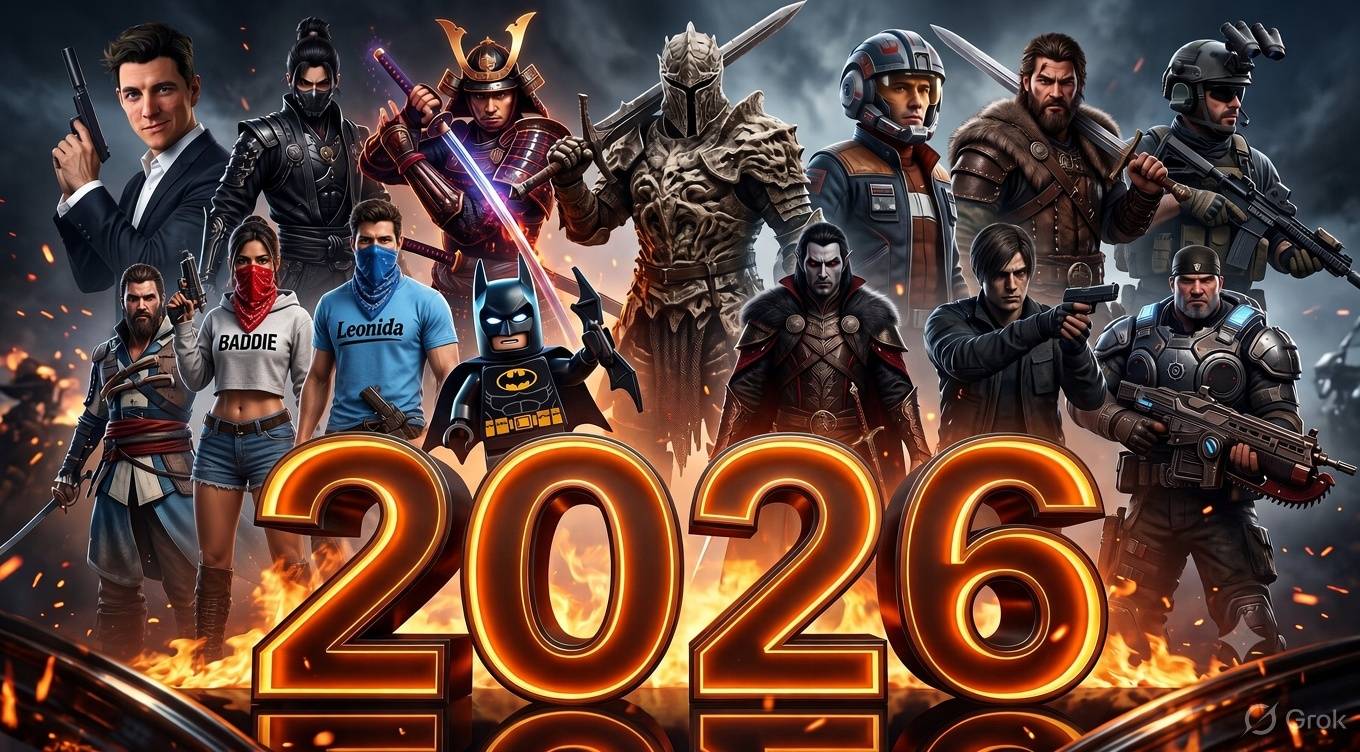
2026 has given gamers the best release calendar in years. It has also given them price hikes, mass layoffs and a push towards a disc-free future. So is it gaming’s best year or its worst? Both. Let us start with the good news.
Table of Contents
The case for “best”: a great game for every kind of gamer
Gaming has not had a release calendar this stacked in years. Whatever you play, 2026 has something for you. Here are the standouts, by genre.
Racing
- Forza Horizon 6: Playground Games took the Horizon Festival to Japan, with 550-plus cars and the biggest Horizon map yet. This is a country gamers were requesting game developers to cover for years, and finally they delivered in a grand style.
- Star Wars: Galactic Racer: Built by Fuse Games, a studio founded by former Criterion leads, it is a fast, aggressive racer that reviewers liken to a modern Burnout. Podracers and a roguelite-style campaign add to the fun.
Open-world epics and RPGs
- Crimson Desert: Pearl Abyss has built one of the biggest open worlds in recent memory. One reviewer was 160 hours in and had not covered half the map. Another said most players will pass 50 hours without leaving the starting region. This game is not just , but few games this year match its ambition.
- The Blood of Dawnwalker: The debut from Rebel Wolves, a studio founded by Witcher 3 veterans. You play Coen, a man turned into a Dawnwalker, who has 30 days to save his family, and the clock keeps ticking as you choose. This is a game you would happily put the hours in at a stretch.
Action and adventure
- 007 First Light: IO Interactive, the Hitman studio, gave James Bond an origin story with slick stealth and fistfights. Critics called it the best Bond game in decades, and it delivered an action spectacle that left gamers asking for more.
- Assassin’s Creed Black Flag Resynced: A ground-up remake of the 2013 pirate favourite, with naval combat and the Caribbean rebuilt on Ubisoft’s latest engine. According to Ubisoft, this game sold 2 million copies on day one.
- LEGO Batman: Legacy of the Dark Knight: Batman’s film history retold with LEGO humour, Arkham-style combat and an open Gotham to glide across. Could this recipe ever fail to impress? In short, no.
Soulslikes and character action
- Phantom Blade Zero: S-Game’s wuxia-inspired action game is built around fast, flashy sword combat. It is not a soulslike, though Sekiro comparisons are inevitable. It has been delayed from 9 September to be polished further, and the studio says development is now complete. We can hardly wait for this one to be released.
- Onimusha: Way of the Sword: Capcom’s first new Onimusha in 20 years puts you in the shoes of Miyamoto Musashi in early Edo-period Kyoto, with parry-heavy swordplay and Oni Gauntlet powers. Critics and gamers welcomed this game with open arms.
- Mortal Shell II: A standalone sequel to the 2020 cult soulslike. You possess eight fallen warriors, each with their own fighting style, across a compact open world with more than 60 dungeons. Early player reception has been mostly positive.
Horror and survival
- Resident Evil 9, officially Resident Evil Requiem: Capcom’s ninth mainline entry mixes tense survival horror with big action set pieces and photoreal visuals. It has sold over 6 million copies and impressed critics too.
- Valheim: After more than five years in Early Access, Iron Gate’s Viking survival hit reached 1.0 with the frozen Deep North, its final biome. A perfect excuse to start a fresh world with friends.
Shooters
- Gears of War: E-Day: The Coalition’s prequel, set 14 years before the original, drops you into Emergence Day as a young Marcus Fenix. Early response to this game has been extremely positive and is expected to be massive hit, especially given the popularity of the franchise.
- Call of Duty: Modern Warfare 4: Not out yet, but one of the most anticipated releases of the year. Infinity Ward is taking the campaign to the Korean Peninsula with Captain Price back, bringing DMZ back, and dropping PS4 and Xbox One support to take the game to the next level.
Racing, RPGs, soulslikes, horror, survival, shooters, LEGO, and Bond. That is a rare spread, and some of it is still to come. But there is a glaring miss on this list. Do not worry, we have not forgotten the biggest release of the year.
Then there is GTA 6
The biggest release of the year is Grand Theft Auto VI. It launches on November 19th on PS5 and Xbox Series X|S, with a PC version still to be decided. It has been delayed twice, first from fall 2025 to May 2026 and then to November, and it arrives 13 years after GTA V.
GTA is one of the best-selling franchises in gaming history, and GTA V alone has sold well over 200 million copies. That is the weight on this launch.
The early signs are promising. In August, Rockstar released an extended gameplay look, and a few reporters watched about 30 minutes of the game played in person at Rockstar North. No outsider has played it yet, so treat the glowing previews as first impressions. IGN said the scope was bigger than it had expected, and others praised how alive the world feels.
The business side is just as huge. Take-Two’s CEO calls pre-order levels “unprecedented and astonishing”, though the company has shared no figures and warns that pre-orders are not sales. Analysts expect it to be the biggest entertainment launch of all time. If it gets there, attention on gaming will be at an all-time high.
Whatever else 2026 is remembered for, it will be remembered for this.
A quiet win: free upgrades for PlayStation owners
Not everything good this year came with a price tag. Sony has been making the consoles people already own better, for free.
The PS5 Pro’s AI upscaler, PSSR, got a major overhaul earlier this year, often called PSSR 2.0. It debuted in Resident Evil Requiem, and a September system update turned it on by default for games that already support PSSR. On October 1st, Sony added QSSR (Quick Spectral Super Resolution), a lighter version for the standard PS5. Games render at a lower resolution and are upscaled with less visual compromise. The result is sharper images or smoother performance on hardware you already have. No new console, no extra cost.
It is live in just two games so far, Marvel’s Wolverine and Ghost of Yōtei, and developers have to add the support themselves. Digital Foundry found a big gain in Wolverine and a smaller one in Ghost of Yōtei, which already looked sharp.
Still, for owners of older PlayStation hardware, it is a rare case of a console getting better value over time.
The case for “worst”: gaming has never been this expensive
The good games come with a catch. Playing them costs more than ever.
The cause is a global memory shortage. AI data centres are buying up huge volumes of memory, and the three companies that make roughly 95 per cent of the world’s DRAM (Samsung, SK hynix and Micron) have shifted capacity towards the high-bandwidth memory that AI servers need. That leaves less for the RAM and storage in consoles, PCs and phones, and prices have shot up. Micron has even wound down its Crucial consumer memory brand to focus on AI customers. PC builders are feeling the squeeze on RAM and SSDs as much as console buyers.
In India, Sony’s own ShopAtSC store now lists the PS5 at much higher prices:
| Console (India) | Old price | New price | Live from |
| PS5 Disc Edition | ₹54,990 | ₹69,990 | July 27th |
| PS5 Digital Edition | ₹49,990 | ₹64,990 | July 27th |
That is a ₹15,000 jump for the Disc Edition (₹20,000 from launch). Microsoft raised Xbox prices worldwide from August 1st, and Nintendo raised the Switch 2 in the US, Europe, Canada and Japan.
Relief is not close. Microsoft says memory and storage costs have risen more than 2.5 times and expects another doubling by autumn 2027. Micron says demand will outrun supply through 2027 and 2028, and that new factories will not fix it quickly. Expect this to last at least another year, and possibly into 2028.
The bigger risk is who gets left behind. If consoles and parts keep getting dearer, gaming stops being a casual hobby anyone can pick up and becomes something only enthusiasts can afford. Of everything 2026 has done to gamers, unaffordability is the biggest dent.
Layoffs and closures: the industry is bleeding jobs
While the games shine, the people who make them are losing their jobs. Trackers count thousands of job losses and more than 20 studio closures in 2026, with totals varying by method. These are the biggest cases we could confirm.
- Xbox: In July, Microsoft announced about 3,200 job cuts in its gaming division through its financial year, 1,600 of them straight away. Another 268 followed on 22 September. Double Fine and Compulsion Games went independent, and Undead Labs moved to a new publisher. Ninja Theory, the Hellblade studio, now faces closure after two sale deals fell through, and Arkane is still under review.
- Epic Games: It cut more than 1,000 jobs, about 20 per cent of its staff, in March, after Fortnite engagement dropped.
- Sony: It closed Bluepoint Games, the studio behind the Demon’s Souls remake, before the studio could release any fresh title under Sony.
- Meta: It shut three VR studios, Twisted Pixel, Sanzaru and Armature, in January, alongside more than 1,000 job cuts in Reality Labs.
- Bungie and Ubisoft: Bungie reportedly cut about 400 roles, and Ubisoft around 680 across several studios.
Even Gears of War: E-Day launches after layoffs that touched its own developer, The Coalition.
The games are getting bigger. The teams behind them are getting smaller.
Anti-consumer moves: no discs, and prices that may follow you
Sony vs disc saga
On July 1st, Sony said physical disc production for all new PlayStation games will stop from January 2028. After that, new games will be sold only through the PlayStation Store, or as digital codes at retailers.
What this does and does not mean:
- It applies to new releases from January 2028. Games already released, or already scheduled with a retail version, will still come on discs.
- Your existing discs will keep working.
- It covers all publishers, first party and third party, not just Sony’s own studios.
- Sony says it is following a shift in consumer preference towards digital.
The backlash was loud. Thousands signed a petition to keep discs, pointing out that a disc is something you can lend, resell or trade, and a digital code is not. Sony’s CFO acknowledged that people have strong views, but the plan is going ahead. GTA 6’s physical edition is already just a code in a box, and Take-Two says over 90 per cent of its business is digital.
The PlayStation Store pricing test
Price tracker PSprices reported that since November 2025, Sony has been running a pricing experiment on the PlayStation Store. Different users see different prices or discounts for the same game. It reportedly covers more than 190 games in over 70 regions, including the US since March. Please note that Sony has not publicly confirmed this yet.
Some caveats matter. This is an experiment, not a live policy. Reports say users are placed randomly into test and control groups, and so far the test prices have been discounts, not hikes. In February’s sale, for example, Helldivers 2 was reportedly 56 per cent off for test users against 25 per cent for everyone else.
The worry is what comes next. If Sony made this permanent, two players could pay different prices for the same game, and neither could tell whether they got a deal or got fleeced. In other industries, dynamic pricing typically leans on signals such as purchase history, location and demand. If that ever reached the PlayStation Store, players would be on the receiving end of a practice many will see as a dark pattern. For now, it is a test to watch.
So, best or worst?
Both. The games are great and the industry around them is strained. Prices are up, jobs are down, and companies are testing how much of ownership players will give up.
Yet this is still shaping up as one of the biggest years gaming has ever had: a stacked release calendar, a GTA launch still to come, and more eyes on this hobby than ever.