Beyond smartphones: Xiaomi’s 2026 strategy includes a deeper focus on tablets, TVs, and expanding the ecosystem


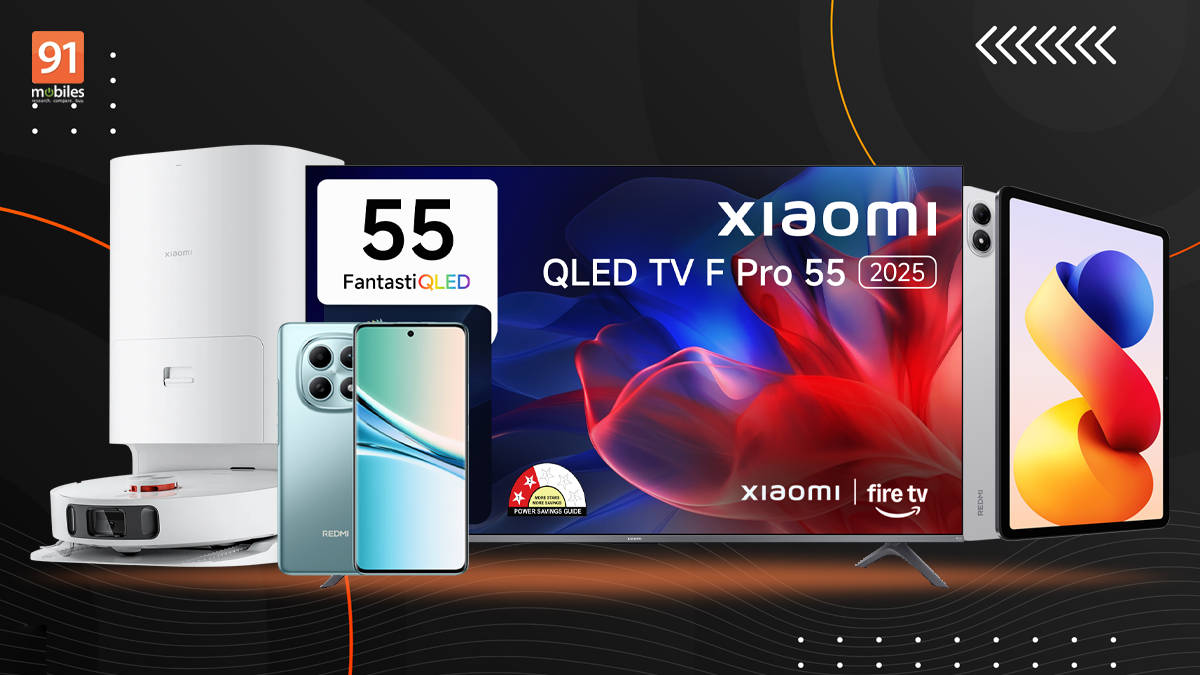
While smartphones continue to be Xiaomi’s most visible business in India, 2026 will be about far more than just phones. At a recent roundtable discussion, the company laid out a clearer picture of how it plans to deepen its ecosystem play in India, spanning tablets, wearables, smart TVs, and connected home products, while ensuring smartphones and ecosystem categories grow in tandem rather than in isolation.
India, according to Xiaomi executives, is now more important than ever to the company’s global roadmap. The market is positioned just behind China in strategic priority, not only because of scale, but also because of its ability to shape future growth models. Planning for India continues to involve close coordination with Xiaomi’s global headquarters, reinforcing the country’s role in driving long-term value creation rather than short-term volume.
A year of recalibration before renewed momentum
2025 was described as a year of recalibration for Xiaomi in India. The brand deliberately slowed down, launched fewer products, and focused on rebuilding relevance across core categories. This shift towards experience-led premiumisation helped Xiaomi regain portfolio clarity and set a stronger foundation for 2026.
Show Full Article
The results of that approach are already visible. Xiaomi closed the year ranked number three in smartphones and tablets in India, retained its leadership in power banks, and saw 20 percent year-on-year growth in wearables. Its QLED TV business grew six-fold year-on-year, while non-phone categories now contribute roughly 15 percent of overall revenue. For Xiaomi, these numbers validate the idea that ecosystem products are no longer secondary, but central to the brand’s future.
Xiaomi’s 2026 strategy is anchored in a balance between smartphones and ecosystem products.
India-first localisation and manufacturing depth
A key pillar of Xiaomi’s ecosystem strategy remains localisation. Nearly 100 percent of smartphones sold in India are now manufactured locally, along with all smart TVs and power banks. Tablets and wearables began local manufacturing in 2025, taking Xiaomi’s overall locally made portfolio in India to over 90 percent.
Beyond assembly, Xiaomi is also pushing for deeper component-level localisation. Around 35 percent of non-semiconductor components are now sourced locally, with further efforts underway to increase value addition within the country. This manufacturing depth not only helps with cost efficiency, but also strengthens supply chain resilience as Xiaomi expands its non-phone categories.
Service as a competitive advantage
Another area Xiaomi is aggressively leaning into is after-sales service, which it sees as a key differentiator in an increasingly crowded ecosystem. According to Counterpoint data shared during the discussion, Xiaomi now has service coverage across every pin code in India, with 95 percent of repairs completed within 24 hours.
The company has also begun rolling out premium service centres, with 10 already operational and a roadmap to scale to 100. Importantly, 37 percent of repairs cost under Rs 1,000, which Xiaomi believes plays a major role in improving long-term ownership experience, especially as consumers hold on to devices for longer.
What Xiaomi’s ecosystem-led 2026 looks like
Looking ahead, Xiaomi’s 2026 strategy is anchored in a balance between smartphones and ecosystem products, scale and experience, and value and premiumisation. Smartphones will see clearer portfolio laddering across price segments, but ecosystem categories will grow alongside them, not behind them.
Tablets and wearables are expected to see renewed focus, driven by evolving usage patterns and longer replacement cycles. This begins with the Redmi Pad 2 Pro, a sub-Rs 25,000 tablet with an impressive 5+7 years software support promise. At the same time, Xiaomi plans a deeper push into smart home categories such as smart TVs, robot vacuum cleaners, and air purifiers, strengthening its presence in connected home living.
The takeaway is clear: Xiaomi no longer wants to be seen only as a smartphone brand in India. With stronger localisation, improved service infrastructure, and a steadily expanding ecosystem, 2026 is shaping up to be the year Xiaomi pushes harder to own more touchpoints in consumers’ daily digital lives—well beyond the phone in their pocket.