Computex 2026: NVIDIA RTX Spark announced, a new Arm based chipset in collaboration with Microsoft


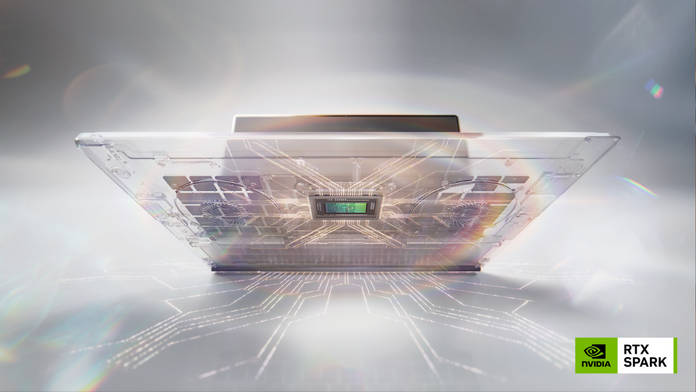
The NVIDIA RTX Spark is a new Arm‑based “AI PC” superchip that brings RTX 5070‑level graphics performance to slim Windows laptops and compact desktops. It uses unified memory so the CPU and GPU share one big, fast pool of RAM, which helps with heavy AI, video editing, and 3D work without slowing the system down.
Beyond the AI buzzwords, the RTX Spark is also a new Windows on Arm alternative, going up directly against Qualcomm’s Snapdragon X chips with a stronger focus on RTX gaming and creator workloads. Let’s look at exactly what the new NVIDIA RTX Spark platforms offer in more detail below.
Show Full Article
Table of Contents
NVIDIA RTX Spark: core features
The RTX Spark uses a custom Arm-based design that Nvidia has built in partnership with MediaTek, which handles the CPU side of the chip. It uses a 20-core NVIDIA Grace CPU built on Arm cores to balance high performance with the power efficiency needed for slim laptops and compact desktops.
On the graphics side, RTX Spark pairs that CPU with a Blackwell-based RTX GPU that packs up to 6,144 CUDA cores and fifth-generation Tensor Cores, roughly comparable to RTX 5070 GPU performance in a single package. Nvidia rates the whole superchip at up to 1 petaflop of AI compute, which should prove enough for local AI assistants, fast content creation tools, and modern games in the same machine.
Instead of separate memory pools for CPU and GPU, RTX Spark uses unified LPDDR5X memory that both sides share, with configurations going up to 128GB and bandwidth around the 270–300GB/s mark. In practice, this means users can load large 3D scenes, long 12K video timelines, or big language models without constantly bumping into memory limits or stutters as data moves around.
Nvidia’s own numbers say this is enough to render 90GB-plus 3D projects, edit 12K 4:2:2 video, generate 4K AI video clips, and run language models up to around 120 billion parameters with very long context windows directly on the device.
NVIDIA RTX Spark: real-world use cases
The RTX Spark essentially pulls together everything Nvidia has been building for years into a single Windows chip. It brings CUDA cores for heavy computing capabilities, RTX ray tracing, DLSS 4.5 upscaling, TensorRT for AI workloads, and OptiX for rendering into one platform that laptop makers can drop into slim machines.
On top of that, Nvidia and Microsoft are adding new security features and the OpenShell runtime so Windows AI “agents” can run directly on the device, automate tasks across apps, search through your files, and still keep more of your data private.
For gaming, Nvidia says RTX Spark laptops can handle modern AAA games at 1440p and over 100fps with ray tracing turned on, helped by DLSS and Reflex, which puts them closer to mid-tier RTX 5060-5070 series systems than the usual low-power ultrabooks.
For creators, Adobe is rebuilding parts of Premiere and Photoshop to tap into RTX Spark’s GPU and unified memory, with both companies promising up to 2x faster AI features, editing, and effects in supported workflows.
Where does the Spark fit in?
In the AI PC space, RTX Spark targets the same buyers who are looking at Snapdragon X-powered Copilot+ laptops and Apple’s M‑series MacBooks. Qualcomm’s Snapdragon X chips have built their reputation on battery life, while Apple’s M‑series silicon has shown how much performance you can squeeze into a thin, quiet machine without compromising power efficiency. Nvidia is trying to do both of those things at once and then add proper RTX gaming on top.
RTX Spark promises the same kind of all-day battery life you normally associate with Arm laptops while still targeting 1440p, 100fps gaming and heavy creator workloads. That’s something neither Snapdragon X laptops nor current M‑series MacBooks can really match, especially when it comes to ray‑traced gaming with DLSS support. With Microsoft cleaning up the Windows side and Nvidia bringing its full RTX and CUDA ecosystem to Spark, this could shape up to be a rare combination: a power‑efficient, very fast, and gaming‑capable Windows chipset that still fits into thin‑and‑light designs.
Nvidia and its partners are clearly treating RTX Spark machines as premium products. Microsoft’s first Spark laptop, the Surface Laptop Ultra, is touted as its most powerful Surface yet and that implies a premium price. Other launches from ASUS, Dell, HP, Lenovo, and MSI should also sit in the same high-end space, with options for more unified memory and fancy OLED or mini‑LED screens.
So RTX Spark laptops and desktops won’t be cheap or budget-friendly. They’re aimed at early adopters, creators, and gamers who are willing to pay for one machine that offers a one-pot solution for all use cases.
RTX Spark laptops and compact desktops are expected to go on sale between September and November globally, from brands like ASUS, Dell, HP, Lenovo, Microsoft Surface and MSI, with models from Acer and GIGABYTE coming later.