Google launches Gemini 3 with deeper multimodal skills, better understanding and straightforward responses


Google has announced Gemini 3, its next family of AI models, positioning it as the most “polished and useful upgrade yet”. Gemini 3 replaces Gemini 2.5, which arrived in May, and begins its rollout inside the Gemini app for everyone and inside of Google Search’s AI Mode for Google AI Pro and Ultra subscribers.
According to CEO Sundar Pichai, the focus this year is to make the model better at understanding what you actually want without making you keep rephrasing things. He says Gemini 3 is “much better at figuring out the context and intent behind your request,” so ideally you’ll get the answer you’re looking for with fewer prompts.
Show Full Article
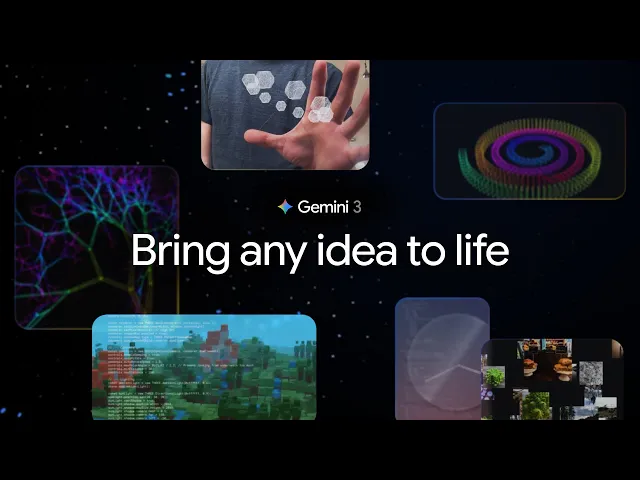
One of the biggest upgrades in Gemini 3 is how it handles multiple types of input. Google refers to it as “natively multimodal,” which means the model can see text, images, audio, and even video all at the same time instead of treating each format separately. So, if you post pictures of recipes, it can build them into a little cookbook. If you have video lectures from a class, it can pull out bits and make flashcards. It can also generate more visual responses inside Search and the Gemini app, including tables, grids, timelines, or even magazine-style layouts.
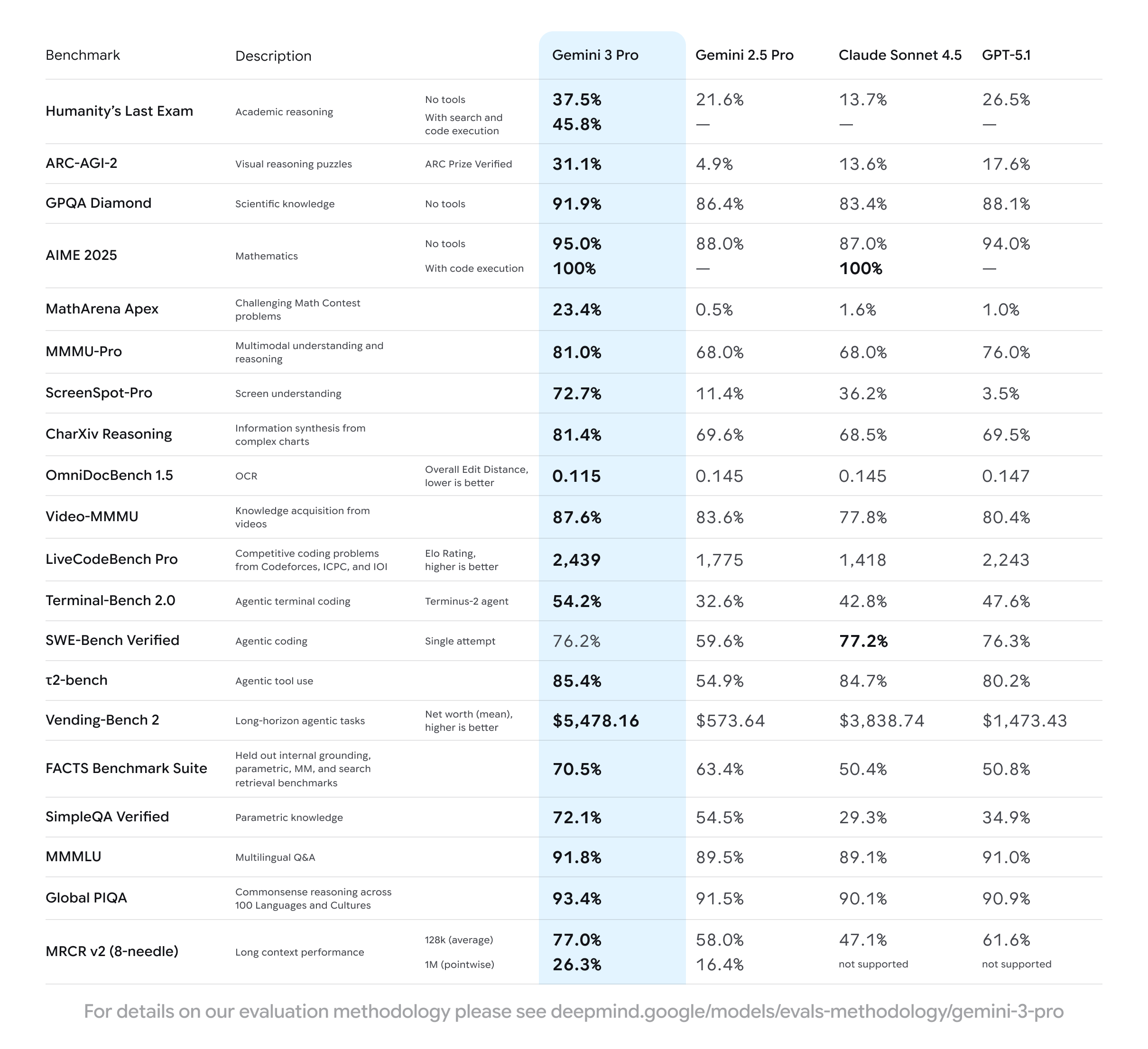
The first model going live is Gemini 3 Pro, which Google says “significantly outperforms” Gemini 2.5 Pro on every major benchmark. It’s available to everyone in the Gemini app immediately, something Google hasn’t done before with a flagship model. A more advanced mode, Gemini 3 Deep Think, is still in testing. This version does even better on reasoning tasks, but it takes longer to respond, so Google seems to be cautious, running extra safety checks in. When ready, it will launch for AI Ultra subscribers.

One of the more interesting changes is in tone. Google says Gemini 3 Pro is designed to give “smart, concise and direct” answers without unnecessary flattery. It even mentions “reduced sycophancy,” which is clearly a reference to conversations around ChatGPT which is accused of being overly agreeable or polite to users. Google wants Gemini 3 to feel more grounded and straightforward. In practice, this could mean fewer softeners and disclaimers, and more focus on the actual answer.
Compared to ChatGPT’s GPT-5, Gemini should understand mixed inputs better because it is built to combine text, images, audio, and video in one go. ChatGPT can handle all those but often processes them in separate steps. With Search, Google obviously has a deep advantage over any AI model. Google’s AI Mode taps into real-time search results with visual elements, simulations, and improved query breakdown. Gemini 3 Deep Think may be more directly competitive with GPT-5 on long-form reasoning.
Anthropic’s Claude has a reputation for long, careful reasoning and structured writing. Gemini 3 Pro should come closer now, though Claude may continue to be preferred for very detailed, academic-style responses. Meta’s Llama still is relevant for open-source ecosystems, whereas Gemini 3 offers much more cohesive multimodal and visual features for the regular user. In benchmarks tracked by platforms like LMArena, Gemini 3 Pro now leads the pack, suggesting that it may have started to outperform GPT-5 or GPT-4.1 in many reasoning and multimodal tests. That said, real-world performance will matter more than raw scores, since ChatGPT enjoys a comfort and familiarity advantage with users.

Since Gemini 3 Pro is free inside the Gemini app, trying it is easy and low-risk. In fact, if you’re a Reliance Jio user, you get 18 months of Gemini Pro subscription free, so this may be a good opportunity to try it. If you work with mixed media, Gemini 3 may feel naturally suited to those tasks. If you rely heavily on ChatGPT’s plugin system, longer chats, or its warmer conversational style, you may still prefer the OpenAI interface. However, with Gemini’s Search integration 3, visual output, and stronger handling of multiple file types, you may get some practical advantages.