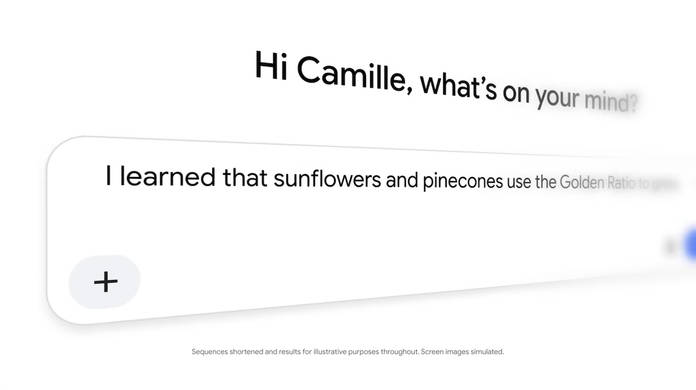
Google, at its annual I/O developer conference, announced the most significant set of changes to Search in years, including AI agents that work around the clock on your behalf, a completely reimagined search box, the ability to vibe code and build mini apps on the fly, and a more deeply integrated Gemini. Once these changes roll out, you could see the end of Google Search as you knew it.
Table of Contents
Over a billion users use AI Mode, so there’s a new model now
Starting today, Google is upgrading AI Mode with Gemini 3.5 Flash as the new default mode globally. AI Mode, Google’s chatbot-style search experience, crossed one billion users just a year after launch, with queries more than doubling every quarter since launch. Total search queries reached an all-time high last quarter, suggesting that the AI additions to Search are increasingly popular, which isn’t great news for websites and publishers whose links would appear on the first page. And it’s about to get worse for them.
The Search box just got its biggest upgrade in 25 years
Google has redesigned what it means to type a query in the search box. Earlier, a simple query would bring up AI Overview followed by links to websites and publishers. Now, the new Search box dynamically expands as you type, offering AI-powered suggestions that go beyond basic autocomplete, essentially getting rid of those 10 blue links.
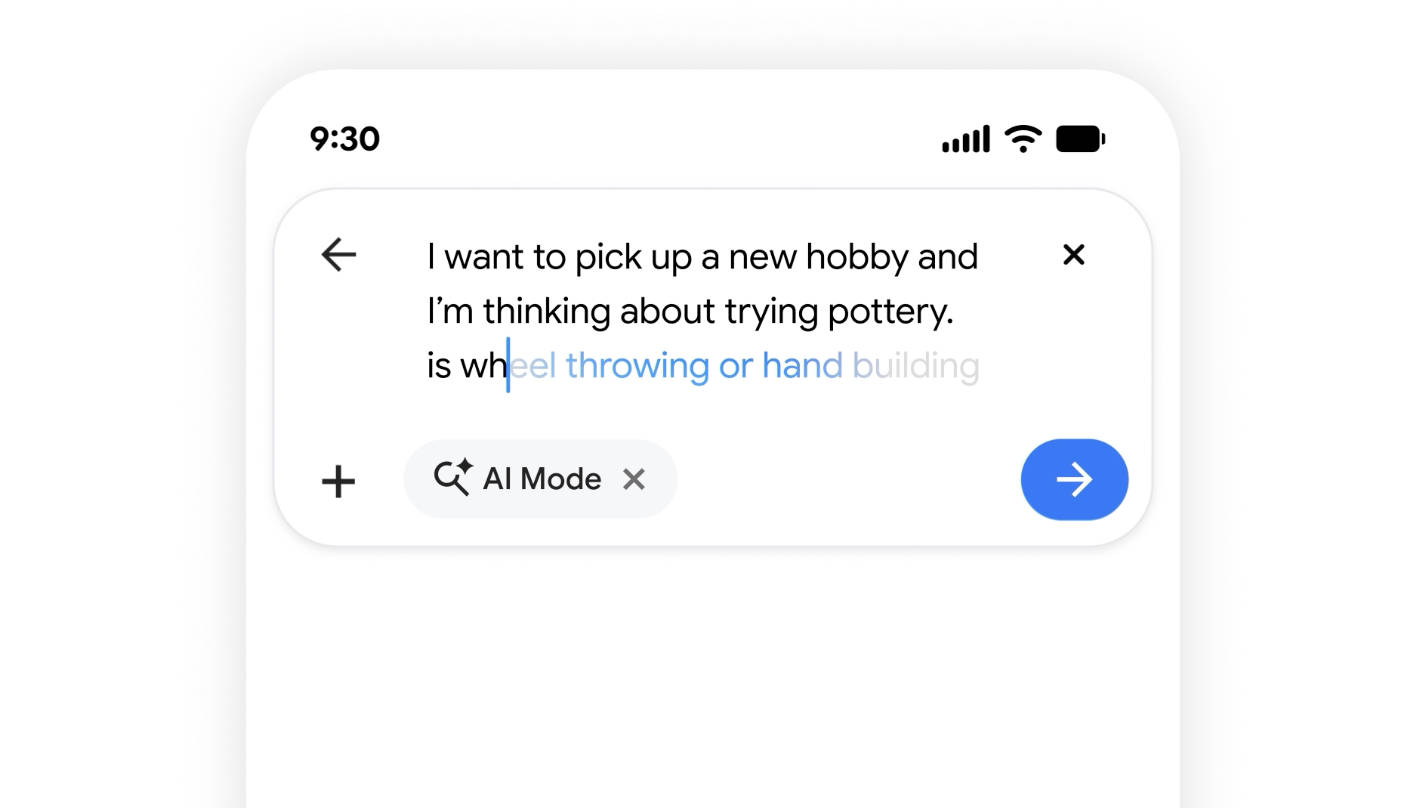
The Search box now also accepts images, files, videos, and Chrome tabs as inputs. It is rolling out today across all countries and languages where AI Mode is available.
Google is also making it easier to continue a conversation within Search. You can now ask follow-up questions directly from an AI Overview and flow into AI Mode, with your context carrying through the entire conversation.
AI agents come to Search
Perhaps the biggest announcement here is Search agents, a new category of AI that operates in the background on your behalf, without you actively using Google.
The first type is information agents, which monitor topics of your choosing around the clock, scanning blogs, news sites, social posts, and real-time data, including finance, shopping, and sports. When something relevant happens, you get a synthesised notification with the option to take action. Google’s example of this is tracking apartment listings that match your exact requirements, or getting notified the moment a favourite athlete announces a sneaker collab. Information agents launch first for Google AI Pro and Ultra subscribers this summer.

Search can now build custom apps for you on the fly
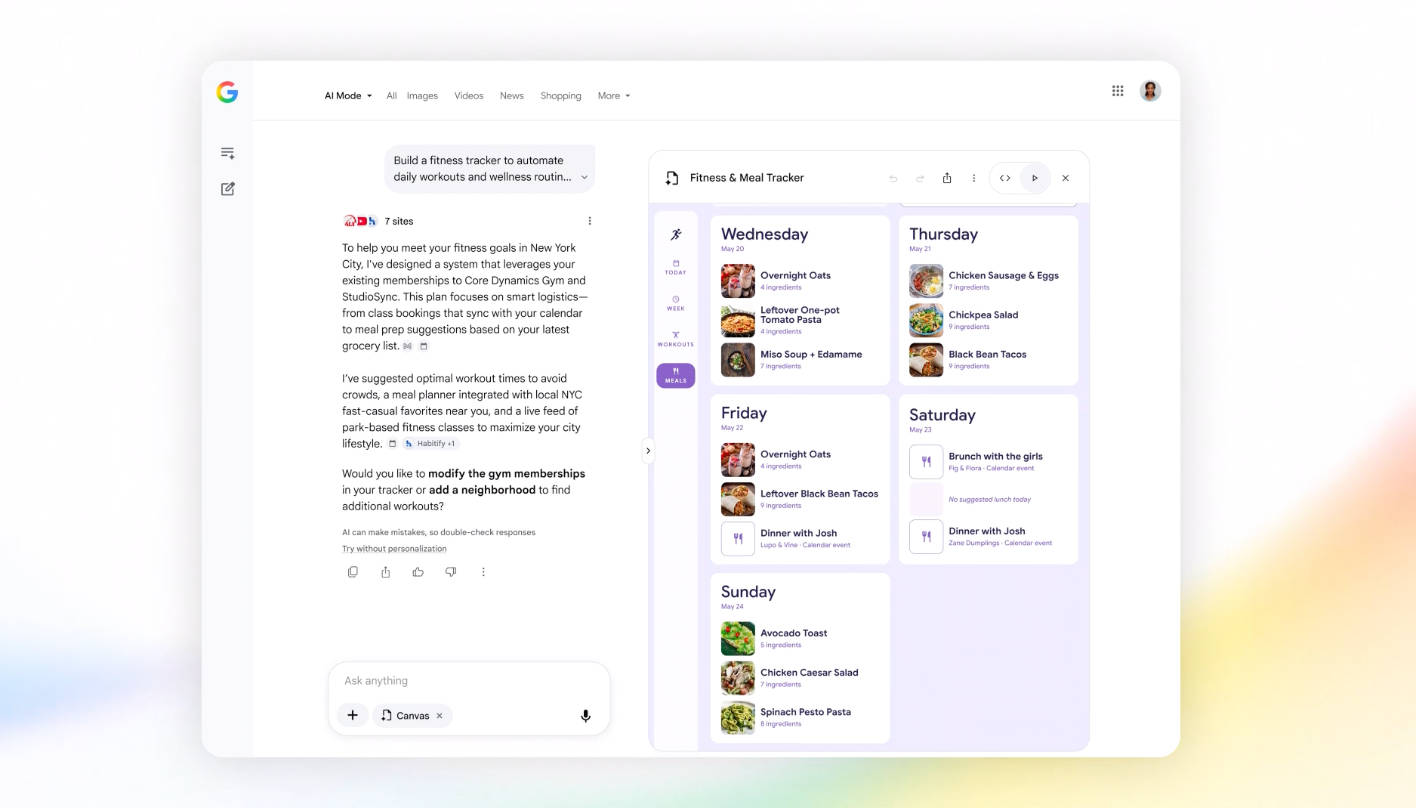
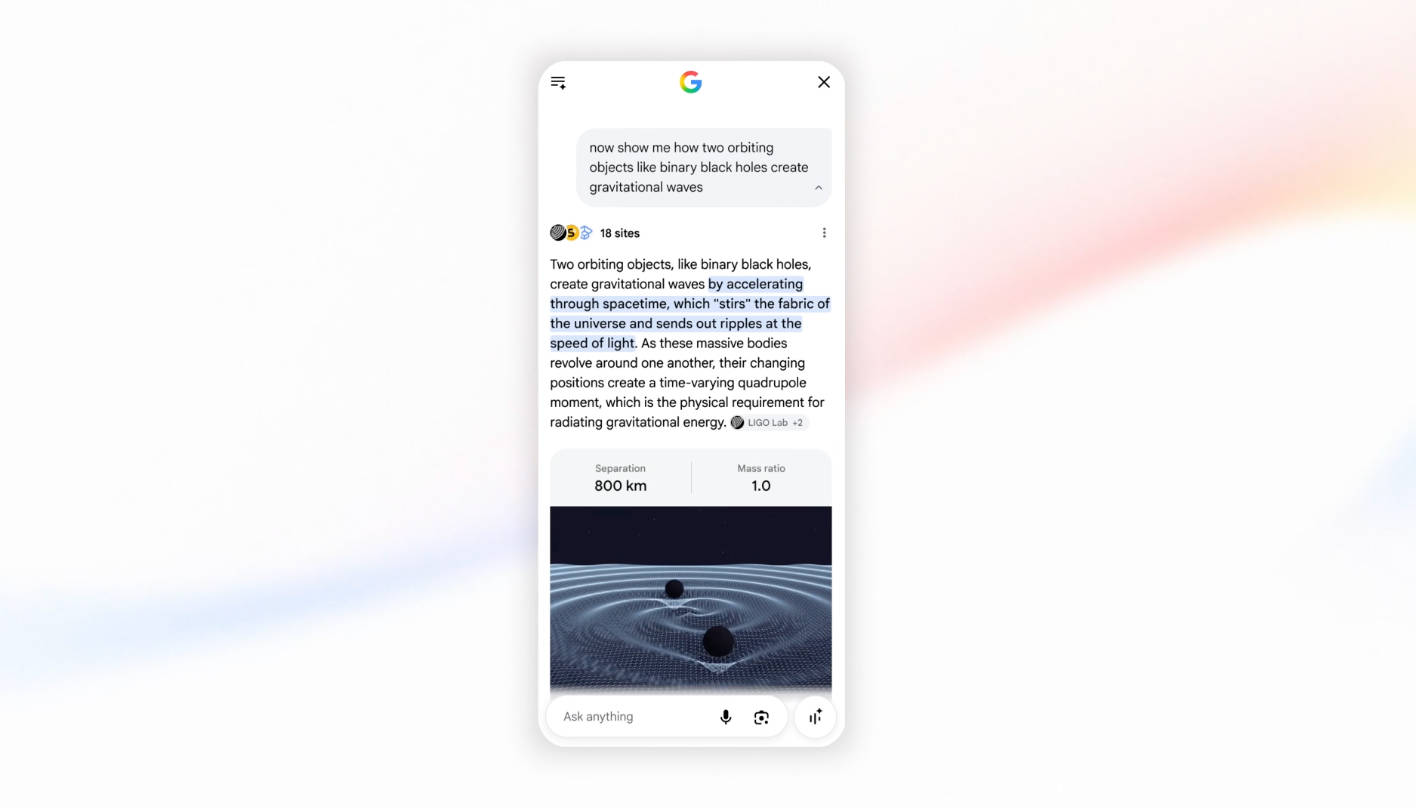
RIP app developers as well? Google is also bringing Antigravity agentic coding tool into Search, giving users the ability to vibe code and generate custom UI responses in real time. Google shares some examples of this: if you ask about astrophysics, Search might build you an interactive simulation. Ask about how a mechanical watch works, and it might assemble a visual breakdown specific to your question. These generative UI capabilities will be available to all users in Search this summer, free of charge.
Personal Intelligence expands globally
Google is also expanding Personal Intelligence in AI Mode, the ability to securely connect personal apps like Gmail and Google Photos to give Search more context about you, to nearly 200 countries across 98 languages, with no subscription required. Google Calendar support is coming soon. Google is positioning this as an opt-in feature where users retain control over what is and isn’t connected.
 What this actually means
This is a significant overhaul to Google Search, practically redefining what it means to search from today. From the sound of it, this seems to spell the end for the “10 blue links” as we know it. Google is building a version of Search that increasingly requires less active participation from users. The original model made you click through links and draw your own conclusions. AI Overviews summarised those pages for you. AI Mode turned it into a conversation. Agents take it a step further now: you set your intent once, and Search handles everything that follows, including monitoring, booking, and building tools to manage ongoing tasks.
That is a significant shift in how people relate to the web, and it raises real questions about what happens to the sites and publishers whose content these agents are consuming on users’ behalf. Google has said it is not trying to replace web links, but the practical effect of agents doing the clicking for you points in a different direction. For now, the features are rolling out gradually, with the most powerful capabilities reserved for paying subscribers. Whether the experience holds up in real-world use is something we’ll be testing as these features arrive.