IFA 2026: NVIDIA RTX Spark gets new local AI tools and gaming support with upcoming titles from Ubisoft, EA, and more


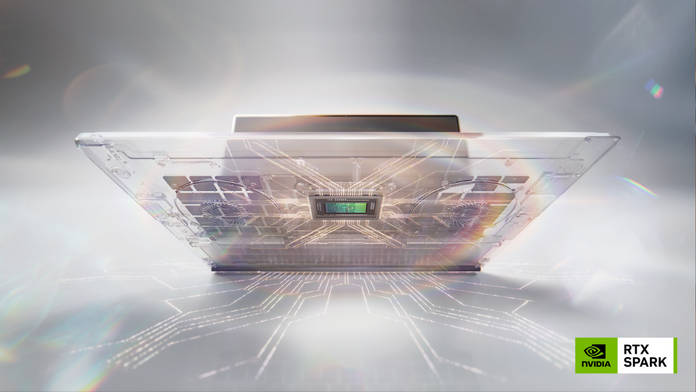
NVIDIA has announced new tools and hardware for running AI agents locally at IFA 2026, with a focus on making local AI easier to set up and use on PCs with NVIDIA hardware. The company says its new RTX Spark Windows PCs will give AI enthusiasts, developers and creators another way to run AI agents locally. Let’s look at what’s been announced in more detail below.
Table of Contents
NVIDIA Spark updates at IFA
For those unfamiliar with AI agents, the idea is essentially to move beyond a chatbot that only answers questions. A local AI agent can use tools and perform tasks on your behalf, which could be useful for things such as research, coding, content creation or repetitive work.
This approach is also helpful for small businesses that want to automate parts of their workflows while keeping their data on local hardware instead of sending everything to the cloud. NVIDIA’s Personal AI Router takes ideas forward by distributing AI workloads across compatible PCs on the same local network.
Show Full Article
For example, a more powerful desktop could handle a demanding AI task while you use your laptop for other things, giving you access to more local computing power without buying a dedicated AI machine.
There is one fairly big assumption here, though. NVIDIA’s approach seems to assume that users have other capable PCs sitting around and available whenever an AI task needs them. That might work well in a home office or enthusiast setup, but consumer PCs are often treated more like personal gadgets than always-on machines.
Most people are very unlikely to leave a desktop or laptop running all day simply so another device can use its spare computing power, especially when we account for power conservation. PAIR is therefore an alternate option rather than something most users will necessarily use all the time. For enthusiasts who already have multiple capable PCs at home, however, it could provide a way to get more out of their existing hardware without buying a completely separate AI setup.
Since August, the company has also added support for several larger open models that can run on its local hardware, including Nemotron 3.5 Lightning, Qwen models, Meta’s Muse Glimmer and DeepSeek v4 Flash. NVIDIA has also highlighted local video generation through models such as LTX 2.5 and MiniMax-H3, while optimisations for llama.cpp and vLLM can deliver up to 1.9x faster local inference.
RTX Spark beyond AI
NVIDIA RTX Spark is also being set up as more than just an AI development platform. The compact Windows PCs, which are coming from partners including Lenovo and Acer in October, are also getting support from major game developers. EA, Embark Studios and Ubisoft are among the publishers and developers bringing their games to RTX Spark, giving the platform another use beyond running AI models.
When it was first revealed, RTX Spark also looked like the latest alternative to the Apple Mac ecosystem for Windows users. NVIDIA was pitching it as a way to combine the power efficiency and compact designs associated with Arm-based PCs and Apple silicon with the gaming and creator capabilities of its RTX platform. That means users can get access to demanding workloads and features such as ray tracing and DLSS, which remain a major advantage over Apple’s Macs.
The addition of gaming support makes that idea a lot more feasible. Rather than serving mainly as a compact PC for developers and AI enthusiasts, RTX Spark could eventually handle gaming, content creation and local AI on a single machine. That gives it a much broader appeal, particularly for users who want a small Windows PC without giving up the gaming capabilities and software ecosystem that come with NVIDIA hardware.