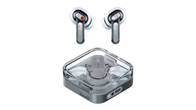
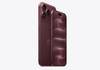
Nothing CEO Carl Pei has announced that CMF will be spun out of Nothing and become a standalone company in India. The new entity will be majority-owned by Indian shareholders and headquartered in the country, with its own team and R&D operations. Nothing, which launched CMF as its affordable sub-brand in 2023, will retain a stake and continue to work with the company as a partner.
“The move will allow CMF to build its products and engineering capabilities in India, rather than operating solely as a sub-brand under Nothing,” said Pei in an open letter titled “India Is Inevitable”. He also outlined an ambition for CMF to eventually reach 100 million smartphones annually. CMF has halted its smartphone launches for this year due to supply chain constraints and an exponential rise in component costs. However, it has expanded beyond smartphones with its TWS portfolio.
The company plans to bring its existing engineering expertise, operating system capabilities and supplier relationships to the new Indian entity, while leveraging India’s manufacturing ecosystem, talent pool and large consumer market to scale the brand. Pei sees this scale as a way for CMF to influence the wider supply chain, with suppliers developing products to its specifications rather than simply providing off-the-shelf components.
Why Carl Pei is making CMF an Indian company

Carl Pei says the decision to make CMF an independent Indian company stems from his belief that India has already established a strong manufacturing base but now needs deeper R&D and engineering capabilities. He points to his experience in China, where smartphone brands pushed suppliers to develop better components and technologies, eventually helping create a broader consumer electronics ecosystem.
Pei believes India has the manufacturing base, talent and consumer market needed to build a similar ecosystem, but lacks a global consumer electronics brand to drive demand for local engineering. CMF is being positioned as an opportunity to fill that gap.
By going local, CMF aims to revive the share of domestic brands in India’s smartphone market, which has fallen to less than 1 percent from nearly 46 percent in 2015, according to Pei. At the time, Indian brands accounted for close to half of all smartphone sales in the country, with one of them briefly becoming the best-selling smartphone brand in India, ahead of Samsung.
“Within two years, foreign brands arrived with what the domestic ones lacked: real engineering. A genuinely better phone every year, with new camera systems, tighter integration, better design. The domestic brands were licensing an off-the-shelf design, changing the back cover and adding a logo,” said Pei.
He attributed the decline of domestic device sales to the lack of original design manufacturing (ODM) and in-house research and development (R&D), despite India becoming the world’s second-largest smartphone manufacturer.
Pei believes that giving CMF greater control to Indian stakeholders will help the company build better phones and, over time, create an ecosystem around it that can strengthen India’s consumer electronics industry, similar to how China built its ecosystem and helped its brands overcome the American and Korean giants they once trailed.