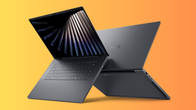


NVIDIA hosted the RTX Spark Experience in New Delhi. ASUS, Dell, HP, Lenovo, and MSI showed slim Windows laptops and compact desktops built on the new RTX Spark superchip. The chip combines an NVIDIA Blackwell RTX GPU with an NVIDIA Grace CPU. It offers up to 128GB of unified memory and up to 1 petaflop of FP4 AI performance. MediaTek worked with NVIDIA on the custom CPU design. NVIDIA is pitching the chip as a new beginning for Windows PCs, with local AI, creative work, and RTX gaming in one portable device.
Price in India
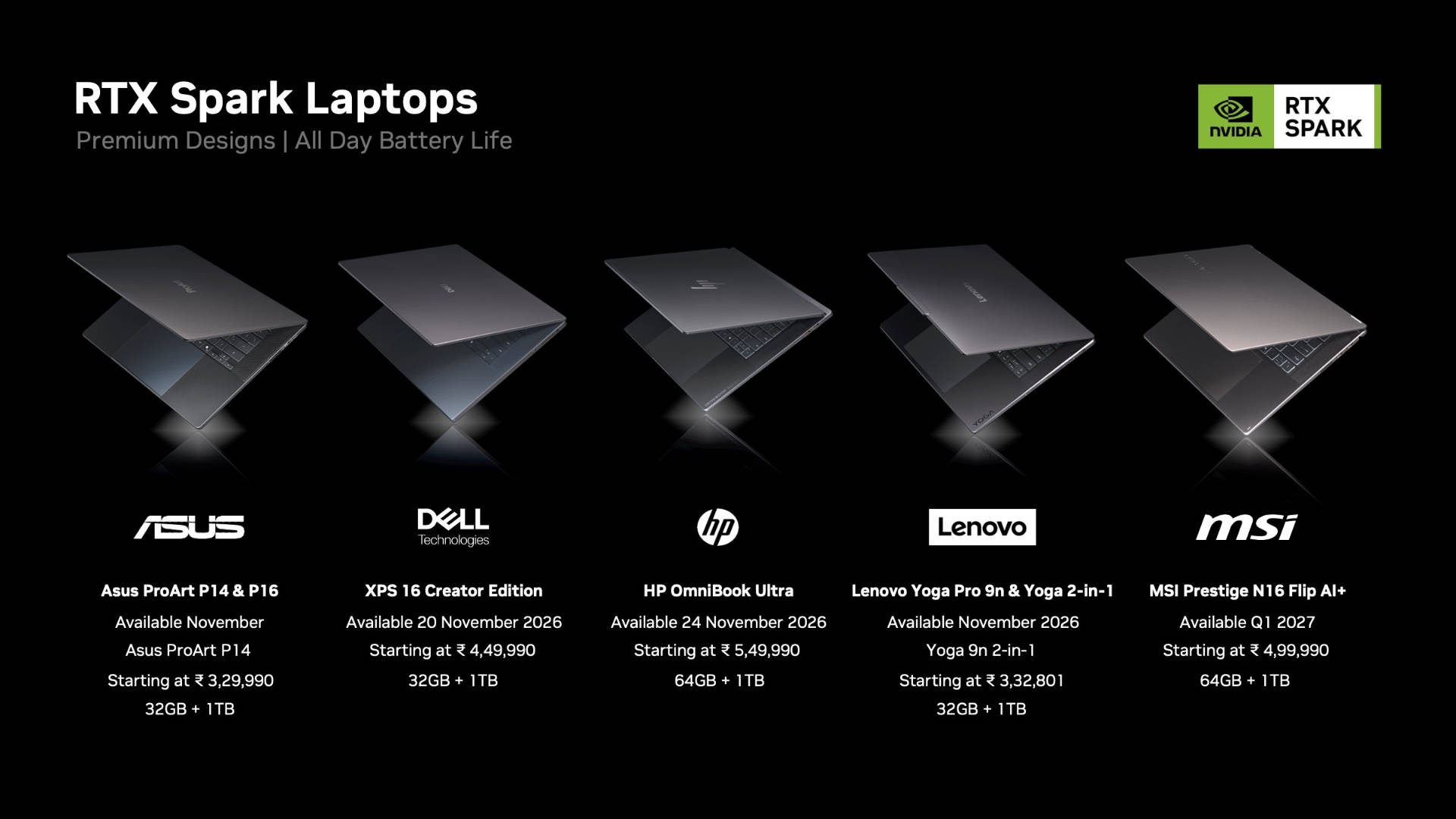
| Device | Starting price |
|---|---|
| Lenovo Yoga Pro 9n | Rs 2,99,399 |
| ASUS ProArt P14 | Rs 3,19,990 |
| Lenovo Yoga 9n 2-in-1 | Rs 3,32,801 |
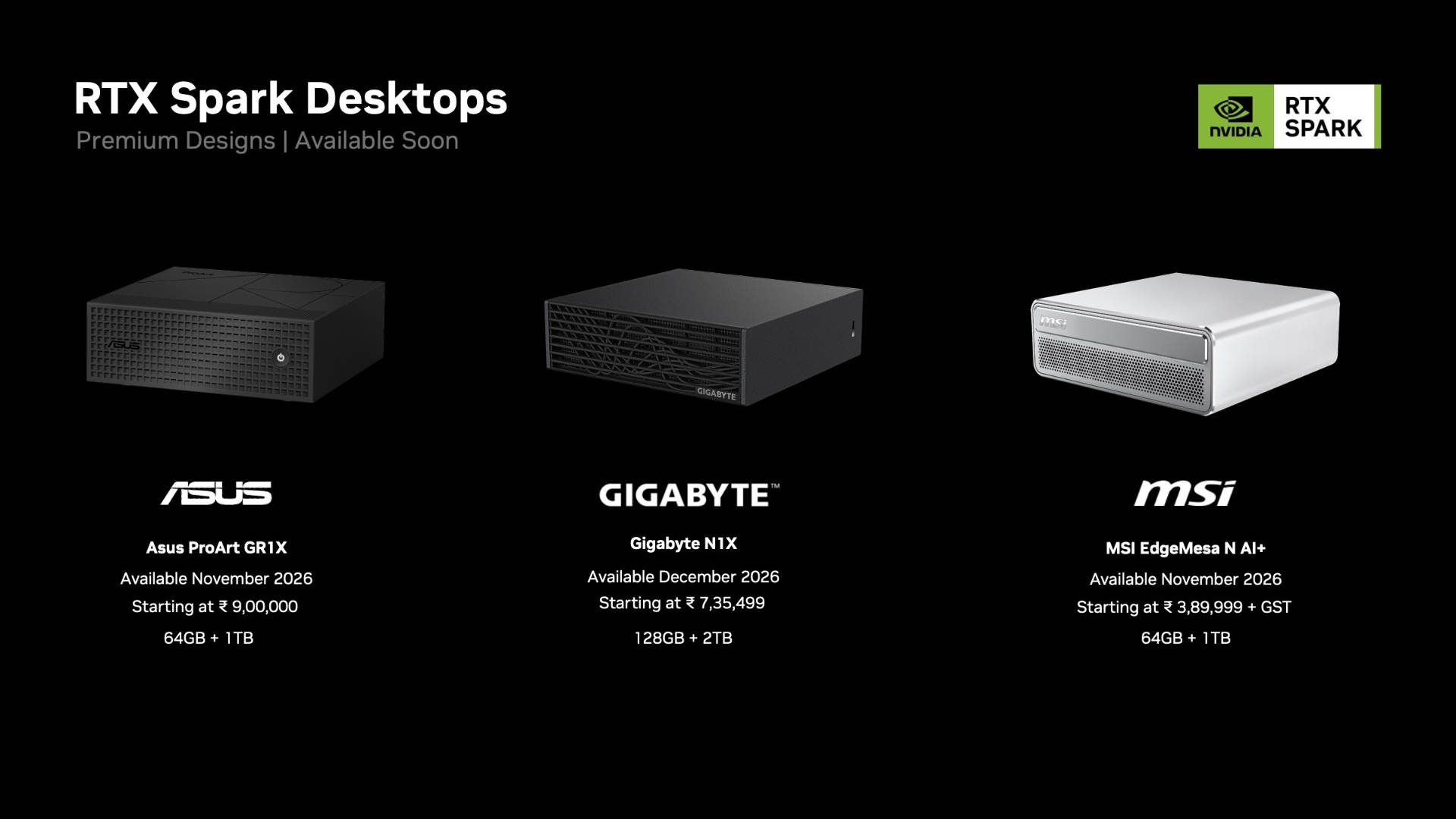
| MSI EdgeMesa N AI+ (desktop) | Rs 3,89,999 plus GST |
| Dell XPS 16 Creator Edition | Rs 4,49,990 |
| ASUS ProArt P16 | Rs 4,89,990 |
| HP OmniBook Ultra | Rs 5,49,999 |
| Gigabyte AI TOP Aero | Rs 7,35,499 (expected later in December) |
| ASUS ProArt GR1X | Rs 9,00,000 |
What RTX Spark is
The main idea is shared memory. The CPU and GPU draw from one large pool, so big AI models and heavy creative projects can supposedly run at the same time without copying data between separate memories. NVIDIA says the platform brings CUDA, DLSS, OptiX, Reflex, G-SYNC, TensorRT, and hardware-accelerated video into a thin laptop that fits in a messenger bag, with all-day battery life.
NVIDIA also says RTX Spark laptops can edit 8K 4:2:2 video and render 3D scenes of up to 90GB, even when unplugged. Specs, configurations, and pricing differ by manufacturer. The press release doesn’t give battery, display, or port details for the platform as a whole.
Local AI agents
NVIDIA’s second pitch is running AI agents on the laptop itself. Guided installers help users set up agents such as GitHub Copilot, Hermes, OpenClaw, Perplexity, Pi, and WorkBuddy without using a command line. NVIDIA’s own Nemotron 3.5 Bolt, a 74-billion-parameter model tuned for tool calling and multistep tasks, runs locally on supported configurations.
For safety, NVIDIA OpenShell and Microsoft Execution Containers let users control what agents can do. Agents can also work with tools like NVIDIA Broadcast, RTX Remix, and Omniverse libraries. For example, they can adjust stream effects or batch-process clips on the PC. A feature called NVIDIA PAIR supposedly lets an RTX Spark machine serve AI inference to other Windows, Linux, and macOS computers on a home network. That keeps those machines free for other work.
Creative software
Adobe is adding NVIDIA TensorRT acceleration to AI editing features in Photoshop, Premiere, and Substance 3D. Photoshop and Premiere have native RTX Spark support in beta at launch, and Substance is coming soon.
NVIDIA Broadcast 2.3 can supposedly clean background noise from existing recordings and add Studio Voice mic profiles. Meanwhile, beta RTX Video features offer up to 4K super resolution and 4x frame generation. New ComfyUI nodes can turn 15fps AI-generated video into smoother 60fps footage and convert it to HDR, without per-use cloud charges.
Availability differs by maker. The Dell XPS 16 Creator Edition is on sale now at dellstore.com. HP opens pre-bookings for the OmniBook Ultra, with configurations up to 128GB, on November 24 through HP.com. Gigabyte expects the AI TOP Aero later in December. The release doesn’t say when the other models go on sale, or which memory size each starting price covers.
What the partners said
Dell highlighted the XPS 16 Creator Edition’s 17.8mm chassis, 3.2K tandem OLED display, and full CUDA stack for local AI development. ASUS pointed to the ProArt range for local agentic AI with greater privacy and no need for cloud connectivity. Lenovo, HP, and MSI each stressed on-device AI for creators and developers. MSI is also pairing its Prestige N16 Flip AI+ laptop with the EdgeMesa N AI+ desktop.
With that said, RTX Spark enters a field where large unified memory has become the main selling point for local AI. Apple has built the MacBook Pro’s pitch on shared memory for years. AMD’s Ryzen AI Max+ 395 offers up to 128GB of unified memory and runs models of up to about 200 billion parameters on the Ryzen AI Halo. Its Max PRO 400 series goes up to 192GB. Qualcomm’s Snapdragon X2 Elite chips top out at much lower memory and NPU figures, around 80 TOPS in recent ASUS laptops.
NVIDIA’s edge is the CUDA ecosystem, which most AI developers already use, plus RTX gaming and creative features. The 1 petaflop FP4 figure comes from NVIDIA itself, and NVIDIA measured it at low precision. That means you can’t directly compare it with the NPU TOPS numbers Intel, AMD, and Qualcomm use.
These are expensive laptops, mostly Rs 3 lakh and up. They suit developers, AI researchers, and professional creators who will use the memory and CUDA support every day. Buyers who mainly want Office, browsing, and light photo editing frankly don’t need this class of machine.
The Lenovo Yoga Pro 9n and ASUS ProArt P14 are the cheapest ways in, though you should check how much memory the starting price includes. Cloud AI services charge per use, so local AI can pay off for heavy users. But you also need to be comfortable setting up and managing agents.
App compatibility is the biggest unknown, since Grace is an Arm-based design. Independent reviews will show how the 1 petaflop claim and the 74-billion-parameter model perform in practice.