OPPO Find X10, Find X10 Pro Max launched in India with 200MP cameras, Dimensity 9600 SoCs: price, specifications


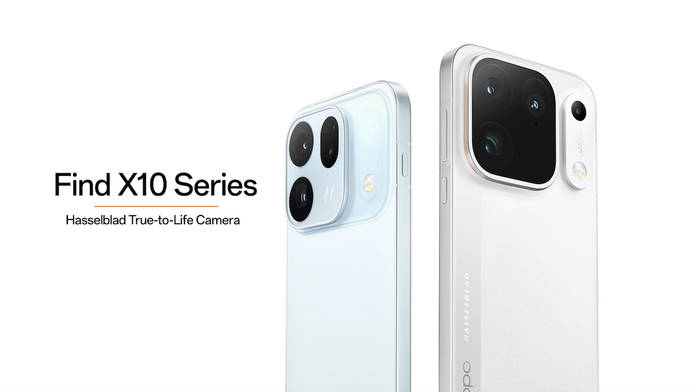
OPPO has launched the Find X10 series in India, bringing the flagship Find X10 Pro Max and the more compact Find X10. The Pro Max is built around a triple 200MP camera system and a camera-inspired design with a Hasselblad-influenced LUMO Colour Module, while the Find X10 carries a 200MP main and telephoto camera in a smaller body. Both phones share an 8,000mAh battery and a new customisable Snap Key. Here are the full details.
Table of Contents
OPPO Find X10, Find X10 Pro Max price and availability
The OPPO Find X10 starts from Rs 1,39,999 for the variant with 12GB RAM and 256GB internal storage. The 12GB + 512GB variant costs Rs 1,69,999. The Find X10 Pro Max will be available at Rs 1,99,999 for the sole 12GB + 512GB version. The phones go on sale from October 29th.
The Hasselblad Teleconverter Kit has also launched in India and will be available at Rs 24,999
Show Full Article
| Model | Configuration | Price |
| OPPO Find X10 | 12GB + 256GB | Rs 1,39,999 |
| 12GB + 512GB | Rs 1,69,999 | |
| OPPO Find X10 Pro Max | 12GB + 512GB | Rs 1,99,999 |
OPPO Find X10 series specifications and features
Design
The Find X10 Pro Max comes in Luna White and Titanium Grey. The Luna White version has the more distinctive look: a matte silver LUMO Color Module that houses the True Color Camera and dual flash, surrounded by knurled detailing inspired by professional cameras and a matte orange accent ring that OPPO says is a Hasselblad signature. The back panel combines smooth matte glass with a subtle fabric-inspired pattern. The Titanium Grey version is more understated, with sculpted-glass detailing around the camera module.


The Find X10 has a sculpted-glass camera module and comes in Glacier Blue, Glow Coral, and Mist Grey. Both phones have an aluminium frame with flat sides, a velvet-textured glass back, OPPO Crystal Shield Glass, and IP66, IP68, and IP69 ratings. The Pro Max is about 8.40mm thick and weighs around 233g (Luna White) or 235g (Titanium Grey), while the Find X10 is about 8.35mm thick and weighs around 216g.
A customisable Snap Key sits on the left side of the frame. It can launch AI Mind Space, or be assigned to functions such as sound and vibration controls, the camera, flashlight, voice recording, translation, and screenshots.
Display
The Find X10 Pro Max has a 6.78-inch flat display with a 2772×1278 pixel resolution and symmetrical 1.15mm bezels, while the Find X10 gets a smaller 6.59-inch flat display with a 2768×1278 resolution and 0.99mm bezels. Both are LTPO panels with adaptive refresh rates from 1Hz to 120Hz, going up to 144Hz in supported games.
OPPO claims up to 2,000 nits of global peak brightness and 3,600 nits of local peak brightness, along with 95 percent BT.2020 colour gamut coverage. The displays can dim down to 1 nit and use 3,840Hz PWM dimming to reduce flicker at low brightness.
Performance and software
The Find X10 Pro Max is the first smartphone in India to launch with the MediaTek Dimensity 9600 Pro, a 2nm chipset that consists of two C2-Ultra cores with clock speeds up to 4.55GHz and three C2-Pro big cores at 4.35GHz, and three C2-Pro big cores at 3.1GHz, delivering up to 17% higher single-core and 15% higher multi-core performance over the previous generation. The base Find X10 is powered by the Dimensity 9600M.
The Pro Max comes in a single 12GB + 512GB configuration, and the Find X10 in 12GB + 256GB and 12GB + 512GB. Both use LPDDR5X RAM and UFS 4.1 storage, and run ColorOS 17. Connectivity includes Wi-Fi 7, Bluetooth 6.2, NFC, and dual SIM with eSIM support.
Cameras
The Find X10 Pro Max has three 200MP rear cameras: a main camera with an f/1.5 aperture and OIS, an ultrawide camera with an f/2.2 aperture and a 124-degree field of view, and a telephoto camera with an f/2.1 aperture, OIS, and 3x optical zoom (up to 18x digital). The Find X10 has a 200MP main camera with an f/1.6 aperture and OIS, a 200MP telephoto camera with an f/2.6 aperture, OIS, and 2.8x optical zoom, and a 50MP ultrawide camera.
Both phones also have a 3.2MP multi-spectral sensor, which is likely the True Color Camera OPPO mentions, and a 50MP front camera with autofocus. The camera app includes Hasselblad Hi-Res and Hasselblad Teleconverter modes. For video, both phones support 8K recording at 30fps and 4K at up to 120fps, including in Dolby Vision.
Battery and charging
Both phones have an 8,000mAh typical battery with 80W SUPERVOOC wired charging and 50W AIRVOOC wireless charging. The USB-C port supports USB 3.2 Gen 1. This is interesting to see considering one would have expected the bigger Pro Max model to get a bigger battery.
OPPO Find X10 series specifications at a glance
| Find X10 Pro Max | Find X10 | |
| Display | 6.78-inch LTPO, 2772 x 1272 | 6.59-inch LTPO, 2768 x 1272 |
| Chipset | MediaTek Dimensity 9600 Pro | MediaTek Dimensity 9600M |
| RAM + storage | 12GB + 512GB, 16GB + 512GB | 12GB + 256GB, 12GB + 512GB |
| Rear cameras | 200MP main, 200MP ultrawide, 200MP telephoto (3x optical) | 200MP main, 200MP telephoto (2.8x optical), 50MP ultrawide |
| Front camera | 50MP | 50MP |
| Battery | 8,000mAh | 8,000mAh |
| Charging | 80W wired, 50W wireless | 80W wired, 50W wireless |
| Weight | About 233g to 235g | About 216g |
| Colours | Luna White, Titanium Grey | Glacier Blue, Glow Coral, Mist Grey |
Which Find X10 phone should you buy?
The Find X10 Pro Max and Find X10 share more than they differ. Both have the same 8,000mAh battery, 80W wired and 50W wireless charging, a flat LTPO display with the same brightness and colour specs, IP69 protection, and a 200MP main camera and 200MP telephoto, both with OIS.
What the Pro Max adds is a bigger 6.78-inch screen, the higher-tier Dimensity 9600 Pro, a 200MP ultrawide in place of the Find X10’s 50MP one, a faster and slightly longer 3x telephoto, a 16GB RAM option, and the more distinctive Hasselblad-inspired design. For most people, that list doesn’t look like it justifies a big premium.
The Find X10 is lighter at around 216g, likely easier to use one-handed, and also comes in a 12GB + 512GB version that matches the Pro Max’s base storage, so it’s worth comparing those two like for like. The Pro Max makes sense if you shoot a lot of ultrawide, want the biggest screen, or care about the design. For most buyers looking at the Find X10 series, the base Find X10 looks like the smarter buy, at least on paper. We are currently reviewing the Pro Max model and will have more to share about that device soon, so stay tuned.