Review Summary
Expert Rating
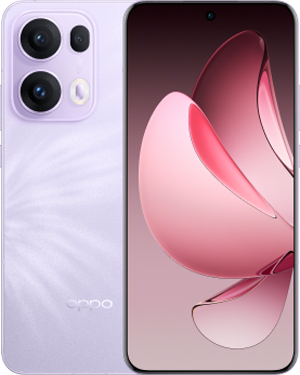
Every year, we get new Reno series smartphones from OPPO, and each time around, there is a new theme for these devices. For example, the Reno11 series focussed heavily on camera and design, while the Reno12 series aimed at offering cutting-edge AI features. With the new Reno13 series, it seems like the brand is trying to bring the best elements from its previous handsets and improve on all fronts rather than excel in just one or two departments.
If you’re wondering whether the brand’s new phones manage to do this successfully or fail to leave a unique mark, I’m here to get you these answers. I’ve now spent a week with the Reno13 Pro and here, I’ll be sharing my thoughts about everything from design and display to camera performance, gaming, and even the battery backup offered by the phone.
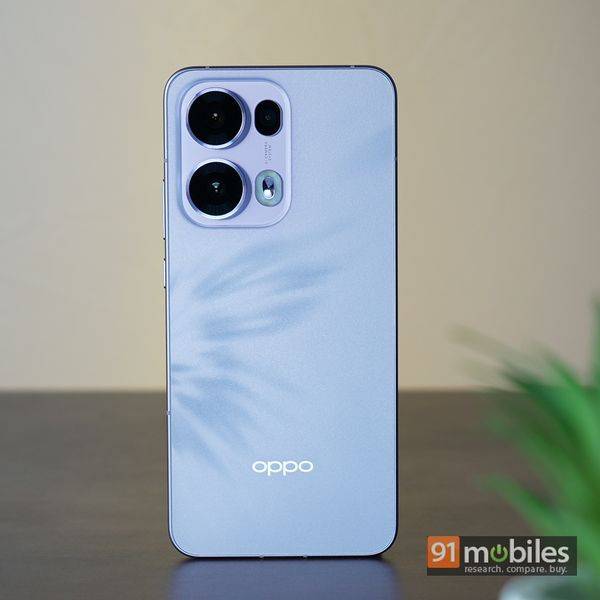
Table of Contents
Verdict
The Reno13 Pro comes with a lightweight design, a vibrant 120Hz display, and a really capable primary camera. However, the phone’s starting price is a tad bit high considering that it ships with a processor that can be outperformed by Realme GT 6, which is retailing for around Rs 10,000 cheaper. However, if you value cutting-edge AI features and share a lot of content (images, files, or even LivePhotos) with people who own iPhones, this is a good buy.
Design and display
While the Reno13 Pro is available in Graphite Grey colour as well, I received the Mist Lavender variant of the phone. The brand has described the handset’s design by saying that this variant displays “a unique butterfly effect, appearing as though butterfly wings are fluttering to life.”
To be fair, this design touch is quite subtle and can easily be missed even if you use a transparent phone case (included in the box). While some of the phones from the Reno series in past have been on the flashy side, the Reno13 Pro goes for a subtle approach.

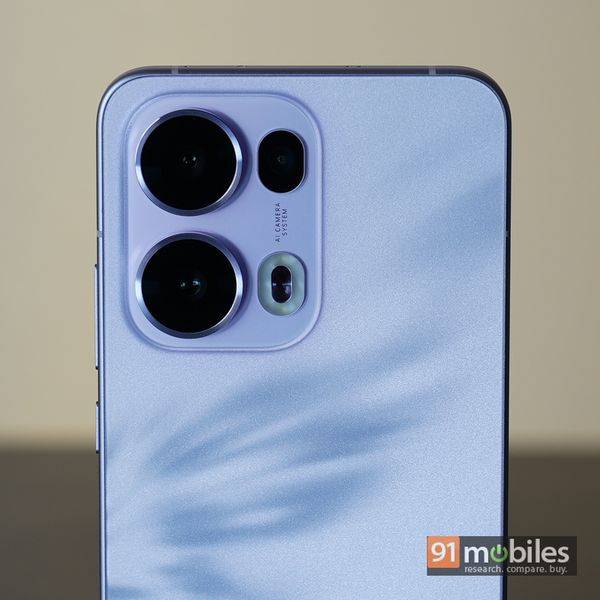
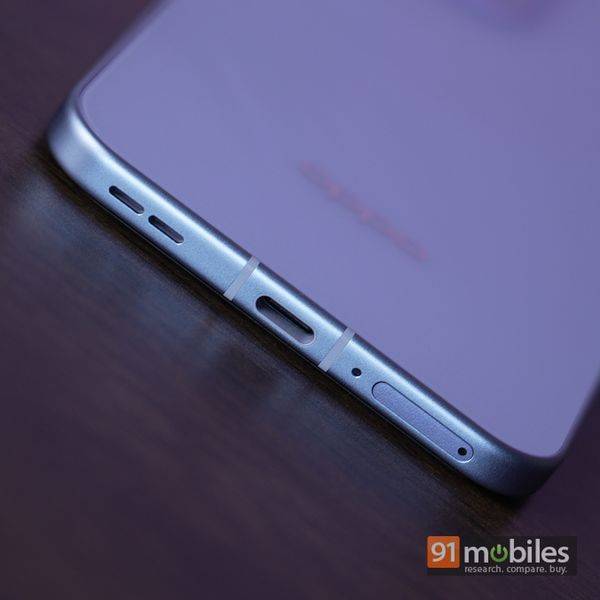
The phone’s sparkly back has a matte texture that offers a decent grip. This is one of the few handsets on the market that features a symmetrical camera island design. There are two large camera rings for the phone’s primary and telephoto camera sensors, tagged along with the pill-shaped cutouts for the LED light and the ultrawide camera. I completely understand that many people do not care about symmetry when it comes to such design elements, but to whoever took this design decision at OPPO, kudos! Having said that, the overall back design of the phone is not memorable. OPPO has done a great job at design with its past phones and the Reno13 Pro lacks the unique elements that made some of the previous phones from the series stand out from the crowd.
On the front, the bezels around the display are really thin, and they feel even thinner as the display has a subtle curve on all four sides. With a hole-punch cutout for a selfie camera, the display is as non-obtrusive as it possibly can be. The end result is in fact so good, that I ended up finding my iPhone’s bezels thick in comparison after a while.
| Smartphone | OPPO Reno13 Pro | Honor 200 | Realme GT 6 |
| Thickness | 7.6mm | 7.7mm | 8.65mm |
| Weight | 197 grams | 187 grams | 199 grams |
| IP rating | IP66, IP68, IP69 | IP65 | IP65 |
You’ll find the power button and the volume rocker on the right side of the phone and both can be accessed with the thumb easily while using the phone with one hand. The phone feels lightweight and quite slim too.


As I mentioned, the screen has a slight curve, and you get a 6.83-inch 1.5K (2,800 x 1,272 pixels) AMOLED display with a maximum refresh rate of 120Hz (can be adjusted between 60/90/120Hz) and a peak brightness of 1200 nits. Notably, the handset ships with a hardware-based low-blue-light solution certified by BOE SGS and Seamless Eye Protection Certificate, aiming to offer comfortable viewing during long sessions. Further, you get high-frequency PWM dimming at 3,840Hz (low brightness).
| Smartphones | Display size | Peak brightness |
| OPPO Reno13 Pro | 6.83-inch (AMOLED) | 1,200 nits |
| Honor 200 | 6.7-inch (AMOLED) | 4,000 nits |
| Realme GT 6 | 6.5-inch (AMOLED) | 6,000 nits |
While on paper the peak brightness doesn’t look impressive, I didn’t face any major issues using the phone outdoors. The sleek build, combined with the curved display, results in an immersive content-viewing experience on this phone – perhaps the best you can get in this price range. As this is an AMOLED panel, you get inky blacks and vibrant popping colours too.
With a high refresh rate, navigating through the UI or general browsing on this phone is a smooth experience. With the high-quality display, gaming on this phone was equally immersive. To sum it all up, the display is one of the highlight features of this phone and one of the most appealing aspects too.
Cameras
The Reno13 Pro ships with a triple camera arrangement – a 50MP Sony IMX890 sensor with OIS support and f/1.88 aperture, a 50MP JN5 telephoto sensor that provides up to 3.5x optical zoom and up to 120x digital zoom, and an 8MP ultra-wide-angle camera with a field-of-view of 115 degrees and supporting AF. For selfies, the phone comes with a 50MP JN5 sensor with f/2.0 aperture. As you can already see from the specs, the phone features a capable camera setup.
In my daily usage, I found that the primary camera is capable of clicking some brilliant shots, both in daylight and low-light conditions. The handset captures skin tones well and even in dark conditions, it doesn’t sacrifice colour accuracy. The zooming capabilities of the phone are seriously impressive but at the highest zoom level, be prepared to see some inaccurate shots. You can check out the camera samples gallery below and the phone’s comparison with Realme GT 6 and Honor 200 (popular handsets priced lower) to get a better idea about its optical capabilities.












Daylight
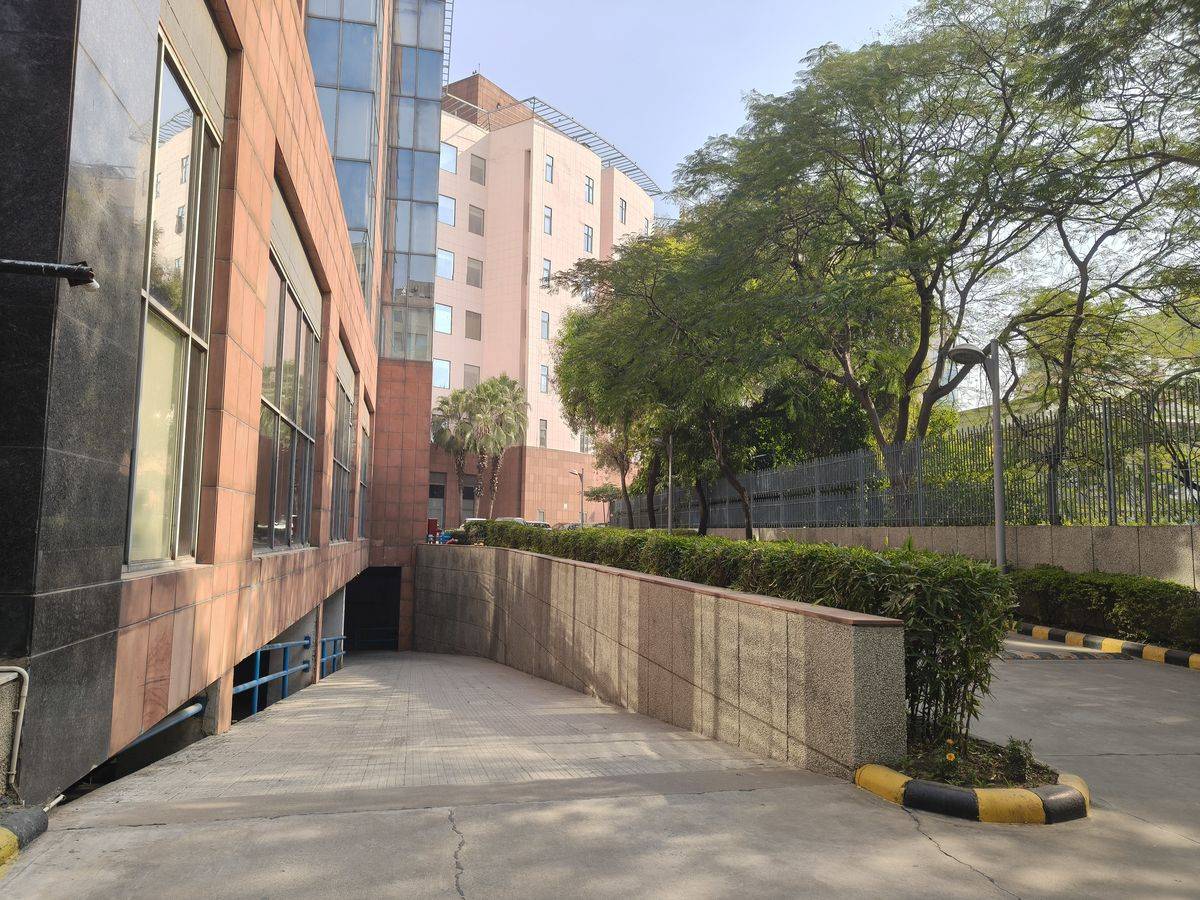
In this comparison, the image clicked by the OPPO Reno13 Pro was richer in terms of details in dark areas, while the image captured by the Realme GT 6 was clearer in the well-lit parts. In terms of colour accuracy, the OPPO handset was the better of the two.


While the image clicked with the Honor 200 looks aesthetically pleasing at first look, it lacks the details and the colour accuracy offered by the OPPO handset.

Ultra-wide
In this comparison, the image clicked by the Realme GT 6 was superior to the one clicked by the Reno13 Pro. The text written on certain boards was not readable in the case of the camera sample clicked by the OPPO handset while it could be read easily in the case of the image clicked by the GT 6, clearly showcasing the better details captured on the latter.


In this case, the image clicked by the Reno13 Pro was far better than the one clicked via Honor 200. The image clicked by the Honor handset lacked details and was extremely oversaturated.

Portrait
In terms of edge detection and colour accuracy, the Reno13 Pro had an upper hand over the Realme GT 6 in this comparison. However, the latter captured more details.


The Honor 200 struggled with edge detection and also smoothened facial details. In comparison, the Reno13 Pro produced a much better image.

Selfie
As far as selfies are concerned, the Reno13 Pro takes the best images with the front camera out of the lot. In comparison, the Realme GT 6 produced a relatively warm image, but sacrificed colour accuracy.


On the other hand, the Honor 200 produced an image with a cooler tone. However, one area where the Honor 200 shined was capturing the background. While the Reno13 Pro struggled in this department, the Honor handset captured details vividly.

Low-light
There was little doubt in this case that the Reno13 Pro produced the most colour-accurate image of the three handsets. Even in terms of details and highlights, the OPPO handset was better than the Realme GT 6.


While the Reno13 Pro was better than the Honor 200 in all the areas mentioned above, the Honor handset offered more dynamic range in the image.


Night mode
In this case, the Realme GT 6 produced a drastically better shot, which was even superior to the one clicked via the Reno13 Pro. The Night mode image clicked with the GT 6 had more detail despite a slightly warmer tone.

The image clicked via the Honor 200 was oversaturated, and again, lacked the details in comparison with the other two camera samples.

Performance and software
Fuelled by the world’s first customised version of the MediaTek Dimensity 8350 SoC, the OPPO Reno13 Pro comes with 12GB of LPPDR5X RAM and 256GB/ 512GB of UFS 3.1 storage. The 4nm chipset comes with an octa-core CPU, four A715 cores and four A510 cores, and the main frequency up to 3.35GHz. The chipset is assisted by a Hexa-core Mali G615 GPU and APU 780 AI processor.
OPPO highlights that during high-load AI processing, the new platform can perform on-device AI computing with controlled power consumption, allowing you to benefit from generative AI capabilities across even more scenarios. As per the figures shared by OPPO, the in-game power consumption is reduced by 4 percent to 15 percent, and 4K HD video shooting power consumption is reduced by 8 percent to 10 percent.
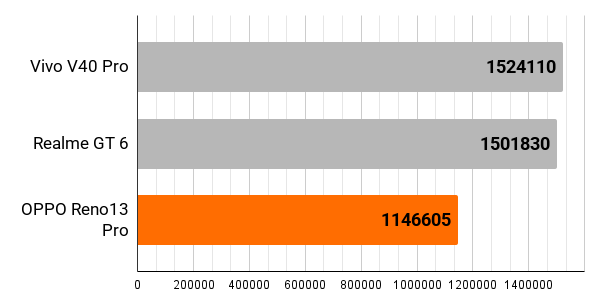
While OPPO claims that on AnTuTu, the handset crosses the 14 lakh mark, in our tests, we found the results to be a bit different. Check out how the phone fared against the Realme GT 6 and the Vivo V40 Pro on the benchmark.
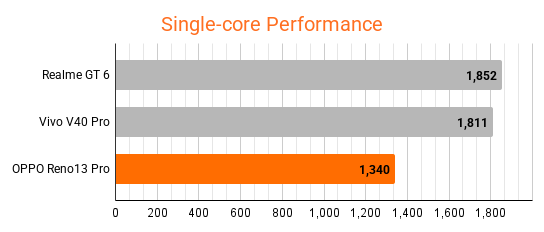
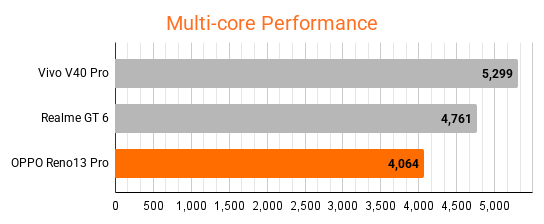
On the Geekbench benchmark, we see the same pattern. The Realme GT 6 leads the charts with its powerful Snapdragon 8s Gen 3 chipset, at least in Geekbench’s single-core test. The Vivo V40 Pro takes the top spot in the multi-core test, but the bottom line remains that OPPO Reno13 Pro’s benchmark scores average compared to its rivals.
While benchmarks help you get a general idea of the performance offered by the handsets in different use cases, it is always better to trust real-world usage experience. I found the Reno13 Pro to be a solid performer that offered consistent performance irrespective of the use case. Throughout my review, I didn’t encounter any app crashes, animation inconsistencies, or even random slowdowns, which goes to show that the phone is quite reliable.
The Reno 13 Pro runs ColorOS 15 out of the box and quite frankly, there is a lot to uncover in this platform. I’ll try not to repeat the features that this handset carries forward from its predecessor and focus on the new additions here. The main draw here is the ‘Tap-to-Share’ feature that aims to let you seamlessly transfer images and files from your OPPO phones with iPhones. Not only this, Reno13 Pro is among the fewer phones in the segment to introduce the LivePhoto feature, which works just like its iOS counterpart. You can even share these LivePhotos with iPhones. For this or sharing files with an iPhone, you can download the O+ Connect and use the Tap-to-Share feature.
Just like the previous Reno handsets, you get handy AI tools such as:
- AI Summary – Condenses articles or reports into easy-to-understand concise points.
- Screen Translator – This feature can now translate text across the entire screen or specific sections, supporting multiple languages.
- AI Writer – Provides spelling and grammar checks, and can write, rewrite, enhance, or condense content in various styles based on your input.
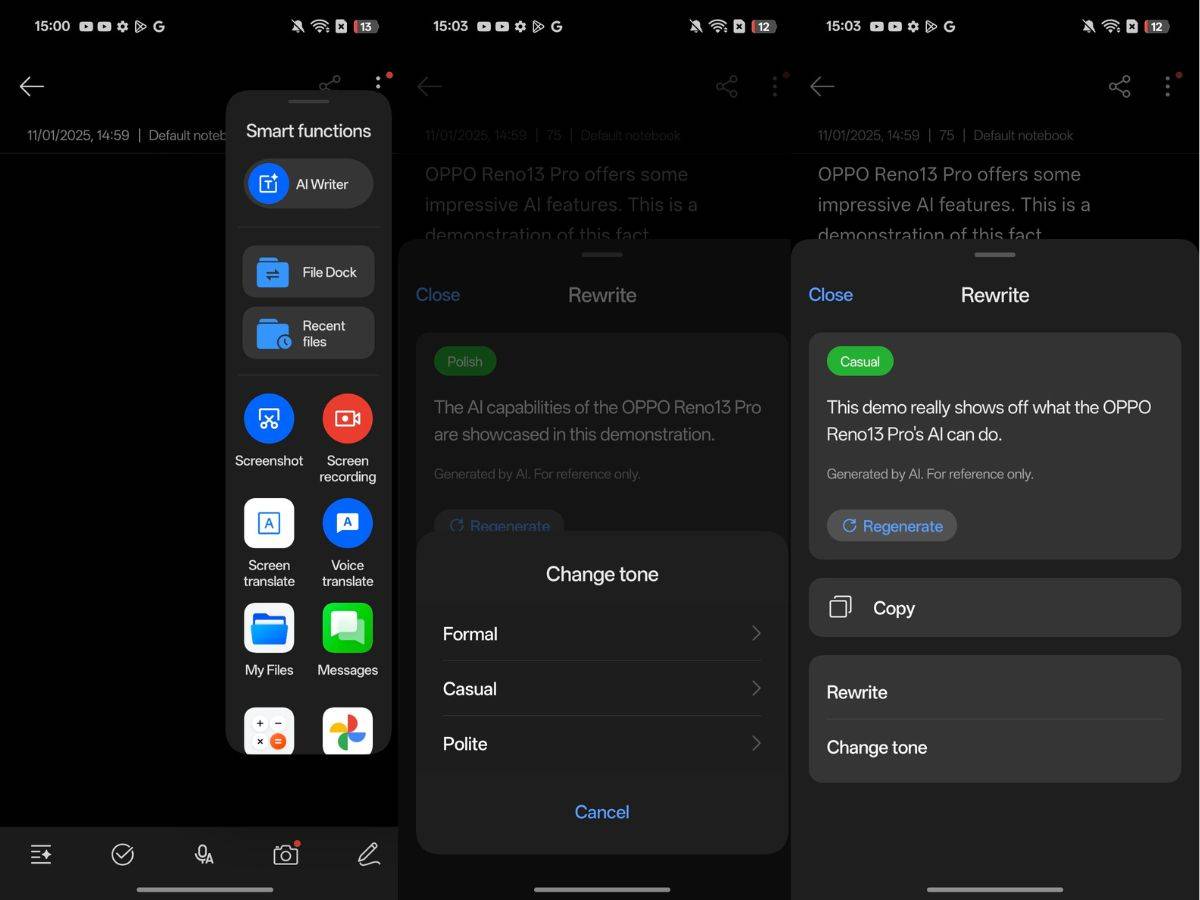
The two AI features integrated within the whole UI are Google Gemini and Circle to Search. While you can access Gemini by long pressing the power button and then asking it anything or making requests, you can use Circle to Search by long pressing either the home button or navigation bar. As you might already know, with Circle to Search, you can simply highlight anything on your screen and get an instant search on the Internet to get more information about it.
While the phone comes with a lot of pre-installed apps, many of them are first-party apps. Although I am not a fan of these many apps out of the box, the ColorOS experience in general is pretty decent. With smooth animations and some useful tools, the UI presents itself as an attractive choice. In fact, I found myself coming back to this phone to use certain features. If OPPO can somehow reduce the number of pre-installed apps here (especially third-party), it can potentially attract a lot more people to buy future Reno phones as the OS in itself is quite solid.
| Pre-installed apps | OS updates (Android + security) | |
| OPPO Reno13 Pro | 71 | 3 years + 4 years |
| Vivo V40 Pro | 50 | 3 years + 5 years |
| Realme GT 6 | 53 | 3 years + 4 years |
Battery and charging
The Reno13 Pro houses a 5,600mAh battery with 80W wired charging support. It is actually commendable that OPPO has somehow included this large battery capacity in such a slim profile. In my usage, the handset lasted around a day and a half in regular usage. In heavy use, this backup might last one day.
| Smartphones | Charging speeds | Charging time (20 to 100 percent) |
| OPPO Reno13 Pro | 80W | 40 minutes |
| Vivo V40 Pro | 80W | 37 minutes |
| Realme GT 6 | 120W | 27 minutes |
Final verdict
If we consider the OPPO Reno13 Pro in isolation, it is a solid phone. It boasts one of the best displays available on the market, along with decent cameras, a sleek design, and genuinely impressive AI features. However, isolation is the keyword here.
At its starting price of Rs 49,999, the handset comes with a less powerful processor than the Realme GT 6, which comes at a significantly lower price. Having said that, the phone does uniquely position itself by appealing to those who want an all-rounder phone that offers cutting-edge AI features and the easiest way to share files and images with iOS devices.
Editor’s rating: 7.5 / 10
Reasons to buy:
- The Reno13 Pro comes with a gorgeous 120Hz AMOLED display.
- The handset comes with some of the best AI features in the market.
- The phone offers a decent battery backup.
- The Reno13 Pro has an impressive primary camera.
Reasons to not buy:
- The phone’s pricing is too high.
- The processor could have been more powerful.