With the Snapdragon X processor, Qualcomm aims to make AI PCs more accessible. Beyond generative AI features, the new chip promises superior battery life and efficiency to new-gen Windows Copilot+ PCs from leading brands. Snapdragon X is built on the company’s Oryon CPU architecture used on the X Elite and X Plus chipsets. In this interaction with 91mobiles, Kedar Kondap, Senior Vice President of Product Management at Qualcomm shares insights into the company’s vision, its strategic push in India, and what sets Snapdragon X apart from the competition. I also enquired about the new chip’s design from a security standpoint, and app plus game compatibility.
D2: The X Series is not Qualcomm’s first entry into the Compute space. You have been trying a few things on that front. So what’s new with the series? As far as India is concerned, this is the first time we’ve seen such a major push into the compute segment from Qualcomm as a company. But in the US and other places, Qualcomm has been in the compute segment for a while. So what’s the thought process now? Why the Snapdragon X series?
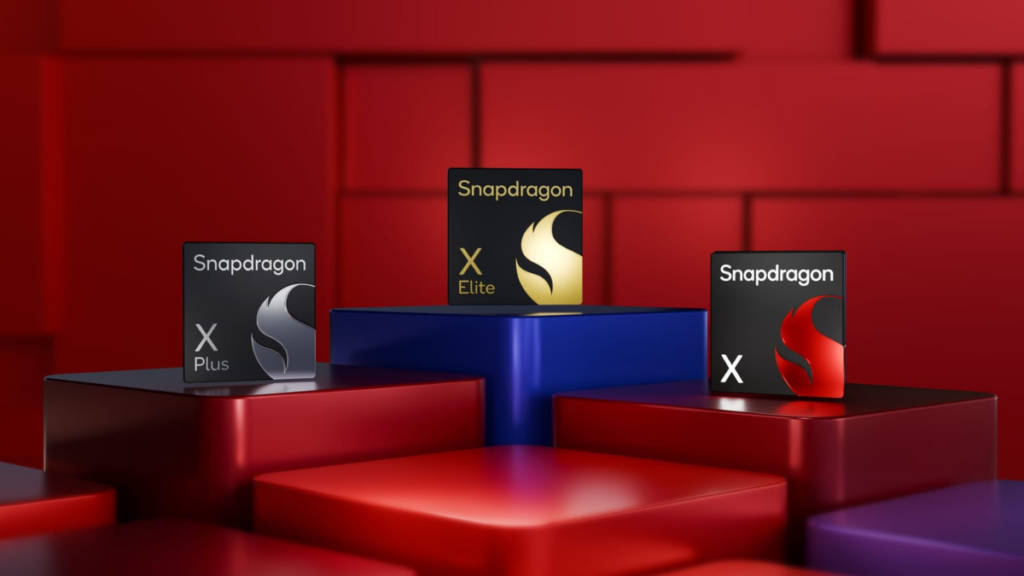
K2: Firstly, I think, from Qualcomm’s perspective, we looked at what was needed to bring excitement back into PCs. It started with the CPU, specifically with the Qualcomm Oryon CPU that we introduced in the computing segment. All of the platforms that we’ve announced: the X Elite, the X Plus, and the X — come with the Oryon CPU cores, ensuring all consumers get high-performance computing as a part of the X series.
Secondly, the number one thing that comes out as feedback on what a consumer wants in a PC is battery life. And so when you think of Snapdragon and phones, you think of premium Android experiences and incredible battery life. So we wanted to bring that same goodness into PCs.
Thirdly, we’re in a world of generative AI and the bet we took was not an overnight decision. Rather, we took it many years ago. We’ve had an NPU for more than 10 years in phones. We’ve wanted to make sure that the same NPU goodness and the heterogeneous architecture are also something we would support as a part of our PC venture.
And so for us, the biggest motivation is that consumers haven’t seen any excitement in PCs like they’ve seen in phones for the last so many years. So we wanted to bring all of our heritage in terms of the battery life experiences now with the Oryon CPU in performance and Gen AI into this space.

I think the timing for us couldn’t have been better. One is because the industry is at an inflection point. We’re just at the beginning of Gen AI, and in 2025 we see it as an inflection point as it relates to Gen AI.
In addition to that, it also is the time when Windows 10 goes end of service. So a lot of consumers from enterprises are looking to refresh their PCs this year. And so there’s a big install base that’s waiting for an upgrade. So we feel like giving them a PC that has amazing performance, battery life, and AI at different price points is the right move.
The other question you asked about was about India. One, I think the PC penetration in India is very low, it’s less than 10 percent with the push in general to have more computing accessible through the kindergarten to 12th standard. We wanted them to have an affordable PC with all of these experiences.
As it relates to technology, India is always leading the way. Indian consumers are not shy to embrace technology. Many consumers in India are using Gen AI more than anywhere else in the globe. Meanwhile, AI is evolving beyond LLMs towards multimodal, i.e., more text-to-image, videos, all of those different form factors. It impacts almost every segment. It impacts manufacturing, operation, creators, artists, and architects… you name it. There isn’t a single industry that doesn’t get impacted by it.
So we feel like it is the right time to introduce our entire spectrum of products from $600 and above with X, X Plus and X Elite in India.
D2: India is very value-oriented. I mean we’ve been known to be very price-sensitive, but I would call it being value-oriented. Snapdragon X seems to be targeting that value-conscious bias. Please elaborate.
K2: I think the point you bring up is good. I think when the consumer in India sees the value of something, they’re always willing to pay. If you think of the phone industry, consumers have shifted away in the last five years from feature phones to smartphones. Adoption has gone to more than 50 percent, I believe in India now. As the consumer starts to see the benefit, for example, they see an incredible camera that they’re able to replace their DSLRS, or they’re almost able to replace their pocket cameras with their smartphones. The consumer starts to buy up as they start to see better, depending on the use case, and what they’re able to use the phone for. They’ve all bought a better phone over the years.
We believe something very similar will happen in PCs. The reason why consumers haven’t upgraded PCs yet is because they haven’t seen an excitement in PCs that has enabled them to get the value out of what they get from the PC. I think now they’ll, as they see the fact that the Windows ecosystem with the X series platforms can bring amazing battery life, Gen AI features usable in their day-to-day to improve their productivity, and the mundane tasks can be offloaded. Simple things like the interview that you and I are doing and you know it’s going to summarise, it’s going to quickly do all of these things for you. It’s going to save all your mundane tasks are going to be handed off to Gen AI. So I think once the consumer starts to see this, they will start to buy up and they will start to refresh their PCs.
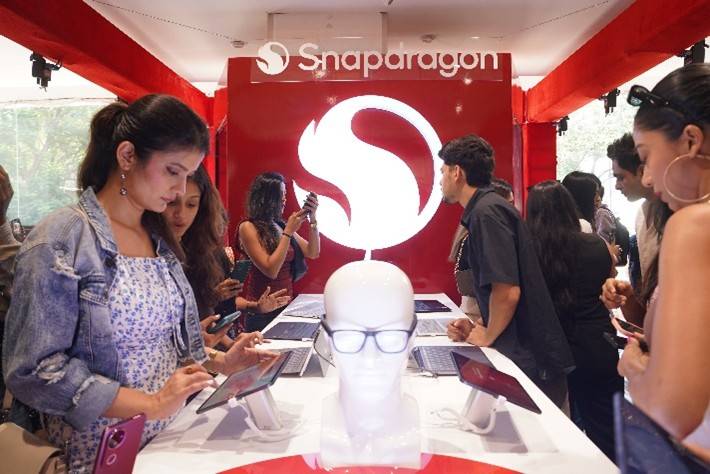
I’m going to lead this to one point which is to be able to educate the consumer here in India. That is why we’re opening the Snapdragon experience stores to communicate better to a consumer.
For consumers in India buying phones is a different route than how they buy a PC. The thought process, buyer behaviour, and whole approach are very different. And so we’re embracing that as well. So as more and more consumers are getting comfortable with buying online, which is why for example, we have a partnership with Flipkart, which has been an incredible partner for us on phones. Now they’re going to be an incredible partner for us in PCs. And so you’ll see Snapdragon stores on Flipkart where they will start to have more videos, to educate the consumer. That is because NPU today is more than a technical jargon for a consumer. It actually drives real experiences. And so you’ll see more of that.
Same thing with Croma as a retail partner, we’ll have more AI experiences that consumers will be able to go and look at before they buy a PC. So other than just looking at battery life and performance, they’ll be able to experience more of these, which is the reason why we started with the first Croma store in Mumbai. And so we’ll be expanding that rapidly.
D2: You referred to Gen AI multiple times and that’s one of the pillars of the whole lineup. You mentioned a bunch of use cases and segments as well. But, I think that a lot of users or potential buyers in India don’t know what Gen AI can do for them. What do you think are some use cases that can turn things around? And, secondly, what are you doing to build that awareness?
K2: Yeah, the use cases vary by the user in what exactly they do. So I’ll give you a few examples as they relate to what we’ve done at Qualcomm and give you a perspective on how we’re embracing it.
At Qualcomm with our IT team, we’ve embraced Code Gen with Llama that we’ve integrated and we’ve been able to give access to like 2-3 thousand, if not more engineers and we’ve already written several million lines of code through Code Gen. That helps improve efficiency significantly.
Again, if you’re into software development, you can see the benefits of integrating Visual Studio or Code Gen and get help in writing code.
Same thing if you’re an artist or a creator, you can create images with a text prompt. You can generate an image to communicate the point you’re trying to make.
Or if you’re into manufacturing and operations, you’re able to find if your production line’s down, you’re able to find exactly what the challenge is and have Gen AI quickly debug that for you.
So it varies depending on the use case, which is why I think with the experiences in the stores, we will have a lot of these demos on the devices.
We’re also making sure that the retail teams understand that as well. We’re training all of the retail staff so they understand exactly the benefits of what they’re able to get with Snapdragon versus our competitors.
And you’ll see more of these use cases as they’re evolving rapidly. So we’ll be having the in-store experience, not just the tables but also what’s running on the devices will change quite a bit.
D2: What about concerns regarding app compatibility and emulation? Is there anything a potential buyer should keep in mind?
K2: I think Microsoft has done a fantastic job with Prism.
Second, if you see the blog that Microsoft recently published with all the telemetry data, 93 percent of the apps that consumers are using on these devices are already native. So I think it isn’t a concern. Consumers should be able to get the task they want and we’ve been able to address that.
The number of apps that are being ported natively is also increasing rapidly. In addition to that, some apps are running natively and taking advantage of the NPU. So you see a lot of the benefits that apps can take with the heterogeneous computing architecture that we have. Overall I’d say we’re making huge progress. The app compiler, I don’t think is a challenge at this point for consumers.
D2: What about games?
K2: We have already talked about more than 1200-1300 games being run on Snapdragon and the performance is running well. There are many titles like Control that are running on Snapdragon. You’ll hear some more announcements from us later in the year. There’s some exciting stuff happening in gaming.
So I think overall, you’ll see unless you’re a high-end gamer, most casual games run well on Snapdragon.
D2: Is Qualcomm working with game developers and even software developers to improve the situation?
K2: At this year’s Summit, Epic Games’ Tim Sweeney talked about the work we’re doing with them. We already work with them on the phone side. So it’s just making sure that we’re putting that to the PC ecosystem and driving that again.
So you should expect very deep engagements with the gaming team right now.
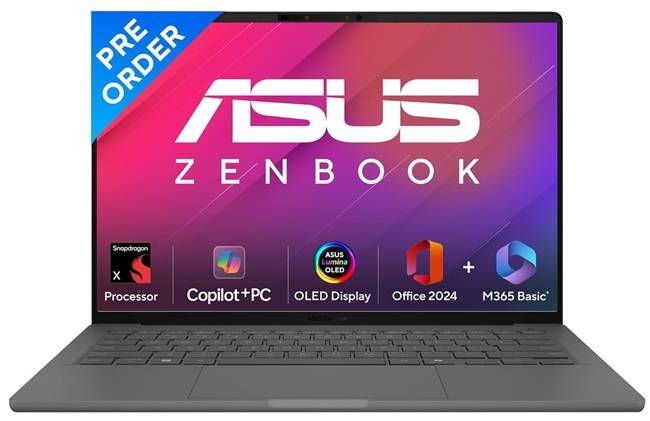
D2: ASUS is the first partner in India to launch a Snapdragon X product. Any details on how the partnership with OEMs will play out?
K2: Yeah, I think the partnership with OEMs has been very strong. Major brands like Dell, Lenovo, HP, ASUS and Acer have launched. They are super excited across the X, X Plus and X Elite. We’ve said publicly we’ve got more than 80 designs in development and are set for launch.
So overall traction is very, very strong.
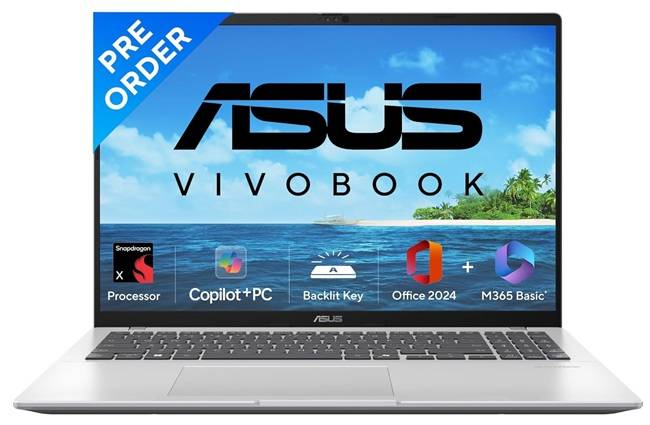
D2: As a relatively new player, how do you plan on competing against established players like Intel and AMD, which you know have been there for a while?
K2: I don’t think competition has been able to keep up, which is why I think consumers getting excited, right? As I said before regarding battery life, I think the x86 ecosystem hasn’t been able to keep up with and bring excitement to PCs for many, many years. So I think we’re pretty excited about what we’re able to offer now.
Second, the consumer in India is very well aware of Snapdragon in phones. And when they think of Snapdragon in phones, they think of a premium Android phone. They think of getting the best experiences, good battery life, all of that stuff. And we want to be able to build that same trust and association from phones to PCs and other devices too.
Like for example, the Croma store isn’t just for phones. We also have X Elite devices. So we’ll build on that partnership quite a bit. I think our intent is clear. We want to make sure that consumers feel very comfortable and say, “oh, I know the brand”. It’s something that’s premium. We want to be able to have that exact same association with PCs. And that’s exactly what we’re doing, whether it’s with the Flipkart partnership, the Croma partnership or even other retailers. It’s not like we’re limited to these two… devices are also available in many of the other stores like Reliance Digital, Amazon, and others.
D2: AI has a negative side to it and I know Qualcomm is doing a lot of work in the responsible AI segment, So what has the progress been in the last few months? From a consumer standpoint, is there any concern that they need to know about AI being misused?
K2: From a security standpoint, we’re supporting Microsoft Pluton and other security stuff. There’s also the benefit of having on-device AI in terms of personalisation, the emotional connection with the PC and the consumer can understand the PC better, and the PC can understand the consumer better. I think once they start getting this emotional engagement, it will build more of an engagement between the PC and the user.