The Samsung Galaxy Z Fold7 is one small step for foldables, a big leap for smartphones


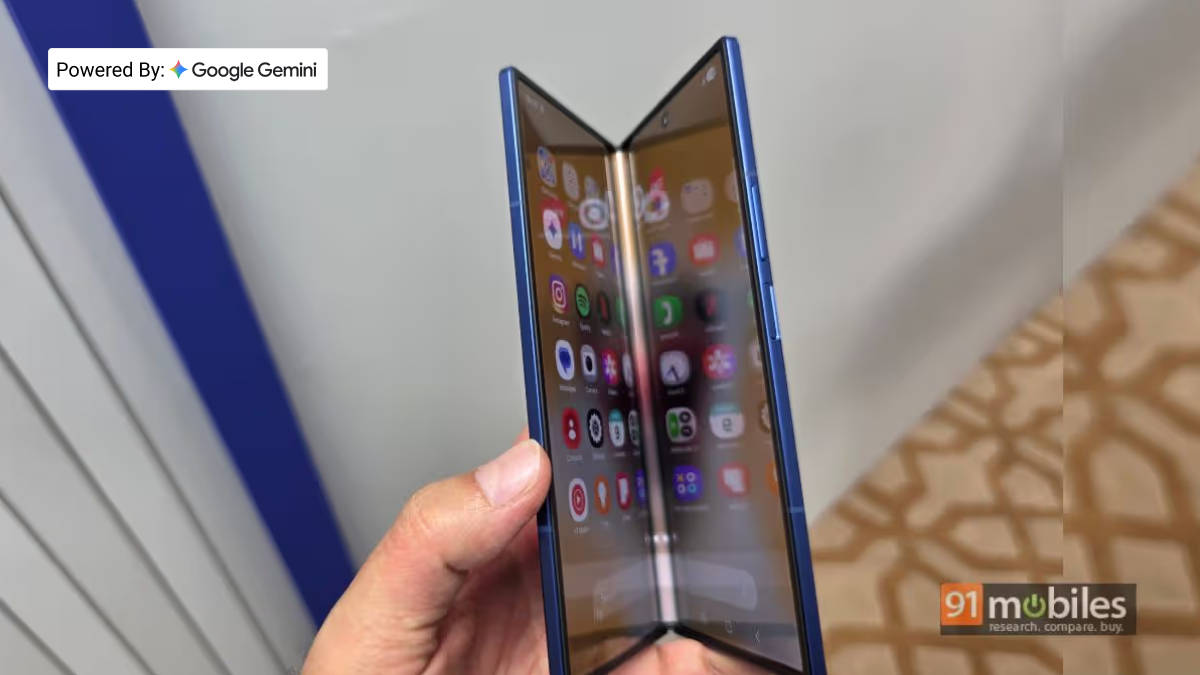
Book-style foldables are great for productivity, but if you ask me to spend my own, hard-earned money on one, I’d probably think long and hard. Sure, cost could be one consideration, but one of the biggest pain points I associate with these phones that are still innovative, exciting and drool-worthy (despite being around for a while), is the bulk. Let’s face it… It’s easier to carry a conventional phone than a book-style foldable, mainly because these things are thick, heavy, and unwieldy. Not the new Galaxy Z Fold7.


In one fell swoop, Samsung seems to have taken care of most of those pain points, and come up with a device that really promises to be the best of both worlds — a tablet for productivity when open, and a conventional bar phone when folded.
It’s not as if there aren’t other thin and light foldables, but access to Samsung’s ecosystem and Galaxy AI features, combined with the improvements in build quality, makes the new device quite enticing… the whole is greater than the sum of the parts. Allow me to elaborate.

On a basic level, a comparison with its predecessor, the Z Fold6, is enough to understand what I’m talking about. And when you throw a regular bar phone (Samsung’s own Galaxy S25 Ultra), into the comparison, you’d see that there are serious upgrades the new foldable brings in terms of the design. The Galaxy S25 Ultra weighs 218 grams and the Z Fold6 weighs 239 grams. In comparison, the new Z Fold7 tips the scales at 215 grams. The Z Fold6 was 12.1mm thick when folded, and 5.6mm when unfolded. The new phone is a mere 8.9mm thick when folded, and a mind-boggling 4.2mm thick when unfolded.

These changes mean the new fold is pretty much like a regular phone when folded, both in terms of thickness and weight. Samsung has even made the aspect ratio of the cover display wider than before (21:9), taking it closer to a conventional phone. And when opened, you can feast your eyes on the large screen which is great for reading, consuming content, managing work docs and emails, and more. That said, the new slim design means one feature has gotten the axe — the S Pen support. As per Samsung, S Pen support needs an additional digitiser layer on the display, so it has chosen slimness over stylus support.

The build quality hasn’t been compromised in making the device so svelte either. The display is tougher thanks to the thicker Ultra-Thin glass, advanced Armor Aluminum in the frame and hinge, and a layer of Corning Gorilla Glass Ceramic 2 on the cover display. The IP48 dust and water resistance continues, though I do wish this had been bumped up a bit. Ditto for the charging speed, which remains at 25W. The 4,400mAh battery, despite being at the same rating as the predecessor, is appreciated since the new phone is much slimmer, so the Samsung engineers do seem to have worked hard to ensure the battery capacity wasn’t compromised. Plus, the latest SoC from Qualcomm along with the optimised software platform should be more efficient in terms of power consumption.

Speaking of engineering, they’ve even crammed in a 200MP primary camera, taking the photography capabilities close to the Galaxy S25 Ultra. This is another point that’s very noteworthy, considering that photography wasn’t really one of the strengths of the Z Fold6. Both the cover display and the main screen of the Z Fold7 are larger than the previous-gen model (6.5-inch and 8-inch, respectively), with the main screen boasting support for HDR10+ and 2,600 nits peak brightness. On the number-crunching abilities, Qualcomm’s Snapdragon 8 Elite for Galaxy is the SoC powering the handset. Apart from the performance boosts, plus other performance and connectivity aspects, the SoC also drives Samsung’s Galaxy AI features on the Galaxy Z Fold7 — Photo Assist, Generative Edit, Portrait Studio, Audio Eraser, and more, which have all received enhancements. A new feature called Suggest Erases automatically detects photo bombers and suggests their elimination from your snaps.

On the software front, the Z Fold7 is the first from Samsung to run Android 16 out of the box, and combined with One UI 8 and Galaxy AI, looks promising at first glance. Samsung says the Galaxy AI is now optimised for large screens, and offers more functionality, displaying AI results in a separate split screen view and enhancing drag and drop capabilities in the Multi Window mode. I’m looking forward to trying all of these out, since hardware alone can’t tell the whole story.

Foldable smartphones, since the time they came in, have been touted as the future. That was a while ago, and a lot of water has flown under the bridge since then. These devices have matured, improved significantly in terms of aspects like build quality, durability and reliability, and evolved into devices that can finally deliver on the promises made and the overall usage experience that’s not compromised in any way. The Galaxy Z Fold7 is a pricey device, sure (Rs 1,74,999 for the base model)… but that doesn’t come as a surprise given its premium flagship positioning. For me personally, the Z Fold7 is a foldable that’s making me excited after a long time, and that’s because I finally see a foldable I can use as daily driver without experiencing any of the pain points I’ve encountered with its predecessors. And in the process, finally take benefit of all the goodness it promises — better productivity, capable cameras, AI features, and more — all in a single device that’s a tablet when I want it to be, but more importantly, a normal, regular phone when I want just that. Nothing more, nothing less.