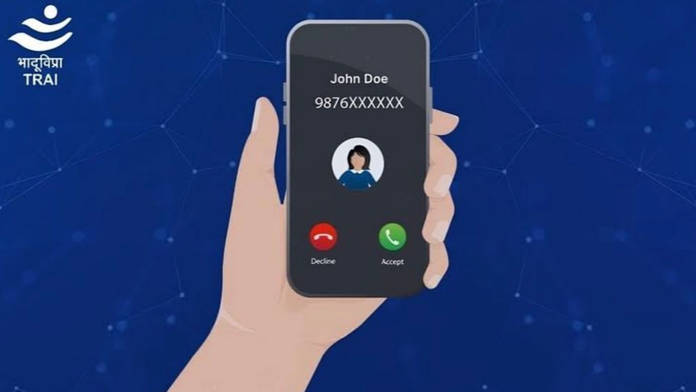
The Telecom Regulatory Authority of India (TRAI) has begun rolling out Calling Name Presentation, or CNAP, a feature that shows a verified name with every incoming phone call. After clearing the framework in October 2025, the regulator started live testing the service last month, and it is now gradually being made available across networks. Wider availability is expected over the coming months, with all users likely to see CNAP live on their phones by March or April 2026.
The idea behind CNAP is to curb the rising number of tele-calling scams. Because of spam, scam attempts, and callers pretending to be banks or government officials, most people no longer answer unknown numbers at all. TRAI believes that putting a verified name on the screen will help people.
What sets CNAP apart from existing caller ID solutions is where the information comes from. Instead of relying on third-party apps or crowd-sourced labels, CNAP pulls names directly from telecom operators’ KYC-verified databases. These records are created when users take a SIM using officially approved identity documents, including Aadhaar. In other words, the name that appears during a call is meant to be the one legally associated with that number, not something guessed or tagged by other users.
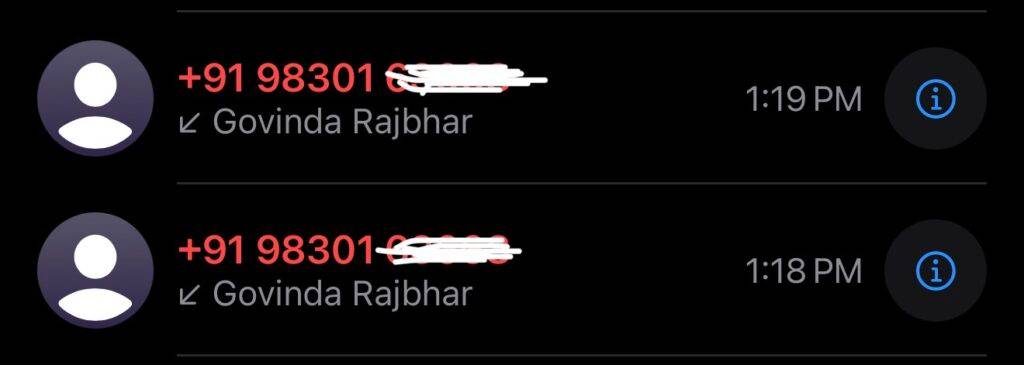
Telecom companies began testing CNAP across select networks last month to see how it performs in real-world conditions. The rollout is being done in phases, starting with 4G and 5G users, while older network technologies will be added later. TRAI has also asked smartphone makers to ensure their devices support CNAP within six months of the launch.
With the gradual rollout, reactions online have been mixed. On platforms like Reddit, some users have welcomed CNAP as a long-overdue move to tackle scam calls. Others are taken more cautious, pointing out that showing verified names by default could reduce anonymity in situations where it actually might be required. Data accuracy is another concern. Users have questioned how quickly telecom operators will fix outdated or incorrect names in KYC records once CNAP is widely live. For users concerned about privacy, there was the existing CLIR (Calling Line Identification Restriction) option that could disable your caller ID. We tried disabling it on an iPhone running an Airtel SIM but it seems the carrier had restricted it. We’re not sure if it would work on other phones too.
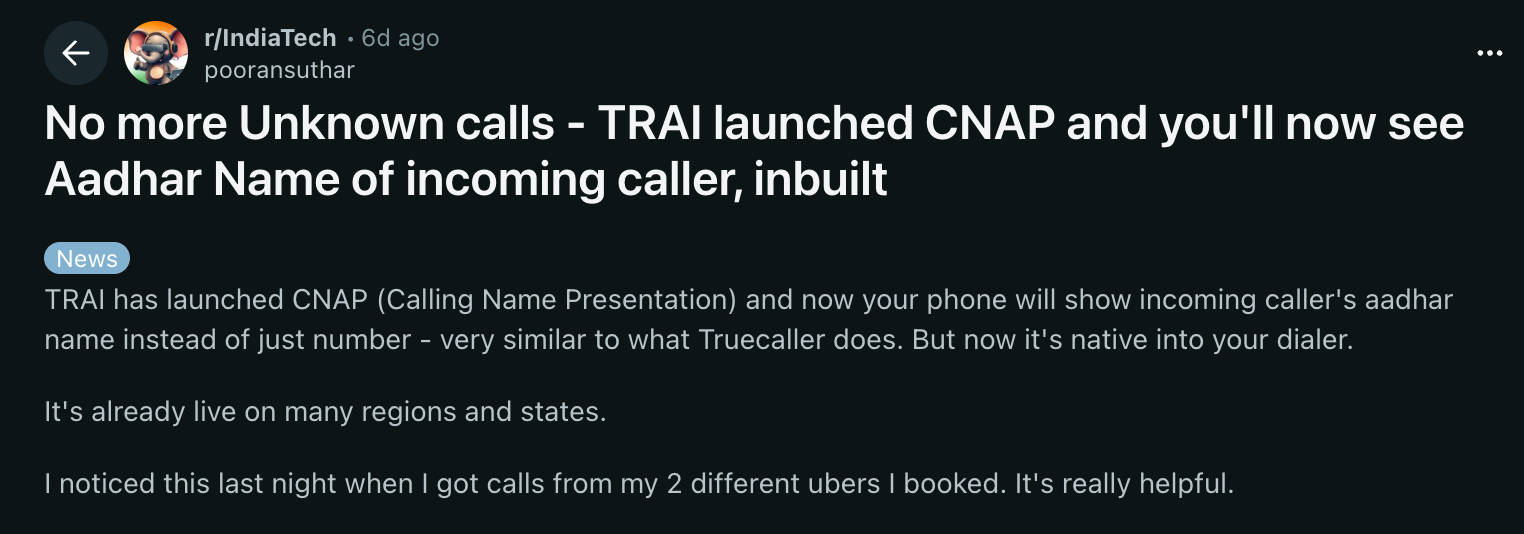
CNAP is also being compared to Truecaller, which is already popular in India, but the difference largely comes down to control. Truecaller relies on user submissions and crowdsourced names, which can sometimes be misleading. CNAP, by contrast, is built into the network itself and doesn’t require an app, making impersonation harder but leaving users with fewer customisation options.
TRAI has said access to the KYC data used for CNAP will be tightly controlled and logged, and used only for caller identification. If the rollout goes as planned, the system could make scam calls less effective and bring some much-needed clarity back to voice calling. Whether it strikes the right balance between transparency and privacy will become clearer as more users start seeing names appear on their screens in the months ahead.