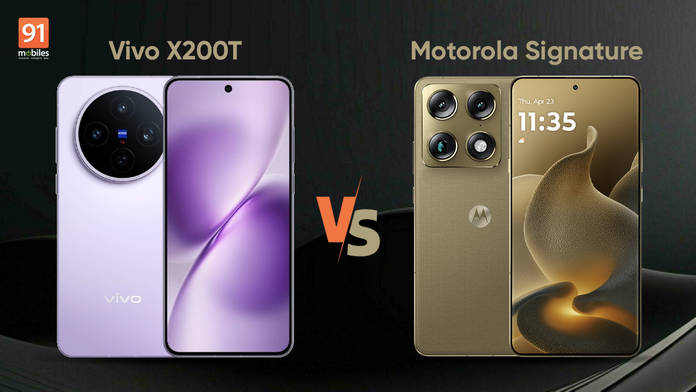
Vivo X200T launched in India today as the brand’s first ‘T’ model in the flagship lineup. It sits between Vivo’s new flagship X300 lineup and the outgoing X200 series. The smartphone also serves as a good buffer between the compact Vivo X200 FE and the flagship X200, for those who want something from both phones. With a starting price of RS 59,999, the Vivo X200T competes directly with the Motorola Signature.
To get a better idea of the two phones and how they stack up against each other, we’ve compared the Vivo X200T against the Motorola Signature.
Table of Contents
Price
The Vivo X200T and Motorola Signature start at Rs 59,999 for the base model with 12GB RAM + 256GB storage. This means you’re paying the same for both phones, at least for the base variant. The Vivo X200T comes in another variant with 12GB RAM and 256GB storage, but this one’s priced much higher at Rs 69,999.
With the Motorola Signature, you get more RAM at a lower price. The 16GB + 512GB variant is available at Rs 64,999, while the 16GB + 1TB retails at Rs 69,999.
Here’s a table with all their prices.
| Variant | Vivo X200T price | Motorola Signature price |
| 12GB + 256GB | Rs 59,999 | Rs 59,999 |
| 12GB + 512GB | Rs 69,999 | NA |
| 16GB + 512GB | NA | Rs 64,999 |
| 16GB + 1TB | NA | Rs 69,999 |
Design, display
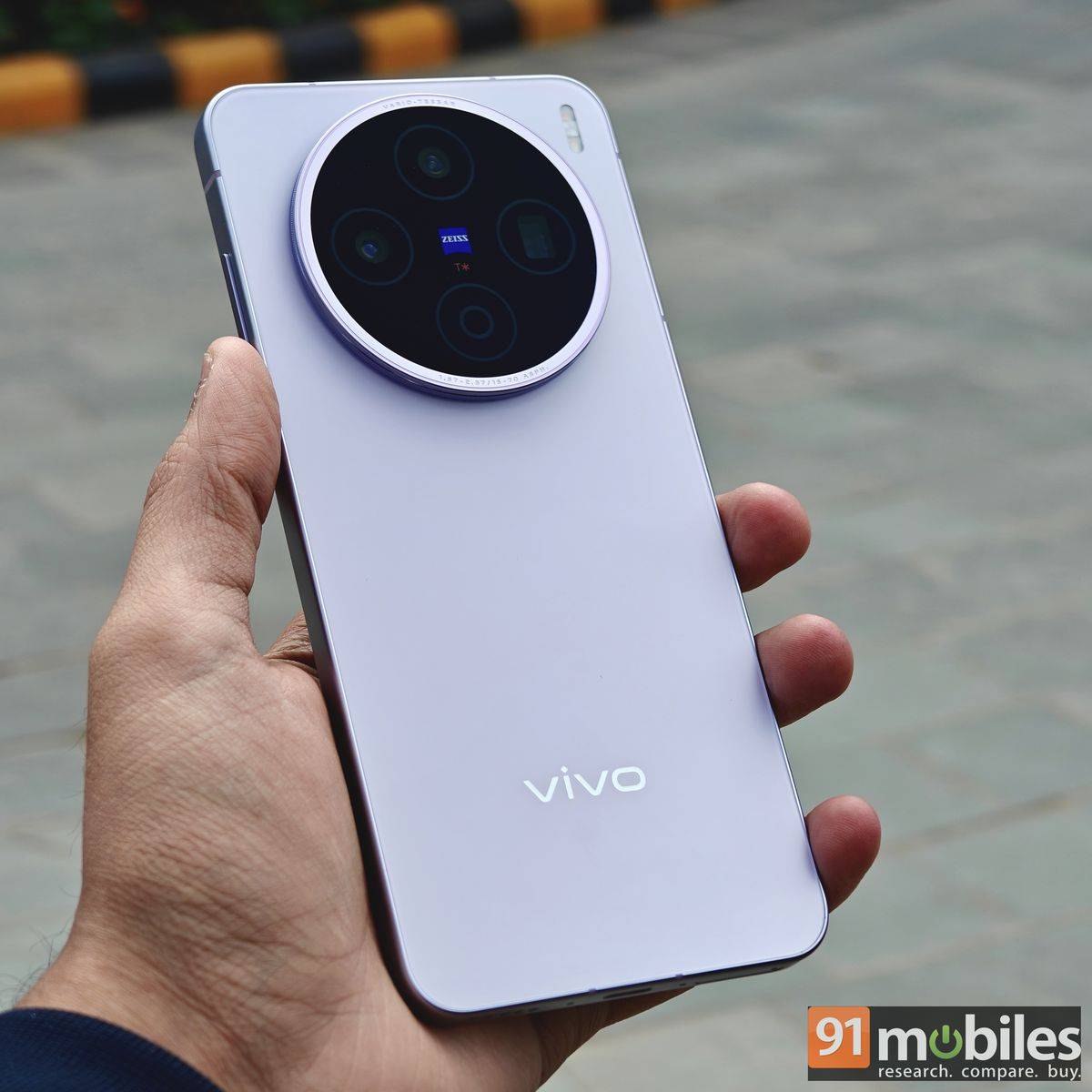
Design is a key differentiating factor between the two phones. With the Vivo X200T, you get a circular camera module at the back, flat edges, and a matte finish. It looks quite similar to the flagship Vivo X200 and even the X300 lineup. Our initial impressions suggest the phone looks premium and feels easy to use throughout the day. The Vivo X200T is IP68 and IP69 water and dust-resistance certified, and comes with an aluminium alloy frame. You can get the device in Stellar Black and Seaside Lilac colours. Up front is a 6.67-inch FHD+ AMOLED display with a 120Hz refresh rate and 5,000 nits of peak brightness.
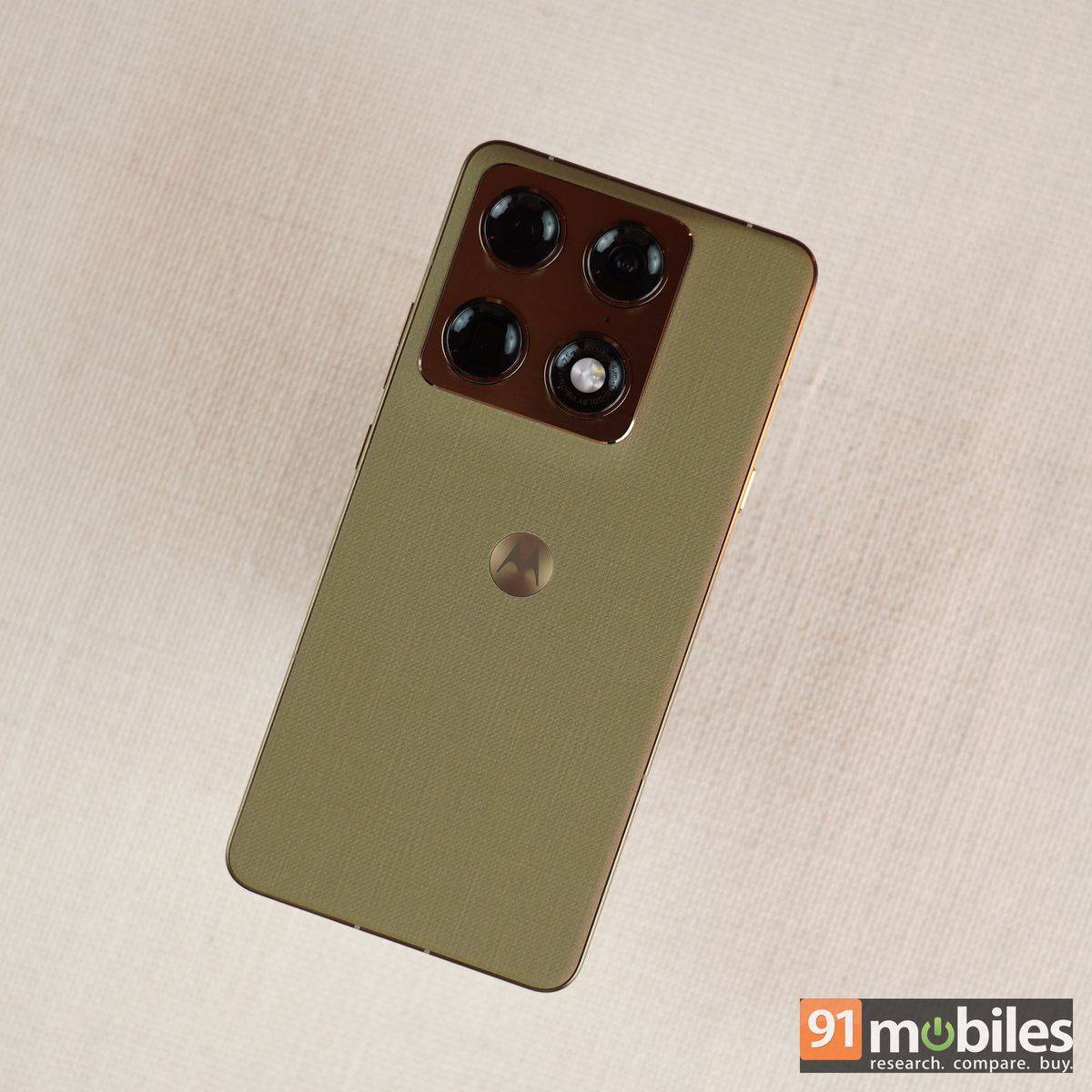
The Motorola Signature (review) offers a more premium display experience with a more power-efficient LTPO panel and a higher 165Hz refresh rate. The display also supports up to 6,200 nits of peak brightness and Gorilla Glass Victus 2, making it more durable and better to use outdoors. In terms of design, you get the classic Motorola design, which is a small square-shaped camera module at the back and a fabric finish that feels pleasant. The handset is also incredibly thin at 7mm, and light to hold and use. Like the Vivo X200T, the Signature also offers IP68 and IP69 dust and water resistance.
Performance
The Vivo X200T is powered by the MediaTek Dimensity 9400+, an overclocked version of the Dimensity 9400, which powers the flagship X200. During our brief usage of the phone, we found it to be quite snappy and easily handled games or multitasking. With 12GB RAM, the phone should be capable enough for a smooth multitasking experience. We should get a better idea when we put the Vivo X200T through real-world performance and tests.


The Motorola Signature is powered by Qualcomm’s Snapdragon 8 Gen 5 SoC, a fairly new chipset designed for sub-flagships. It sits below the flagship Snapdragon 8 Elite Gen 5 in terms of performance, but it showed impressive benchmark scores. The Motorola smartphone can easily handle anything you throw at it, even demanding tasks. The only drawback is that the handset may struggle to maintain peak performance during prolonged usage.
Cameras
Like its flagship siblings, the Vivo X200T also carries Zeiss optics with 50MP triple rear cameras. The setup is a 50MP Sony LYT702 OIS sensor, a 50MP Samsung JN1 ultra-wide lens, and a 3x 50MP Sony LYT600 telephoto unit. Selfies are taken care of by a 32MP front camera. We’re yet to test the Vivo X200T’s cameras, but given the legacy maintained by Vivo’s flagships, we do expect the X200T to impress us.
| Smartphone | Primary Sensor | Secondary Sensor | Tertiary Sensor |
| vivo X200T | 50 MP Wide Angle | 50 MP Ultra-Wide Angle | 50 MP Telephoto |
| Motorola Signature | 50 MP Wide Angle(84° field-of-view) | 50 MP Ultra-Wide Angle Macro | 50 MP Periscope |
The Motorola Signature features a similar 50MP triple-camera setup, but a superior 50MP selfie camera. In our review of the Motorola flagship, we found its cameras to deliver reliable and visually safe results, but heavy processing prevents the camera hardware from truly shining. Some examples include overexposure in daylight and heavy noise reduction. Otherwise, you get social-media-ready photos and visually pleasing low-light images, two things that are key for a smartphone camera.
It will be interesting to see how the Vivo X200T’s camera stacks up against the Motorola Signature.
Battery
Battery might be another clear differentiating factor between the two phones, just based on the specs. The Vivo X200T packs a 6,200mAh battery with 90W wired and 40W wireless charging support. This setup is pretty good for its price and one that should get you by easily with more than a day’s usage.
| Smartphone | Battery Capacity | Charging Support | Charging time (20% to 100% ) |
| vivo X200T | 6200 mAh | 90W Flash Charging | 44m |
| Motorola Signature | 5200 mAh | 90W Turbo Charging | 38m |
The Motorola Signature has a comparatively smaller 5,200mAh battery but with the same 90W fast charging support. It also comes with wireless charging, but only at 10W. A year back, we would have said this is a decent battery capacity, but with 7,000mAh batteries suddenly becoming common, the Motorola Signature might feel limiting in terms of endurance. Even in real-world usage, the phone felt lacking in terms of battery life, leaving you wanting more, especially in situations where you need more juice to run through the day.
The Vivo X200T might be the better choice when it comes to battery life.
Software
Vivo X200T ships with the new Android 16-based OriginOS 6 out of the box. This is a more refined and smoother software experience than the previous FuntouchOS. It’s designed to deliver up to 16 percent faster app launches, 41 percent quicker touch response, and steadier frame rates. There’s Origin Island, a smart on-screen shelf showing live updates and shortcuts, plenty of customisation, and more. The handset is promised to receive five major OS upgrades and seven years of security updates, an impressive software support.
| Smartphone | Pre-Installed Apps | Software Support |
| vivo X200T | 47 | 5 Years OS Updates + 7 Years Security Updates |
| Motorola Signature | 38 | 7 Years OS Updates + 7 Years Security Updates |
Motorola Signature, on the other hand, has a cleaner, near-stock Android 16 experience and comes with Moto AI features for productivity and usability. It also offers a longer software commitment with seven years of OS upgrades and security patches. This makes the phone on par with Samsung and Google, who are known for their software support.
Takeaways
With both phones starting at the same price, the question becomes which one offers better value. We can’t do a direct head-to-head, yet, since the Vivo X200T hasn’t been reviewed, but based on what we know so far, each device brings its own strengths. The Motorola Signature pulls ahead with a slightly better display, a faster chipset, and reliable cameras in everyday use. On the other hand, the Vivo X200T impresses with a more premium design, a larger battery, and cameras that look promising on paper.
The differences aren’t likely to be huge. In the end, the choice may come down to design preference, the feel of the software experience, and how long the battery lasts in real-world use. That said, if you prioritise cleaner software, a brighter display, and performance, the Motorola Signature appears to be a strong choice now. However, if cameras and battery life are more important, waiting for full reviews of the Vivo X200T might be advisable.