Why Vivo X300 could be the compact camera smartphone worth waiting for


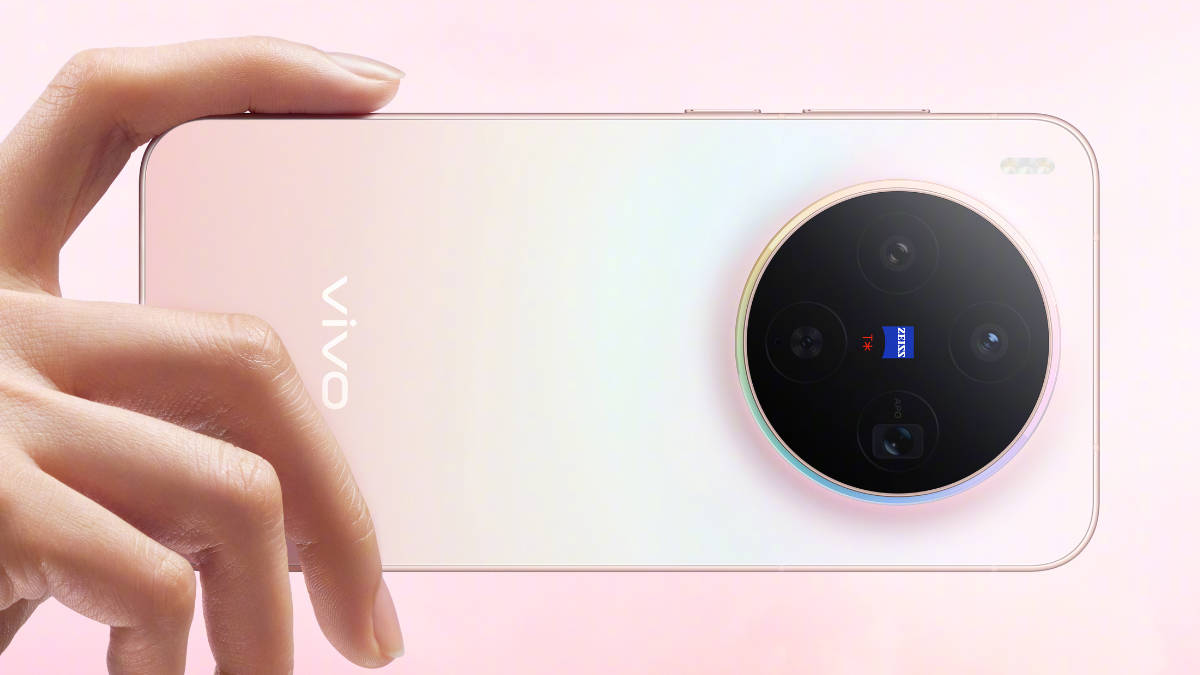
When it comes to flagship and high-end smartphones, Vivo doesn’t shy away from packing bleeding-edge technologies and hardware. Over the years, its partnership with ZEISS and in-house imaging developments have enabled it to offer users great camera versatility in various scenarios, whether it’s portraits with natural bokeh effects, detailed long-distance shots, or crisp macros.
With the next generation of flagship chipsets officially unveiled by MediaTek and Qualcomm, Vivo wasted no time and announced that the Vivo X300 series, powered by the Dimensity 9500, will be released on October 13th in China. The lineup will comprise the Vivo X300 and X300 Pro, of which the former will feature a 6.3-inch display and is the one to watch for compact phone admirers who also happen to be photography enthusiasts. Here’s why:
Table of Contents
Large camera sensors, despite the compact body
Soon after revealing the X300 series’ launch date, Vivo detailed its camera hardware, imaging algorithms, and stabilisation upgrades at an event in China. Speaking of which, the Vivo X300 is confirmed to feature the 200MP ISOCELL HPB primary camera sensor, which comes with a 1/1.4-inch sensor size, an f/1.4 aperture, and a CIPA 4.5-level optical image stabilisation (OIS). On the processing front, the phone will rely on ZEISS’s expertise and the Dimensity 9500’s Imagiq 1190 ISP to produce authentic skin tones, enhanced dynamic range, improved details, and improved low-light performance.


Regarding the zoom lens, the Vivo X300 will utilise a 50MP Sony LYT602 1/2-inch sensor for its periscope camera. While the hardware doesn’t undergo a major shift from the Vivo X200 and X200 Pro mini, the ZEISS T* coating, combined with APO integration, should ensure that images are free from chromatic aberration, lens flares, and reflections, resulting in clear and blur-free results.
Lastly, the root system powering and overseeing every camera process on the Vivo X300 is the new Blueprint Extreme Focus Tracking Engine, which utilises a vast dataset to identify and track subjects for rapid focus. This engine has been co-developed by Vivo, MediaTek, and ZEISS for the X300 series.
Show Full Article
How will the Vivo X300 stack up against other compact smartphones?
While the details about the upcoming compact smartphones from other brands are scarce, the Vivo X300 has quite a lot to offer on paper compared to the Vivo X200 FE, Vivo’s current compact flagship in India. For starters, the 200MP HPB primary camera of the Vivo X300 is not only larger in size, but also has a larger aperture than the X200 FE’s 50MP IMX921 main lens. This should result in enhanced light capture, producing well-detailed and brightly lit photos. Furthermore, the periscope lens could benefit from the advanced algorithms for better portraits, zoomed-in shots, and macros.


Speaking of which, the Vivo X200 FE lacked telemacro capabilities due to the W-shape periscope implementation, which is something the Vivo X300 will address, as noted in Vivo’s imaging conference. While the OnePlus 13s went head-to-head with the X200 FE this year, its successor, possibly called OnePlus 15s, could directly compete with the Vivo X300. A leak by Smart Pikachu on Weibo suggests that it’ll feature the Snapdragon 8 Elite Gen 5 chipset, a battery with a capacity of 7,000mAh or larger, a metal frame, and a 6.3-inch display. We haven’t yet seen a glimpse of its camera hardware.
The Vivo X300 could also compete with the likes of the iPhone 17 (6.3-inch) and the upcoming Samsung Galaxy S26 Pro, which is rumoured to have a 6.27-inch display and will serve as a replacement for the standard Galaxy S flagship. While the iPhone 17 has received significant improvements to its front and ultrawide lens, it still lacks a dedicated telephoto lens, which is something photography enthusiasts may look for. The Galaxy S26 Pro, however, is expected to rock a similar lens setup as the Vivo X300, but only time will tell how well it performs compared to the Vivo X300’s camera.
Here are some snaps from the Vivo X300 shared by Vivo China’s Product Manager:
How will the Vivo X300 be priced, and will it be worth considering?
Vivo has made some radical changes to the base X series flagship by downsizing the display of the X300 from the X200 (6.67-inch display) and presenting it as a more pocketable option. The Vivo X300 may not only replace the Vivo X200 Pro mini, which was exclusive to China, but also the recently introduced X200 FE, unless it decides to also bring an X300 FE in India above the Rs 50,000 range, with compactness and cameras being the major highlights.

Since the Vivo X300 brings upgrades to performance and cameras, we can expect its price to be anywhere between Rs 70,000 to Rs 75,000, considering the X200 was launched in India at Rs 65,999 for the 12GB RAM and 256GB storage starting model. We can expect the Vivo X300 series to land in India towards the end of this year, as was the case with the X200 series.
If you’re someone who values a phone that fits comfortably in your hand without compromising on flagship-grade performance and imaging, the Vivo X300 could be well worth the wait. By reintroducing compact form factors at a time when most brands are chasing size and battery endurance, Vivo seems to be carving a distinct niche for itself, one centred on camera leadership and one-handed usability. The combination of ZEISS optics, the new Blueprint Focus Engine, and the Dimensity 9500 chipset positions it as a serious contender in the compact premium space. And while Funtouch OS left Vivo users wanting more in terms of design and refinements, the upcoming OriginOS 6 update should address that. Unless you’re deeply invested in the iPhone or Samsung ecosystem, the Vivo X300 looks set to be the compact camera flagship to beat this year.