Audi Q3 review: Audi is back with a makeover!


Choosing Goa as the location for the media drives of the all-new Audi Q3 wasn’t a coincidence. Audi first launched this popular mid-size luxury SUV back in 2012, incidentally in Goa, and now, in its third generation, the Q3 also spearheads Audi’s renewed global product portfolio in India, and we got our hands on the first batch of the Q3 made-in-India production model to take out for a spin in Goa.

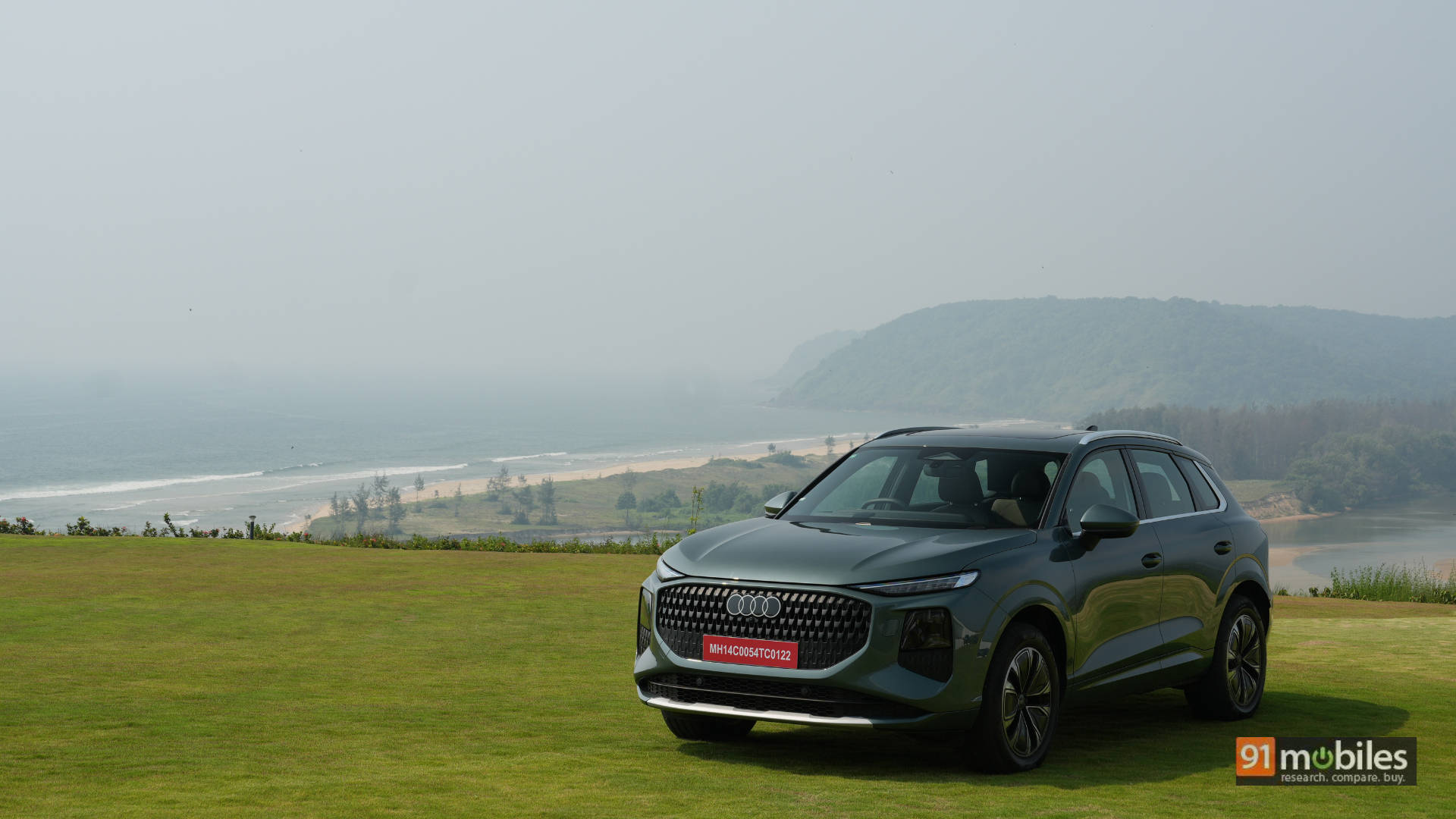
Table of Contents
Design (9/10)
Instantly likeable, unlike increasingly polarising designs by competitors, the Audi Q3 has a grown-up look about it, and it indeed has added to its dimensions literally too. Unmistakably Audi, with a big octagonal grille with a smart pattern, albeit in plastic, split headlamps with the customary cutting-edge Digital LED Matrix lighting system and a sculpted look that adds muscle at all the right places. Around the rear, it now gets a full-width light bar, illuminated Audi rings and a more sculpted tailgate, creating an effect that is more substantial than before, without losing the compact proportions that make the Q3 particularly appealing in Indian cities.

Tech (7.5/10)
The cabin is where the transformation becomes most apparent, with Audi’s new Digital Stage dashboard combining the 11.9in instrument cluster and a 12.8in MMI infotainment display into a sweeping, curved arrangement, giving the Q3 a distinctly more contemporary feel. Thankfully, the India-spec car also gets niceties like acoustic glazing for the windows, a panoramic sunroof and configurable ambient lighting. Wireless phone mirroring along with support for Google Maps in the cluster is genuinely useful. The icons on the touchscreen system are easy to hit targets and the navigation is fairly simple too, making it a joy to use while on the move. Climate control lives on the touchscreen at all times, though changing fan speed is a two-touch process. Compared to most other systems, though, this is refreshingly light on bloatware and unnecessary tech, for the sake of tech.

The lack of a third, passenger-side screen being a case in point. Audi has stuck to the essentials while retaining crucial controls on physical buttons that feel clicky and tactile, like the volume knob. Even the buttons on the steering wheel, while they may appear to be capacitive, have a reassuring click feel and sound to them when toyed with. The gear selector is now a stalk behind the wheel, freeing up space in the centre console for a wireless smartphone charger, USB-C ports and two cup holders.
The Digital Matrix LED headlights are quite the showpieces. They can shape the beam around other traffic, project a lane light onto the road and play custom welcome animations. The Zenith variant also gets a richly informative head-up display and nine airbags as standard.

ADAS is standard on both variants, the Nova and Zenith, with adaptive cruise, front emergency braking, driver fatigue monitoring, rear seat alert and Park Assist Plus. There is no 360-degree camera, though, which is an odd miss at this price. Ventilated seats are absent too, but strangely, heating has been retained from the European spec cars. Finally though, the usually low-res reversing camera has been improved with a high-brightness, high-resolution unit and also gets a wash function.
Then there is the Sonos sound system, a 12-speaker, 420W setup exclusive to Zenith. It offers plenty of customisation between the different DSP presets and custom soundfield options like Live and Stage, but at heart the sound lacks depth and refinement. You do get soundstage is nicely diffused, a decent pseudo-surround effect, and Podcast mode adds real clarity to voices, yet on music, the mids lack warmth and the highs lack openness. The Nova variant, on the other hand, gets a 10-speaker, 260W Audi system instead.

Drive (8.5/10)
The 2.0 TFSI makes 204hp and 320Nm from 1500rpm, enough for a 0-100km/h sprint in 7.1 seconds, making it the most powerful petrol in the segment and the only one with quattro all-wheel drive. There is some turbo lag below 2000rpm, but get past that initial hesitation and the Q3 feels quick, with plenty of performance for overtaking and highway cruising. The seven-speed dual-clutch transmission is smooth in traffic, but the drive select modes make little difference to throttle response. Permanent quattro means traction is never in question, and you can push it around fast, long corners with a lot more confidence than others in the segment. Along with the high levels of cabin insulation and superb ride quality on the perfectly set-up suspension for India, there isn’t much you’d be left wanting for as a driver of the Audi Q3.
A great quality-of-life feature is the Progressive steering that reduces effort at low speed full locks for U-turns and parking while adding weight at highway speeds. It feels quick and natural, enhancing the driveability even further.
Verdict
There’s more than enough proof here that even an entry-level Audi can still feel like an Audi, and the Q3, when launched officially on the 16th of October, will hardly have an entry-level price tag. It’s extremely well-built, spacious in the second row, decently specced and most importantly, feels analogue in an increasingly digital world, and that is an attribute we should be celebrating. There are a couple of gaps in the spec sheet, no 360-degree camera, no ventilated seats and a Sonos system that underdelivers on its badge. But in every aspect of its driving and perceived luxury, it delivers in spades. Expected to cost around Rs 55 to 60 lakhs, it will take on the BMW X1 and Mercedes GLA with the most power and the only quattro in the class. It’s our pick of the lot!
Editor’s Rating: 8 / 10