Intel hasn’t exactly had the smoothest ride in the GPU world. Their first-gen Arc Alchemist cards were like that new kid in class who tried really hard but kept tripping over their shoelaces. Sure, there were flashes of brilliance, but also enough driver drama to make you want to chuck the card out the nearest window. Fast forward, and we’ve got the Intel Arc B580, part of the shiny new Battlemage lineup. And this one isn’t just a timid step forward; it’s several confident strides.
Armed with 12GB of GDDR6 memory, a 192-bit bus, and 20 Xe cores, the B580 still wears the “budget underdog” tag proudly, with Indian pricing landing around ₹28K. The catch? It’s arriving just as Nvidia’s RTX 50-series and AMD’s RX 9000-series are already stirring up excitement among budget PC builders. So, the big question: is Intel showing up late to the party with nothing but chips and dip? Or does Team Blue finally have enough firepower, beyond just the price tag, to make the Arc B580 a genuinely solid recommendation? Time to find out.
Table of Contents
First Impressions: The Glow-Up
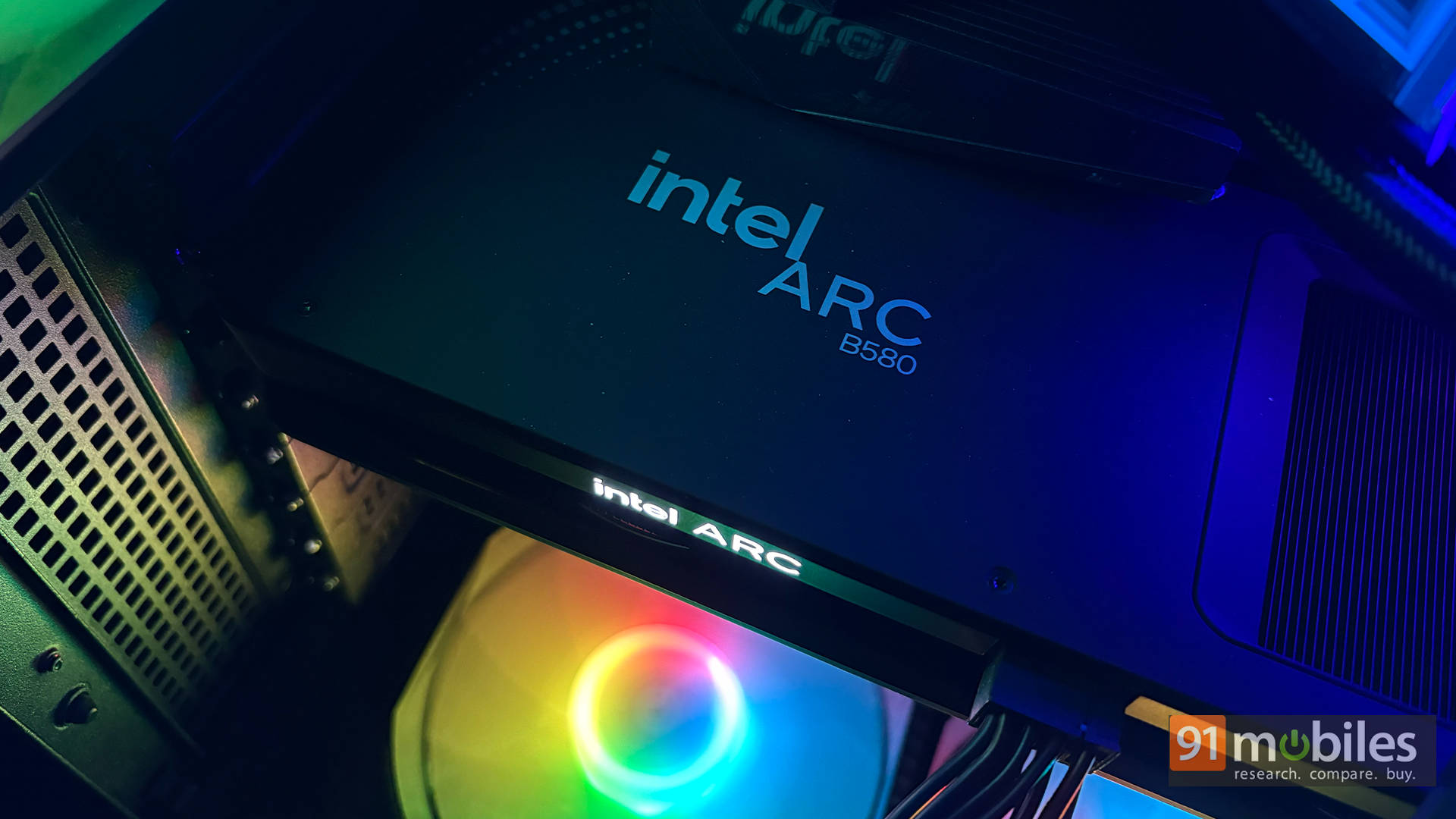
Intel’s GPUs have always leaned toward that minimalist chic, and the Arc B580 carries that vibe with confidence. No blinding RGB strips or flashy lights. Instead, just a clean, understated look that actually feels premium. The matte black shroud is classy, and the simple Intel Arc logo glowing white on the front is about as loud as it gets. Honestly, there’s something refreshing about a card that doesn’t look like it’s trying too hard.
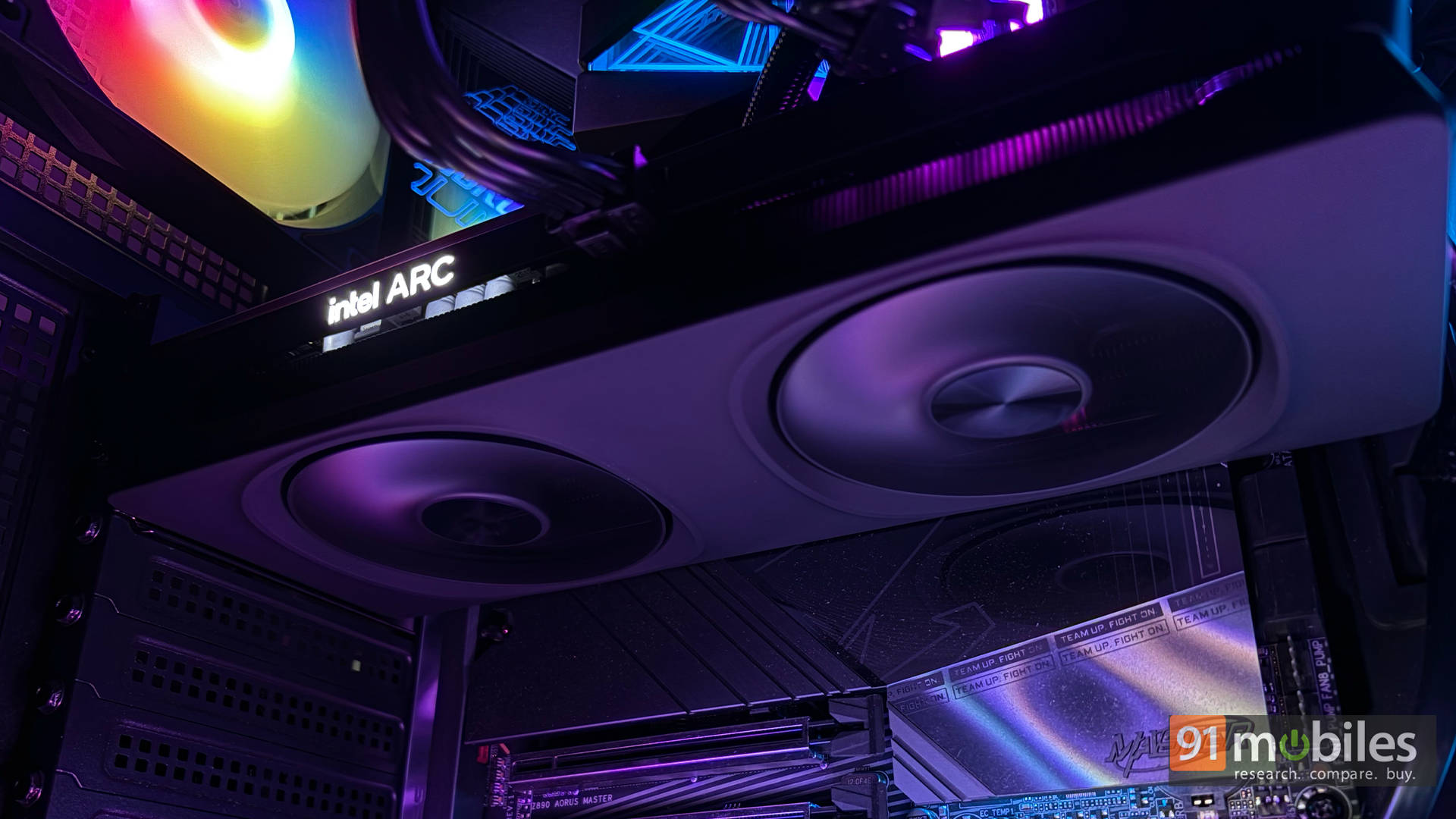
The dual-fan setup is tucked neatly inside, and it does its job without fuss. Cooling is surprisingly solid too, with the fans keeping the card hanging in the low 70s under load. For a mid-range GPU, that’s a big win. Size-wise, the B580 isn’t a chunky beast either. Cards in this price bracket rarely are, but the bonus here is that it slides into most cases comfortably, including SFF builds.
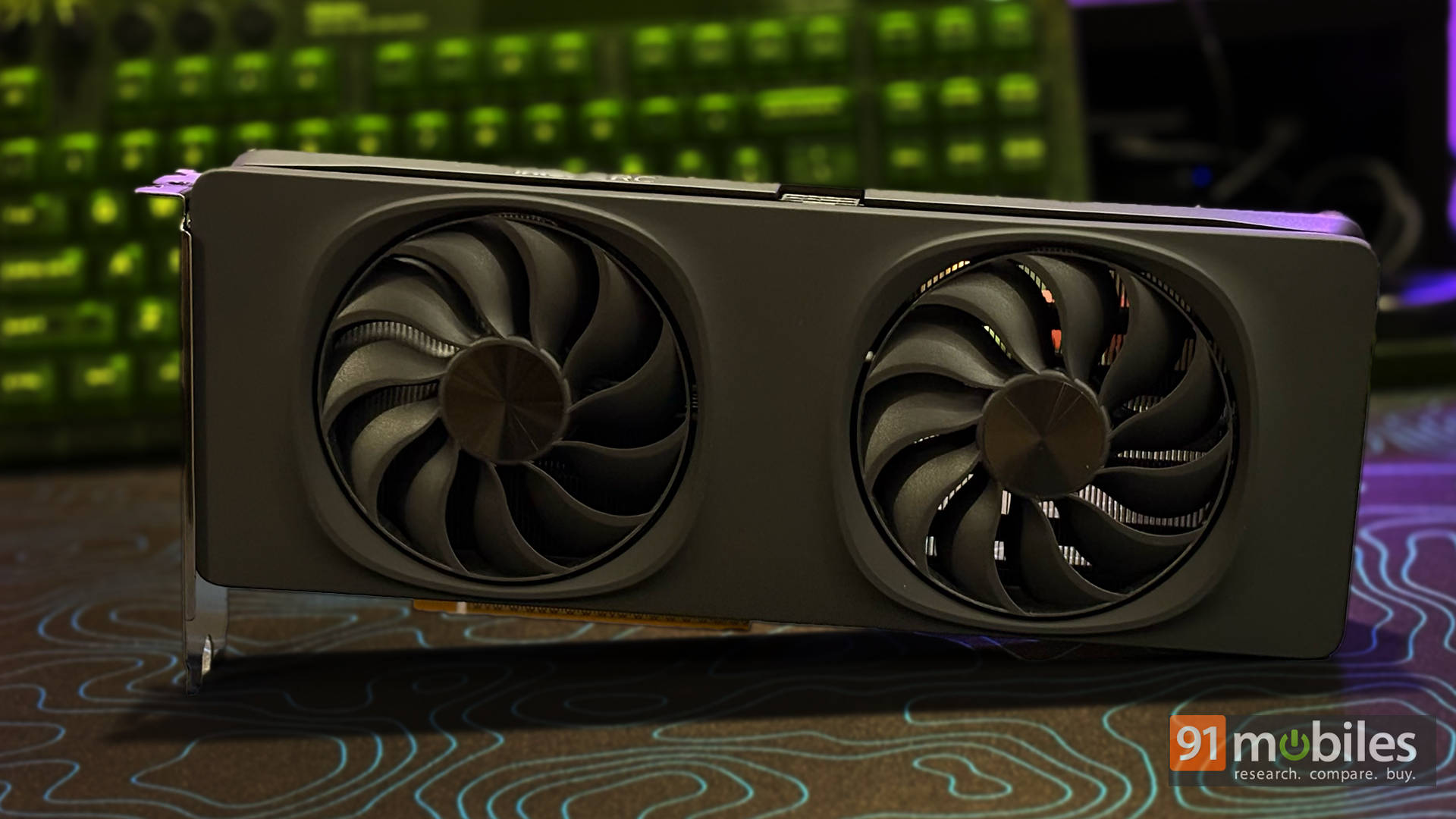
As for the I/O, you get the usual suspects: three DisplayPort 2.0s and one HDMI 2.1. Whether you’re rocking a buttery-smooth 1440p display or dabbling in 4K, you’re covered. I know that last part isn’t what you expected reading in this review, so please, stick around till the end, and you’ll know what I mean.
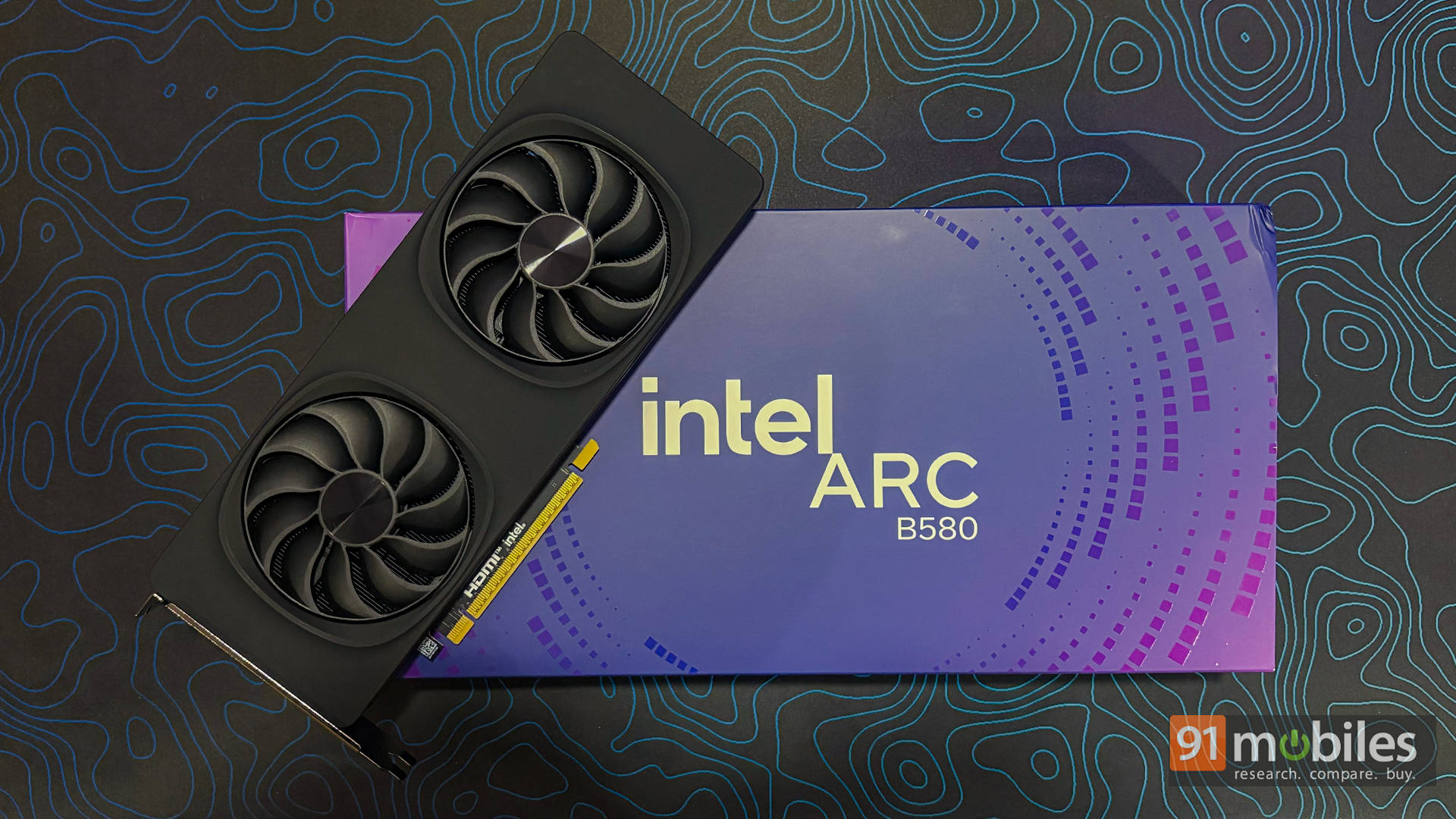
Now here’s the catch: in India, you won’t actually find this clean Limited Edition model on shelves. Instead, only AIB versions from partners like ASRock will be available. That’s a shame, because if you’re the kind of builder who appreciates a minimal, no-nonsense look, the Intel edition really does add a touch of elegance to any rig. If you can somehow get your hands on one, it’s totally worth the flex.
Intel vs NVIDIA and AMD: Same Game, Different Rules
Nvidia and AMD have been running the GPU show for what feels like forever. Team Green leans heavily into AI smarts these days, especially with the shiny new RTX 50-series, while Team Red plays the value card by offering more VRAM, solid raw performance, and often a friendlier price tag. Then there’s Intel, the new kid on the block, trying to carve out a space somewhere in between.
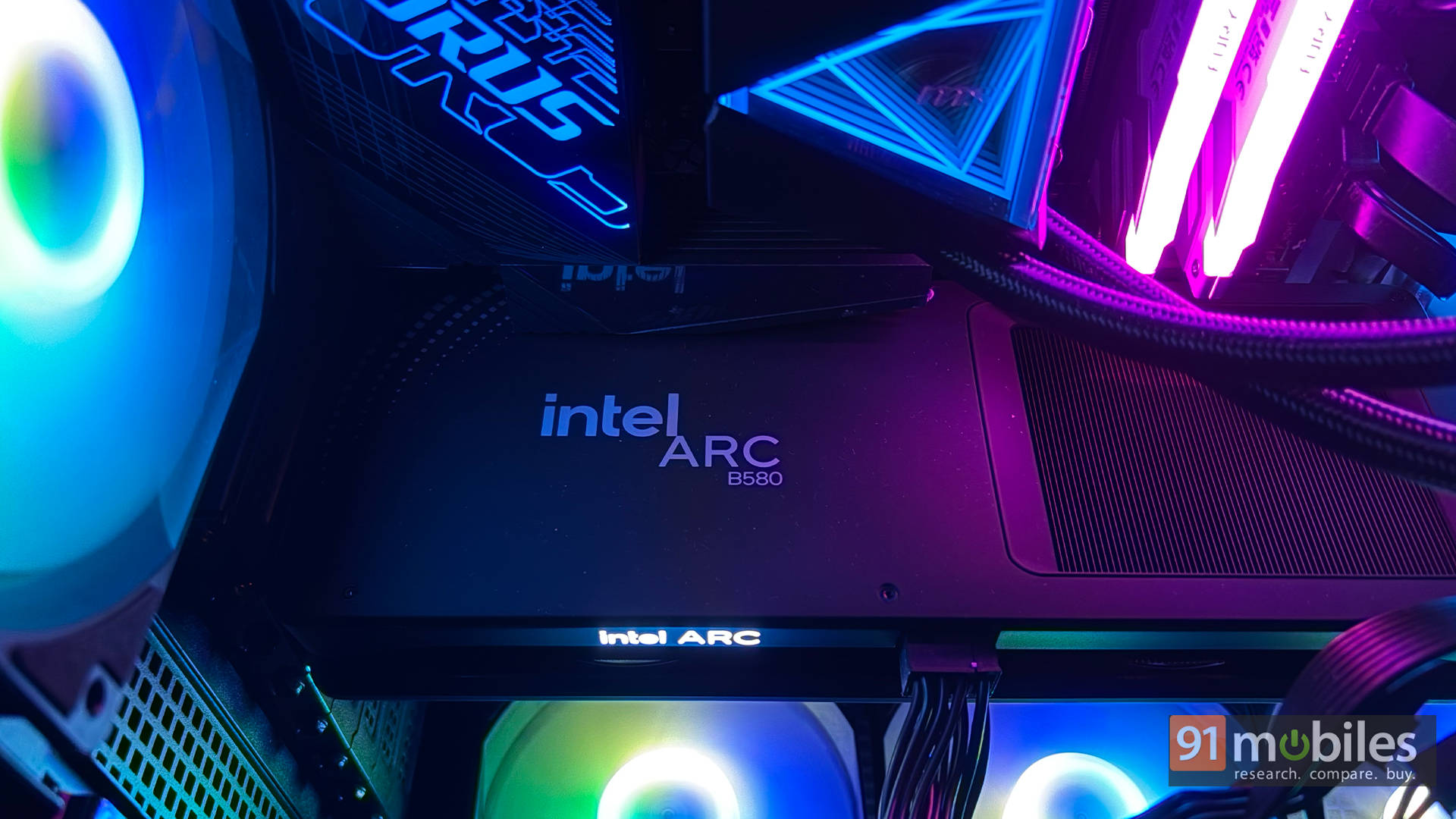
What makes the Arc B580 stand out isn’t just that it’s Intel’s latest attempt, but the fact that it finally feels serious. Built on the new Battlemage architecture, you get 20 Xe cores, 20 ray-tracing units, and 160 XMX engines for AI acceleration. That’s a lot of firepower for a so-called “budget” card.
And then there’s XeSS, which is Intel’s take on upscaling to go toe-to-toe with DLSS and FSR. Is it as polished as Nvidia’s or AMD’s versions? Not yet. But compared to Intel’s first-gen effort, it’s a significant glow-up. In fact, in a growing list of games, XeSS actually manages to boost frames without turning your character’s face into a smeary watercolour painting. Progress, my friends, is very important, and I must compliment Intel for what they’ve achieved here. For the most part, at least.
Performance and Benchmarks: Frames, Games, and Some Surprises?
Alright, let’s get to the part everyone actually cares about: performance. But before we dive into the numbers, let me quickly talk about the test bench I used, because yes, it’s a little overkill. The Arc B580 was paired with an Intel Core Ultra 9 285K, cooled by an MSI MAG Coreliquid i360 AIO, all dropped onto a Gigabyte AORUS Z890 Master motherboard. Add in 32GB of Kingston FURY DDR5 running at 8000MT/s, a 2TB Kingston NVMe SSD, and power from an MSI MAG A1000GL Black PSU, all housed inside the MSI MAG PANO 100R PZ Black with more airflow than a ceiling fan convention.
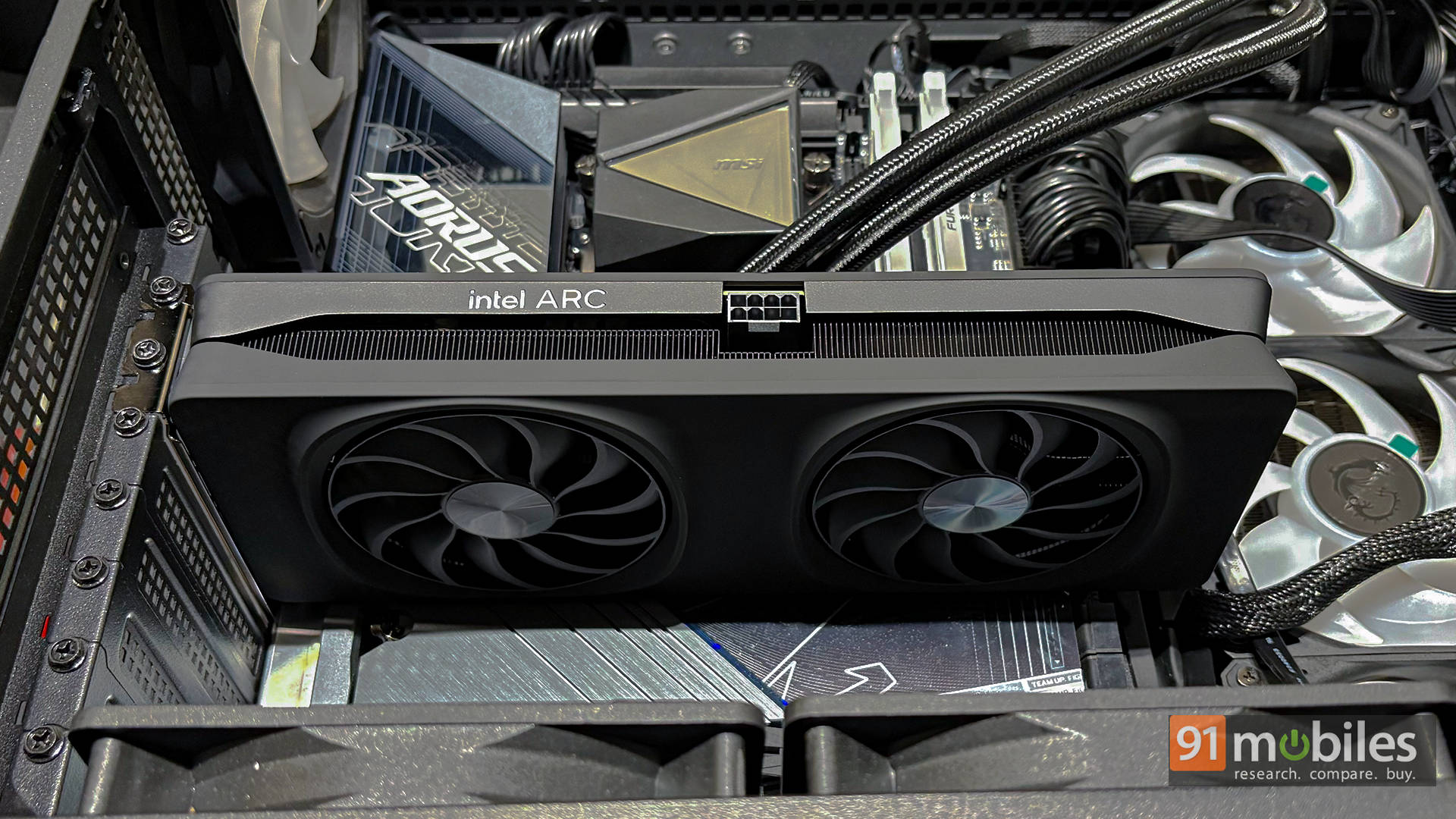
In short, this setup was designed to let the B580 run at full throttle, no bottlenecks, no excuses. Realistically, most buyers won’t pair this GPU with such high-end components, which means in your build, the numbers might be a bit lower. But for the sake of testing? It’s the fairest way to see what the card can actually do.
Synthetic Benchmarks
Let’s rip the Band-Aid off with synthetics first. Across our suite of 3DMark and Geekbench runs, the Arc B580 turned in numbers that were, frankly, impressive. What’s more, when stacked against the ZOTAC RTX 5060 Ti 16GB (a card that costs nearly double), the B580 wasn’t trailing far behind. In fact, in some tests, it came surprisingly close, which is kind of wild given the price gulf.
| Benchmarks | RTX 5060 Ti 16GB | Arc B580 12GB |
| Geekbench 6 Vulcan | 113,575 | 96,894 |
| Geekbench 6 OpenCL | 117,174 | 97,577 |
| Time Spy Extreme | 7,463 | 7,477 |
| Time Spy | 15,869 | 15,060 |
| Fire Strike Ultra | 8,463 | 8,049 |
| Fire Strike Extreme | 7,105 | 15,875 |
| Fire Strike | 31,778 | 31,796 |
| Port Royal | 9,983 | 7,783 |
1080p and 1440p Gaming
Of course, synthetic benchmarks are one thing, and gaming performance is a different story. Most gamers are ideally going to game at either 1080p or 1440p, and in both those scenarios, the B580 absolutely shines.
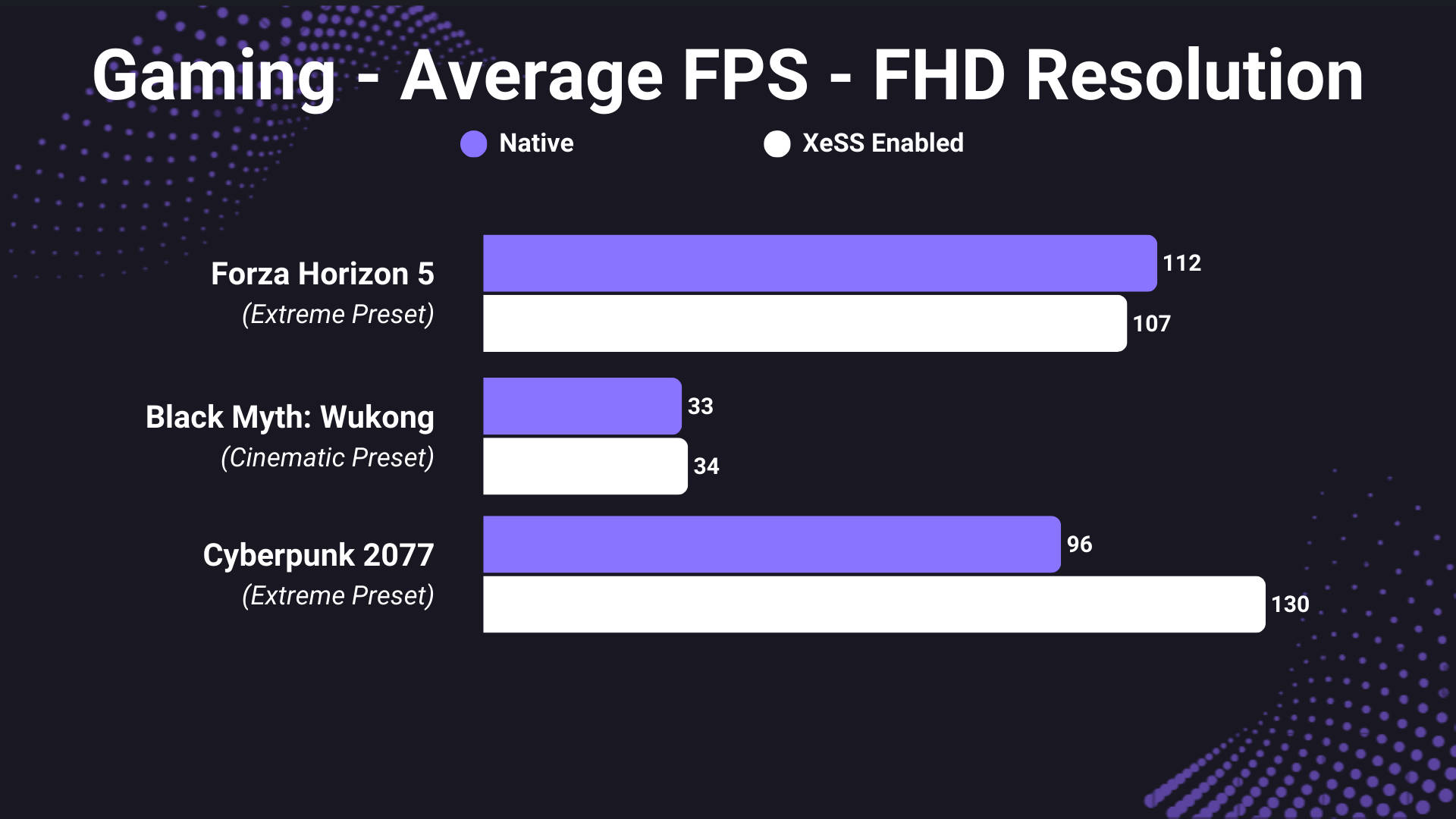
Starting off with Full HD, the Arc B580 is basically cruising. Competitive titles like Valorant, Apex Legends, and CS2 push frame rates comfortably into triple digits. Even graphically demanding titles like Cyberpunk 2077 and Forza Horizon 5 are silky smooth at ultra settings with no XeSS crutch needed. At Full HD, the B580 is basically flexing without breaking a sweat.
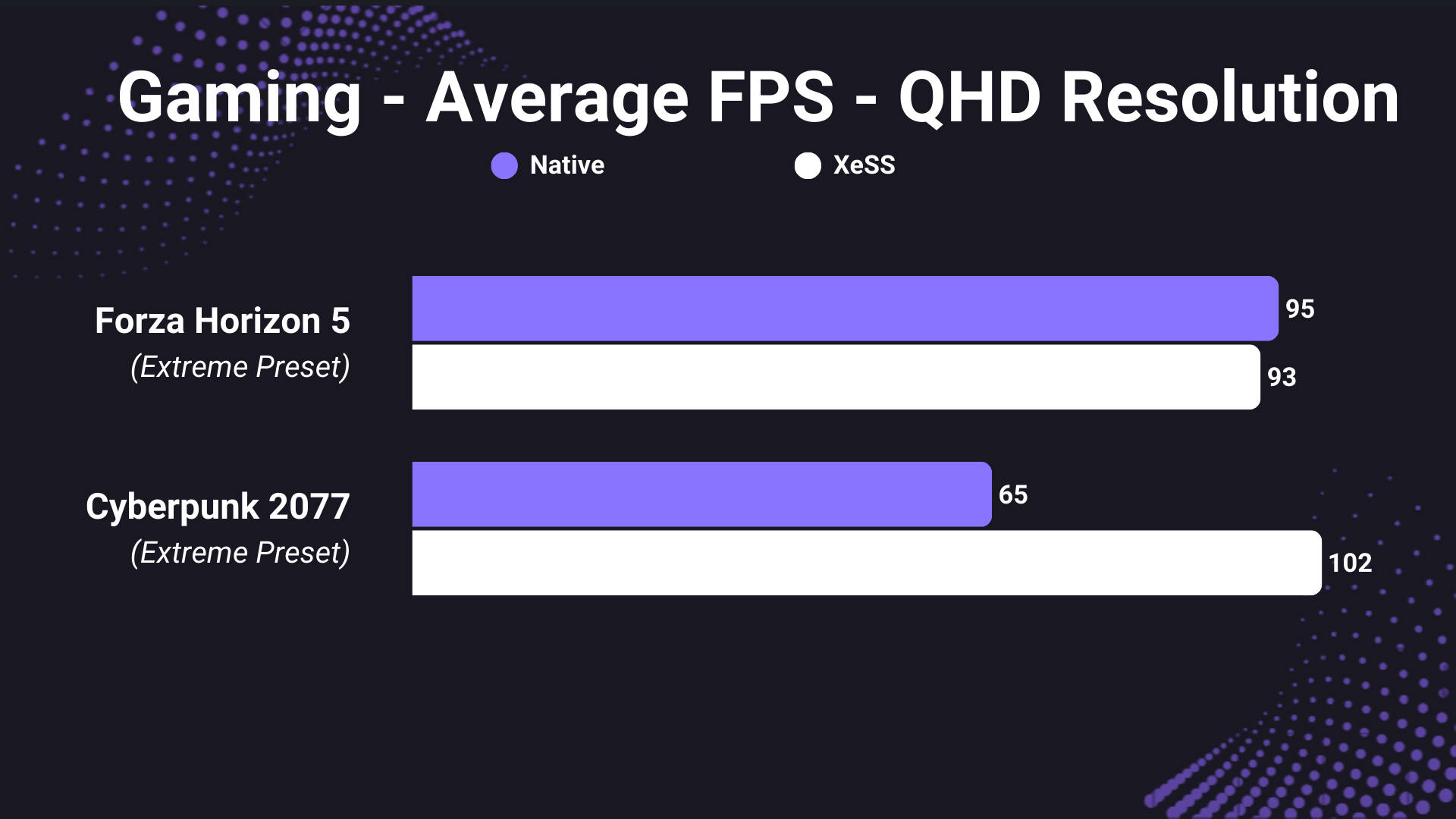
Moving on to 1440p, the GPU hits the sweet spot. The B580 feels right at home pushing 60–80 FPS in modern AAA titles at high settings. Cyberpunk 2077 and Black Myth: Wukong will need XeSS enabled, but once that's on, gameplay feels wonderfully smooth. For its price tag, this level of 1440p performance is honestly punching way above its weight.
4K Gaming (Yes, but...)
Now, let's be real: this is not a 4K card. But can you technically game at 4K? Surprisingly, yes. In titles like Cyberpunk 2077 and Forza Horizon 5, flipping on XeSS gets you close to 60 FPS, which is honestly impressive. Yes, you'll see the occasional dip, but remember that these tests were conducted at the highest settings possible. A little fine-tuning here and there can easily make things more stable.
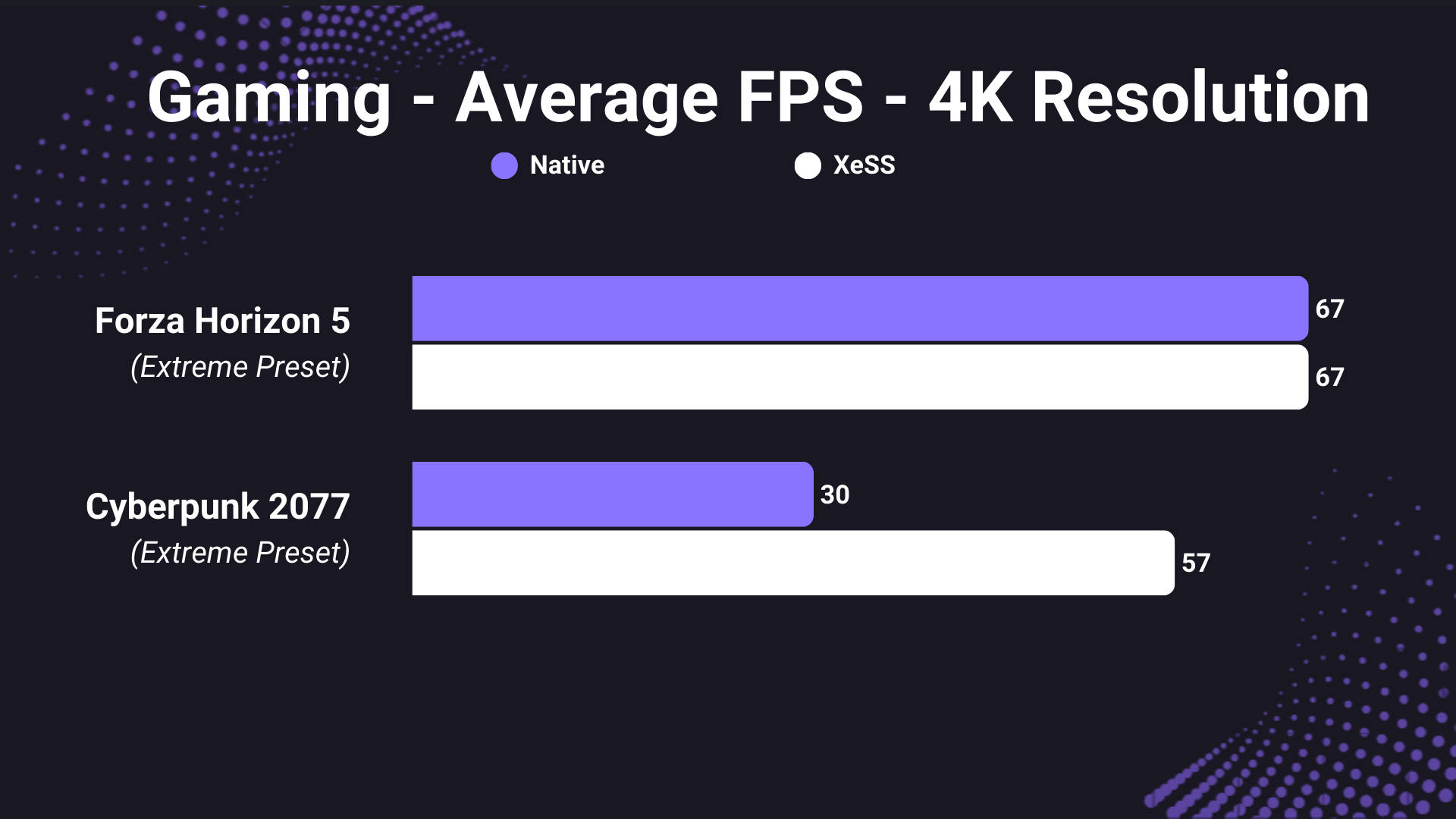
That said, results vary wildly by game. Some, like Indiana Jones or Black Myth: Wukong, don't even want to play ball with outright crashes or unplayable performance. And let's be clear: ray tracing at 4K is a hard no. But still, if you do want to give it a shot, make sure to enable XeSS with FG. For instance, Cyberpunk 2077 has been updated to support XeSS 2, and as such, it also benefits from frame generation.
| Preset in Cyberpunk 2077 | Avg FPS |
| 4K Native | 30 |
| 57 | |
| 16 | |
| 30 |
Of course, not every game is going to have this ability, at least not yet. Still, for a so-called "budget" GPU, the fact that the Arc B580 even dares to flirt with 4K is kind of cheeky, and maybe even a little impressive.
Not a Smooth Sail: Drivers and Software
Of course, raw numbers only tell half the story. The experience of using the Arc B580 is where the picture gets more complicated. Let's talk about drivers, the eternal Arc elephant in the room. To Intel's credit, the leap from Alchemist to Battlemage is night and day. Where first-gen Arc cards felt like a beta test, the B580 feels like a finished product. But that doesn't mean it's flawless. Mid-game crashes? Still happen. Random frame drops, especially on day-one game launches? Yep, those too. Reddit is full of tales of Arc adventures, and while most gamers report stability being much improved, it's still not Nvidia-level rock solid.
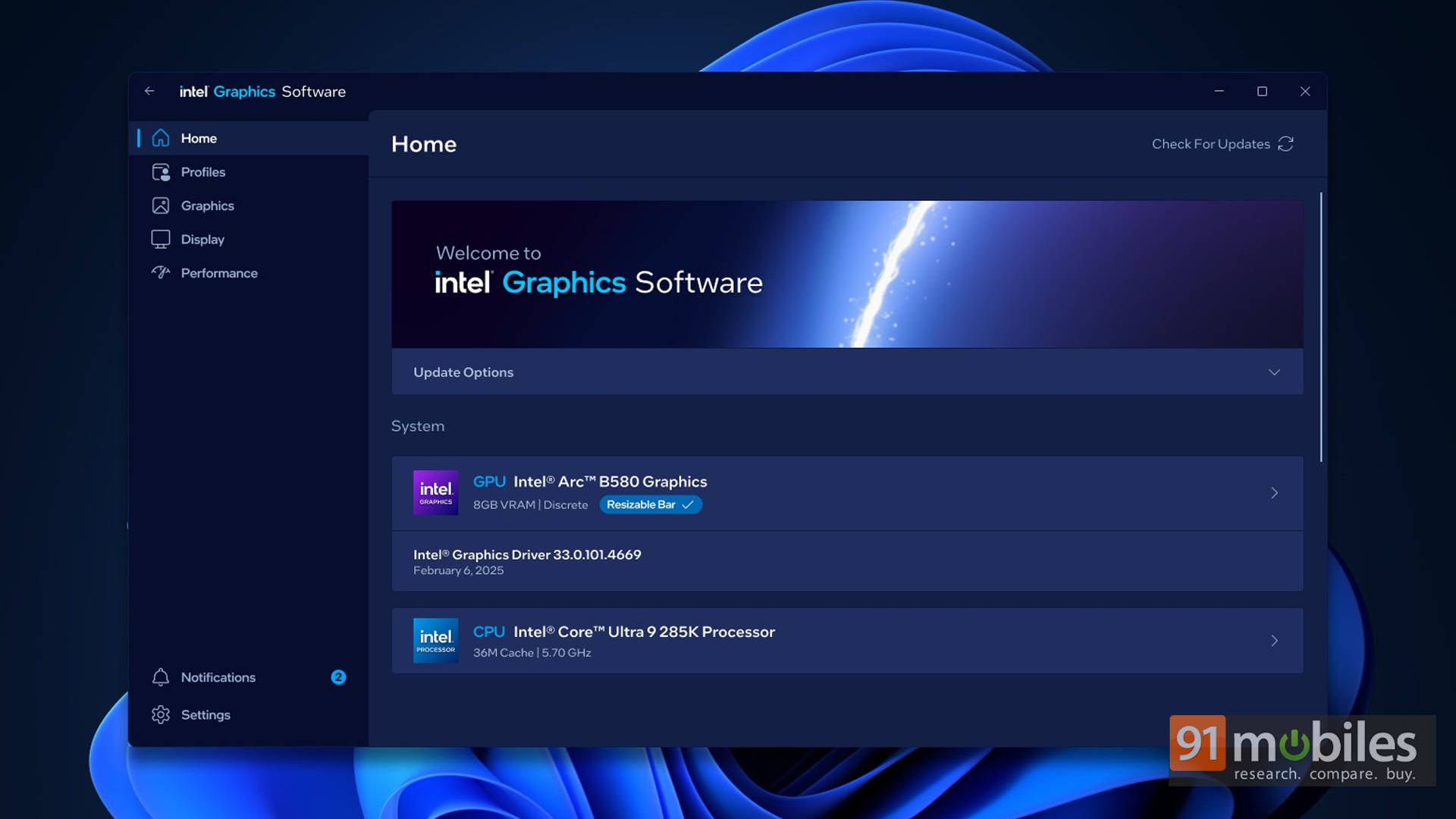
There is a silver lining, though. Intel has been patching issues faster than anyone else in the GPU business. Bugs that used to linger for months are now being squashed within weeks, sometimes days. That's a huge deal, and it shows Intel's driver team is finally hitting its stride. As for the software, the Intel Graphics Software looks modern, offers performance tuning, monitoring, and fan control. But compared to Nvidia and AMD, it's still missing that extra sparkle. Features like built-in gameplay recording, advanced overlays, or deeper integration with streaming tools are either basic or absent altogether. It works, it's improved, but it doesn't quite have the polish or feature depth of its rivals yet.
So while the Arc B580 delivers great performance, the day-to-day experience still feels like a work in progress. Not a dealbreaker, but definitely something you need to know before buying.
Verdict: Is it the budget king?
In the US, the Arc B580 launched at a cheerful $249, immediately undercutting most of its direct rivals. However, in India, it lands between ₹25,000–₹28,000, depending on the brand and cooling solution. Even so, that's a pretty sharp price when you consider that the RTX 5060 and RX 9060 XT sit comfortably higher up the ladder. For Indian gamers who don't want to drop an entire month's salary on a graphics card, the Arc B580 finally feels like an upgrade that won't burn a hole in the wallet. But is it the right card for you?
The B580 isn't the most powerful GPU in town. It won't win the ray tracing crown, and in creative workloads, Nvidia still has the CUDA advantage. But honestly? It doesn't need to. What Intel has delivered here is a fun, surprisingly competent, and aggressively priced GPU that actually makes the mid-range segment exciting again. For 1080p and 1440p gamers, it's an easy recommendation.
Sure, it's not quite as reliable as Nvidia's RTX 5060 or AMD's RX 9600 XT. However, it undercuts both by at least ₹5,000, ships with 12GB of VRAM instead of 8GB, and continues to improve with each driver update. Day-one performance on new titles may not always be flawless, but the overall package makes the Arc B580 one of the most pleasant surprises in the GPU world right now.
Editor's Rating: 8.5 / 10
Pros:
- Great 1080p & 1440p performance for the price
- 12GB VRAM offers future-proofing
- Competitive Indian pricing
- Efficient cooling and quiet operation even under load
Cons:
- Driver stability still trails Nvidia/AMD
- Ray tracing performance lags behind the competition
- Limited availability