Review Summary
Expert Rating
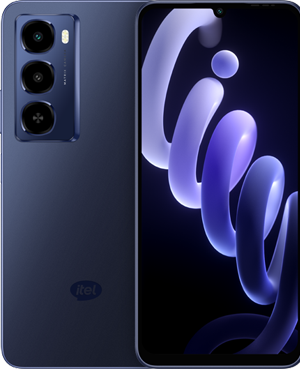
itel launched the City 100 in India in early July 2025 as an ultra-budget phone, starting at Rs 7,599. The phone offers a 7.65mm slim body, IP64 dust and water resistance, a 6.75-inch 90Hz LCD panel, a single 13MP rear camera, a large 5,200mAh battery, and a 12nm Unisoc T7250 processor clocked up to 1.8GHz. In some ways, the City 100 feels like a step-up from the itel P55 4G, with improvements in processor speed, battery capacity, software, ingress protection, and overall compactness. The P55 4G handled the basics well in our review last year. Now, the question is: how well does the City 100 hold up in 2025?
To understand where it stands in today’s market, we’ve compared the itel City 100 with the Lava Shark 5G (review), which launched in May 2025, at Rs 7,999. I have been using the itel newcomer for a week now. Read on this itel City 100 review to find out how it fared.
Table of Contents
Verdict
The itel City 100 features a slim design, dependable battery life, and cameras that are respectable for its price. While it lacks 5G support and ships with the older Android 14 OS, it still offers a solid range of features. It delivers reliable everyday performance, making it a worthwhile choice for budget-conscious buyers.
Clean and compact design
| Smartphone | Thickness | Weight | IP Rating |
| Itel City 100 | 7.65 mm | 185 grams | IP64 |
| Lava Shark 5G | 8.2 mm | 200 grams | IP54 |
itel City 100 comes in three colours, namely, the Navy Blue, the Pure Titanium, and the Fairy Purple. We received the Blue colour variant, which looks chic thanks to an iridescent lustre on the back panel. The vertical rear camera stack with its glossy finish complements the overall look. I appreciate the side frame, and the buttons also match the colour well.
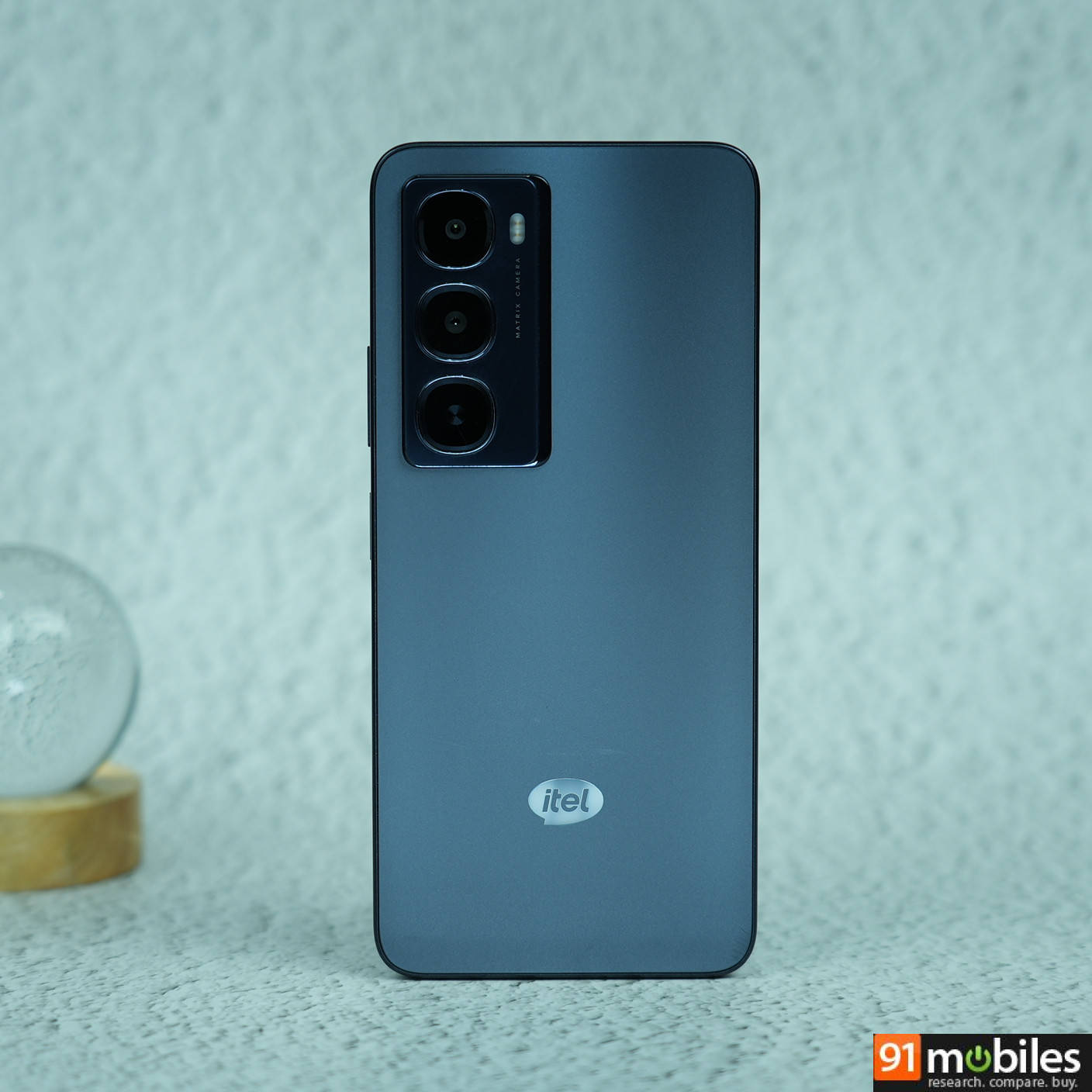
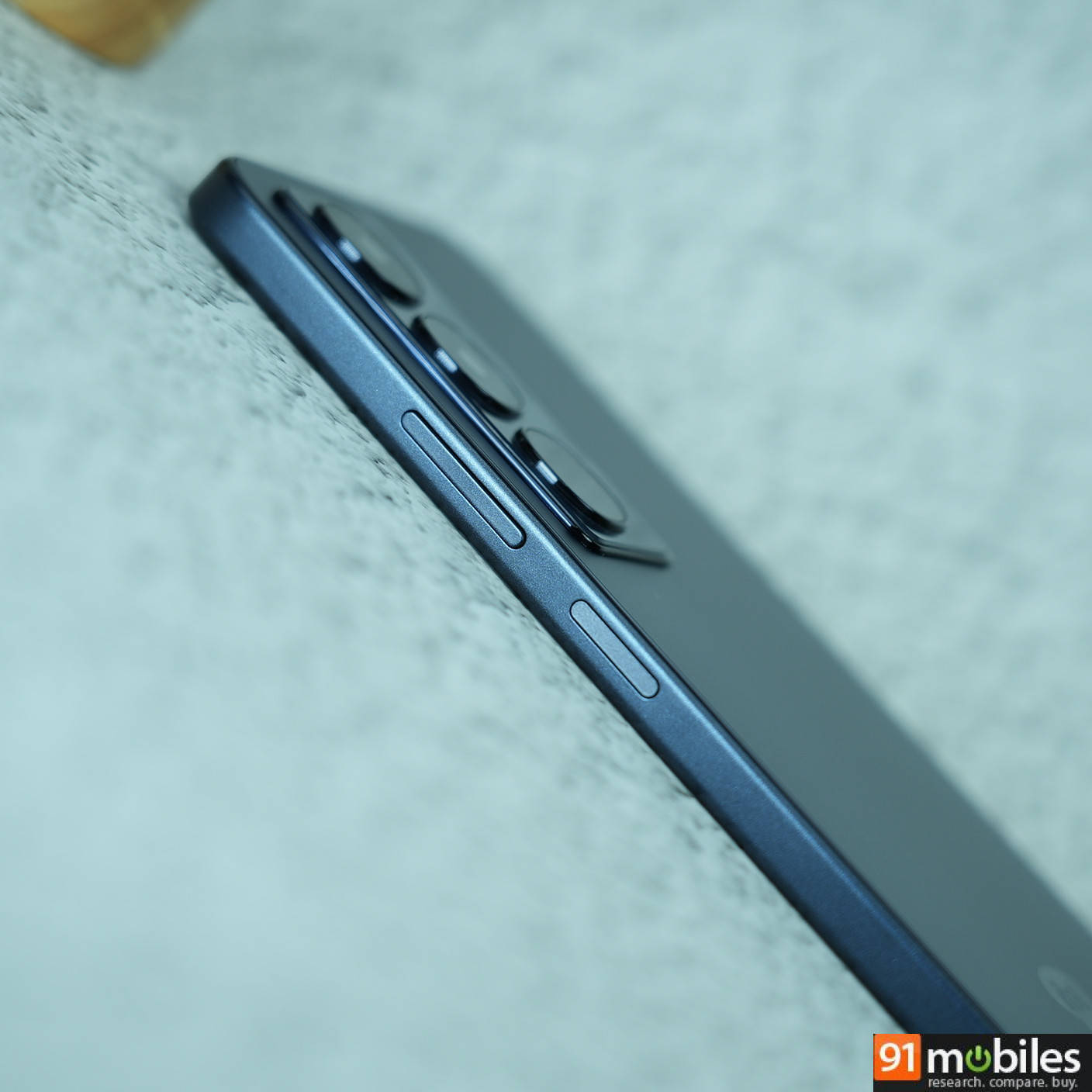
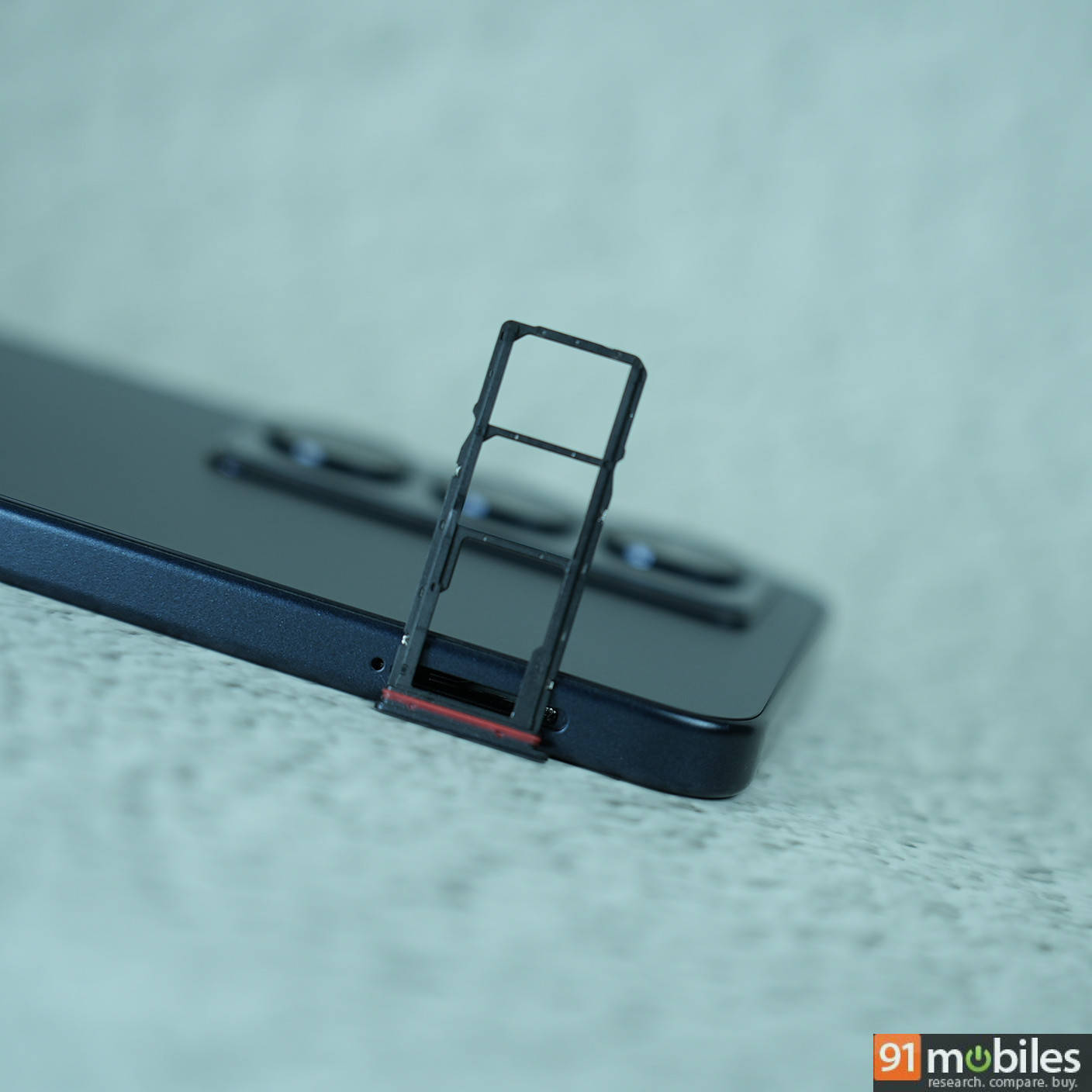
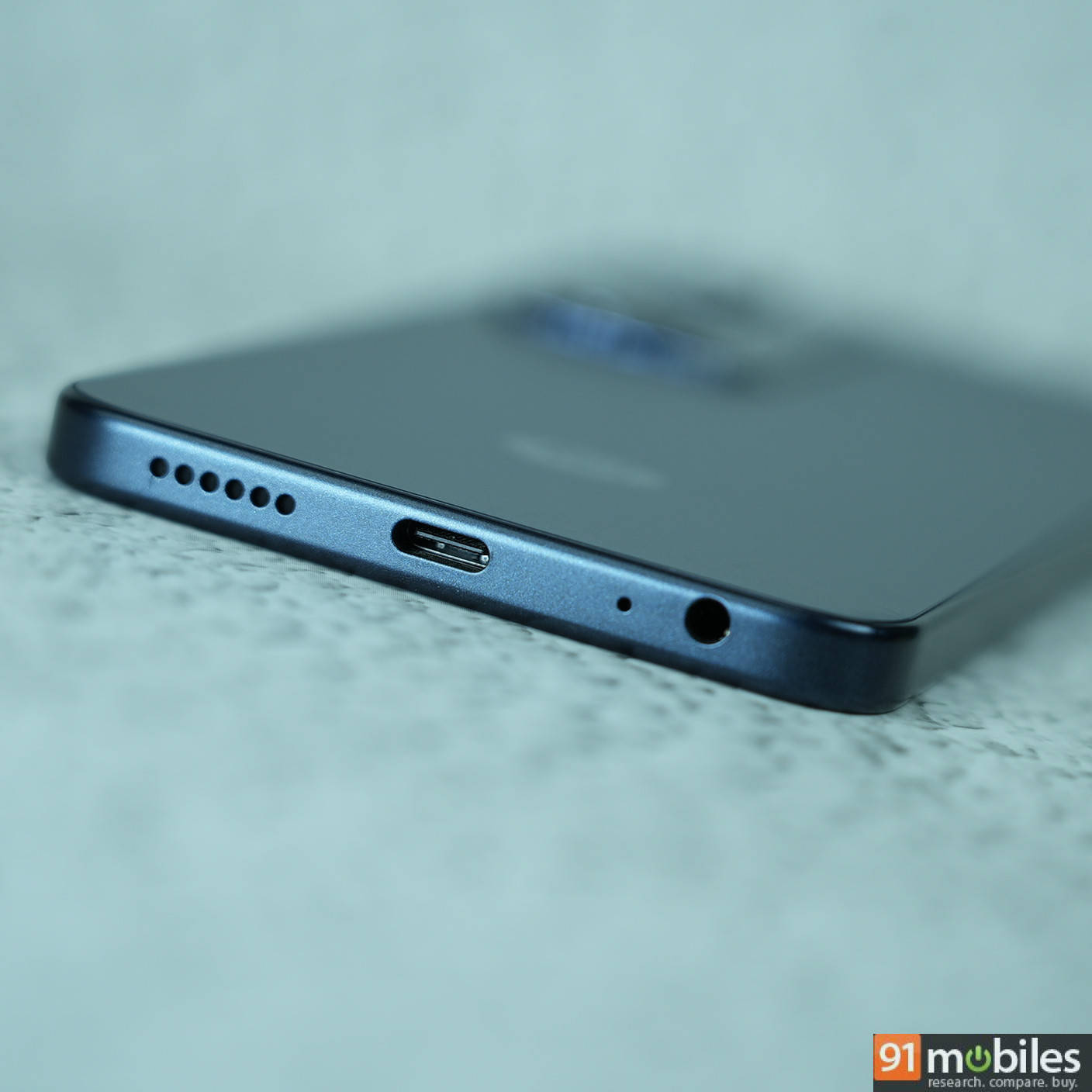
It is not just about looks, though. The itel phone is pretty handy due to its slim and lightweight build. The phone also has a better IP rating than its rival, Lava Shark 5G, meaning it can withstand water spray but not water splash. The right-side buttons are clicky, easily reachable, and as for I/O, the phone comes with the usuals, such as a 3.5mm headphone jack, USB-C port, a single speaker grille, and a microSD card. The phone also features an IR blaster, which happens to be hidden within one of the rear lens rings.
Overall, the design is nice in form and function. Let’s check out the screen now.
Good display, average speaker
| Smartphone | Display | Peak Brightness |
| Itel City 100 | 6.75 inches - IPS LCD | 700 nits |
| Lava Shark 5G | 6.75 inches - IPS LCD | NA |
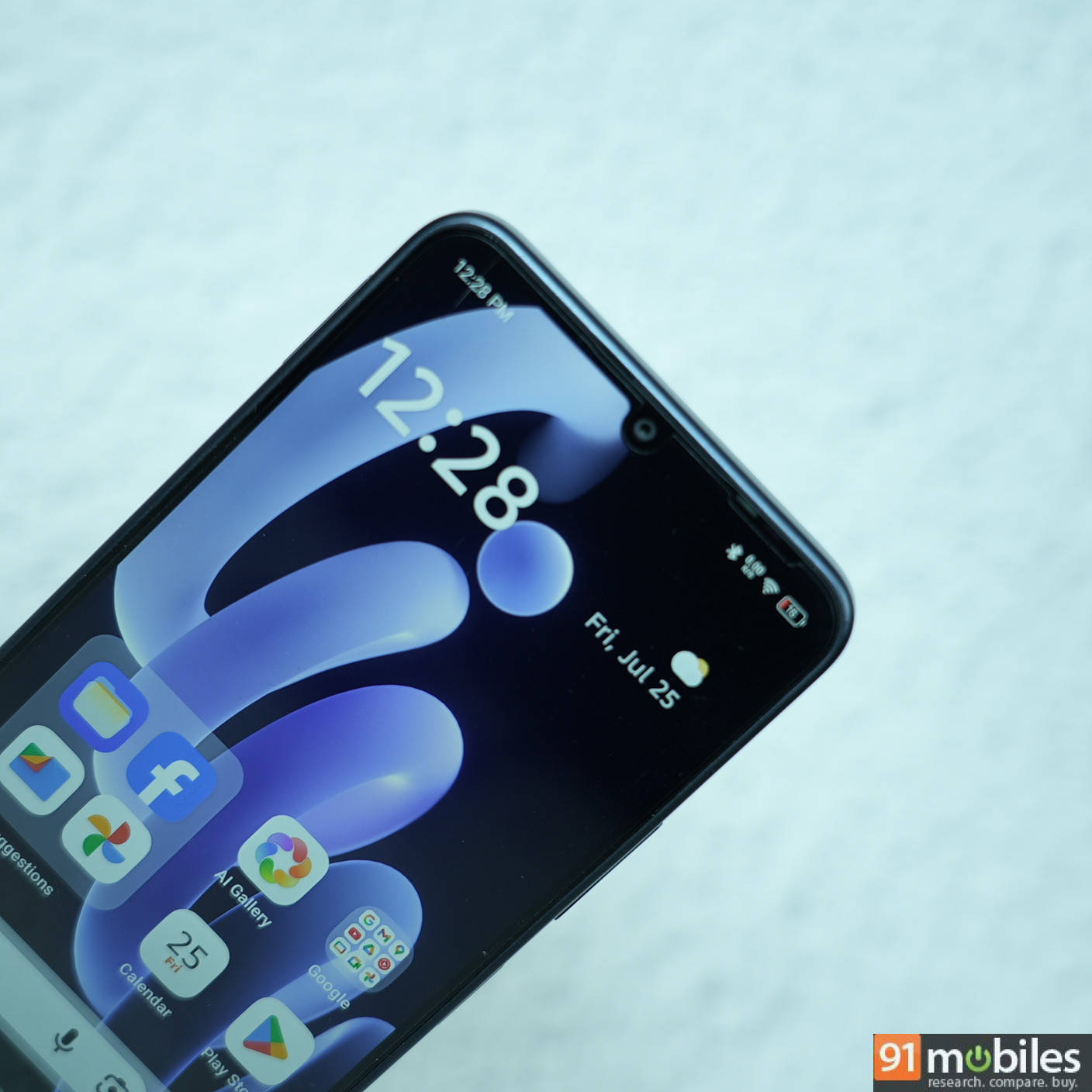
The itel City 100 has a waterdrop notch, slim bezels on the left and right sides, a slightly thicker bezel on the top, and an even broader bezel on the bottom. The screen within this perimeter is a 6.75-inch IPS LCD with a 90Hz refresh rate, HD+ resolution and 260 PPI. The itel phone is comparable to the Lava Shark 5G in all these aspects. Even in brightness, the difference isn’t much, but the itel phone is slightly brighter. Still, when outside, you may need to hover your palm over the screen to block harsh sunlight and see better.
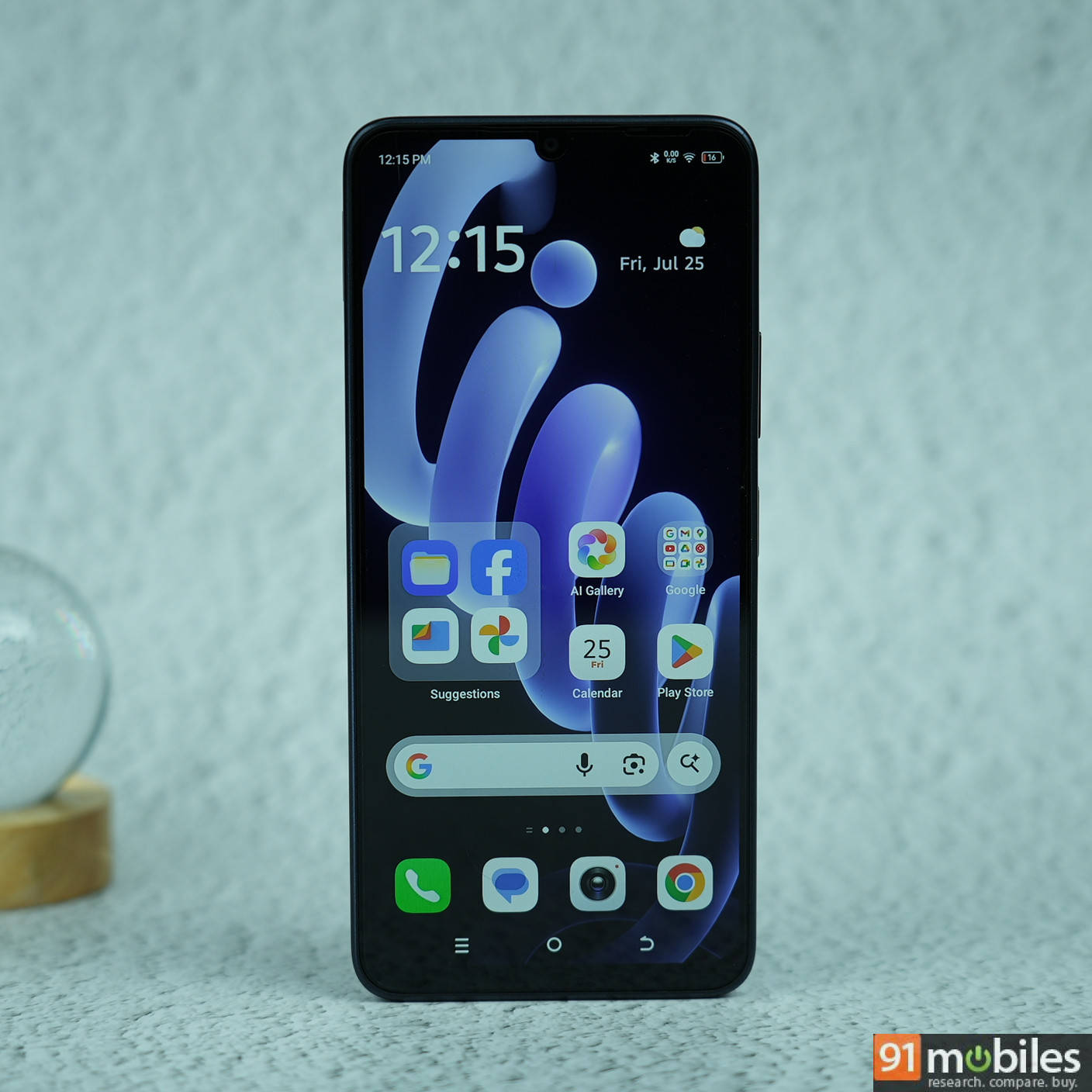
When compared side by side, the itel phone fared better in terms of colour representation, sharpness, and contrast, as well. So, the itel phone’s display is visually better. As for the output from the solo speaker on the bottom, the itel sounds passable, but the Lava Shark 5G sounded slightly louder and clearer.
Let’s now get to the cameras.
Mostly capable cameras
| Smartphone | Primary Sensor | Secondary Sensor | Tertiary Sensor |
| Itel City 100 | NA | NA | NA |
| Lava Shark 5G | NA | NA | NA |
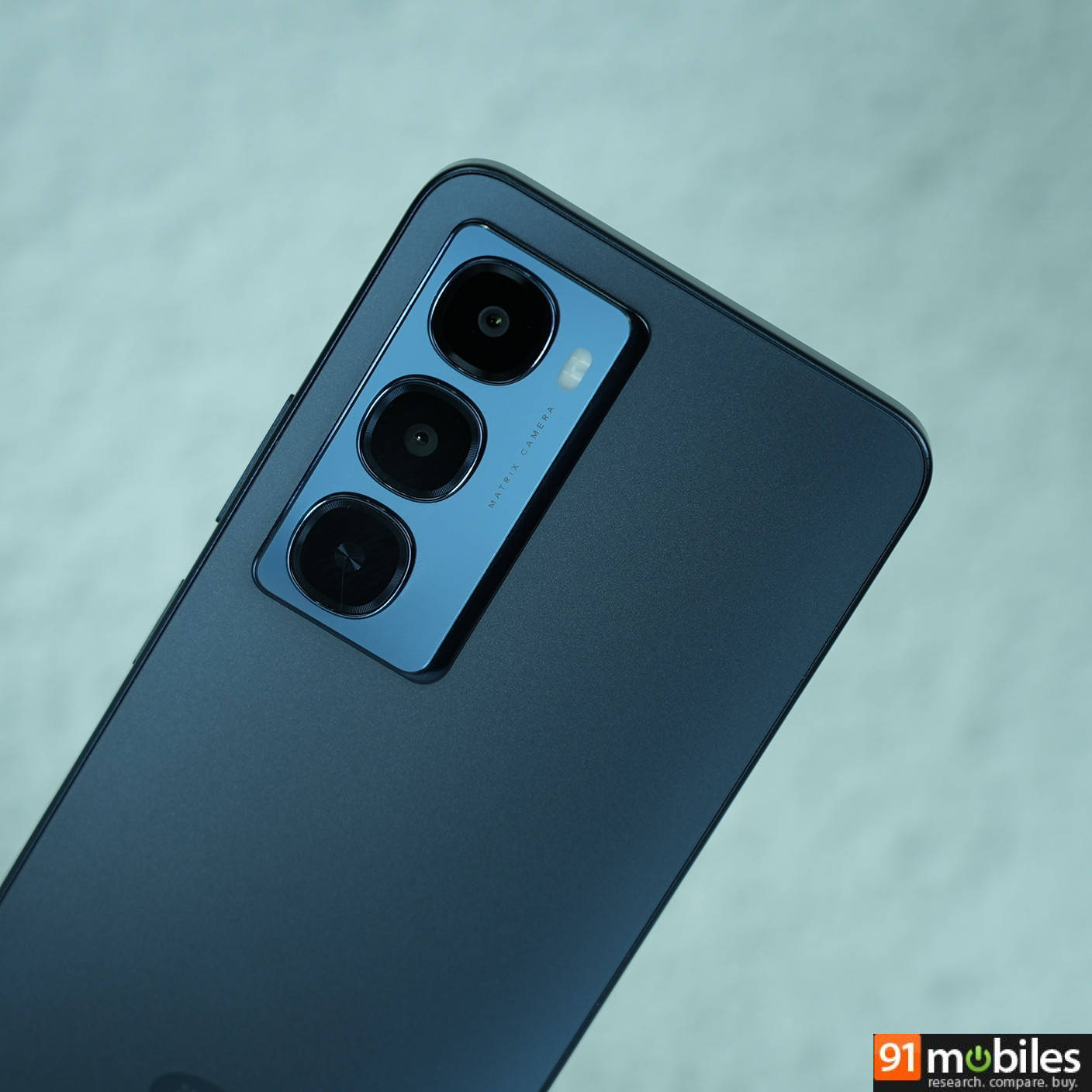
On the back, the itel City 100 has a 13MP camera, and on the front, it has an 8MP camera. The setup is the same on the Lava Shark 5G.
The itel City 100 camera performs well for its segment. The handset captures sharper details in daylight, manages dynamic range well, and handles light flares more effectively in low light. Selfies also turn out more natural compared to rivals like the Lava Shark 5G. However, portrait shots can look reddish with some smudging, and low-light photos show slightly oversaturated colours.


Let’s now expand on the camera performance using the following sub-sections. We have taken the same photos from the Lava Shark 5G for comparison.
Daylight
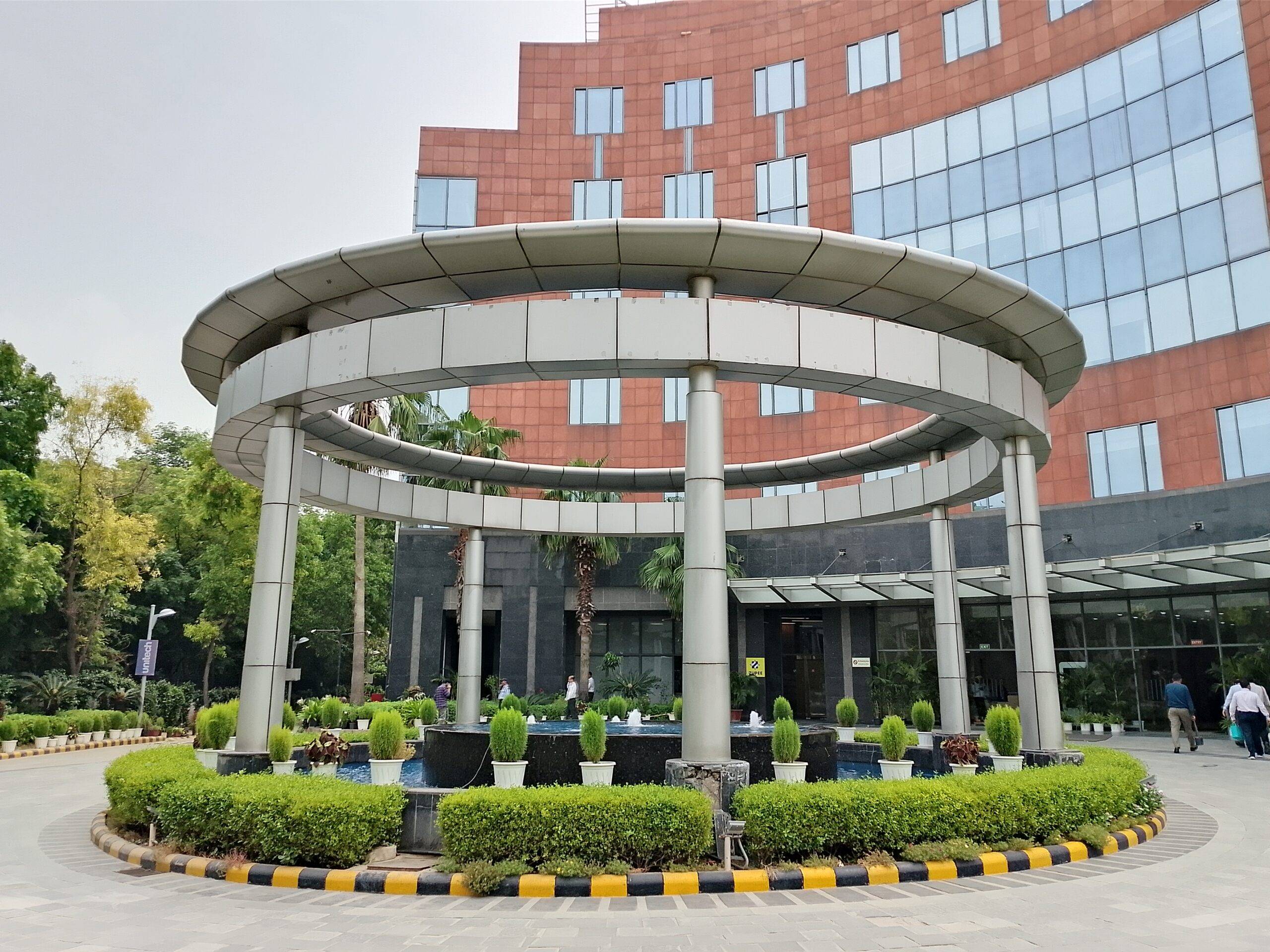
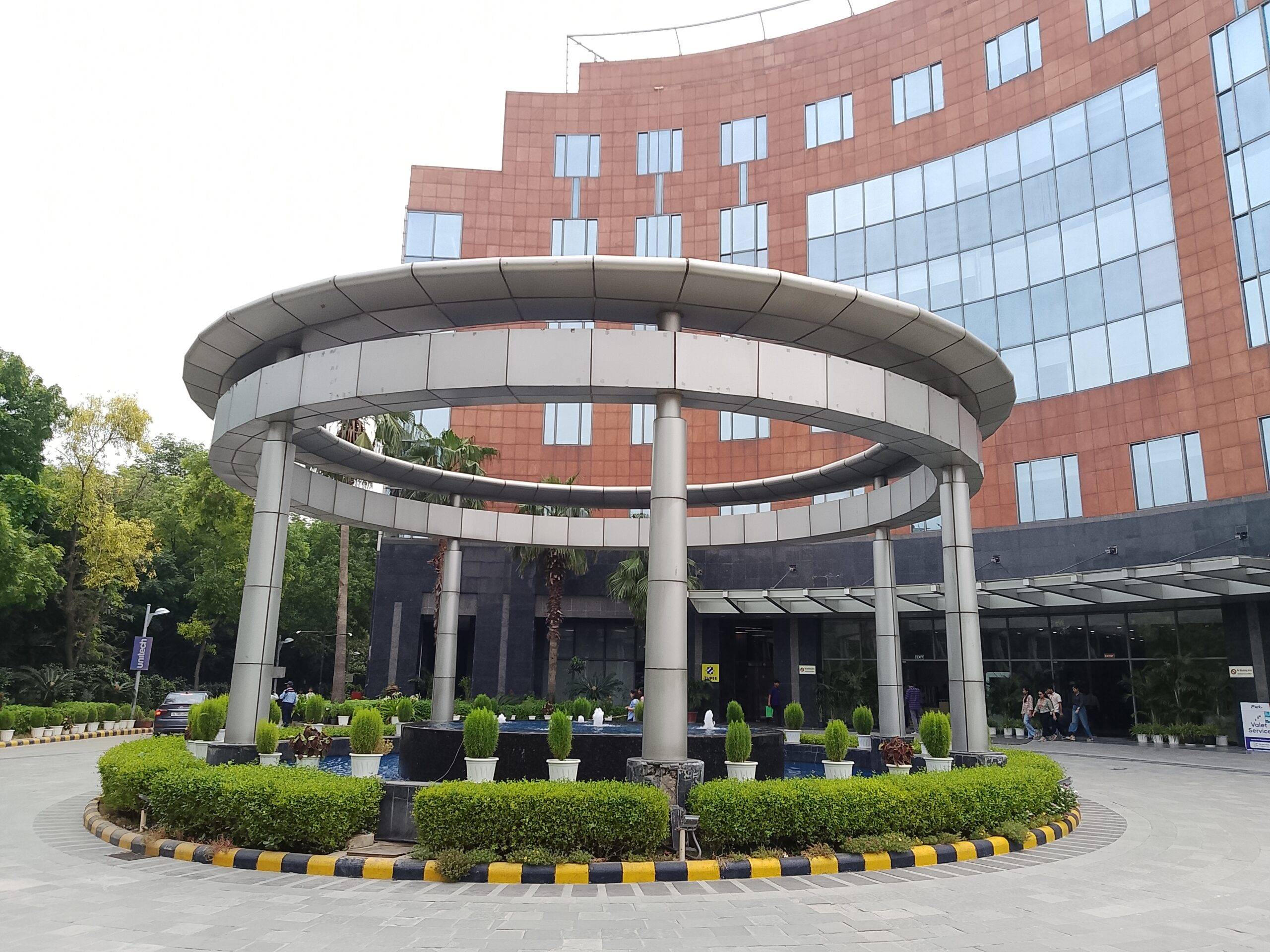
In our usual outdoor test, the itel City 100 captures slightly more detail with better edge sharpness, though both are close. In the images, you can see that the itel one shows the ‘ZUPEE’ text sharper than the Lava one, but the latter presents more details in the trees and signage on the left edge of the image. Although the Lava Shark 5G presents more natural colour tones, it also looks slightly cold and muted compared to the itel City 100.
The City 100 photo also presents the sky colour better. The Shark 5G has blown out the highlights and shows fewer details in the shadows around the plants on the left side.
Portrait
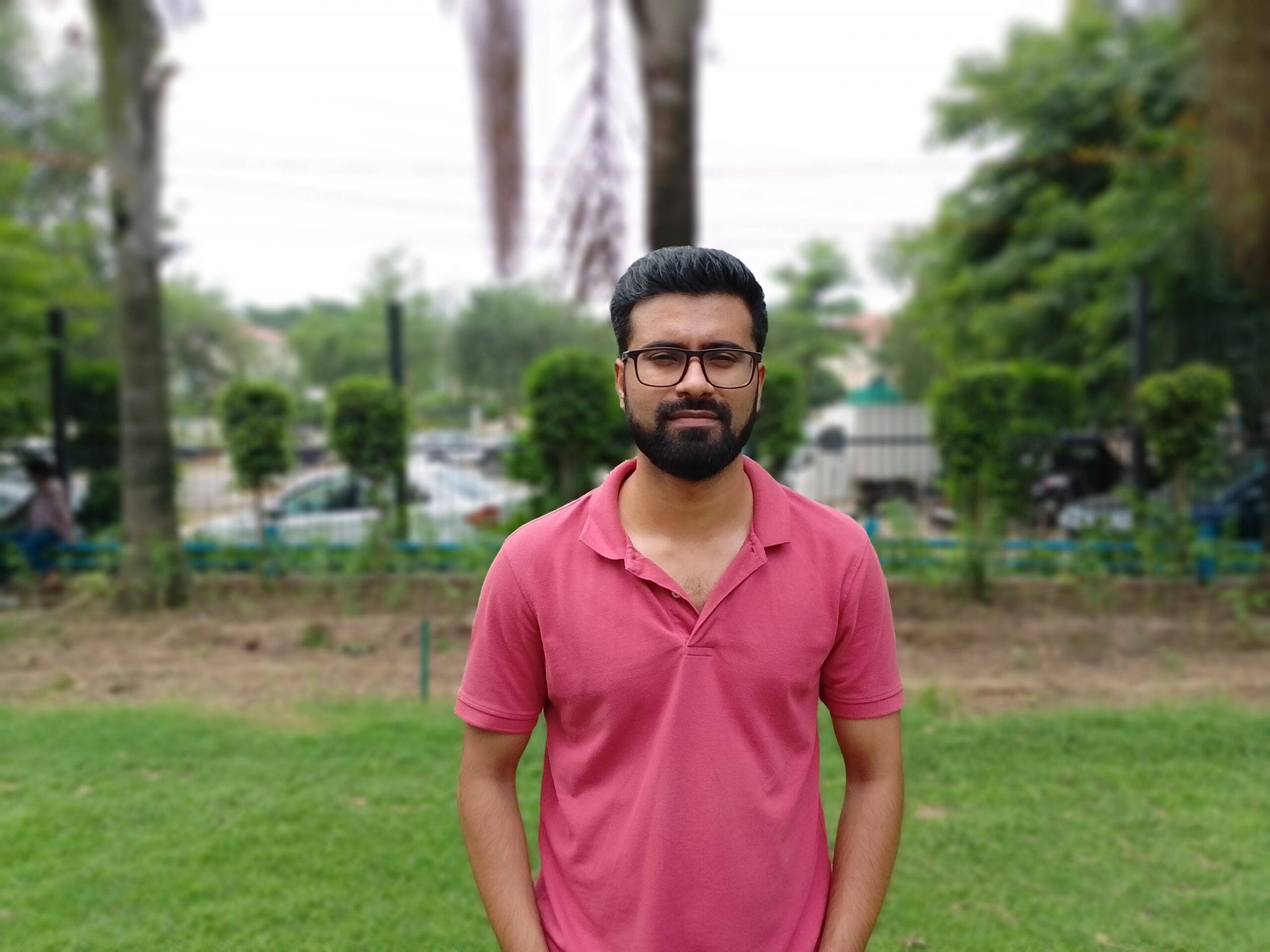
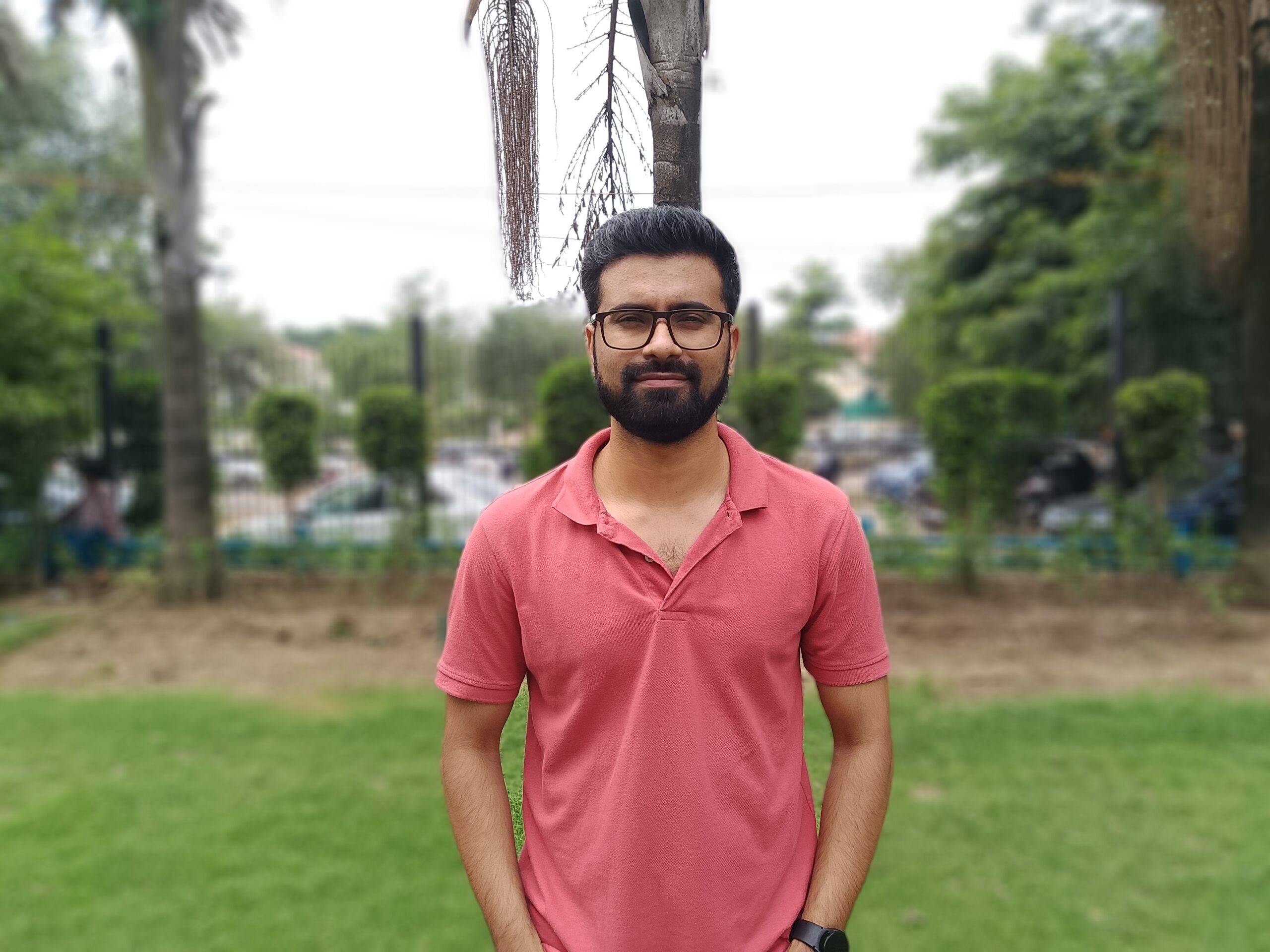
The Lava Shark 5G delivers slightly more natural skin tones and balanced colours. The skin tone and the colour of the subject’s shirt in the itel shot leans towards a reddish tint. In case of detail retention, Lava offers better facial texture and less smudging. The itel smartphone, however, has better edge detection, and the bokeh blur is also decent. So, there is no clear winner in this case.
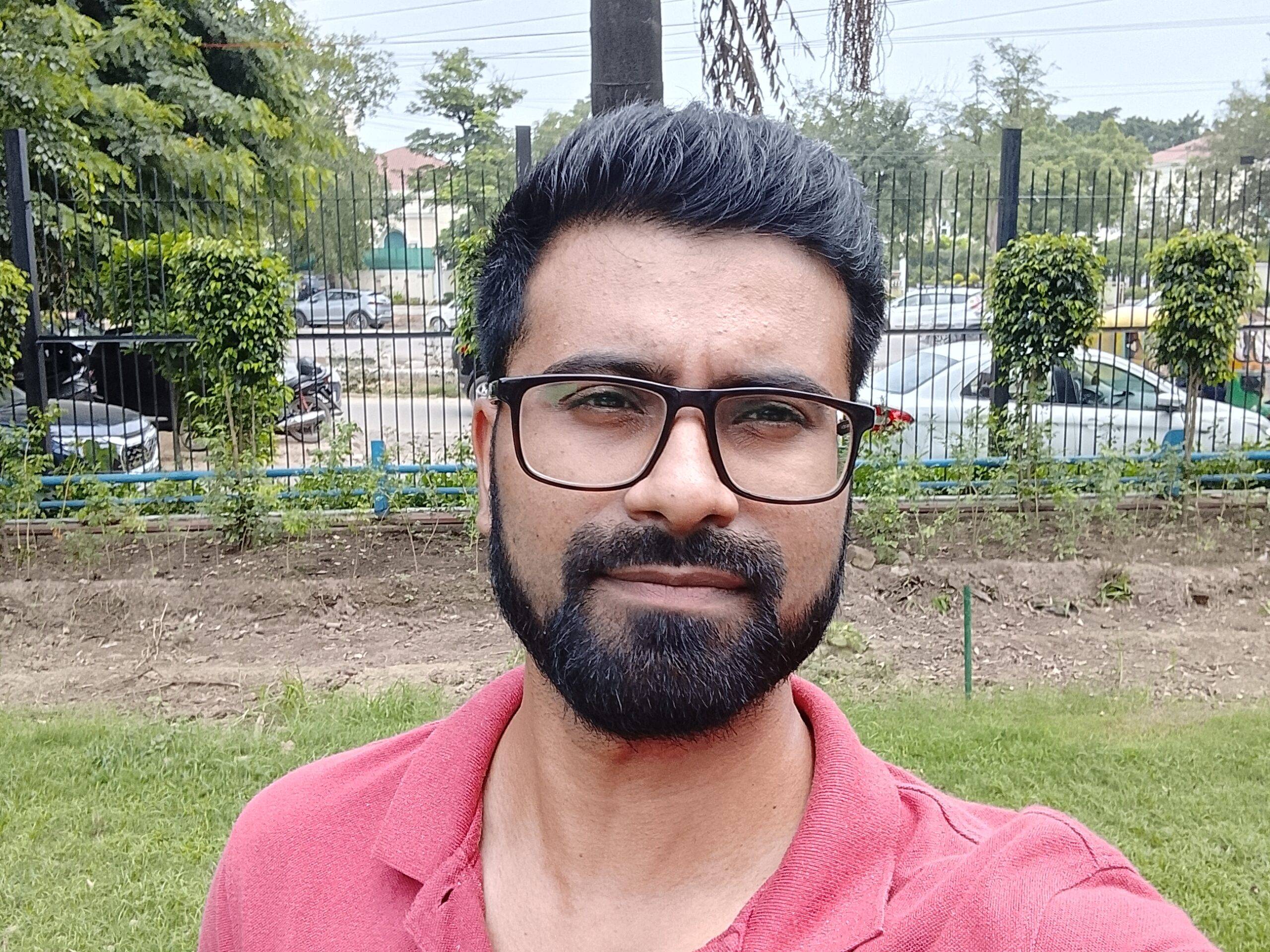
Selfie
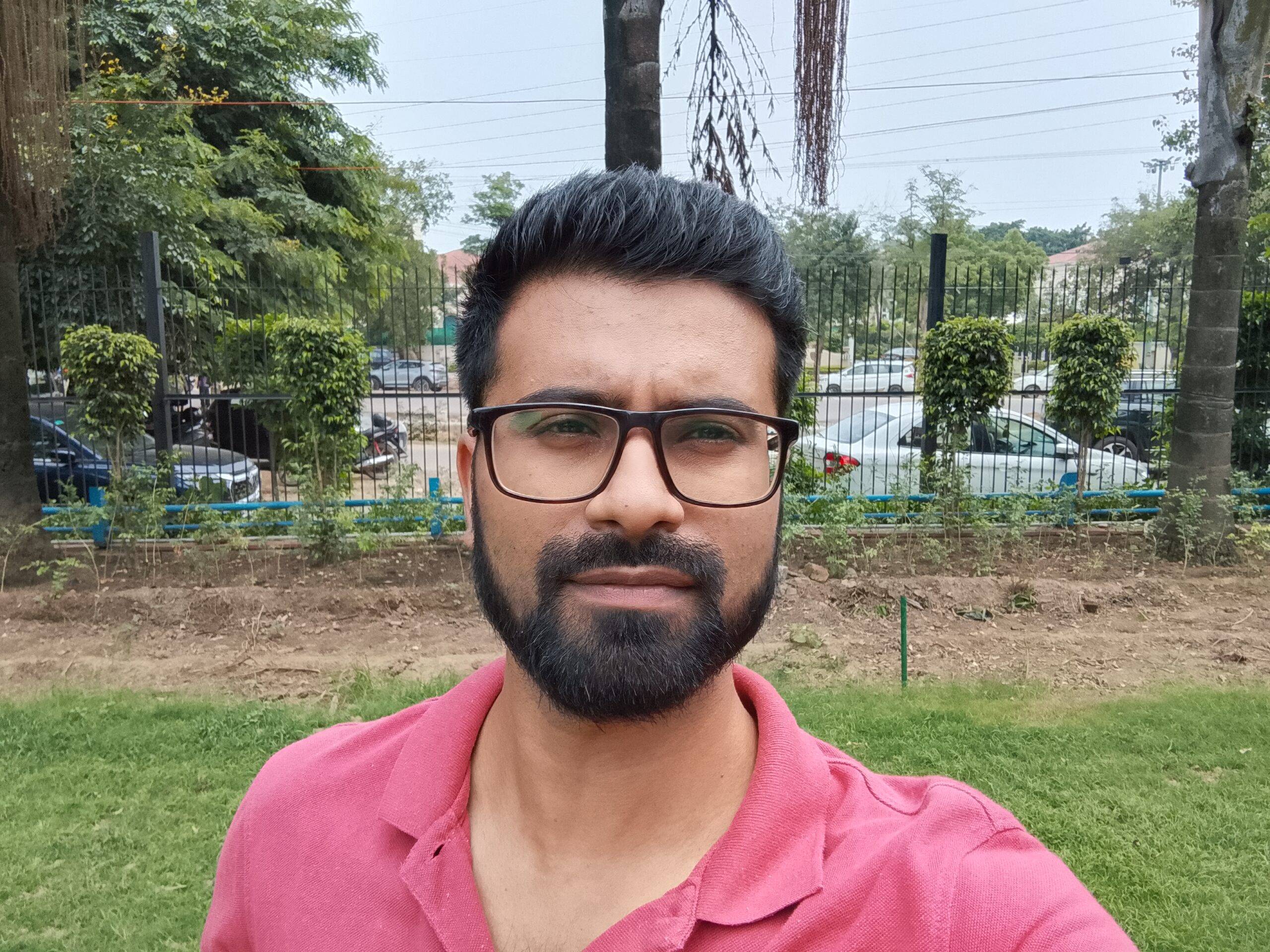
Although both phones have HDR Auto enabled, the output from the Lava phone oversharpens the facial texture and blows out highlights. The aggressive tuning on the Lava Shark 5G doesn’t look natural. So, on both detail and dynamic range, the itel City 100 is a better performer. The handset also edges out the Lava phone in colour tonality.
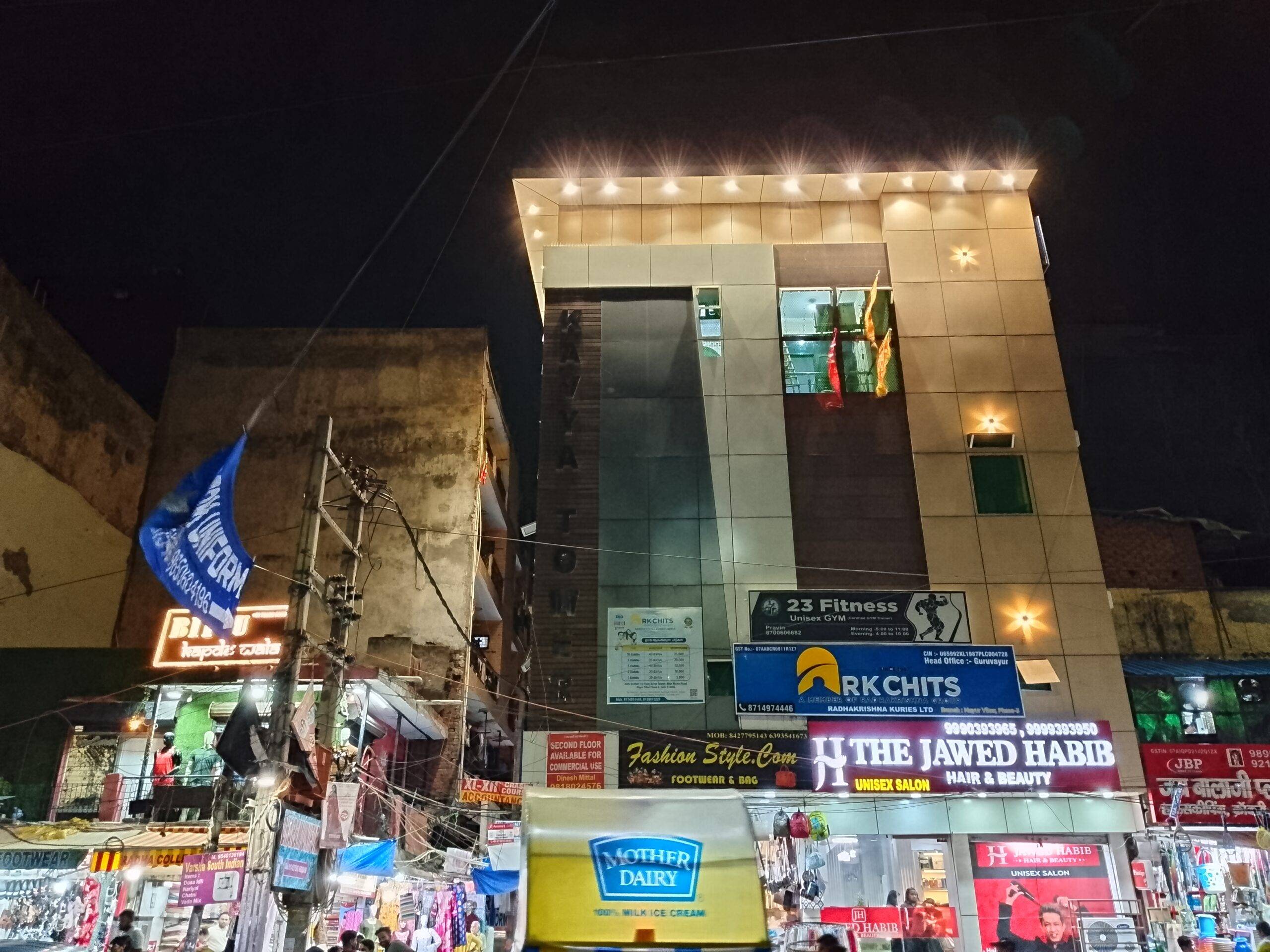
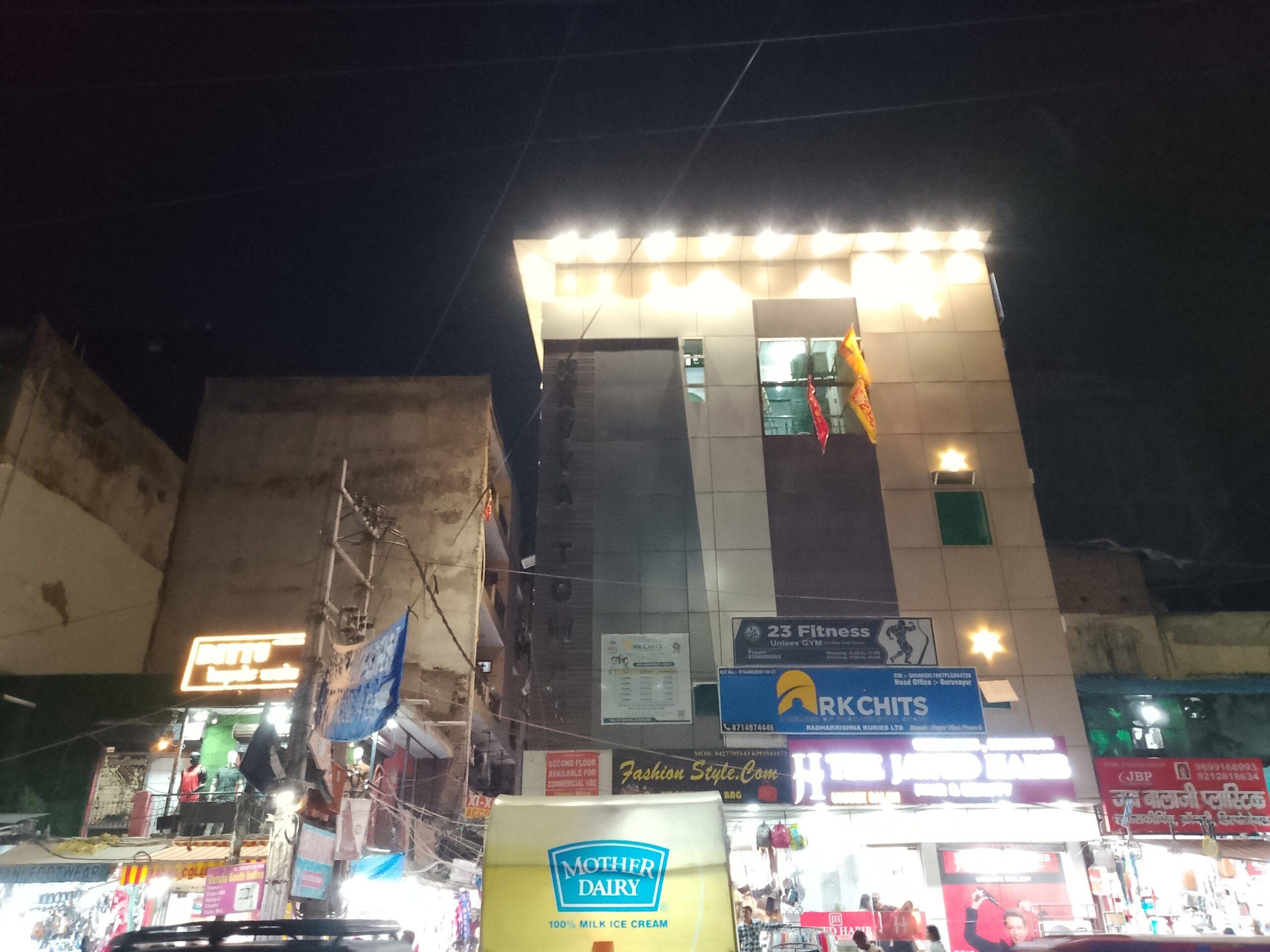
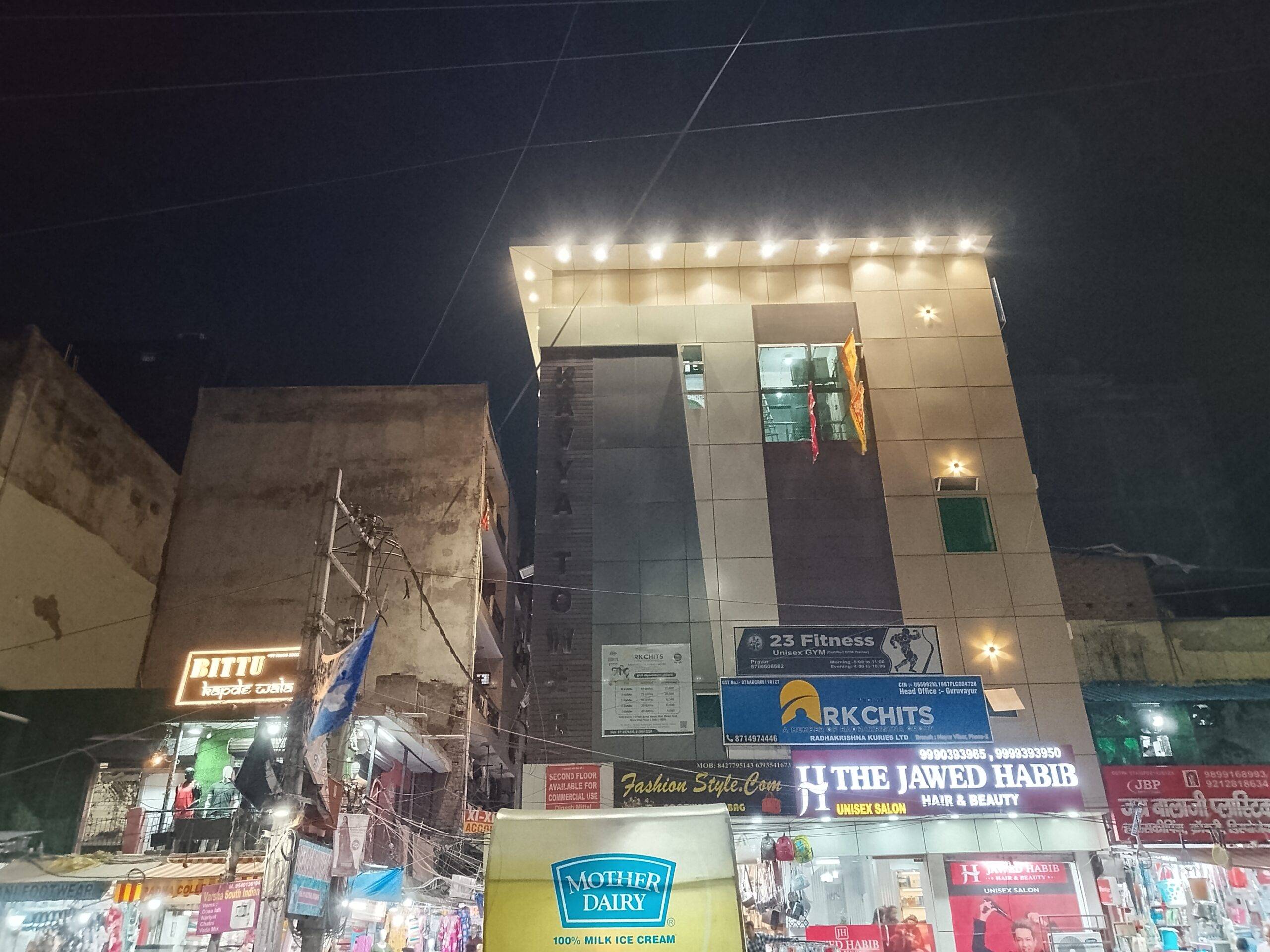
Low light
In these shots, the Lava struggles with light flares, causing noticeable blooming around light sources. The itel handles this better, containing the light more effectively. The smartphone itel preserves more detail, albeit with some noise. Neither shot gets the colour tones right, but the itel’s slightly saturated image looks more appealing, whereas the Lava shot appears washed out.
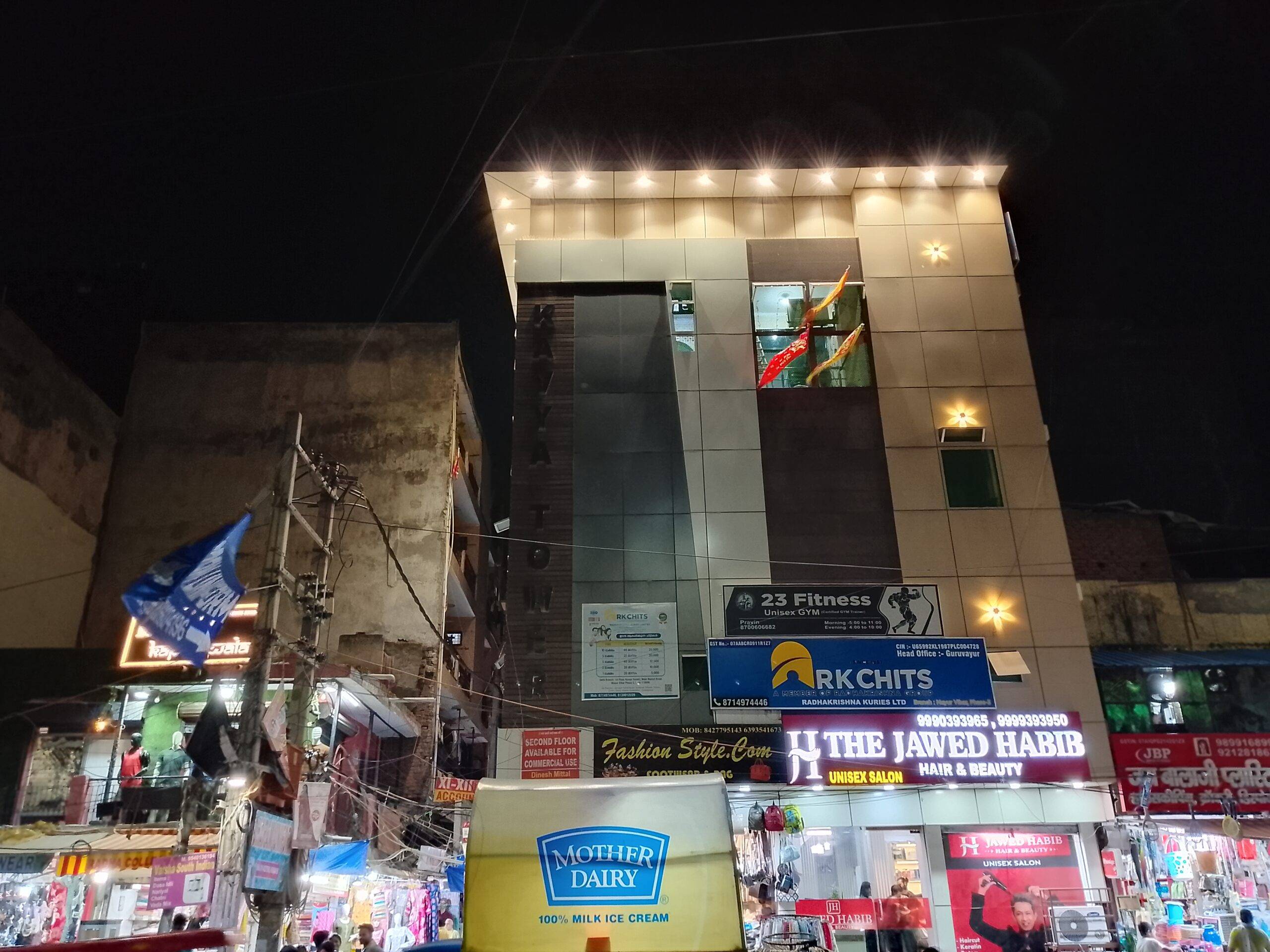
Low light (night mode)
Turning the dedicated Night mode on improved the Lava smartphone’s shot, but the itel City 100 still offers better detail and handles light more effectively. Lava’s colours are less washed out, but overall, the itel image looks better.
Videos
When it comes to videos, both phones support up to 1080p, 30FPS recording from the front. And on the back, the itel phone supports 1080p, 30FPS again, but the Lava phone delivers superior 4K res video at 30FPS. In case of front camera videos, the itel is far better in terms of details, colour and exposure control. As for the back camera video, the itel has more light in the frame, due to which the low-light places are better visible on it, while the overexposure can cause colours to look washed out in medium to normal lighting conditions.
Decent performer
| Smartphone | Chipset | RAM |
| Itel City 100 | Unisoc T7250 | 4 GB LPDDR4X |
| Lava Shark 5G | Unisoc T765 | 4 GB LPDDR4X |
The itel City 100 runs on a 12nm Unisoc T7250 SoC with two Cortex-A75 performance cores at 1.8GHz and six Cortex-A55 efficiency cores at 1.6GHz. On the other hand, the Lava Shark 5G packs a 6nm Unisoc T765 SoC with up to 2.3GHz frequency.
The chipset on the itel phone is paired with 4GB LPDDR4x RAM, 4GB virtual RAM, and 128GB UFS 2.2 storage. There is also a dedicated microSD card slot, though itel hasn’t specified the maximum supported capacity. Lava, meanwhile, offers 64GB built-in storage, which is user-expandable up to 512GB.
In our benchmark tests, here’s how the itel City 100 fared, compared to the Lava Shark 5G:

The Lava phone leads in all these benchmark tests, which is in line with the chip performance. But the scores from the itel phone are comparable to the POCO C71 (review), which also runs on the same chipset.
In everyday use, the itel phone performs as expected. For gaming, the handset runs Call of Duty Mobile at Medium graphics and High frame rate, similar to the Lava Shark 5G. In BGMI, however, the City 100 is capped at High FPS, while the Shark can go up to Ultra FPS. So, gaming could feel more fluid on the Lava. The GFXBench scores also reflect this difference.
In terms of connectivity, the phone lacks 5G support. While this isn’t uncommon in the segment, some alternatives like the Lava Shark 5G do offer it.
Feature-rich software
| Smartphone | Pre-Installed Apps | Software Support |
| Itel City 100 | 48 | NA |
| Lava Shark 5G | 30 | NA |
itel City 100 ships with Android 14, which is old at this point, and the phone may not get a major OS upgrade at all. The Lava Shark 5 5G, on the other hand, ships with a relatively new Android 15 OS and also assures at least quarterly security updates for two years.
Be that as it may, itel’s custom Android skin is quite feature-rich to satiate most users’ needs, though. For productivity, you get UI enhancements like an Always-On Display and a Dynamic Bar that shows real-time information such as face unlock status, incoming calls, recorder activity, charging animation, and media playback. There’s also a Smart Panel for quick access to favourite apps, and a Landscape Display mode that turns the phone into a desktop-style clock, Smart Hub, a temporary clipboard for text, images and files, and a Dual App feature to access multiple accounts of a platform on the same device. Quick gestures are also supported to access various functions more efficiently.
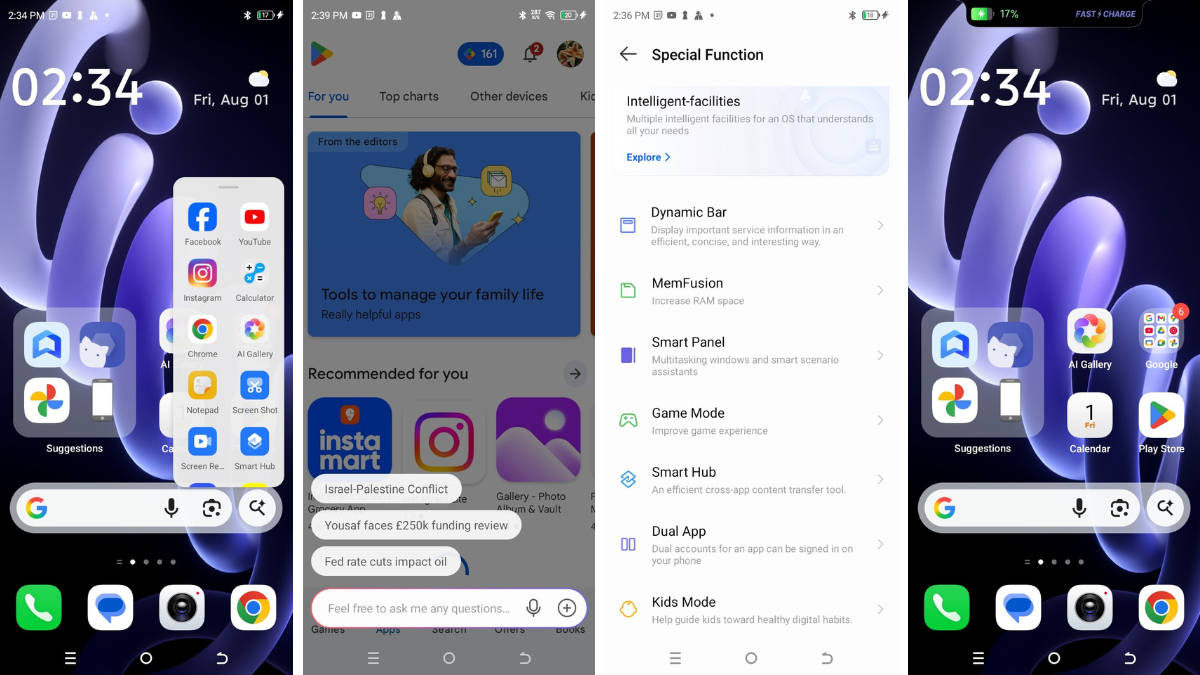
There’s a Game Assistant Panel, which gives you access to quick settings, enables bypass charging for battery health and heat management, hides interferences from notifications, remaps volume buttons for in-game controls, and a Game Mode feature which optimises the system performance for the on-screen game.
And if you want to give the device to a kid, the dedicated Kids Mode can come in handy with built-in parental controls to manage their access and screen time.
Additionally, the itel City 100 also features AI chatbot Aivana, based on the popular Chinese AI model, Deepseek. It serves as an alternative to Google Gemini and can be conveniently accessed by assigning it to the power button. You can launch Aivana with a long press of the power button, the home button, or simply through voice commands to have a conversation, edit images, correct or generate text, translate, and even ask what’s on the screen. The choice of Gemini and Deepseek is good to have.
The software also features ways to preserve battery life and health, like AI Charging Protection, which claims to suspend charging based on your charging routine, and Ultra Power Saving to get the maximum battery life possible by limiting various system settings. We will read more about the battery next.
Big battery
| Smartphone | Battery Capacity | Charging Support | Charging time (20% to 100% ) |
| Itel City 100 | 5200 mAh | 18W Fast Charging | 1h 40m |
| Lava Shark 5G | 5000 mAh | NA | 2h 38m 10s |
The itel City 100 has a 5,200mAh battery, which is bigger than the 5,000mAh cell inside the Lava Shark 5G. Still, in our PCMark battery test, the Shark performed a bit better. However, in another battery drop test involving YouTube playback, BGMI, Call of Duty Mobile, and Real Racing 3 gameplay, the itel City 100 proved to be more power-efficient across all tasks. On average, it drops 1.25 percent less battery than the Lava Shark 5G per session for 30 minutes, a difference that can translate to noticeably longer usage over the course of a full charge.
So, in day-to-day use, this difference would be negligible and you should get a day’s worth of juice from the itel smartphone.
In the case of charging, both smartphones ship with a compatible 18W wired charger. However, the itel phone takes a lot longer than the Lava phone to juice up from 20 to 100 percent, which is understandable given its larger battery size.
Final verdict
The itel City 100 stands out with its slim design, large 5,200mAh battery, and cameras that perform well in daylight, selfies, and even low light. The feature-rich software adds value, and overall performance meets expectations for the price.
That said, it doesn’t match the Lava Shark 5G in benchmarks and gaming. The itel smartphone requires a bit more system optimisation that should improve both performance and efficiency. The portrait mode of the City 100 also needs tuning to capture finer details. Additionally, the phone ships with Android 14 and doesn’t come with any promise of future updates, unlike the Lava, which runs Android 15 and offers at least some level of software support. There’s also no 5G, which limits its long-term relevance next to a few 5G-enabled alternatives like the Lava Shark 5G, Lava Storm Lite 5G, Redmi A4 5G and POCO C75.
Having said that, the itel is slightly more affordable than its rivals. At Rs 7,599, the City 100 brings together a balanced set of features for budget users. If your priorities are a clean and compact design, reliable battery life, useful software features, and decent everyday performance, the itel City 100 is an easy recommendation.
Editor’s rating: 7.5 / 10
Reasons to buy:
- Slim and lightweight design with IP64 protection
- Large 5,200mAh battery with good power efficiency
- Cameras deliver decent results in daylight, selfies, and even low light
- Feature-rich software with multiple AI chatbots, Game Assistant, and multi-tasking options
Reasons not to buy:
- No 5G support
- Runs older Android 14 with no promised updates