Luxsin X9 review: AI-Tuned Desktop DAC & Amp


Born as a spinoff of the Zidoo Group and Eversolo’s sibling brand, Luxsin is a lesser-known brand. One look at the X9 headphone amp/DAC confirms my belief that it’s a brand on the cusp of making some serious waves. While this category may be more crowded than a metro station at 9 am, Luxsin X9 has some pretty significant highlights that ensure it earns its time in the spotlight.

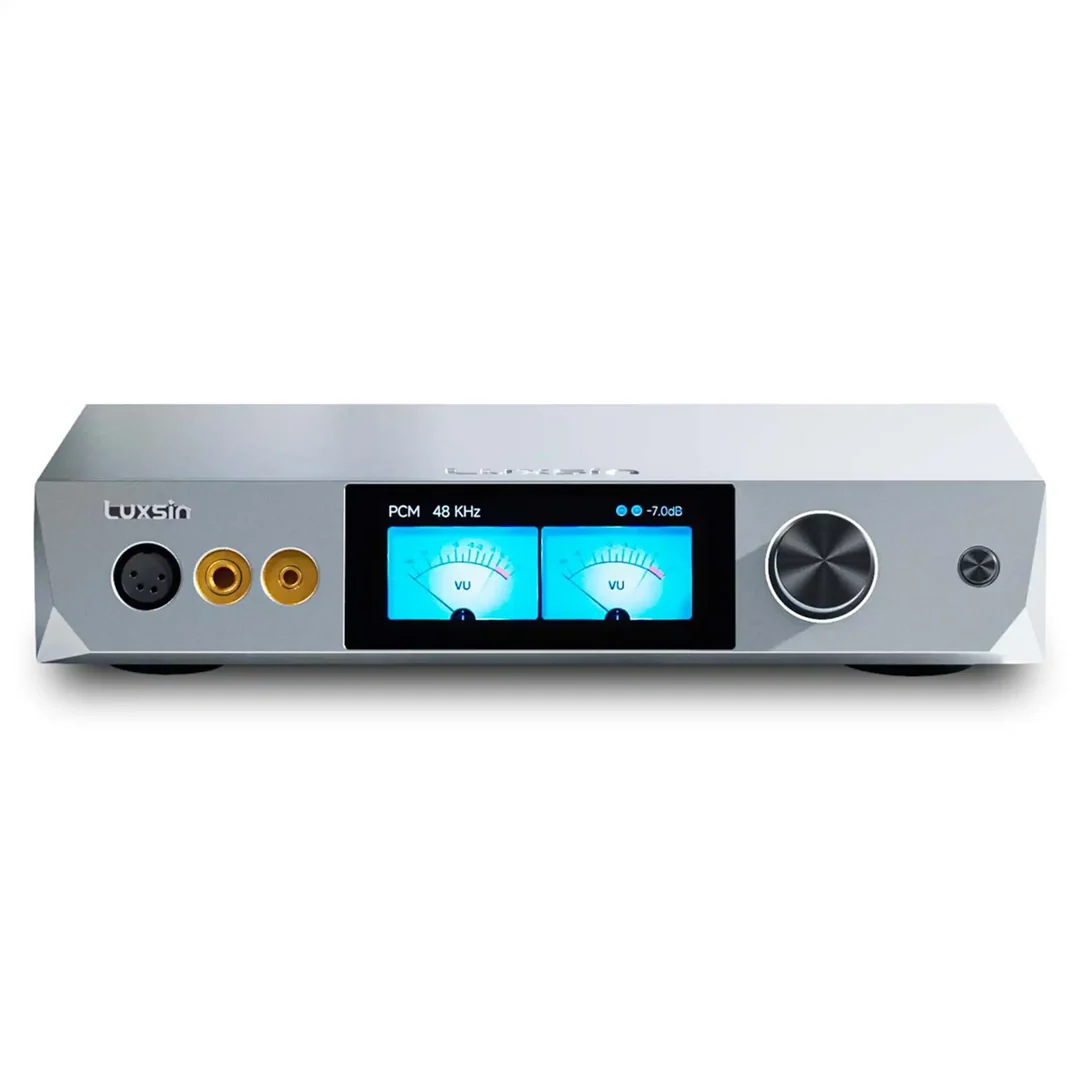
Table of Contents
Dressing your table
The 15-degree diamond-cut bevel on the front panel isn’t just for aesthetics, although the fully CNC-machined aluminium chassis does give it a hefty and serious stance. It tilts the 4.0-inch full-colour touchscreen toward the user, making it easier to read and operate whether you’re seated or standing over the desk. One of the X9’s most alluring party tricks is its wide selection of VU meter styles, from classic analogue needle displays to modern real-time spectrum visualisations, each reacting instantly to the music. Swiping between them is a lag-free experience, but the app gives a birds eye view of all the styles in a single screen, making it my preferred choice.


Geek-friendly
Designed to be a Swiss knife for a head-fi aficionado’s desk, its core hardware justifies the confidence. Two AKM chips handle everything from native DSD512 and PCM up to 32-bit/768kHz, and the signal runs through a fully differential balanced circuit from the conversion to the output stage. It also boasts of 128dB S/N ratio which is one of the best in the business and the only real chink in its armour compared to the competition on the spec sheet is the slightly low power output of 4W/pc in balanced mode. It also has a unique volume control implementation through a discrete R2R resistor ladder rather than a conventional potentiometer, moving in 0.5dB steps with a claimed 0.1dB left/right channel accuracy, accompanied by an audible relay click that sounds tactile and reassuring rather than distracting.

Ports ahoy!
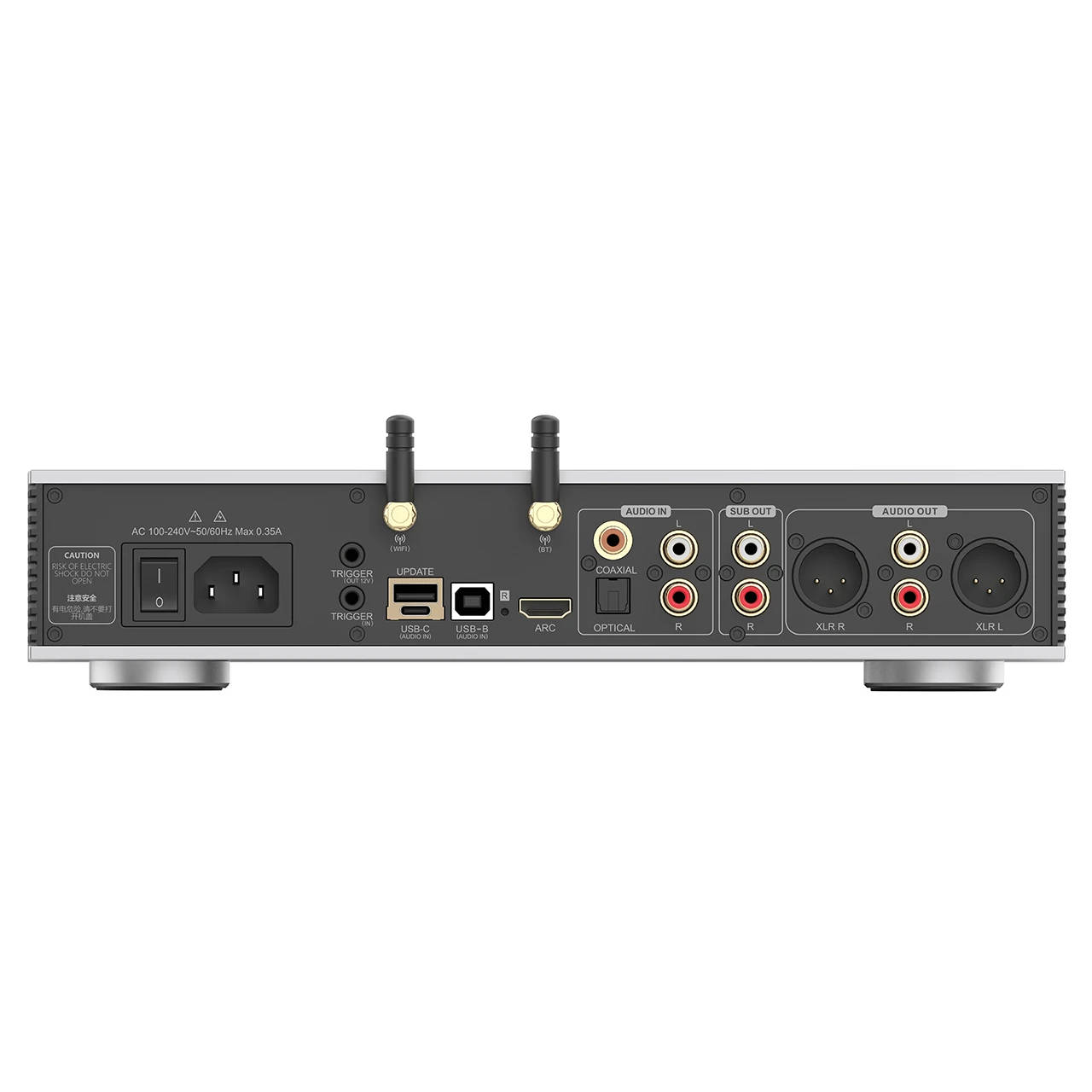
Around the front, you get 6.35mm single-ended, 4.4mm balanced, and 4-pin XLR outputs. The rear is equally well-appointed, featuring USB-B, USB-C, coaxial, optical, HDMI ARC for TV setups, RCA line-in, dedicated subwoofer outputs, and balanced XLR outs. Despite its laundry list of features, the underlying ethos of the Luxsin X9 is to make life less complicated for the desktop music lover. Auto-impedance detection is one such useful engineering flourish that detects a pair of headphones into either the 6.35mm or balanced 4.4mm output and measures impedance and recommends the correct gain stage across three tiers (16, 32 and 300 ohms) without degrading the signal path. Sitting alongside that is Luxsin’s comprehensive HP-EQ system, a hardware-level correction engine with a database of over 2500 headphone models, each tuned toward a Harman-style target curve. Other filters are available, or you could go full custom if you’re adept at handling parametric EQs. Crossfeed, Soundstage Width and depth controls and a personalised Hearing Compensation mode are just some of the other useful additions accessible through the app. You can dial in the kind of sound you prefer for a particular kind of music genre, either expansive or intimate, and it never feels “wrong”, even as a purist. This really is the audio equivalent of a spice cabinet in an Indian kitchen.
World’s first AI-enabled EQ
The real headline, though, is the AI-enabled EQ control layered on top of all that. Rather than dragging bands on a parametric EQ or picking a preset, you simply type, or speak, what you want into the Luxsin Controller app, phrases like “warmer with more bass” or “airier top end”, and the X9’s DSP interprets that description in real time, generating and applying a matching EQ curve on the fly. It removes the need to understand frequencies, Q values or filter shapes entirely. Billed as a world-first for a headphone amp/DAC, it’s a genuinely novel way to let non-technical listeners tune their own sound, and it works well enough in practice that it stops feeling like a gimmick within a few sessions.


Sonic fireworks
Using both the Focal Utopia and the Meze Audio Empyrean II headphones, the presentation was transparent and had the requisite sense of wide space and pinpoint imaging you would expect from top-tier cans. Despite the low power on paper, everything I threw at it, from IEMs to over-ear headphones, never felt like it was holding back on transient attack or dynamics. The only real point of note in terms of its sonic quality is that with the HP-EQ off, it tends to sound overtly soft and polite, so don’t expect the “flat” or neutral sound to entertain you. If you want to get the most out of your headphones, you will have to deploy the full power of the X9’s arsenal. But once you do, you will be rewarded with a revealing midrange, natural vocals and real texture to instruments. Of course, it’s easy to under or overcook things depending on your comfort level with handling complex EQ controls, but the upside is that your ears are still connected to your brain. So find a sound you like and don’t fuss about accuracy if you find the music connecting to you.
When you get it right, though, it stops being a gadget and starts acting like a high-end studio monitor. Take a track like ‘Limit to Your Love’ by James Blake and the sub-bass notes hit with that tight, snappy decay instead of the lingering, muddy warmth you get from lesser gear. In the midrange, it’s ruthlessly clean, which really shines on vocals like those in Radiohead’s ‘No Surprises’ where the separation is immediate and intimate. Whether it’s the last word in desktop DACs or headphone amps depends on how intimately you want to get to know it, and it may take a while until you can extract the best out of it. Even then, sonic subjectivity is always up for debate.


Who is it for?
The Luxsin X9 packs in some of the most daring DSP and software tricks the personal audio space has seen in years. The AI-enabled sound tuning is not just genuinely useful but alludes to a whole new revolution in the AV world if more brands and consumers take to it. I think it’s a matter of when and not if. For audiophiles who miss vintage Japanese hi-fi, the X9 delivers serious eye candy and adds genuine personality to a desktop workspace. At Rs.1,16,900, it’s not for everyone and certainly not for TWS owners, but if you do want to take the next step into the deeper end of desktop hi-fi, the X9 feels like having a personal mastering engineer on call.
Editor’s rating: 8 / 10
Pros
- Innovative AI sound tuning
- Transparent sonic character
- Aluminium chassis build is excellent
Cons
- Slightly low balanced power output
- Soft sound without EQ active
- Carries a high price tag