


Review Summary
Expert Rating
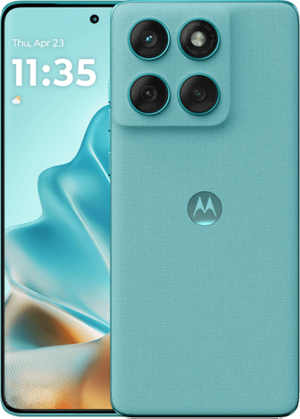
The Motorola Edge 70 Fusion is the latest addition to the company’s mid-range lineup in India, positioned just below the Motorola Edge 70 (review). The handset comes with a starting price of Rs 26,999 and stands out for its large battery, slim design, capable chipset, and curved display.
That said, like many recent launches, the Edge 70 Fusion arrives at a slightly higher price than its predecessor, the Motorola Edge 60 Fusion. However, with a set of notable upgrades, it aims to justify that bump and position itself as a strong contender in the sub-Rs 30,000 segment. Does it manage to do so? Let’s find out in our detailed review.
Table of Contents
Verdict
The Motorola Edge 70 Fusion is a well-rounded mid-range smartphone that offers a slim design, reliable battery life, capable cameras, a clean UI, and a vibrant display. It’s particularly appealing for users who want a sleek and stylish phone without compromising on battery endurance. While it may not be the best option for intensive performance or heavy gaming, the handset delivers more than enough power for regular to moderate day-to-day usage.
Design and display
Let’s start with the design of the Motorola Edge 70 Fusion. The phone carries the familiar Edge series look with a slim profile, curved display, and a rear panel that avoids metal or glass. This time, Motorola has opted for a fabric finish on the back with a subtle patterned texture. The handset is available in three Pantone colours — Blue Surf, Country Air, and Silhouette.
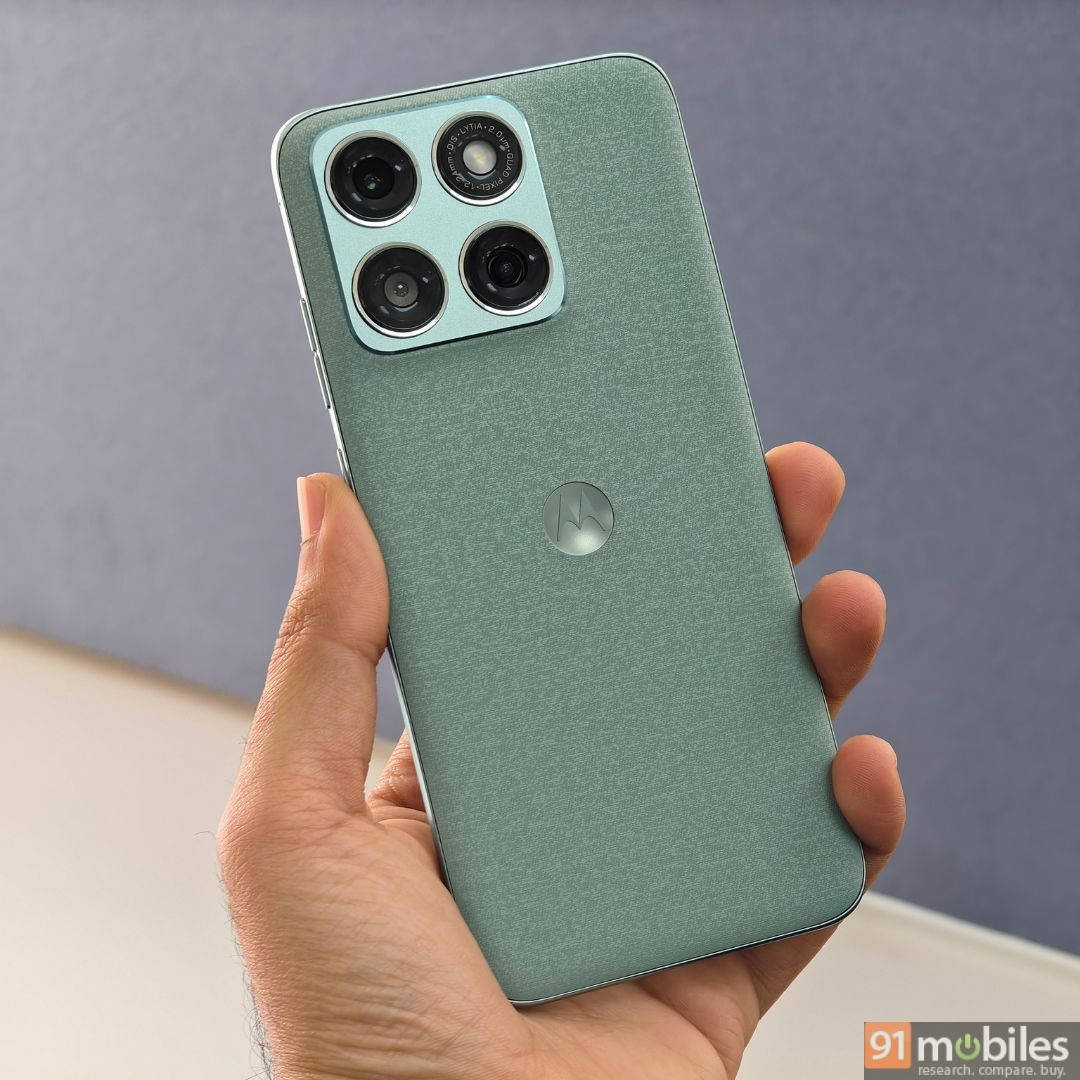
We received the Blue Surf variant, which appears as a light bluish-turquoise shade. While the overall design language is something we’ve seen from Motorola for a few years now, it still manages to stand out among most Android phones. Thanks to its slim and lightweight build (7.99mm and 193g), the phone feels very comfortable to hold and use, even for extended periods. The handset doesn’t feel overly large in the hand, despite my coming from a compact phone.
The Edge 70 Fusion features a 6.78-inch 1.5K quad-curved AMOLED display with a 144Hz refresh rate, up to 5,200 nits peak brightness, and Gorilla Glass 7i protection. The curved display choice is interesting at a time when many brands are shifting back to flat panels. However, the immersive feel of a curved screen is something the Edge 70 Fusion delivers very well. The display is bright, vibrant, and sharp, and even simple tasks like scrolling feel smooth and premium. The phone is also adequately bright indoors and outdoors, thanks to its 5,200 nits peak brightness level.
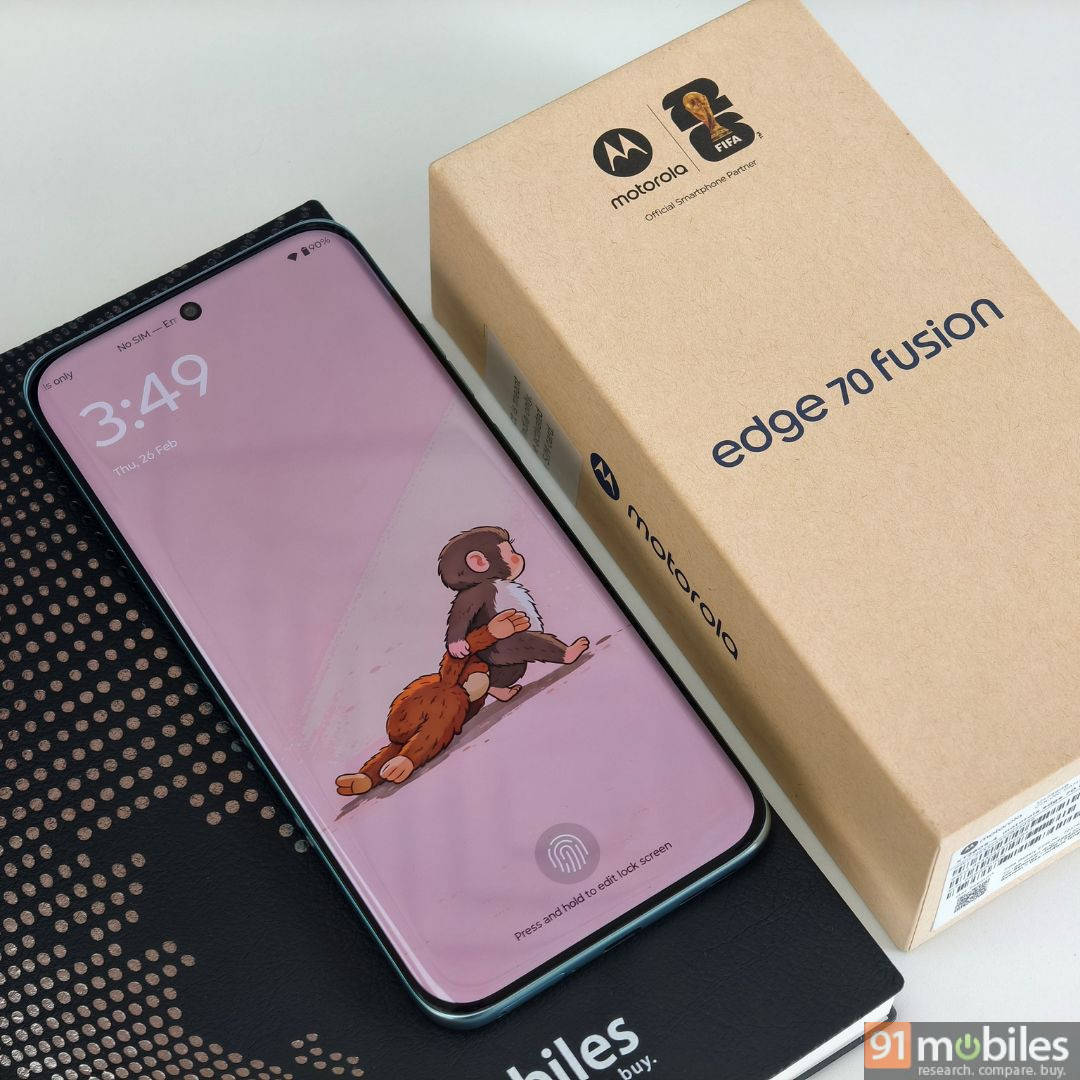
I particularly enjoyed watching content on this phone, as the curved display combined with Dolby Atmos speakers enhances the overall viewing experience. While the display supports a 144Hz refresh rate, it activates only during gaming. Even so, the standard 120Hz refresh rate is more than sufficient to ensure smooth scrolling and everyday use.
Cameras
The Motorola Edge 70 Fusion features a 50MP Sony LYT-710 primary sensor paired with a 13MP ultra-wide camera. For selfies and video calls, it includes a 32MP front camera that also works well for group selfies, thanks to its wider field of view.
Despite the dual-camera setup, the Edge 70 Fusion aims to offer versatility. The ultra-wide camera doubles as a macro shooter and assists with depth for portraits, while multiple focal lengths add flexibility for portrait photography.
Motorola has also integrated motoAI to optimise textures, colour accuracy, and motion detection in real time, helping reduce blur and improve clarity in fast-moving scenes. The company further highlights Pantone-validated colours and Pantone SkinTone validation for more accurate colour reproduction.

















Overall, the Edge 70 Fusion delivers balanced and respectable camera performance with a leading score in its segment. The handset captures good daylight shots and performs particularly well in low light. To see how it stacks up, we compared its cameras with those of the Redmi Note 15 Pro.
Daylight
Starting with daylight photography, it was a close call between the two phones, but the Edge 70 Fusion slightly edged ahead with better detail and colour consistency. The difference is most noticeable in finer details, where the Redmi tends to smooth out elements like plants and flowers. Motorola also does a better job with colour reproduction, maintaining more natural and consistent tones, while the Redmi adds a bit more contrast than what appears in reality.


Selfies
When it comes to selfies, the Motorola Edge 70 Fusion maintains better details and clarity compared to the Redmi. Skin tones on the Motorola smartphone can appear slightly contrasty, but it still does a better job of preserving accurate colours across the scene. The Redmi offering, on the other hand, applies mild smoothing, which isn’t necessarily bad and can make selfies look more appealing for social media. However, considering the overall image, the Edge 70 Fusion offers better dynamic range, making the background appear more detailed than on the Note 15 Pro.


Portrait
Neither phone has a dedicated telephoto camera, so portraits rely on the primary sensor. In this case, the Edge 70 Fusion’s skin tones and colour accuracy aren’t quite as good as the Redmi Note 15 Pro’s. However, it captures noticeably better details, especially in elements like fabric textures and hair strands.
Edge detection and bokeh are a mixed bag on both phones. The Redmi Note 15 Pro manages good edge detection around certain parts of the face but struggles in other areas. The Edge 70 Fusion, meanwhile, applies slightly stronger bokeh and occasionally cuts out small portions, but it still manages to produce a more natural-looking portrait overall.


Ultra-wide
Ultra-wide shots on the Edge 70 Fusion show better detail and colour consistency, much like its daylight images. Motorola also delivers better dynamic range, retaining elements even in darker areas where details might otherwise be lost. While the Redmi Note 15 Pro does a decent job, the Edge 70 Fusion clearly has the upper hand in this scenario.


Low-light (night mode)
The Redmi Note 15 Pro automatically enables night mode in low-light conditions, whereas the Edge 70 Fusion uses a separate night mode. Comparing the two, the Motorola handles light flare much better without losing too much detail. Its low-light images also show less noise, while still retaining finer elements such as the brick lines on a wall. Colours are well reproduced on both phones, although the Redmi Note 15 Pro adds a slightly higher level of contrast.


Performance and software
The Motorola Edge 70 Fusion is powered by the Qualcomm Snapdragon 7s Gen 4 chipset, marking a generational upgrade over the Qualcomm Snapdragon 7s Gen 3 found in the Motorola Edge 60 Fusion. This newer processor delivers solid performance for its segment.
In benchmark tests, the Edge 70 Fusion posts a respectable 1,149,292 points on AnTuTu, indicating strong overall performance. Its Geekbench scores are also competitive, particularly in multi-core performance, where it reaches 3,475 points, placing it comfortably among rivals in the same category.



In real-world usage, the phone delivers a smooth and reliable experience with no noticeable slowdowns during everyday tasks. Typical activities, such as making calls, using messaging apps like WhatsApp, browsing Instagram, streaming shows and movies, or occasionally using the camera, run effortlessly.
Gaming performance is also impressive, especially for users who enjoy visually appealing titles. The curved display performs well and avoids the accidental touch issues that sometimes affect curved-screen phones. That said, the phone tends to warm up slightly quicker than expected, particularly during extended gaming sessions.
Motorola smartphones are well known for their clean, near-stock Android experience, and the Edge 70 Fusion continues that tradition. The phone runs Hello UI based on Android 16 right out of the box. As expected, the interface feels clean, minimalistic, and smooth. Navigating through the system is effortless, and you don’t have to deal with unnecessary third-party apps, apart from the standard Google apps that most users rely on anyway.
The UI is simple and intuitive, making it easy to use even for those who prefer a straightforward smartphone experience. However, it does fall short when it comes to customisation, particularly with themes. If you enjoy frequently changing the look and feel of your phone’s interface, you might find the options here somewhat limited.
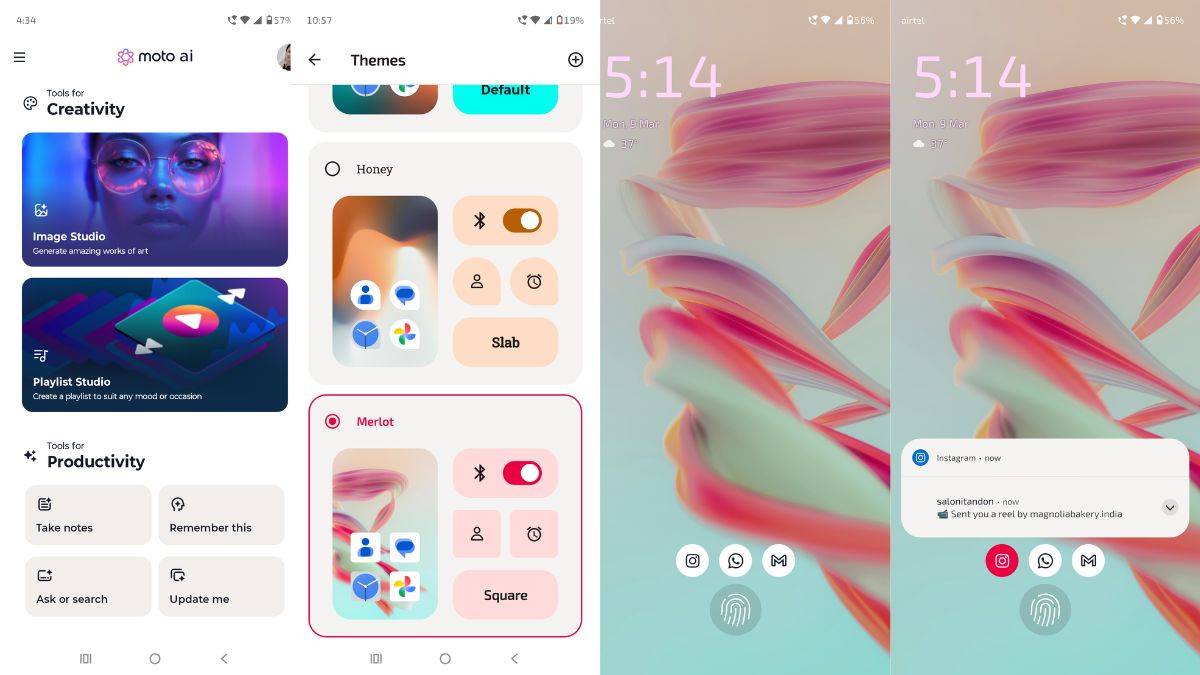
One feature I personally found very useful is lock screen notifications. When you receive a notification while the phone is locked, the app’s icon appears directly on the lock screen. Tapping the icon lets you quickly preview the notification’s content without unlocking the phone. From there, you can decide whether to unlock the device for further action or simply dismiss the notification. It’s a small feature, but one that adds convenience to everyday use.
Motorola also includes its own set of AI-powered tools under Moto AI. These features include Image Studio for generating images and Playlist Studio for creating playlists. Moto AI can also help you take notes, remember tasks and actions, answer queries, and provide updates on events or things to do. While these tools may feel somewhat limited compared to the more advanced AI ecosystems offered by some competing brands, it still feels enough for what you’d need daily. For image edits, you have Google’s AI features built within the Photos app.
Overall, the Motorola Edge 70 Fusion is a well-balanced device for regular to moderate use. While heavy workloads may cause some heating, the phone remains more than capable of handling most everyday tasks with ease.
Battery life
The battery performance of the Motorola Edge 70 Fusion is truly one of its standout features. Motorola has managed to pack a massive 7,000mAh battery into an impressively slim 7.99mm body, thanks to silicon-carbon battery technology. Large batteries like this are quickly becoming the new standard, with some brands even pushing beyond the 7,000mAh mark.
With such a large battery, you can comfortably expect more than a full day of usage on a single charge. In fact, the Edge 70 Fusion can easily stretch to two full days with moderate use. Even under heavier usage, the phone should still last well over a day. The PCMark benchmark score is equally impressive, with the Edge 70 Fusion running for 17 hours and 34 minutes straight. This is one of the best scores in the segment, just a few hours shy of the Realme P4 Power, which has a 10,001mAh battery.


This endurance holds up even with demanding settings enabled, such as Always-On Display running continuously, 5G connectivity, hotspot usage, and the refresh rate set to its maximum, all of which typically drain battery faster. So, if you’re looking for a slim, stylish smartphone that doesn’t compromise on battery life, the Edge 70 Fusion makes for a very compelling choice.
Final Verdict
The Motorola Edge 70 Fusion is a well-rounded mid-range smartphone that offers a slim and lightweight design, reliable battery life, capable cameras, a clean UI, and a vibrant display. The fabric finish and Pantone colours give it a distinctive look, while the curved display makes the phone comfortable to hold and use. It’s especially appealing for users who want a stylish phone that can easily last through a full day of regular use.
Performance is sufficient for everyday tasks, social media, streaming, and moderate gaming, though it may not be the best choice for heavy gaming or intensive workloads. If you want better performance, the Motorola Edge 70 (review) is a stronger option, but it’s priced slightly higher. Meanwhile, the Nothing Phone (4a) (review) offers similar performance with the same chipset but adds a telephoto camera, making it a better pick for those who want more camera versatility.
The Edge 70 Fusion still stands out with its slim design, dependable performance and long-lasting battery life, clean software experience, and well-balanced cameras, making it a solid and stylish mid-range choice for most users.
Editor’s rating: 8.3/10
Reasons to buy
- The 7,000mAh battery can run longer than a day on regular usage.
- The phone’s slim and lightweight design makes it easy to hold and use for longer durations.
- The Edge 70 Fusion’s camera setup produces satisfactory results in all lighting scenarios.
- Although not the top performer, the handset is more than capable for regular and moderate usage.
Reasons to skip
- The phone tends to warm up slightly quicker than normal while gaming.
- Its dedicated macro mode for close-up photography could do better with detail preservation.
 | vs |  |
| vs |  |