Motorola Signature revisited: still promising 6 months later, with one glaring flaw


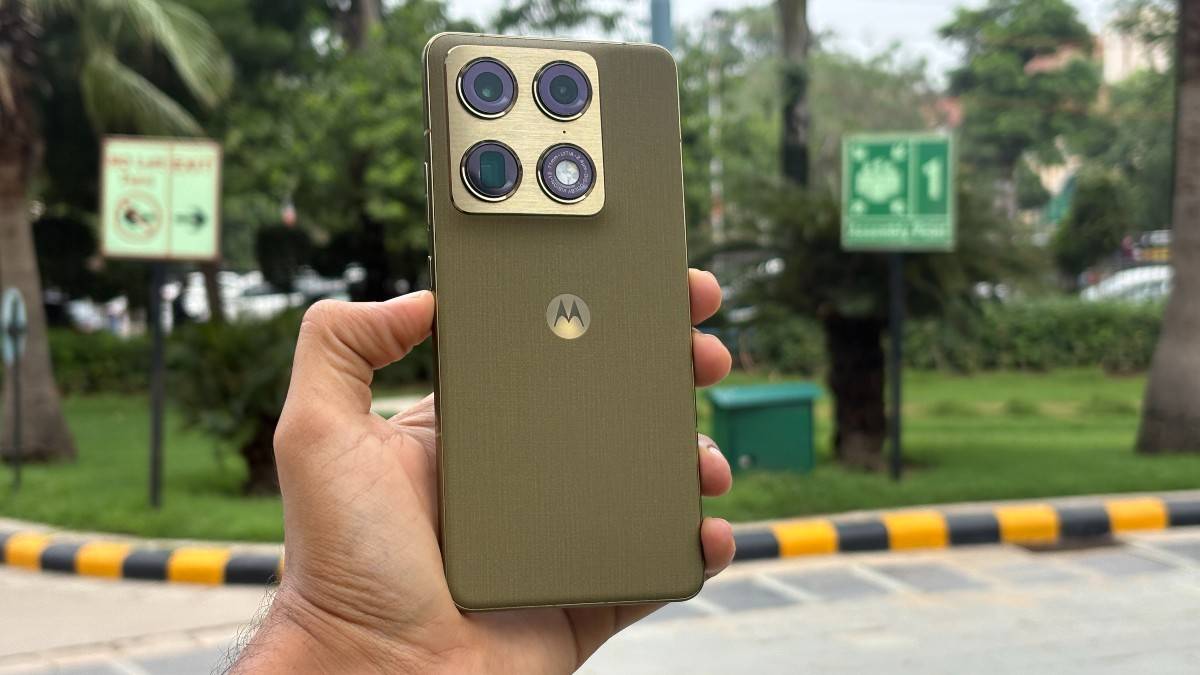
What impressed me the most about the Motorola Signature is that its price has remained unchanged since the launch. This is no small feat, considering almost every manufacturer has jacked up smartphone prices to accommodate the exponential rise in component costs. In fact, at the time of writing this article, the Motorola Signature was selling with a flat discount of Rs 2,500 across all variants, bringing its starting price down from Rs 59,999 to Rs 57,4999. This alone makes it a much more compelling option since I first reviewed the device back in January.
However, after revisiting the smartphone, one glaring issue became apparent, and it is an area Motorola cannot afford to overlook both for its existing and potential buyers. Read on to find out what that is and what works for the Motorola Signature.
Table of Contents
What continues to work for Motorola Signature


The Motorola Signature continues to be a sleek smartphone that matches Motorola’s design identity. At 76.4mm wide, the handset remains broader than most other smartphones, but its 7mm thickness ensures that it doesn’t get unwieldy in day-to-day operations. While everything remains within reach, reaching for those far corners might require slight finger gymnastics for single-handed use.
We had the Pantone Martin Olive colourway for review, which features an elegant fabric finish on the back. Contrary to my initial impressions, the material did not pick up stains during everyday use when using the phone without a case, which has to be purchased separately. We did not have any accidents with the phone to test its durability against drops and falls, but its display remains susceptible to scratches. It is recommended to purchase a tempered glass alongside the phone since there is no screen protector on top of the Corning Gorilla Glass Victus 2.

That said, users should remain worry-free with the Motorola Signature out in the rain, thanks to its IP68/IP69 rating. The phone also features aluminium framing and MIL-STD-810H military-grade certifications to take minor beatings during everyday use. Its 186-gram weight further ensures ease of use during prolonged use.
The Motorola Signature sports a 6.8-inch LTPO AMOLED display with a 1.5K resolution, a dynamic refresh rate of up to 165Hz, HDR10+ support, and a peak brightness of 6,200 nits. It is among the best displays you can get in this price range, offering vibrant colours, excellent sharpness, and smooth visuals. Visibility is impressive indoors and remains decent even under direct sunlight, while colours retain their punch and vibrancy even when viewed from an angle.


Moving on, the Motorola Signature remains as swift and smooth as it was on day one, thanks to the Snapdragon 8 Gen 5 SoC. Its benchmarking numbers remain the same as before and are on par with rivals, and everyday tasks, multitasking, editing, and AI features, including several built-in ones, are handled with ease. The SoC is paired with 12GB/ 16GB LPDDR5X RAM and 256GB/ 512GB/ 1TB UFS 4.1 storage. We tested the phone with the top-end configurations, but the base 12GB RAM variant shouldn’t be any different.
Not much has changed with the camera setup either. The Motorola Signature remains one of the few options in the segment to offer a dedicated telephoto lens, alongside the main and ultrawide sensors. All these sensors have a 50MP resolution, with OIS support on the primary and telephoto cameras. While they may not be flagship sensors, the Motorola smartphone set out to impress with vivid tones and fine detailing across lighting conditions.
Those looking for true-to-life colours may not find the Motorola Signature particularly appealing. However, social media enthusiasts are likely to appreciate its vibrant image processing and the versatility offered by the camera setup.
What doesn’t work for Motorola Signature

While the Motorola Signature’s display looks stellar, there is one caveat. The display operates at a maximum of 120Hz across the UI and most system apps. Motorola claims the 165Hz refresh rate is reserved for supported high-frame-rate games such as BGMI. However, that wasn’t the case during our testing. While the overall experience remains fluid, the display did not consistently reach the advertised 165Hz refresh rate, making its real-world performance fall short of the claimed value. We highlighted this issue in our review back in January and hoped a software update would address it. However, that has yet to happen.
This leads us to the bigger problem. Eight months later, the smartphone is still running the January 2026 security patch and Android 16-based Hello UI, with no software updates rolled out since launch. That is disappointing for a flagship phone, especially one that is promised to receive a staggering seven years of Android OS and security updates.

As a result, the software experience feels dated, lacking several of the latest features, including dynamic clock widgets, improved notification controls, and expanded customisation options introduced with the recent Motorola Edge 70 Max. More importantly, it raises questions about whether Motorola can deliver on its longevity claim and keep the Signature relevant for years to come.
The Motorola Signature’s 5,200mAh battery could also benefit from further optimisation if it is to compete with the 7,000mAh+ batteries now becoming common in this segment. In both our real-world usage and synthetic benchmark tests, the handset falls short of its rivals. That is not to say the Signature is incapable of lasting a full day on a single charge under regular usage.

It certainly can, but more demanding tasks such as navigation, 4K video recording, editing, or any workload that causes the device to heat up, which honestly isn’t very difficult to achieve owing to its underwhelming thermal management, drain the battery much faster, often forcing users to top up the phone before the end of the day. The Motorola Signature supports 90W wired fast charging and 50W wireless charging, which can juice it up in a jiffy, but if you’re a gamer or power user, the overall experience feels less appealing.
Final thoughts
Many of the Motorola Signature’s shortcomings can be overlooked when viewed in the context of its target audience and competition. The handset goes up against several capable rivals, including the OnePlus 15R (review), OPPO Reno15 Pro Mini (review), and Vivo V70 (review). However, all these rivals are only good in parts. The OnePlus 15R is better suited to power users and gamers, while the OPPO Reno15 Pro Mini and Vivo V70 place a stronger emphasis on camera performance.
The Motorola Signature, meanwhile, is designed to deliver a well-rounded, lifestyle-focused experience rather than excel in any one area, and in that regard, it succeeds. The smartphone is powered by a capable sub-flagship chipset that can comfortably handle almost anything you throw at it. It is complemented by an excellent display, a capable and versatile camera setup, and a battery that provides an all-day backup for everyday use.
However, the success of the Motorola Signature depends on timely software updates.