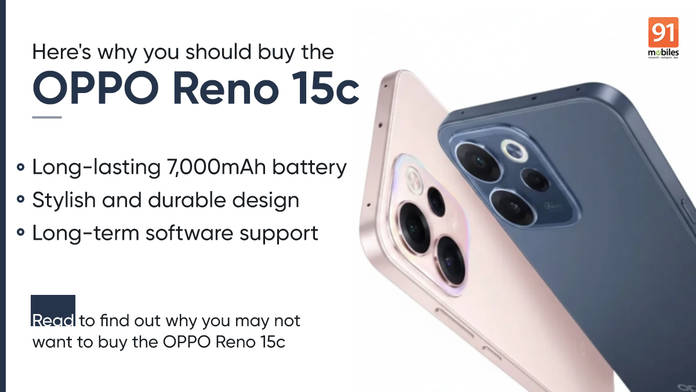
OPPO Reno 15c is the first ‘C’ model in the Reno lineup, and the most affordable one from the latest series. It sits below the Reno 15 and the Reno 15 Pro series, while offering a similar design and experience at a more accessible price. The Reno 15c doesn’t come cheap, though. With a starting price of Rs 37,999, the handset sits in the upper mid-range category with many factors to consider before buying it.
To make that decision easier for you, we’ve listed out the Reno 15c’s pros and cons in detail based on its review. So, here are three reasons to buy the Reno 15c, and two reasons why you might want to skip.
Table of Contents
Reasons to buy the OPPO Reno 15c
Reliable two-day battery life
If battery life is a top priority for you, the Reno 15c makes a compelling case for itself. It packs a massive 7,000mAh battery, ensuring you can easily get through up to two days of regular to moderate use, whether that includes 5G browsing, streaming, social media, or even hotspot sharing. This level of endurance makes it a dependable choice for heavy users and those constantly on the move.



And when you do need to recharge, the 80W SuperVOOC fast charging comes in handy, taking the phone from 20 to 100 percent in under an hour. So, you spend less time plugged in and more time actually using your phone. The Reno 15c also has the best PCMark benchmark score in its segment, with 18 hours and 14 minutes.
Stylish and durable design
The Reno 15c has a 6.57-inch which isn’t too large nor too small. The screen size hits a sweet spot, making it large enough for immersive viewing, yet compact enough to remain comfortable for everyday use. Combined with its well-balanced in-hand feel, it’s a device you can use for long periods without strain.
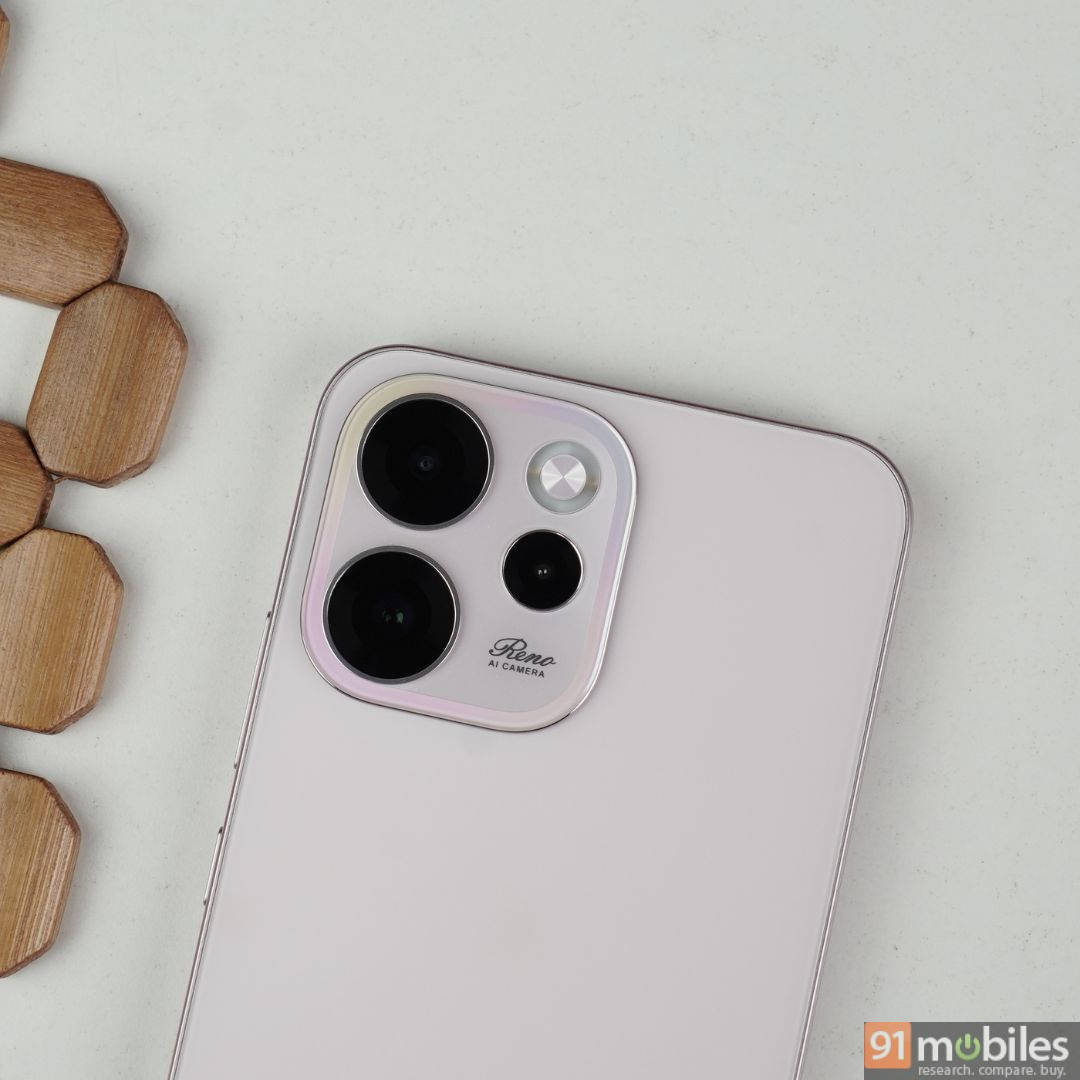
On the design front, the Reno 15c carries a premium look similar to its siblings but with its own subtle identity. The Afterglow Pink variant, in particular, stands out with its soft tone and glittery camera module, giving it a stylish and elegant finish. If you prefer something more understated, the Twilight Blue option offers a cleaner, minimal look.
What makes it even more appealing is its durability. With IP66, IP68, and IP69 ratings, the phone is well-protected against dust and water, making it a reliable companion for everyday use in different environments.
Long-term software support
On the software front, the Reno 15c runs ColorOS 16 with Android 16 out of the box. This is the latest software version with ColorOS 16, providing an interface that feels smooth, fluid, and well-optimised for everyday use, making navigation and multitasking seamless. The Reno 15c is also designed for longevity with 5 years of OS updates and 6 years of security updates.
You can expect the device to stay up-to-date, secure, and relevant even for years to come. This level of support not only enhances the overall user experience but also makes the Reno 15c a reliable long-term investment.
Reasons to skip the OPPO Reno 15c
Performance could have been better
Performance is one of the weaker aspects of the Reno 15c. It runs on the Snapdragon 6 Gen 1, an older chipset that feels dated compared to newer options in this segment. This shows in benchmarks as well, where it ranks lower than many rivals.
In day-to-day use, the phone handles basic tasks like browsing, social media, and streaming reasonably well, but it’s not the smoothest experience, as you may notice occasional delays when opening apps or multitasking. Gaming is manageable on titles like COD Mobile and BGMI, but higher settings or longer sessions may lead to lag and inconsistent performance.
Low-light photography needs improvement
Low-light photography on the Reno 15c is decent, but not its strongest area. The phone struggles slightly with controlling light flare and managing exposure. It’s also not great with preserving detail, with the image appearing more washed out, likely due to aggressive processing. Since the results are inconsistent, the Reno 15c doesn’t always deliver the cleanest or most detailed night shots in its segment.


Overall, the Reno 15C’s low-light performance is usable and balanced, but it falls short of being a standout feature.