


Review Summary
Expert Rating
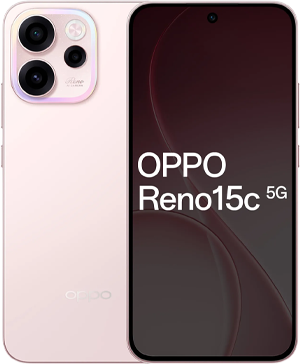
With the Reno 15c, OPPO introduced something new to its lineup. It’s the most affordable model in the Reno 15 (review) series with a starting price of Rs 37,999, and also the first ‘C’ variant in the Reno lineup. Traditionally, the Reno series has been associated with premium design and camera-focused experiences, and the Reno 15c aims to bring that philosophy to a more accessible price point.
After using the Reno 15c as a primary driver for a week, here’s my detailed review of the phone, covering all key aspects from cameras to performance.
Table of Contents
Verdict
The Reno 15c gets a lot of the basics right, especially when it comes to design, display quality, and battery life. It looks and feels more premium than what you’d typically expect at this level, and the massive battery makes it a dependable companion for long days or even heavier usage. However, it could have done better with performance to be a truly well-rounded device.
Premium design with a practical form factor
The Reno 15c features a 6.57-inch FHD+ AMOLED display with a 120Hz refresh rate and up to 1,400 nits peak brightness. The size strikes a sweet spot. It’s neither too compact nor overly large, making it comfortable for most users. In hand, the phone feels well-balanced and easy to use for long durations.
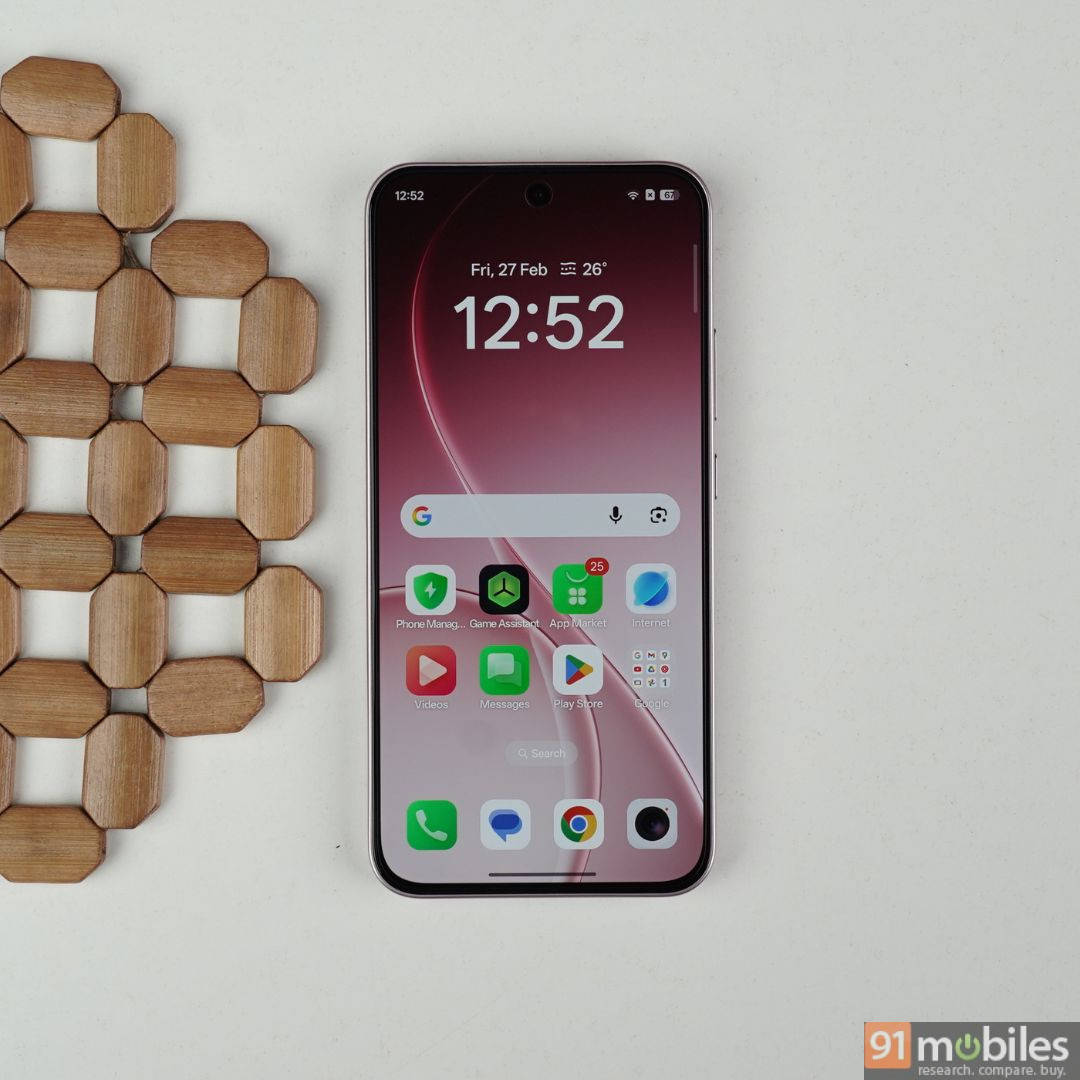
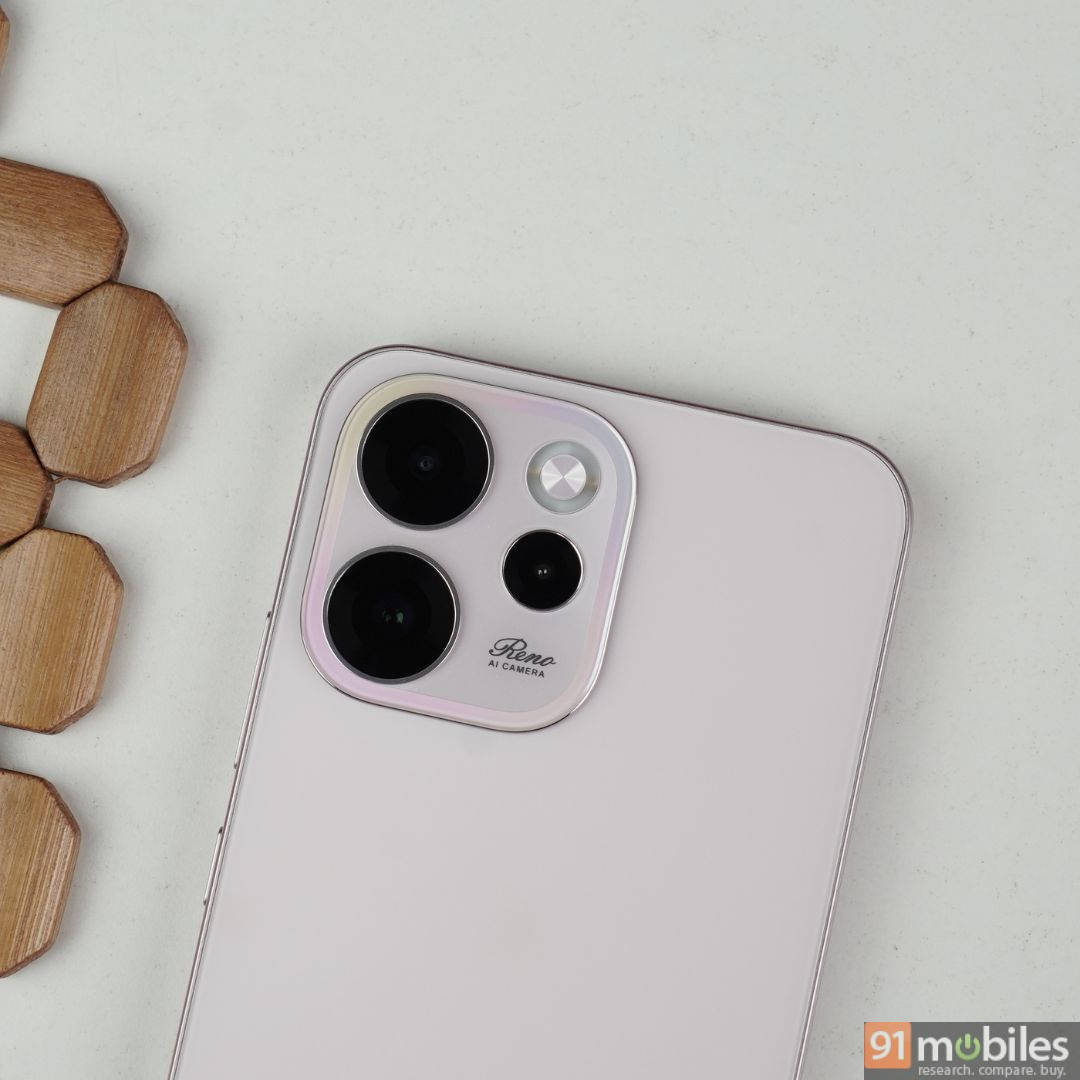
Design continues to be one of OPPO’s strongest areas. The Reno 15c looks quite similar to the Reno 15 and Reno 15 Pro Mini (review), but skips the bow-inspired design seen on those models. The handset is available in Afterglow Pink and Twilight Blue, and we received the former. This finish stands out with its soft light pink tone and a glittery rear camera module, giving it a stylish, dainty look. If you want something more subtle, you can go for the Twilight Blue variant.
The display itself is vibrant, with rich colours and very slim bezels, making content consumption enjoyable whether you’re watching videos or scrolling through social media. Adding to its appeal, the phone comes with IP66, IP68, and IP69 ratings, offering strong protection against dust and water.
Versatile cameras with room to grow
The Reno 15c offers a versatile triple-camera setup, including a 50MP main sensor, an 8MP ultra-wide, and a 2MP macro camera. On the front, there’s a 50MP selfie camera capable of 4K video recording, which is a strong addition for content creators and video calls.
While the setup covers most use cases, the absence of a telephoto lens is noticeable, especially for users who prefer better zoom capabilities or more refined portrait shots. That said, for everyday photography and social media use, the camera system performs well and remains balanced with a pleasing contrast that makes colours pop. Low-light photography, however, isn’t great, and the dedicated macro mode also doesn’t do that well with details.














OPPO has also included features like Flash Photography 2.0, AI Portrait Glow, and AI Motion Photo Slo-mo, which add a layer of creativity and flexibility, particularly for casual users who enjoy experimenting with photos.
We compared the OPPO Reno 15c’s cameras with the Redmi Note 15 Pro+ to get a better idea of where it stands in the segment.
Daylight
For daylight shots, it’s the Reno 15c’s 50MP main camera going up against the Redmi Note 15 Pro+’s 200MP sensor. Despite the lower megapixel count, the Reno 15c delivers better overall detail and sharpness, especially on closer inspection. In terms of colour and contrast, the Reno 15C does lean slightly towards saturation, but the results still appear more natural, whereas the Redmi Note 15 Pro+ tends to look a bit washed out. The OPPO phone also handles dynamic range and exposure more effectively, managing to retain finer details in challenging areas compared to its rival.


Ultrawide
The ultrawide cameras are fairly evenly matched, with each phone having its own strengths. The Redmi Note 15 Pro+ retains slightly better detail, while both devices deliver consistent colours, though the Reno 15C leans towards a more saturated look, and the Redmi’s output may appear more pleasing to some. When it comes to distortion control and dynamic range, however, the Reno 15C pulls slightly ahead, giving it a marginal edge overall.


Portraits
Portrait shots are quite similar on both phones, with each relying on its main camera. Both capture good detail, but the overall look comes down to personal preference. The Reno 15c produces more vibrant, punchy colours, while the Redmi Note 15 Pro+ tends to deliver flatter, slightly washed-out results. Skin tones aren’t particularly accurate on either device, though the Reno 15c comes closer to natural reproduction. Interestingly, the Reno 15c also delivers a more pleasing bokeh effect, while the Redmi Note 15 Pro+ has more precise edge detection.


Selfies
The Redmi Note 15 Pro+ captures slightly more accurate skin tones compared to the Reno 15C. Both phones manage to retain details well, with even finer elements like stray hair appearing natural. That said, neither device excels in overall image detailing, though the Reno 15C holds a slight edge here.


Low-light (night mode)
The Redmi Note 15 Pro+ automatically enables night mode in low-light conditions. The handset also does a better job of controlling light flare and managing exposure compared to the Reno 15C. In terms of noise and detail, the Redmi phone produces a cleaner image, retaining finer elements like textures on walls, while the Reno 15C appears more washed out, likely due to aggressive processing. Colours are also handled better on the Redmi Note 15 Pro+, giving it the overall advantage in night photography.


Overall, it’s a balanced win for both phones. With the Reno 15c, you can see brighter colours, which might make it a better choice for social media photography.
Every day performance with noticeable limits
The Reno 15c is powered by the Snapdragon 6 Gen 1 chipset, which is a notably dated processor from 2022. This is one of the more disappointing aspects of the phone, especially considering that newer and more powerful chipsets are available in this segment today. Benchmark scores reflect this as well, placing the Reno 15c among the lower performers in its category.



In real-world usage, however, the performance is still dependable. For everyday tasks like browsing, social media, and streaming, the phone performs reliably. Gaming is possible on titles like COD Mobile and BGMI, but playing for long or pushing graphics to the maximum might result in occasional lag. We also noticed slight delays when opening apps or multitasking, which highlights the limitations of the chipset.
On the software side, the phone runs Android 16 with ColorOS 16 out of the box. OPPO is promising 5 years of OS updates and 6 years of security updates, which is impressive and adds long-term value. ColorOS 16 feels smooth and fluid, but the longevity of performance will largely depend on how well the chipset holds up over time.
Two-day battery life
Battery life is easily one of the biggest highlights of the Reno 15c. The smartphone packs a massive 7,000mAh battery with 80W SuperVOOC fast charging. In everyday use, the phone comfortably lasts up to two days on regular to moderate usage, including 5G usage, streaming, social media scrolling, and even hotspot sharing. This makes it a highly reliable device for users who prioritise endurance.
The smartphone’s PCMark benchmark score is also the best in the segment, making it a top pick for battery life. The 80W fast charging also ensures quick top-ups, so even when the battery runs low, you won’t be plugged in for too long. The handset takes less than an hour to get from 20 to 100 percent.
Final verdict
The OPPO Reno 15c is a phone that clearly prioritises style and endurance over raw performance. The handset brings the Reno series’ signature design language and camera focus to a more affordable price point, and in many ways, it succeeds. The display is vibrant, the design stands out, and the battery life is among the best in its class.
However, the use of an older chipset limits its potential, especially when competitors are offering faster and more efficient processors. While it performs adequately for everyday use, how well the smartphone ages over time will depend on the optimisation with future updates.
If performance and gaming are high on your list, you may want to consider alternatives like the OnePlus Nord 5 or Realme GT 7. However, if your priorities are design, battery life, and long-term software support, the Reno 15c makes a strong case.
Editor’s rating: 8/10
Reasons to buy:
- The phone’s 7,000mAh battery can comfortably last for two days.
- It has a stylish design with good durability.
- OPPO is providing long-term software support with the Reno 15c.
Reasons to skip:
- The performance feels slightly underwhelming for the price.
- Low-light photography needs improvement, especially with noise and detail.