Review Summary
Expert Rating
A new phone launching this year with a 7,000mAh or 8,000mAh battery has become strangely acceptable, while just a year ago, it would have been a headline feature. With AI giants monopolising RAM and NAND production, smartphone prices have appreciated massively, leaving brands to look beyond costly components like RAM, storage and processors to showcase value. That leaves batteries, software and design, areas where we’ve seen growth like never before.
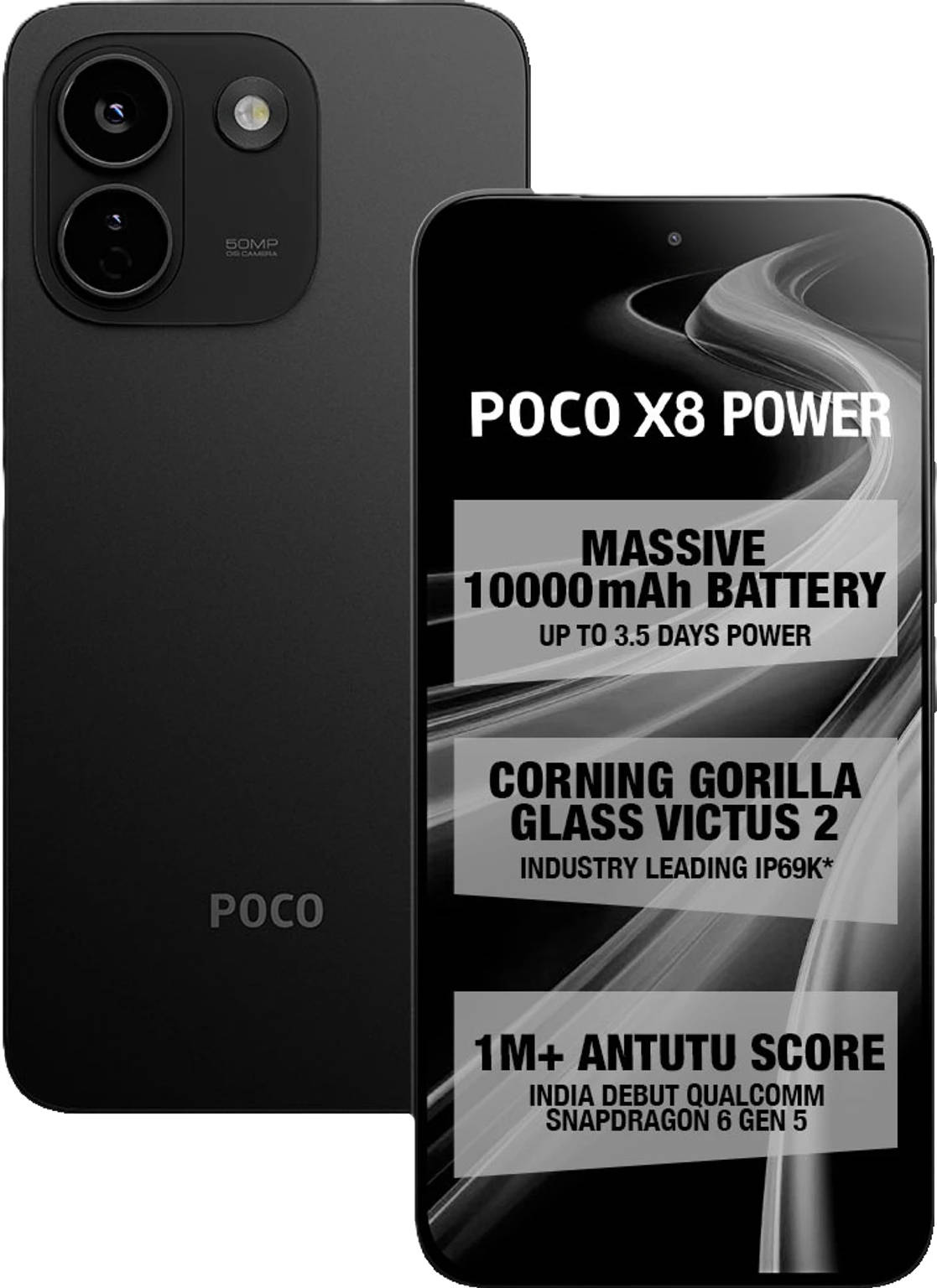
Battery sizes in particular have gone well beyond what we’re used to, and the POCO X8 Power is the very embodiment of that. But how does a 10,000mAh battery affect the overall experience, and does the rest of the hardware keep up as a whole? In this review, we’ll find out how the POCO X8 Power performs in everyday use, how much battery life you can expect and whether it is worth its asking price.
Table of Contents
Verdict
The POCO X8 Power is the very embodiment of how much smartphone battery sizes have grown this year. The handset features a massive 10,000mAh cell, along with goodies like a 1.5K AMOLED panel, a Snapdragon 6 Gen 5 processor and more. While the battery is definitely the key feature, the device is rather well balanced for its price point, which makes it more worthwhile than a phone built around battery alone.
Design: doesn’t feel like a power bank at all
A massive 10,000mAh battery is certainly a reason to boast, but it is also important to make the phone handy enough that the capacity does not become detrimental to comfort. In my opinion, the POCO X8 Power manages to do that rather well. While the phone is certainly heavy and a little dense at 229 grams, the weight is mostly balanced, and you wouldn’t think of it as unwieldy. It is also around 8.6mm thick, which is an impressive number.
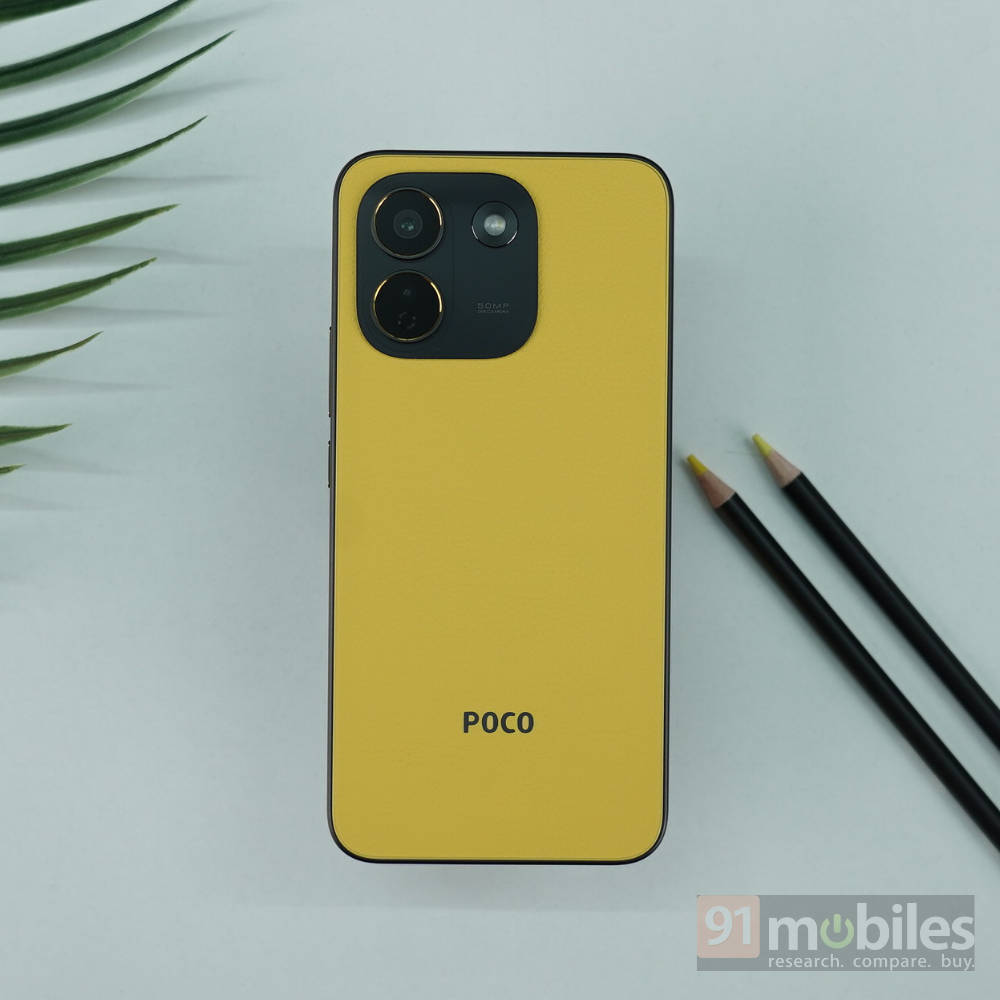
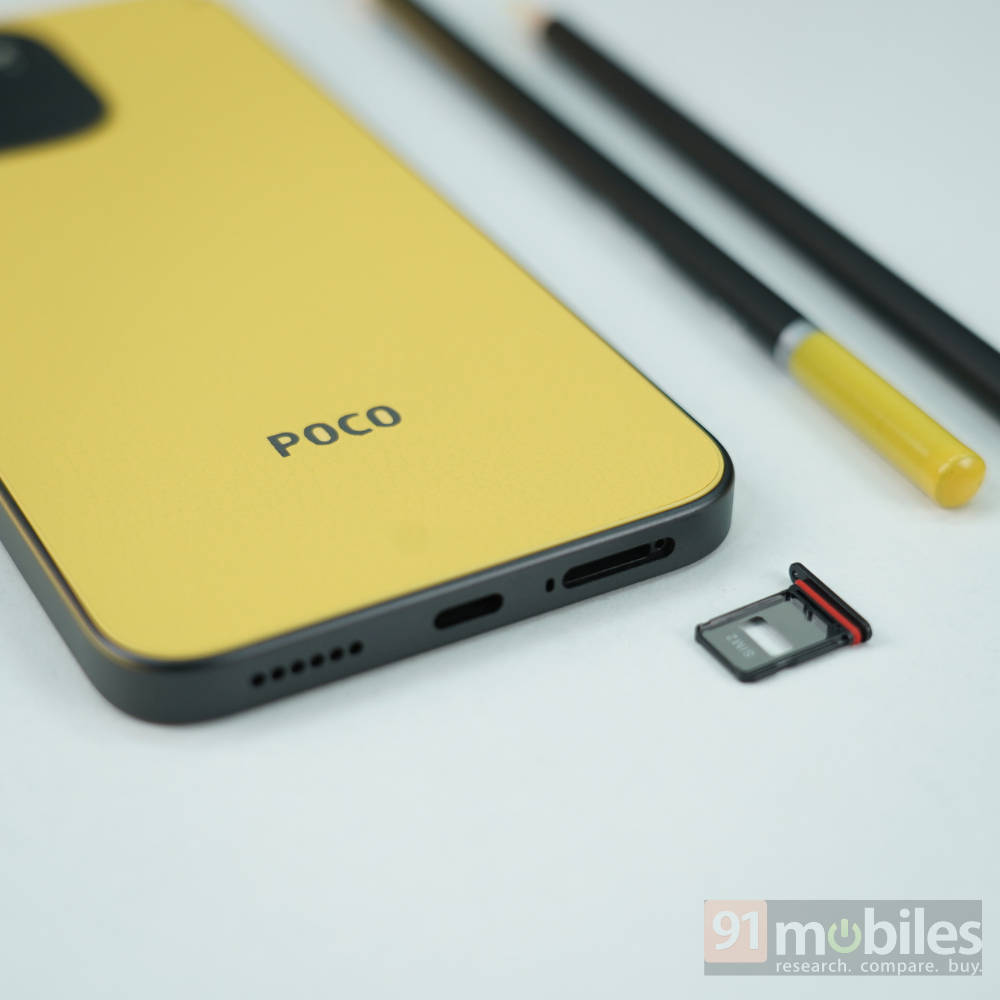
The phone’s flat display and slightly rounded edges make it comfortable enough to hold, and you get used to the weight within a couple of days. While it is technically impressive, the design, I feel, is nothing special to write home about. You get a basic rear panel that comes in two finishes: a matte black variant and a vegan-leather option in the classic POCO yellow colourway. The handset features nice, uniform bezels around the display, which enhance the viewing experience, and the volume and power buttons are comfortably within reach.
| Smartphone | Thickness | Weight | IP Rating |
| POCO X8 Power 5G | 8.65 mm | 229 grams | IP68 +IP66 +IP69K +IP69 |
| realme P4s 5G | 8.60 mm | 208 grams | IP68 +IP66 +IP69 |
| iQOO Z11 5G | 7.99 mm | 199 grams | IP68 +IP69 |
The phone doesn’t try to impress you with a fancy design, but it is enduring and reliable. The handset boasts IP66, IP68, IP69 and IP69K ratings, so rest assured, it is extremely resistant to both water and dust. Add to that, you get Corning Gorilla Glass Victus 2 on the display, which is rare for a mid-range phone and gives you a good level of protection against shattered displays and everyday scratches and scuffs. The POCO X8 Power, thus, sits pretty high in terms of build quality, which is something to appreciate.
Battery: fulfils its promise
Let’s now discuss what the POCO X8 Power’s battery performs like in everyday use. The POCO X8 Power claims up to 3.5 days of battery life, which is a marketing claim and thus something you should not focus on. A more realistic number would be around two days of battery life with moderate usage patterns.


The phone’s result on the PCMark battery benchmark was about 20.5 hours. Before you think that’s a low number, even the Realme P4 Power (review), which also has a 10,000mAh battery, scored about 21 hours. Benchmarks tend to be power-intensive, and thus we can equate them to heavy or extremely heavy usage. The actual day-to-day numbers of the X8 Power, however, are pretty excellent.
The phone dropped just 3 percent over an hour of YouTube streaming and about 4.5 percent for every 30 minutes of gaming. That is better than every other phone in this price range and on par with the Realme P4 Power. In my use, I only ended up charging the device towards the end of the second day, and I’m a moderate user with roughly 4-5 hours of screen-on time.
Do keep in mind that this also includes passive Wi-Fi use, as the phone sits in the room, and overnight drain. That is an impressive number in my books, and you’ll never really be concerned about the battery life of this phone.
| Smartphone | Battery Capacity | Charging Support | Charging time (20% to 100% ) |
| POCO X8 Power 5G | 10000 mAh | 100W Hyper Charging | 1h 19m 35s |
| realme P4s 5G | 8000 mAh | 80W Super Charging | 1h 0m |
| iQOO Z11 5G | 7050 mAh | 44W Flash Charging | 1h 13m |
While a big battery is certainly a boon, it does come with reduced charging speeds. To circumvent that, the phone includes a 100W fast charger, and fast charge it does. The POCO smartphone takes only 1 hour and 20 minutes to go from 20 to 100 per cent, and that’s a decent number for a phone you’d need to charge only once every couple of days. You’ve also got 27W reverse-wired charging support, which is helpful if you want to charge your accessories and other devices in a pinch.
The POCO X8 Power more than lives up to its promises in battery life, and I’ll recommend it to anyone who wants a phone that lasts days without needing a charge.
Display: as good as it gets
The phone features a 6.83-inch 1.5K AMOLED display with a 120Hz refresh rate, 12-bit colour depth and up to 3,500 nits peak brightness. The POCO X8 Power further enhances the viewing experience with HDR10+ and Dolby Vision support. It also features stereo dual speakers, backed by Dolby Atmos, Hi-Res Audio, and up to 400 percent volume boost.
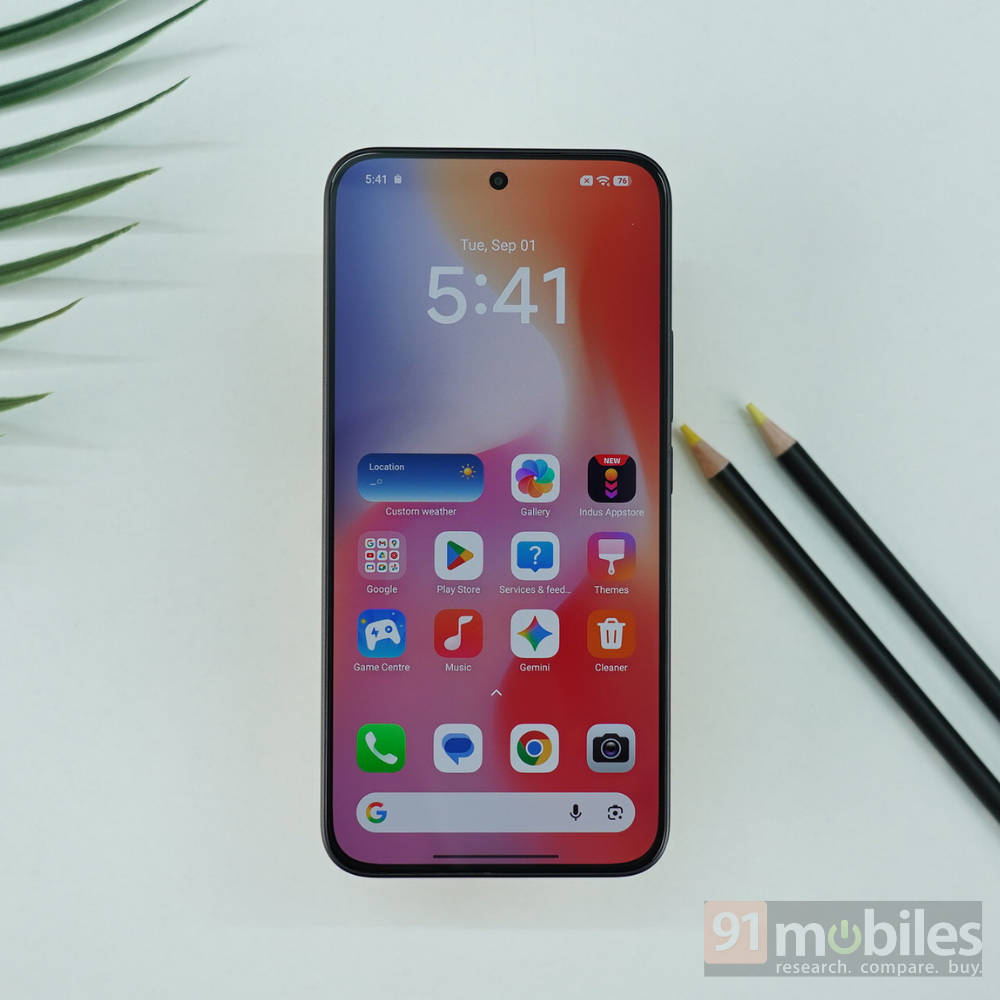
The display is something I’ve enjoyed a lot on this phone. It is vibrant, sharp and well suited for both content consumption and gaming. While it doesn’t have the 144Hz refresh rate seen on some other phones, I don’t think it misses out too much, since the higher refresh rate is mostly limited to supported gaming titles. 120fps in a game is still more than enough for most users.
The panel is certainly big, and it remains legible both outdoors and indoors. With HDR10+ and Dolby Vision support, content playback is something you’ll enjoy on this phone. Pair that with a good set of stereo speakers, and you have a multimedia champ in your hands.
| Smartphone | Display | Peak Brightness |
| POCO X8 Power 5G | 6.83 inches - AMOLED | 3500 nits |
| realme P4s 5G | 6.78 inches - AMOLED | 6500 nits |
| iQOO Z11 5G | 6.83 inches - AMOLED (Curved Display) | 3000 nits |
The phone also offers a 400 percent audio boost feature, but I found that it can distort the output. The 200 percent boost is a better middle ground in my opinion, offering a good bump in loudness without being as brutal on the source audio.
Cameras: surprisingly capable in most situations
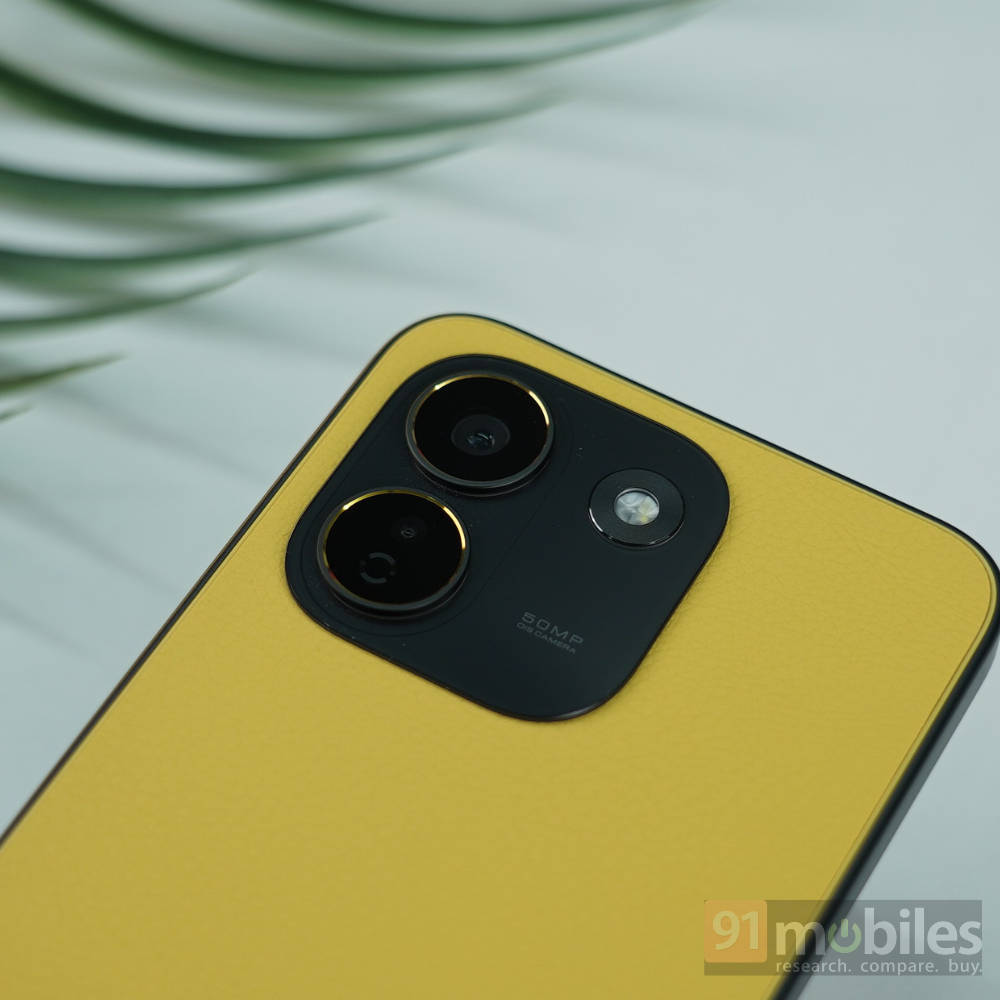
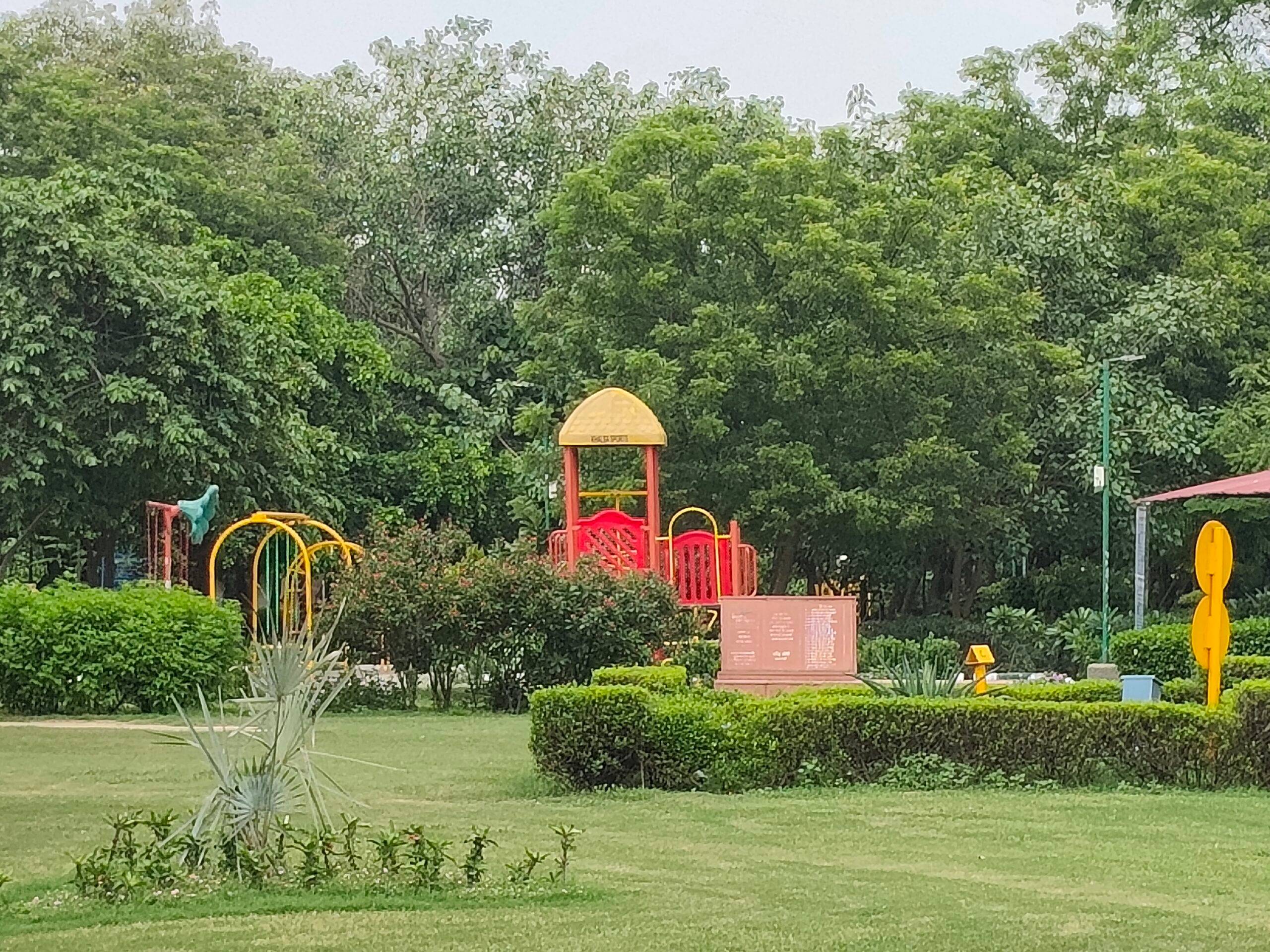
Let’s now talk about the cameras, which are not this phone’s strong suit but are still quite capable for everyday photography. You get a 50MP primary camera with OIS and an 8MP ultrawide, but it is the former doing most of the heavy lifting.
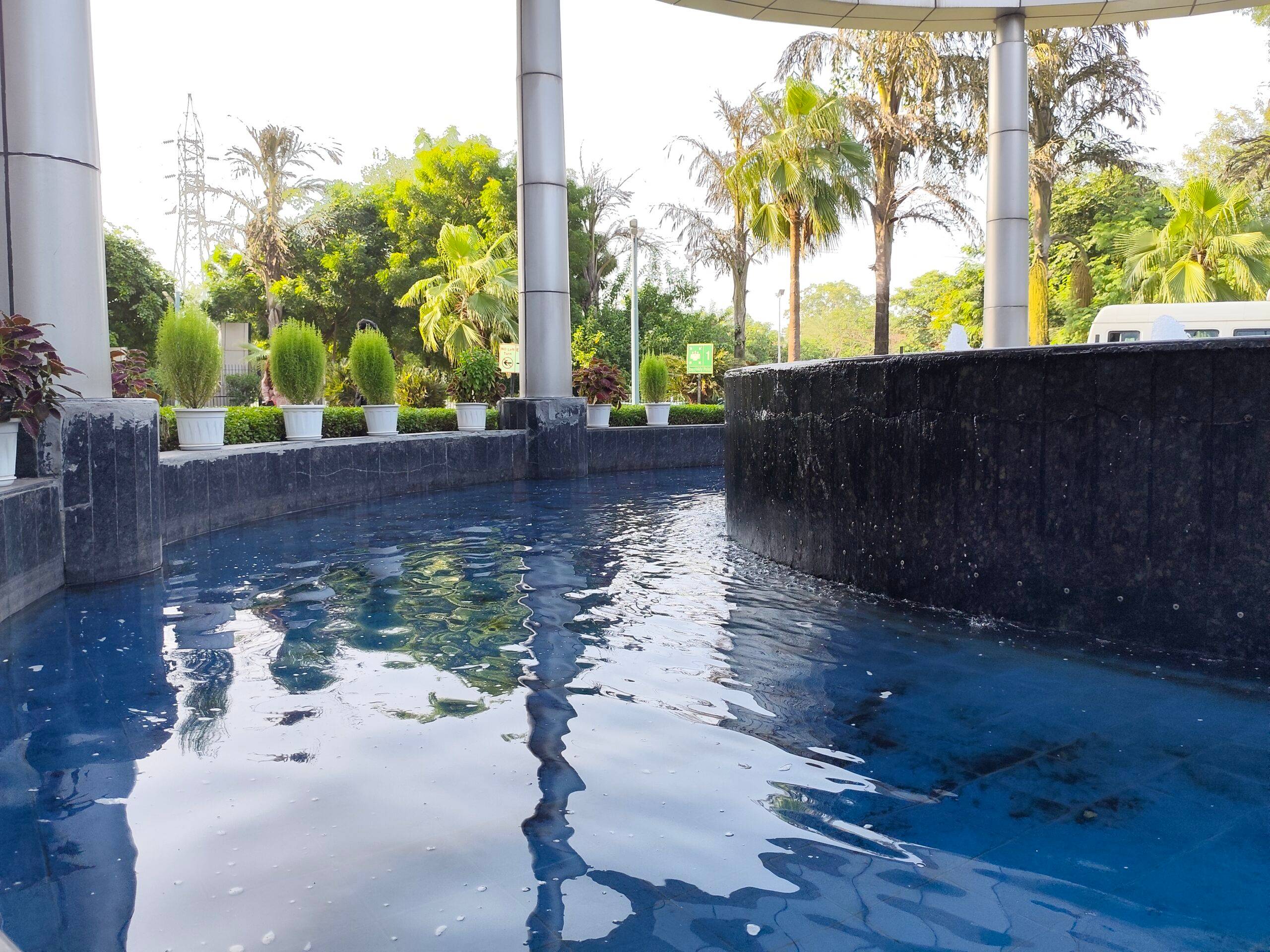
The primary camera takes pretty decent daylight shots, with a good amount of detail and realistic skin tones. I found the colours to be on the cooler side, but the results are social-media ready from the get-go. There’s a 2x zoom available, but it does lead to a loss of detail, so I didn’t use it a whole lot.
What surprised me more was the low-light performance. The camera can take a second or two to capture an image, but the results are usually worth the wait, with crisp shots and sharp details. The exposure is enhanced quite aggressively, though, making scenes look much brighter than they actually were and taking away some of the feel of a night shot.
The 8MP ultrawide is my least favourite part since there is a big drop in detail compared to the primary camera. However, colours remain mostly consistent between the two, which is good to see. The 32MP selfie camera is also decent, although the beautification remains quite aggressive even when set to zero, and the skin is smoothed out beyond what I prefer.









The primary camera supports 4K30 and 1080p60, while the ultrawide is limited to 1080p30. The selfie camera also supports 4K30 and 1080p60. The primary camera can take decent 4K videos thanks to OIS, although the quality leaves a little to be desired.
Overall, the camera setup is pretty capable, especially in low light. The primary camera does the most, while the ultrawide and selfie camera have their limitations but remain useful for everyday photography.
I compared the phone’s cameras against the Realme P4s (review). Check it out.
Daylight
The key difference between the daylight shots of both phones comes largely down to the colour science. The Realme P4s opts for a warmer colour profile and richer greens and yellows, while the X8 Power’s colour profile is cooler. The blues and the reds are instead more enhanced. In terms of details and dynamic range, both phones are quite neck and neck.


Ultrawide
The colour science in daylight shots also follows both phones when it comes to ultrawide shots. Both have the same colour styles as the main camera, although the shots are more vibrant compared to the daylight scene. The main difference here is that the Realme P4s has better detail and sharpness compared to the X8 Power.


Portrait
The portrait scenarios continue the same colour profiles we saw in the daylight shots of both phones. The other aspects, however, are quite evenly matched for both phones. For instance, the detail and sharpness level of both are on par with each other even when you zoom in closer. The only aspect where there’s a key distinction comes down to edge detection – the X8 Power does a slightly better job than the Realme P4s.


Selfie
When it comes to selfies, the Realme P4s is in the definitive lead for me due to a couple of reasons. First up, its skin tones look more realistic compared to the X8 Power, which stylises the subject’s face and smooths it out. The P4s preserves more facial detail than its competitor here. The second key reason being the sharpness level on the Realme P4s, which is also better than its peer.


Lowlight
With the dedicated night mode enabled on both phones, the POCO X8 Power’s shot does a few things better than the Realme P4s. The former’s shot has better details and sharpness all over the frame, while the Realme P4’s image turns out a little blurry when you zoom in closer.
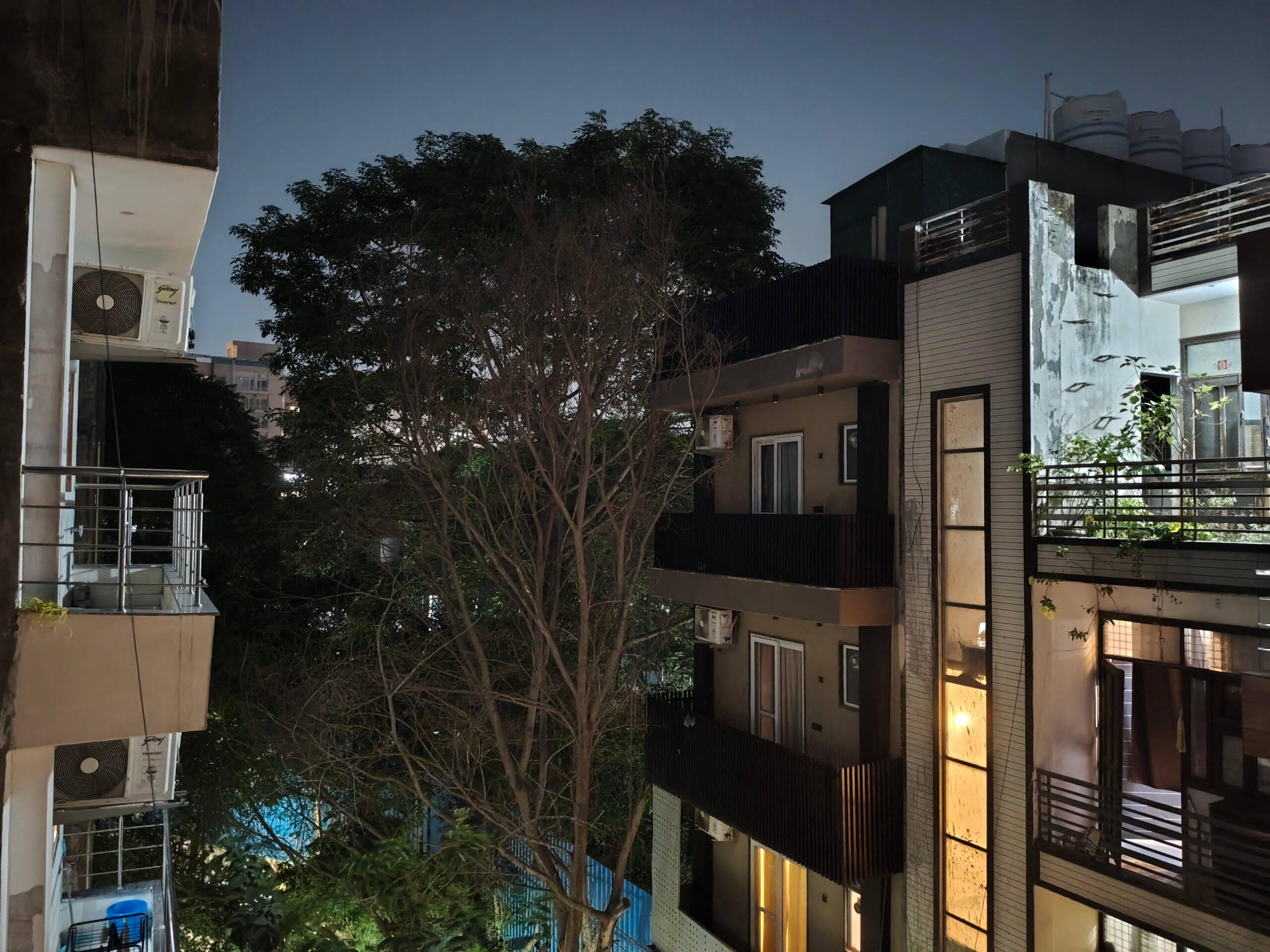
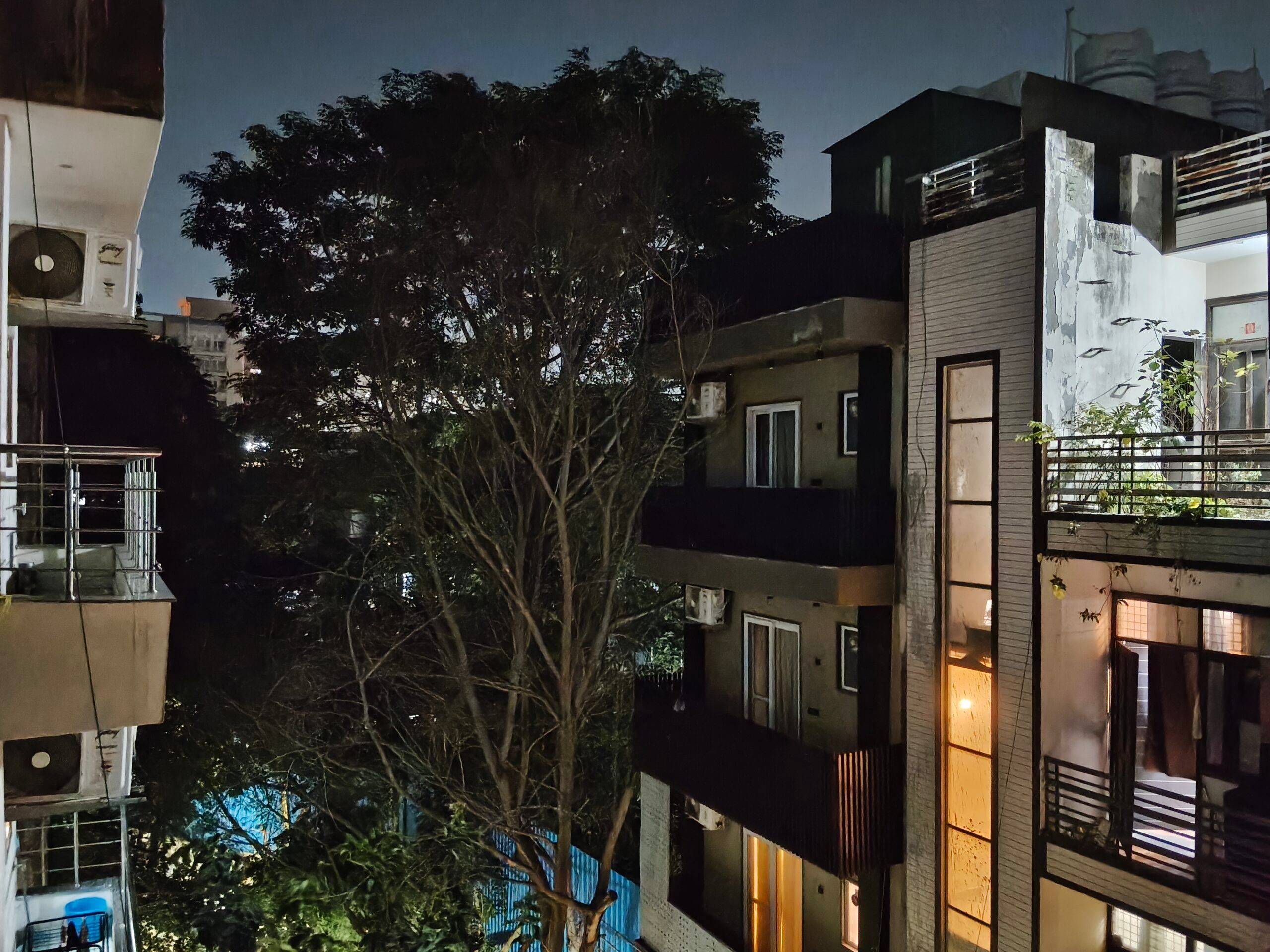
The P4s also presents some noise around the edges of the image, which isn’t the case for the X8 Power. The Realme P4s, however, depicts the actual scene better with controlled lens flare and ambient light.
Performance: sufficient output for most tasks
The POCO X8 Power brings the India debut of the Snapdragon 6 Gen 5 Mobile Platform, which offers CPU speeds of up to 2.6GHz. It is paired with up to 8GB of LPDDR5X RAM and 256GB of UFS 4.1 storage. The additional performance and memory make it more than capable for most day-to-day users, including those who regularly juggle multiple applications, large files and content-heavy usage.
The higher storage variant (256GB), in particular, uses UFS 4.1, which is up to four times faster than the UFS 2.2 storage found on the base variant. In day-to-day use, I didn’t encounter any major stutters or problems, and the phone handles switching between apps and other regular tasks without much fuss.
Gaming performance is also quite decent, and supported games like BGMI currently offer up to 90fps. The 120fps support is expected to arrive through a future OTA update. Naturally, you cannot push the highest graphics settings in extremely demanding titles such as Genshin Impact and Wuthering Waves, but both games can still maintain a steady 60fps on lower presets.
That should be sufficient for most users, especially considering the phone’s mid-range position. If you’re looking for a more gaming-focused smartphone, the Realme P4s (review) is the better choice. It comes with a high 144Hz refresh rate, a dedicated gaming chipset and software to improve performance.
As for thermals, the phone’s temperature increased by around 5 degrees on average after 30 minutes of gaming. That’s not a bad result, although it isn’t particularly impressive either, since it is on par with other phones around this price. Overall, the POCO X8 Power has more than enough performance for everyday use and can handle gaming reasonably well, as long as you don’t expect it to compete with more powerful gaming-focused phones.
Software: capable but riddled with pre-installed apps
On the software front, the POCO X8 Power runs HyperOS 3 based on Android 16 out of the box. The interface is largely similar to what you get on Xiaomi’s latest phones, with features such as depth and cinematic wallpapers, smoother animations and HyperIsland for alerts, notifications and live activities for music playback, timers, navigation and incoming calls. You also get a bunch of AI features for writing, transcription, on-screen searches and image editing.
| Smartphone | Pre-Installed Apps | Software Support |
| POCO X8 Power 5G | 83 | 4 Year OS Updates + 6 Year Security Updates |
| realme P4s 5G | 58 | 3 Years OS Updates + 4 Years Security Updates |
| iQOO Z11 5G | 51 | 3 Year OS Updates + 5 Year Security Updates |
I, however, found some issues after the initial setup. The biggest problem is the sheer amount of pre-installed software. The handset comes with 83 apps pre-loaded, including 35 third-party apps, which is well beyond any mid-range smartphone I’ve reviewed lately. It may help keep the price lower, but it absolutely mars the first impression, with the app page, notification panel and other parts of the interface filled with suggested apps and actions.
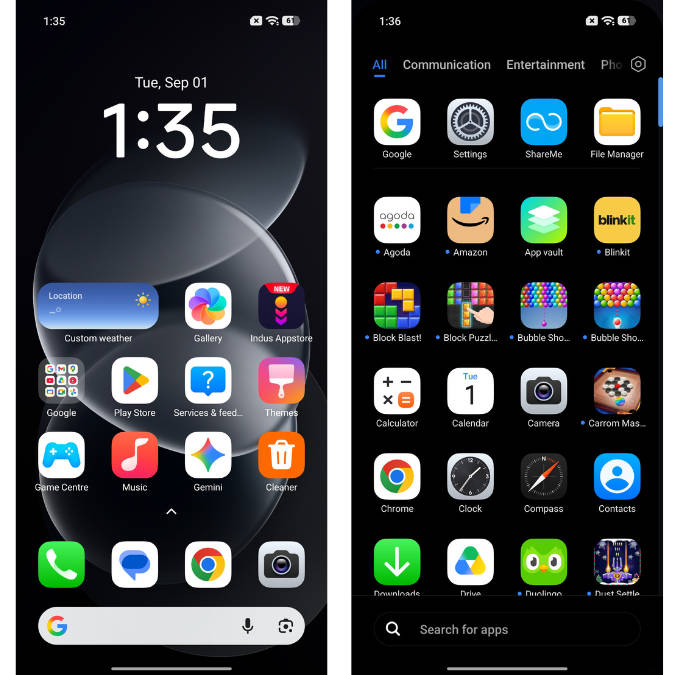
The underlying software is capable, but there is simply too much clutter that you need to clean up yourself. While you can remove most of them manually, it takes a good chunk of time to clean up the interface and disable the suggestions in the phone’s menus. I would recommend skipping the initial prompts to launch most of these apps during setup to avoid this problem.
POCO has promised at least four years of major OS upgrades and six years of security updates, which should keep the phone supported for several years to come. This is also one of the higher software commitments in the segment, which is worth praising.
What is the competition like?
The POCO X8 Power’s chief competitors are undoubtedly the Realme P4s and iQOO Z11 5G. Both phones carry a starting price of Rs 34,999 to compete closely with the X8 Power. The Realme P4s (review) is a gaming-focused smartphone with a similarly high-quality AMOLED panel, an 8,000mAh battery and slightly better cameras. However, it doesn’t match the X8 Power’s battery life or software support promise. The Realme P4s is ideal if you play a lot of games and want a good battery life phone that is still somewhat handier.
The iQOO Z11 5G (review) is a balanced smartphone that offers a more powerful Dimensity 7500 chipset, a slim curved build, a good set of cameras and a decent 7,000mAh battery. Its endurance is naturally lower than the X8 Power’s, though, and it doesn’t match POCO’s software update promise either. The Z11 is more suitable for users who want a more balanced and lightweight everyday phone.
Final verdict
The POCO X8 Power retails at Rs 35,999 for the 8GB + 128GB and Rs 38,999 for the 8GB + 256GB variant. For its price, this is a phone that puts battery life front and centre, and it delivers exactly where it matters. The 10,000mAh cell comfortably gets me through two days of use, while the 100W charging means you don’t have to wait too long when it finally needs a top-up. What makes it special, however, is that POCO hasn’t compromised too much elsewhere to achieve this.
Furthermore, the smartphone offers a vibrant 1.5K AMOLED display, reliable everyday performance and a rather durable build, making it a pretty well-rounded mid-range phone. The cameras aren’t its strongest suit, but the primary sensor is surprisingly good in most situations and more than capable for everyday photography. You also get a long-term software update promise, which should keep the device relevant for years to come.
There are some compromises, however, to keep in mind. The phone is still on the heavier side, and the plethora of third-party apps is something POCO needs to address. The ultrawide and selfie cameras also leave some room for improvement. Having said that, if battery life is high on your list of priorities, the POCO X8 Power is an easy phone to recommend on that metric alone, and it offers much more than that.
Editor’s Rating: 8.2/10
Reasons to buy:
- Massive 10,000mAh battery delivers around two days of use
- Vibrant 1.5K 120Hz AMOLED display with HDR10+ and Dolby Vision
- Excellent build with IP69K and Gorilla Glass Victus 2 protection
- Reliable everyday performance and gaming
Reasons not to buy:
- Software is cluttered due to multiple third-party apps
- It is slightly heavy and takes time to get used to
- The ultrawide camera could be better