Review Summary
Expert Rating
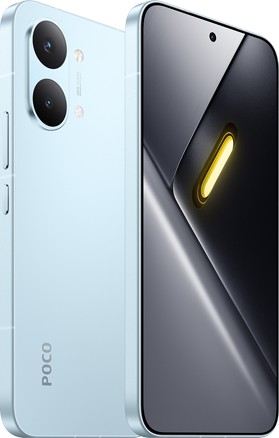
If gaming is your priority, the POCO X8 Pro Max is well worth a closer look, and the reasons are straightforward. It packs a top-tier chipset, a large battery, and an expansive vapour chamber cooling system designed to sustain performance during long sessions. In our dedicated gaming analysis, we’ve already explored how it handles demanding titles. This POCO X8 Pro Max review goes a step further, examining its overall performance and how well it holds up beyond gaming in everyday use. Read on to find out if it truly delivers as an all-rounder.
Table of Contents
Verdict
The POCO X8 Pro Max gets off to a strong start with impressive performance, reliable battery life, and a solid viewing experience. However, the software may feel cluttered and less refined, and the cameras fall short of expectations. That said, for gamers, imaging is often a secondary concern, making these compromises easier to overlook.
Simple yet solid design
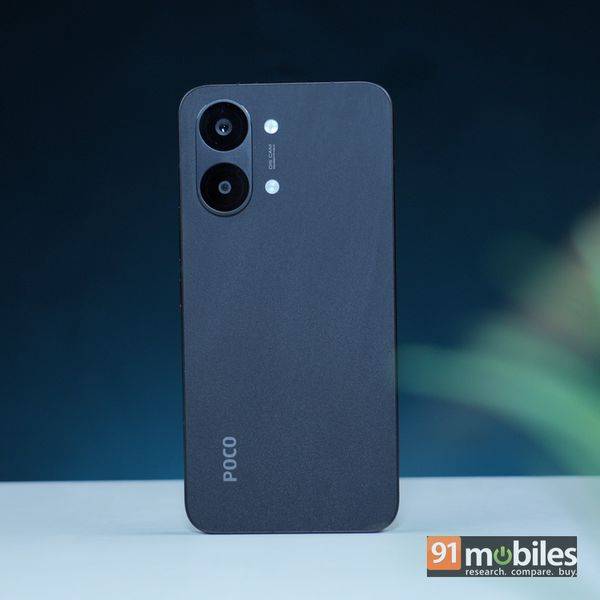
The POCO X8 Pro Max keeps things clean and familiar in terms of design, echoing last year’s POCO F7 with its pill-shaped camera module. This time, however, the module is slightly more compact and integrates RGB LED lighting that adds a touch of flair. These lights aren’t just for show; they also double as indicators for notifications, charging status, incoming calls, and camera activity, and even sync with gaming through rhythmic effects.
You can customise the lighting with a selection of colours and tweak brightness levels via the settings menu. That said, the implementation isn’t as intuitive as it could have been. Instead of being readily accessible, the controls are tucked away under additional settings and “Back light effects,” which feels unnecessarily buried for a feature that’s meant to stand out.
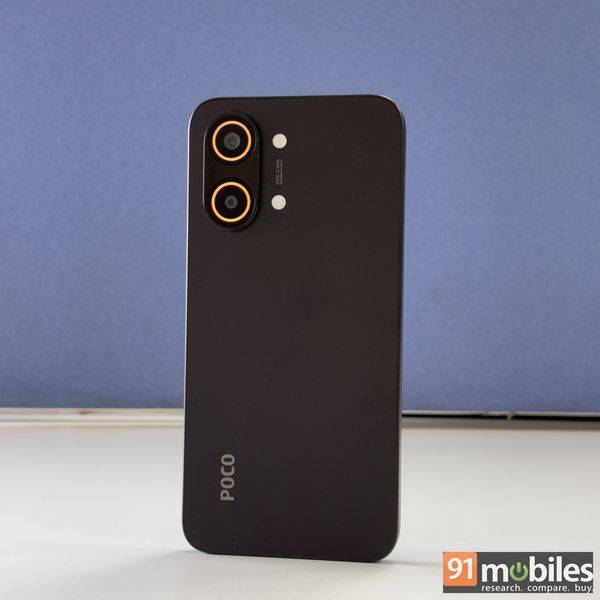
Beyond charging and alerts, I didn’t find the LED lights very useful. POCO claims the lights will enhance the gaming experience, but their support and placement meant it wasn’t the case. Since the lighting sits on the back, you rarely notice the lights while actually gaming, which defeats the purpose of having reactive effects in the first place.
Colour options, I/O, and audio experience
Moving on, the POCO X8 Pro Max comes in white, black, and blue colour variants. We received our review unit in black, which features a fibreglass layer that helps minimise minor scratches while also keeping the surface clean and resistant to fingerprints. The overall design remains fairly minimal, with little to draw attention beyond the POCO branding at the bottom left. Up top, you’ll find the IR blaster and LED flash neatly placed alongside the camera module. To POCO’s credit, the RGB lighting has also been placed discreetly. When switched off, it blends in so well that you wouldn’t even notice it’s there.
The handset weighs 220 grams, which is immediately noticeable, especially for someone like me who was using the Samsung Galaxy S26+ prior to this. That said, you get accustomed to the weight and thickness of the device, which measures 8.2mm. The handset also feels sturdy and is rated for multiple ingress protection levels, including IP66, IP68, IP69, and IP69K, offering strong resistance to dust, splashes, and even high-pressure water exposure.
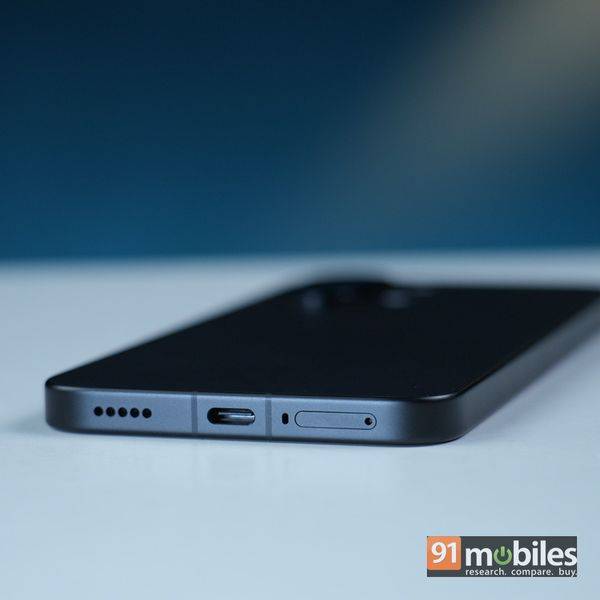
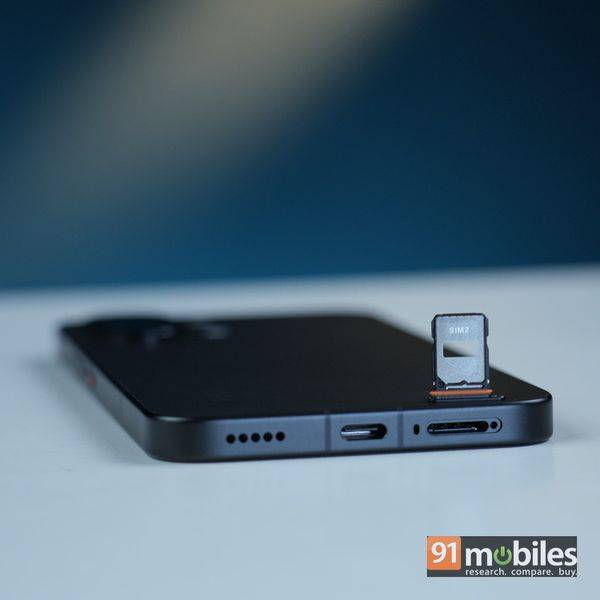
As for I/O, the POCO X8 Pro Max sports a Type-C port for charging and data transfer at the bottom edge, along with a speaker grille. The handset also features a secondary speaker grille at the top edge for a stereo setup. The setup is backed by Dolby Atmos to offer a good audio experience, if not immersive, at 70-80 percent volume levels. Anything higher than that may cause slight muddiness in the audio.
Familiar 1.5K AMOLED display
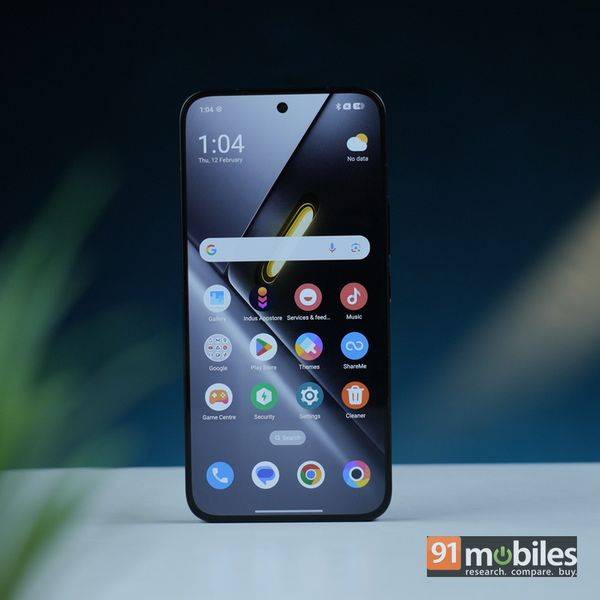
The POCO X8 Pro Max sports a 6.83-inch AMOLED display with 1.5K resolution, 120Hz refresh rate, HDR10+ support, and 3,500 nits peak brightness. The brightness level is slightly lower than its closest rival, the iQOO 15R, but the difference is not night and day when it comes to legibility outdoors under a bright and sunny environment. The POCO X8 Pro Max is just as capable for an easy viewing experience. The colours look nice and bright – a bit contrasty, in the default ‘Original colour Pro’ settings.
Moreover, HDR support is available out of the box on platforms such as Netflix, YouTube, and others. Since the smartphone also supports a 12-bit colour depth panel, it also supports Dolby Vision content, allowing for richer colours and improved contrast while streaming. That said, I found the HDR quality slightly underwhelming when playing graphically enhanced games, such as Tomb Raider and Hitman: Absolution. This could be partly due to limited game-side optimisation or support, rather than a shortcoming of the panel itself.
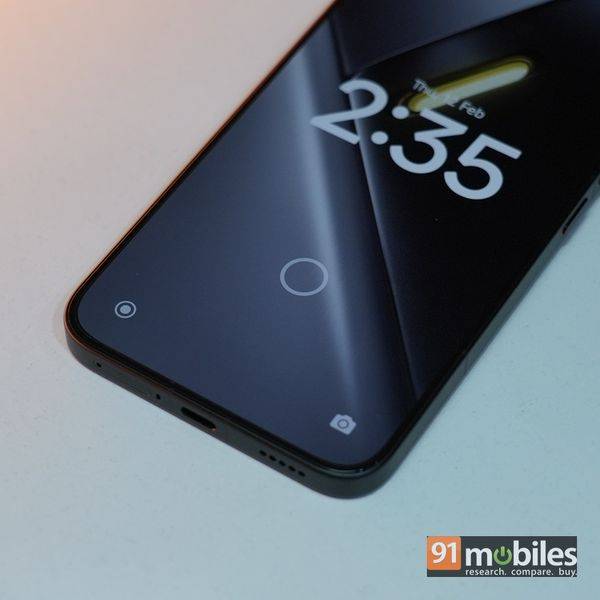
For security, the POCO X8 Pro Max features an ultrasonic in-display fingerprint scanner that unlocks in a flash and is conveniently placed where the thumb naturally rests while unlocking the device.
Top-notch performance, but the software needs improvement



The POCO X8 Pro Max packs hardware that comfortably handles everyday tasks as well as demanding workloads like gaming. At the heart of the device is a 3nm sub-flagship MediaTek Dimensity 9500s SoC, paired with up to 12GB of LPDDR5X Ultra RAM and 256GB or 512GB of UFS 4.1 storage. This combination ensures not just smooth performance across scenarios, but also consistently fast load times and responsiveness. Furthermore, the POCO X8 Pro Max offers one of the highest memory setups in its segment. Its closest rival, the iQOO 15R, which is priced Rs 3,000 higher, offers 8GB of LPDDR5X Ultra RAM with 256GB storage under Rs 45,000.
The smartphone also features a large 5,800 mm² vapour chamber and an 11,000 mm² graphite-layer cooling system to dissipate heat. The system actually delivers in both our internal and real-world testing. The handset remained much more thermally efficient than its arch-rivals, the iQOO 15R and OnePlus 15R, while playing popular titles such as BGMI and COD: Mobile. The POCO X8 Pro Max got warm while playing Hitman: Absolution, but that is understandable since it is a PC port and a more demanding title.
For most other uses, you can count on the smartphone to handle everything calmly. This was also evident in our Burnout CPU throttle test, where the X8 Pro Max sustained 51 per cent of its peak performance, roughly 20 per cent higher than its rival, the iQOO 15R.
On the software front, the POCO X8 Pro Max runs HyperOS 3, based on Android 16, out of the box. This marks the third iteration of Xiaomi’s custom Android skin since its rebranding from MIUI. The latest flagship Xiaomi 17 series also ships with the same version, so you’re essentially getting a similar interface and feature set. The list of features includes depth and cinematic wallpapers, smoother animations, and HyperIsland for alerts, notifications, and “Live Activities” such as music playback, timer countdowns, navigation directions, Uber tracking, and incoming calls.
There is also WildBoost optimisation, which enhances gameplay by delivering up to 120 fps, making it essential for fast-paced games such as BGMI. The phone even boasts a handful of AI features to help you write, transcribe, search what’s on your screen, and edit images, among other things.
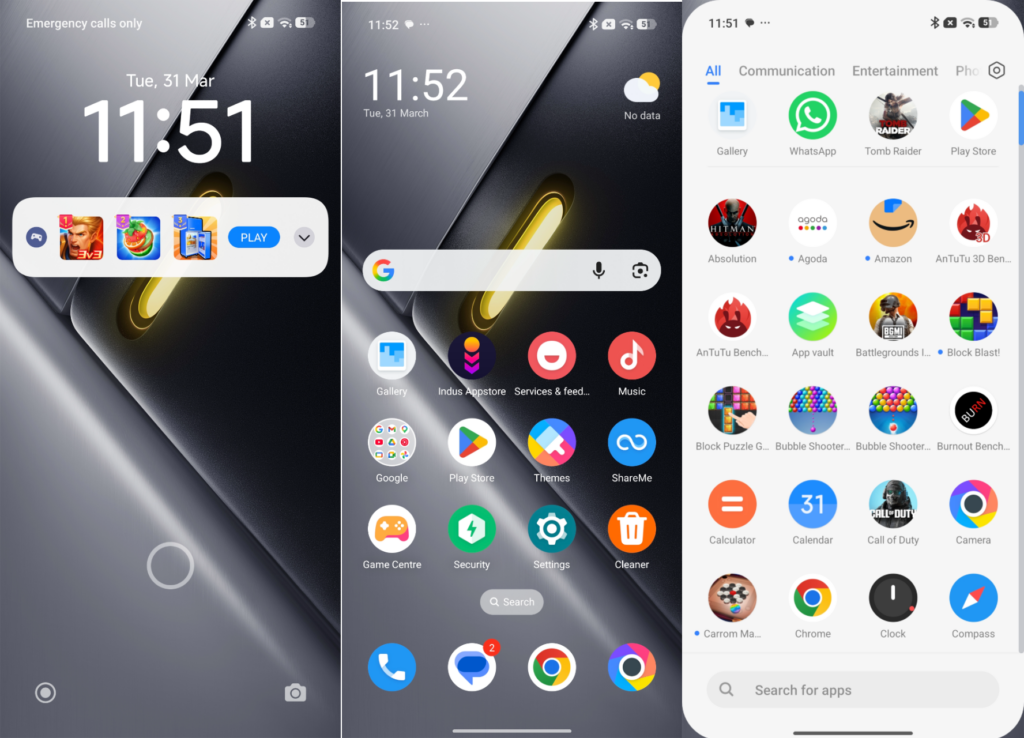
However, I didn’t find the skin as intuitive or clean as some other Android skins. The handset comes with plenty of pre-installed apps, 63 in total, of which 21 are third-party, which is the most I’ve come across in a sub-flagship smartphone. Furthermore, the notifications panel looks cluttered due to unnecessary recommendations from the game centre and other system apps, and there are a few bugs, particularly with the secondary user profile, that need to be addressed via an OTA update.
Speaking of updates, the POCO X8 Pro Max is promised to receive at least four years of major OS upgrades and six years of security updates. This is on par with other contemporary smartphones within the segment.
Battery you can count on
The POCO X8 Pro Max packs a 9,000mAh silicon-carbon battery, backed by 100W fast charging and 27W reverse charging. A compatible charger is provided in the box, which can juice up the device in around an hour and 15 minutes from 20 percent. It’s worth noting that the smartphone limits the charge to 80 percent by default, notably to expand the battery life span, with the ‘Intelligent charging’ feature. This can be turned off in Battery Protection under Battery in the Settings app.

Once fully charged, the POCO X8 Pro Max lasted 21 hours and 21 minutes on our synthetic PCMark battery test. This is the highest a phone has achieved in the segment and indicates its endurance level. The smartphone’s real-world battery backup is roughly on par with its synthetic performance; however, I found the iQOO 15R a tad more optimised. Where iQOO’s battery depleted by 11 percent after an hour-long video streaming and gaming, the POCO X8 Pro Max consumed 13 percent battery.
In terms of screen-on time, the POCO smartphone comfortably delivers around seven hours on a single charge under heavy usage, which includes extended gaming sessions, video streaming, web browsing, and social media scrolling. For more moderate, everyday use, the brand claims the device can stretch up to three days on a single charge, making it a reliable companion for users who prioritise battery endurance.
Workable camera setup
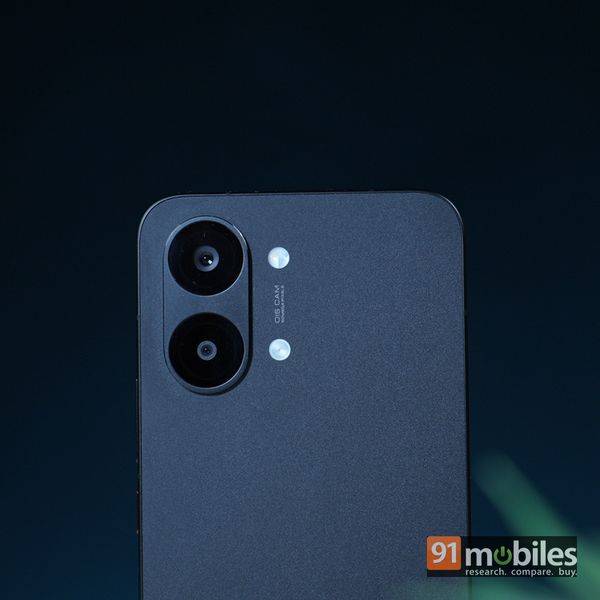
For a mid-range gaming phone packing such powerful hardware, some trade-offs are inevitable, and on the POCO X8 Pro Max, those compromises are most evident in the camera department. The handset sports a dual-rear camera setup, with a 50MP Light Fusion 600 primary OIS sensor and an 8MP ultrawide lens. The front camera is a 20MP sensor for selfies and video calling in the punch-hole setup.
For better context, we compared the POCO X8 Pro Max with the iQOO 15R, which offers a camera setup.
Daylight


The POCO X8 Pro Max fails to capture natural-looking images. The colours are oversaturated, with boosted reds and greens. The details are decent, but underwhelming compared to the iQOO 15R, which manages to get the colours closer to reality.
Ultrawide


Both smartphones follow similar colour science when switched to ultrawides. The POCO X8 Pro Max, with its brighter appeal, has your attention, but the iQOO 15R has the edge with superior details and better exposure around shadowy areas.
Portrait


Portraits on the POCO X8 Pro Max can look marginally sharper, largely due to its tendency to overexpose shots. This brighter processing also helps bring out a bit more detail compared to the iQOO 15R. Edge detection and bokeh performance remain fairly similar on both devices, but if you prefer more natural-looking skin tones, the iQOO is the better choice.
Selfie


A similar thing happens with the selfies. The brighter image makes the POCO X8 Pro Max more appealing than the iQOO 15R. But the skin tones and colours may not look the most accurate, and the details are also very average.
Low light (night mode)
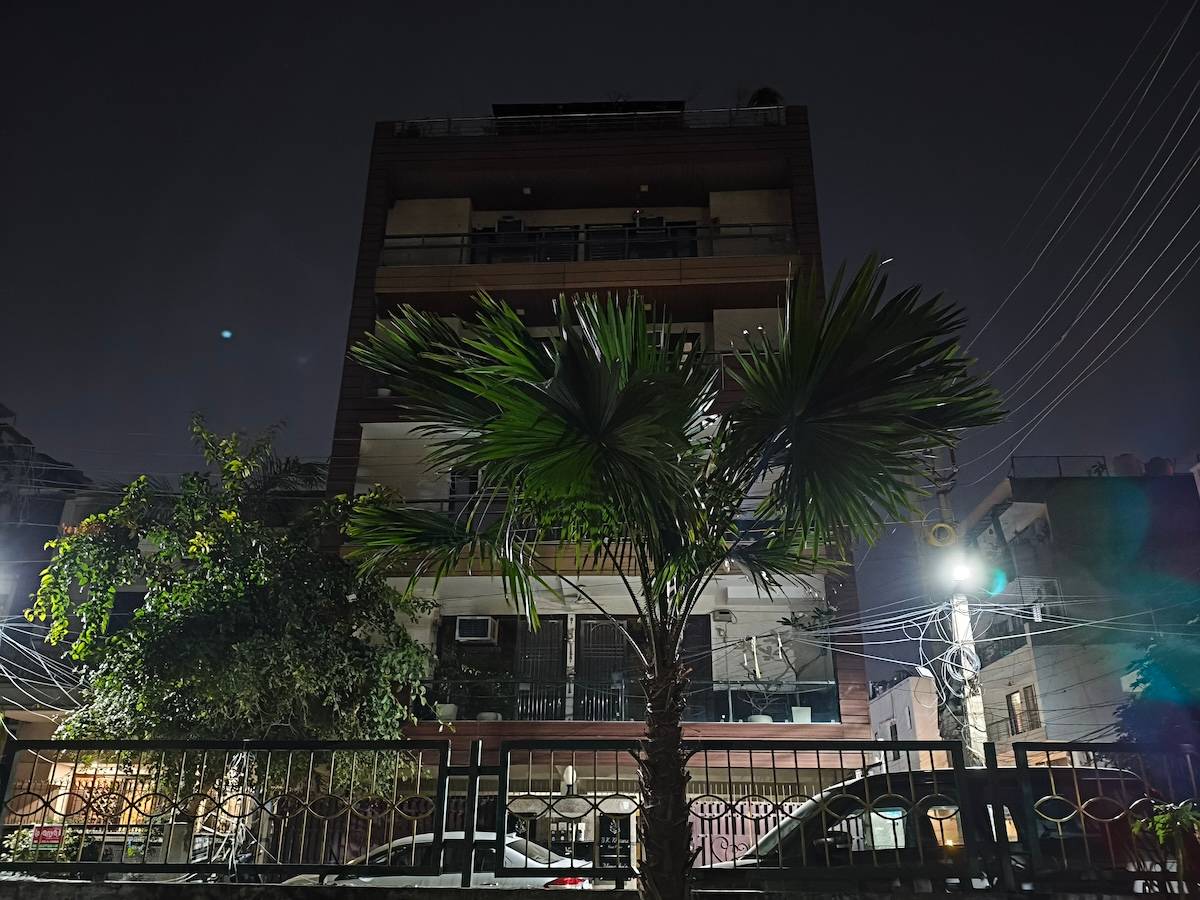
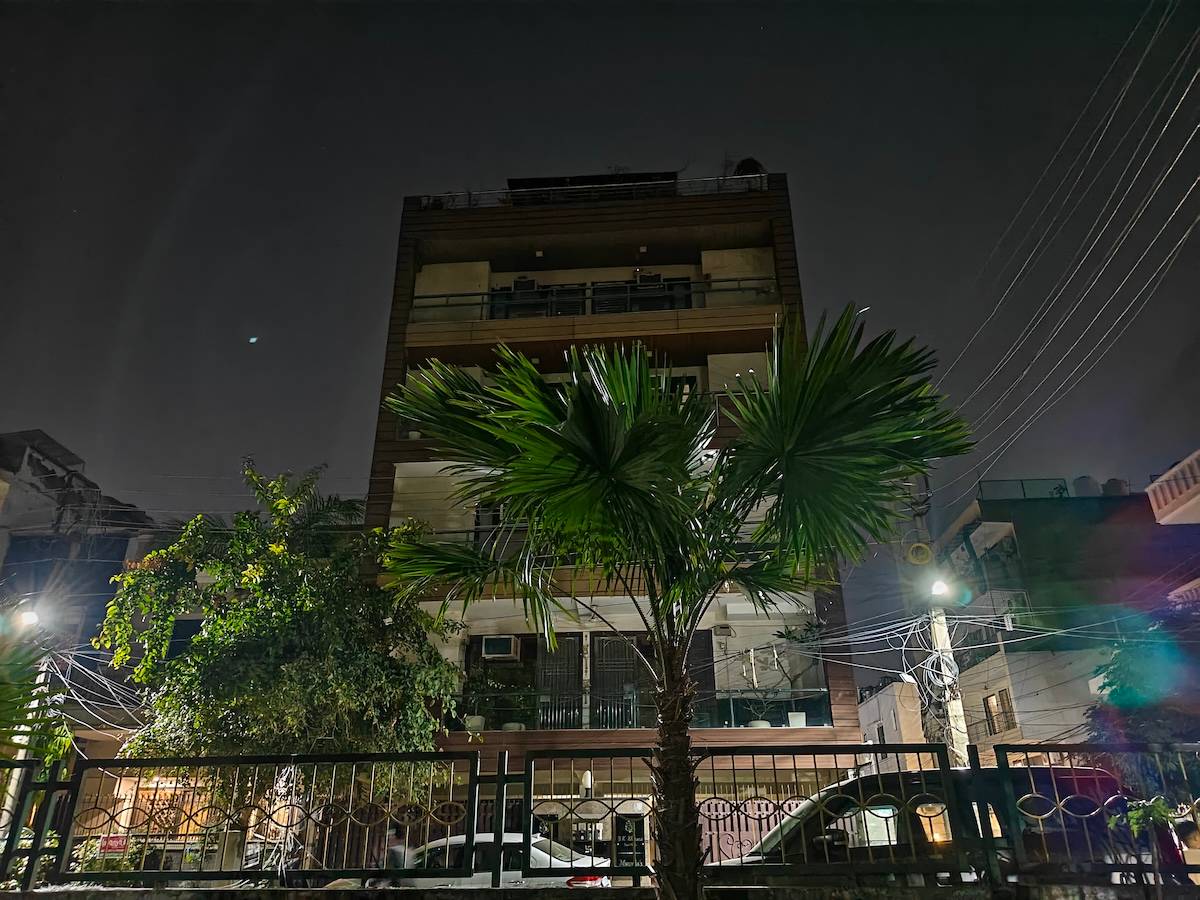
With night mode enabled, the POCO X8 Pro Max captures images that more closely reflect the actual scene. In comparison, the iQOO 15R tends to overexpose and apply heavier smoothing. While the POCO’s shots can look a touch grainy, they retain finer details and texture more effectively.











Overall, the POCO X8 Pro Max prioritises saturated and overexposed photos over accuracy. While it may struggle to capture accurate colours and details in daylight, it outshines the iQOO 15R when the sun goes down. The X8 Pro Max is capable of shooting 4K videos at 60 frames per second from the main sensor. The front camera and ultrawide lens are limited to 1080p at 30fps. If cameras are your priority, it is better to check out alternatives such as Vivo V70 and Realme 16 Pro+ in the segment.
Final verdict
The POCO X8 Pro Max has everything you want from a mid-range performance-focused smartphone. From its powerful chipset and effective cooling system to its massive battery, the phone delivers a consistently smooth experience, especially for gaming. The handset also holds its ground well in day-to-day use, backed by a vibrant display and dependable battery life that easily gets you through heavy usage.
However, it falls short of being a true all-rounder, largely due to its serviceable camera setup, which prioritises an oversaturated look over accuracy and detail. Additionally, the software experience feels cluttered and less polished than its rivals, with an excessive number of pre-installed apps and occasional bugs holding it back. Similarly positioned phones, such as the iQOO 15R (review) and OnePlus 15R (review), may be a better fit if you want your smartphone to excel in these areas apart from gaming.
That said, they are not as competitively priced as the POCO X8 Pro Max, which makes it a compelling option. The smartphone is priced at Rs 42,999 for the base 256GB storage variant, while the top-end 512GB variant costs Rs 46,999.
Editor’s rating: 8.4/10
Reasons to buy
- Bright, smooth AMOLED display.
- Excellent performance with strong sustained output.
- Effective cooling system for long gaming sessions.
- Massive battery with reliable endurance.
Reasons not to buy
- Cameras lack consistency and natural colour reproduction.
- Cluttered software with too many pre-installed apps.