Sony InZone H9 II Review: The Ultimate Premium Headset for PS5 and PC?


When it comes to gaming audio, Sony has cleverly divided its premium offerings to cater to different crowds. While their Pulse series of accessories is laser-targeted at PlayStation console gamers, the InZone branding steps in as their PC-centric line. However, the beauty of the InZone headsets is that they work exceptionally well with the PlayStation audience, too.
Sony recently launched the InZone H9 II in India, currently retailing on Amazon India for Rs. 26,390. Boasting the same drivers as the flagship XM6 headphones and tuned in partnership with Fnatic to target the esports audience, these headphones have a lot to live up to. Here are my thoughts.
Table of Contents
Design & Comfort: Built to Last, Designed to Fit
The InZone H9 II is extremely well-built. At first glance, the earcups look similar to the previous generation, but there are subtle, smart design changes. The headband is incredibly strong and stable, featuring a braided finish that gives it a highly premium feel. Beneath that is a secondary band that actually rests on your head: it’s slightly thicker, softer, and sports the InZone branding.


The headset is highly adjustable and fits exceptionally well. I have slightly larger ears, but the spacious earcups accommodated them perfectly. When it comes to the overall weight and clamping force, the headphones are remarkably well-balanced for long hours of use. The clamp is snug but never too tight to the point of discomfort. As someone who wears glasses, finding the right fit can be tricky, but the clamping force here was just right, as my glasses didn’t dig into the side of my face at all. The headset also offers decent breathability, keeping things comfortable during intense matches.

Another fantastic quality-of-life improvement is that the earcups now rotate in both directions to sit completely flat on a table. Unlike older Sony headphones that only lay flat on one side, placing these down on a desk is now much easier and more natural.
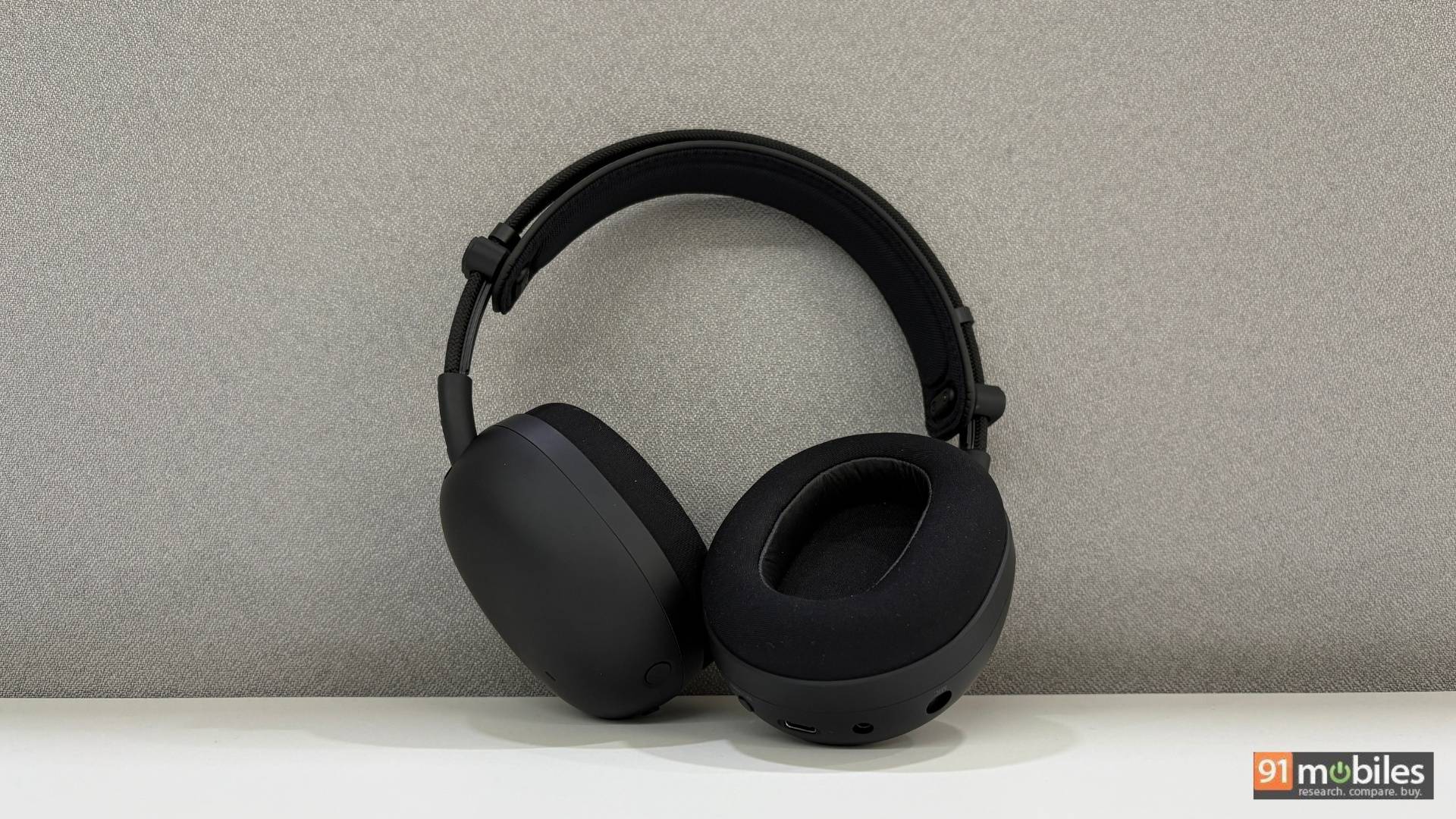
I also appreciate that the headset relies entirely on physical controls rather than the touch controls found on its XM6 sibling. The right earcup houses the power button, Bluetooth pairing button, and the game/chat audio toggle. The left earcup holds the volume wheel, noise-cancelling button, USB-C charging port, a 3.5mm wired connection port, and the microphone port. It’s great that the mic is detachable; if you are playing a single-player game, you don’t need it in your face. My only personal downside, being a bit careless, is that I might lose the detached mic quite easily!

Thankfully, Sony includes a carrying case. It isn’t a hardshell case like the one bundled with the XM6; instead, it’s a soft pouch with a main section for the headset and a secondary pocket for the mic and cables. Speaking of cables, it comes with a USB-C charging cable and a generous 6-foot 3.5mm cable for wired play; nobody is going to complain about that length. Finally, there is a USB-C dongle for a lag-free experience on PC and Mac. The dongle also works perfectly with the PS5, though sadly not with the Xbox Series X.

Overall, during extended gameplay sessions, I could wear these comfortably for hours on end. I usually don’t prefer Active Noise Cancellation (ANC) when gaming, as it sometimes makes me nauseous, but these didn’t give me that feeling at all. While the ANC isn’t quite as powerful as the XM6, it is still fantastic for blocking out distractions. I also thoroughly enjoyed gaming with the ANC turned off so I could listen out for the doorbell. These headphones easily hit the sweet spot for long-term use, whether ANC is on or off.
Software & Connectivity: Tuning the Sound Your Way
Kicking things off with software support, the headset pairs with both a PC and a mobile app. On the PS5, it integrates natively with the headphone settings menu. Customizing the EQ is a breeze, offering a variety of modes to adjust the bass and treble. It also features three distinct FPS modes that work wonderfully depending on the type of competitive shooter you are playing.

Another massive plus for connectivity is the Dual Audio support. You can connect to your PC or PS5 via the USB-C dongle while simultaneously being connected to your phone via Bluetooth. This means you can easily take a phone call or listen to a podcast from your phone without ever dropping your game audio.

When using the smartphone app, you do lose out on some of the bells and whistles found on the XM6 (like the background music mode and deep lifestyle customisations). However, you retain full control over the same sound profiles found in the PC app, alongside settings for EQ, ANC modes, and firmware updates. Some great news for Mac users: the USB-C dongle provides lag-free listening on Mac, and you can easily tune your headset settings using your smartphone.
Gaming Performance: Immersive Audio That Gives You an Edge
I tested the headset on both my PS5 and my gaming laptop, and the audio output was sublime across the board.

In Gran Turismo 7, particularly in the Music Rally mode, you can distinctly make out the roar of the engine, your tyres screeching against the asphalt, and the background score. The positional audio dynamically shifts based on your camera angle; switch to the cockpit view and the engine is deafening, but switch to the follow-camera, and it softens appropriately. It’s a small detail, but one worth highlighting.

In Marvel’s Spider-Man 2, every web-shot is crisp, and the ambient sounds of traffic and a moving city completely surround you. During combat, you can clearly hear enemies sneaking up behind you. This incredible positional audio, powered by Sony’s 360 Spatial Sound for Gaming, also carries over to horror titles like Cronos: The New Dawn and Resident Evil: Requiem. In horror, sound is half the terror, and hearing the cries of approaching enemies from a distance made the hair on the back of my neck stand up.

Action games benefit just as much. Whether it’s Gears 5 or Doom: The Dark Ages, the heavy metal soundtracks combined with the guttural punch of your weapons create an incredibly visceral experience. Even in competitive shooters like Valorant, chatting with teammates and gunning down foes felt highly coordinated. This is partly thanks to the seamless game/chat toggle and the sublime performance of the mic, which stands out as one of the better-performing microphones in the gaming space.
Movies & Music: A Double Life as an Entertainment Powerhouse
When someone asks me for a single headset recommendation for both gaming and entertainment, I usually point to the Sony XM5 or XM6. They are premium, sound incredible, and get the job done for single-player gaming. However, if your priorities are reversed, meaning you primarily want a headset for multiplayer gaming but still want to consume content on the side, the InZone H9 II is a phenomenal choice.

Yes, they have a different sound signature compared to the XM6, but that makes sense given their primary purpose. Watching movies like Ready Player One (specifically the massive race scene at the 11-minute mark) or the final dogfight in Top Gun: Maverick was a treat. The headset delivered deep bass, a clear separation of vocals from the background action, and excellent channel separation. This translated beautifully to listening to music, too.

If you are a strict audiophile, finicky about your sound signature, you might want dedicated lifestyle headphones. But if gaming is your priority and you don’t want to buy a second pair of high-end headphones for movies and music, the H9 II does the job exceptionally well.
The Verdict: Premium Price for Premium Performance
At a market operating price (MOP) of ₹26,390, the InZone H9 II is premium-priced and targeted at gamers who want the best. They boast an incredible battery life of over 30 hours with ANC on, and closer to 50 hours with ANC off. They offer phenomenal sound, great PC and PlayStation compatibility, and stellar performance for both gaming and multimedia.

My only gripes are the lack of native wireless Xbox support (though you can’t complain too much since the 3.5mm wired connection works flawlessly) and the absence of PlayStation Link support for the PS Portal. Aside from those minor omissions, these headphones stand tall among the competition. They are exceptionally well-built, incredibly comfortable for long sessions (even with glasses!), and sound fantastic.
Editor’s Rating: 9.2 / 10
Pros:
- Exceptional Comfort & Build
- Immersive 360 Spatial Sound
- Top-Tier Microphone
- Incredible Battery Life
Cons:
- No Wireless Xbox Support
- No PlayStation Link