Top performers by all-round power in the Rs 50,000 – Rs 60,000 segment in India


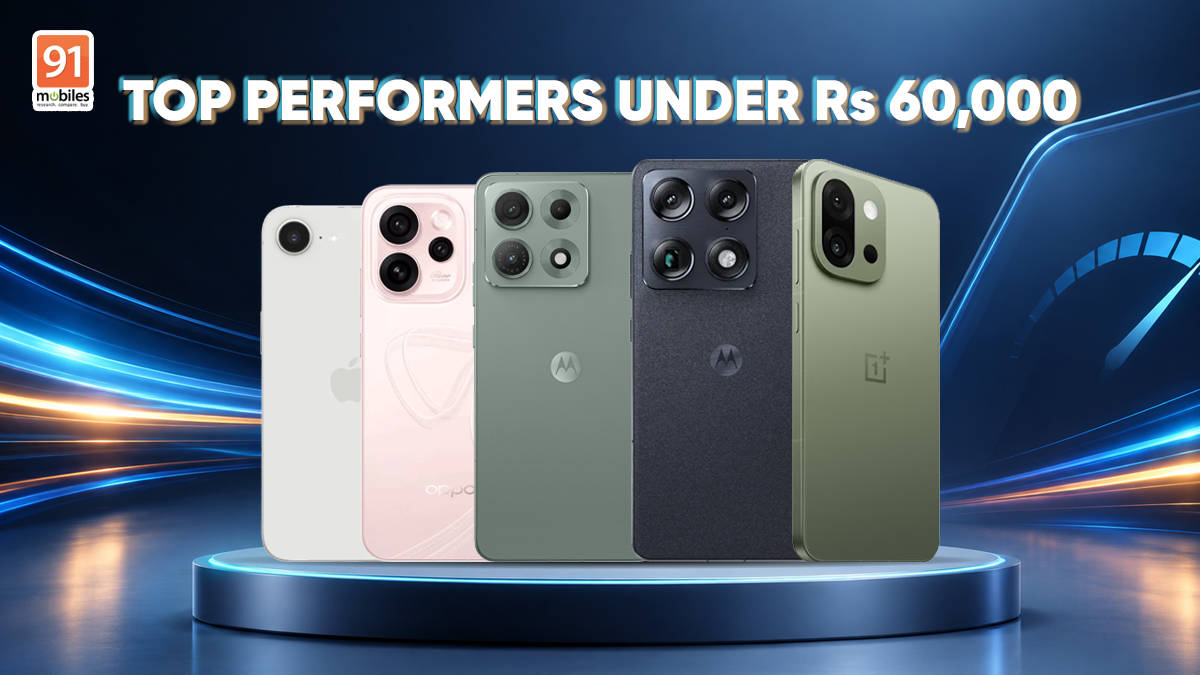
The Rs 50,000 – Rs 60,000 smartphone segment has become an interesting space for buyers who want flagship-level performance without moving into the most expensive premium phones. Earlier pretty much the sub-flagship segment, it now includes devices with powerful chipsets, fast storage, smooth displays and advanced cooling systems, although not every phone delivers the same balance of features.
We tested out a couple of phones in this segment and based on that, the Motorola Signature is the strongest performer in this group, followed by the Moto Edge 70 Max and OnePlus 13s. The OPPO Reno15 Pro Mini and iPhone 16e complete the list, catering to buyers with different priorities.
The ranking follows the AnTuTu scores recorded in our tests, which ran for around 25-30 minutes. Geekbench single-core and multi-core scores provide additional context on CPU performance. While benchmarks help compare raw processing power, they do not tell the whole story about sustained gaming performance, battery life or everyday usability.
Table of Contents
Best performers at a glance
| Smartphone | AnTuTu score | Price |
| Motorola Signature | 30,98,258 | Rs 59,999 |
| Moto Edge 70 Max | 29,72,932 | Rs 54,999 |
| OnePlus 13s | 25,81,355 | Rs 54,999 |
| OPPO Reno15 Pro Mini | 21,41,052 | Rs 59,999 |
| iPhone 16e | 14,05,699 | Rs 59,900 |
*Prices are as of October 2026 and may vary with storage configuration, retailer and offers.
Motorola Signature
Price: Rs 59,999 (12GB + 256GB)
The Motorola Signature (review) leads this list with an AnTuTu score of 30,98,258. Its Geekbench results are equally strong, with 2,889 in single-core testing and 9,583 in multi-core testing. This makes it the most consistent performer among the top three phones in our results.


The phone is powered by Qualcomm’s Snapdragon 8 Gen 5 chipset, paired with 12GB LPDDR5X RAM and UFS 4.1 storage. It also features a cooling system designed to manage heat during demanding workloads. This combination makes it a strong candidate for users who frequently play graphics-intensive games, multitask between demanding applications or edit content on their phones.
The hardware extends beyond performance. The Signature features a 6.8-inch 1.5K LTPO AMOLED display with a 165Hz refresh rate, a 5,200mAh battery, 90W wired charging and 50W wireless charging. Its triple 50MP rear camera setup and promise of up to seven years of software support add to its appeal.
At its asking price, few phones can match the Motorola Signature’s overall performance. As per our revire, its display and software support are among the best in the segment, while its distinctive design helps it stand out from competing flagships. However, battery endurance falls short of expectations, the cameras take a conservative approach to image processing, and thermal inefficiency can affect demanding workloads. These drawbacks are worth considering, particularly for buyers who prioritise sustained gaming performance or camera versatility.
Motorola Edge 70 Max
Price: Rs 54,999 (8GB + 256GB)
The Motorola Edge 70 Max comes close to the Signature, recording an AnTuTu score of 29,72,932. Its Geekbench scores of 2,823 in single-core and 8,890 in multi-core testing are also competitive, although both fall short of the Signature’s results.


Like the Signature, the Edge 70 Max uses Qualcomm’s Snapdragon 8 Gen 5 chipset and LPDDR5X RAM. It features a 6.8-inch QHD+ AMOLED display with a 144Hz refresh rate and a 7,100mAh silicon-carbon battery. Charging is handled by 90W wired charging, with 25W wireless charging also available. Its biggest advantage is the combination of near-top benchmark performance and a larger battery at a lower price. The Rs 5,000 difference between the two Motorola models gives buyers room to save without taking a substantial hit in our benchmark results.
Our review states the Edge 70 Max gets the fundamentals right, with powerful performance, effective thermal management and decent battery life. However, outdoor display legibility remains a concern, while its three OS updates software policy falls short of what some rivals offer. These compromises make it a better fit for buyers seeking a well-equipped all-rounder than those prioritising long-term software support.
OnePlus 13s
Price: Rs 54,999 (12GB + 256GB)
Launched in June 2025, the OnePlus 13s (review) is older than the two Motorola phones in this comparison. However, its benchmark results show why it remains relevant. The phone scores 25,81,355 in AnTuTu, while its Geekbench single-core and multi-core scores stand at 3,059 and 9,192, respectively. Its multi-core result is higher than that of the Moto Edge 70 Max in our testing.


The OnePlus 13s is powered by Qualcomm’s Snapdragon 8 Elite chipset, paired with 12GB LPDDR5X RAM and up to 512GB storage. Its 6.32-inch 1.5K LTPO AMOLED display supports a 120Hz refresh rate, while the 5,850mAh battery and 80W charging help it retain the endurance expected from a modern performance-focused phone.
Its compact design is a major differentiator. While the Motorola phones offer larger displays, the OnePlus 13s is easier to handle for users who prefer smaller devices. The phone also has a vapour chamber cooling system to help manage heat during demanding tasks.
The OnePlus 13s may not top the AnTuTu chart, but its Snapdragon 8 Elite chipset and strong Geekbench scores mean it still has plenty of processing power for demanding games and multitasking. Buyers should weigh this against the remaining software support period and newer alternatives, but its performance and compact form factor keep it competitive at its current price.
OPPO Reno15 Pro Mini
Price: Rs 59,999 (12GB + 256GB)
The OPPO Reno15 Pro Mini launched in January 2026, making it newer than the OnePlus 13s but less powerful in our benchmark comparison. It records an AnTuTu score of 21,41,052, with Geekbench results of 1,630 in single-core and 6,387 in multi-core testing.


It uses MediaTek’s Dimensity 8450 chipset, paired with 12GB RAM and up to 512GB storage. Its 6.32-inch AMOLED display with a 120Hz refresh rate makes it another compact option, while the 6,200mAh battery and 80W charging are useful for everyday endurance. The Reno15 Pro Mini’s main advantage is its camera system. It features a 200MP primary camera, a 50MP ultrawide camera and a 50MP telephoto camera, giving users more flexibility for portraits, landscapes and zoom photography than a basic dual-camera setup.
Our review says the Reno15 Pro Mini delivers a compelling compact flagship experience, despite using a chipset that feels a step below what buyers might expect at this price. Its hardware and software optimisation help it deliver dependable performance, while the versatile camera system, impressive display and comfortable in-hand feel make it an appealing option for those who prefer smaller phones.
This makes it relevant for buyers who want a compact phone with versatile cameras and fast charging, rather than the highest possible benchmark score. However, at a price close to Rs 55,000 or above, the Reno15 Pro Mini is a less obvious choice for users whose main priority is gaming or raw processing power. The Motorola and OnePlus models deliver higher AnTuTu scores, while the OPPO’s case rests on its camera hardware and form factor.
iPhone 16e
Price: Rs 59,900 (128GB)
The iPhone 16e (review) is the oldest phone in this group, having launched in February 2025. It also ranks last by AnTuTu score, recording 14,05,699 in our tests. However, its Geekbench results tell a different story: it scores 3,194 in single-core testing, the highest result in this list, and 7,868 in multi-core testing.
The phone is powered by Apple’s A18 chip and has 8GB RAM. Its 6.1-inch OLED display, 48MP rear camera and support for Apple Intelligence make it a compact option for buyers who prefer iOS. The A18 chip remains capable of handling demanding applications and supported games. Its strong single-core score also illustrates why AnTuTu rankings shouldn’t be treated as a direct measure of everyday responsiveness. AnTuTu and Geekbench assess different aspects of hardware performance, and cross-platform comparisons between iOS and Android need additional context.
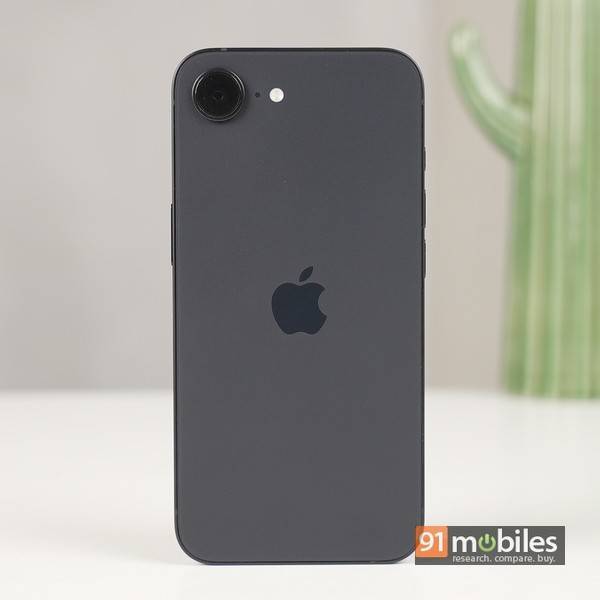
The iPhone 16e’s age does, however, mean buyers should consider what newer devices offer in this price range. Its 60Hz display and single rear camera are less versatile than the fast refresh rate displays and multi-camera setups offered by several Android rivals. It also has less storage at its entry price than some competing phones.
The iPhone 16e remains relevant for buyers who want the Apple ecosystem, strong CPU performance and a compact design. But those prioritising gaming benchmarks, display fluidity or camera versatility will find better-equipped alternatives in this list.
Which phone should you buy?
The Motorola Signature is the strongest all-round recommendation for buyers who want top benchmark performance, a premium display, versatile cameras and long software support. The Moto Edge 70 Max is the better value option for those who want similar processing power with a larger battery at a lower price. The OnePlus 13s remains a compelling choice for users who want flagship performance in a compact phone, even though it’s an older model. The OPPO Reno15 Pro Mini is better suited to buyers who prioritise camera versatility and a compact form factor over benchmark leadership. The iPhone 16e, meanwhile, makes the most sense for users who prefer iOS and value its strong CPU performance.
The Vivo X200T also delivered a strong AnTuTu score of 28,21,319 in our testing, while the Vivo V70 Elite scored 18,15,619. Both were considered during the selection process but have been excluded because their prices rose above Rs 60,000 after launch, taking them outside the scope of this comparison.
Ultimately, the AnTuTu ranking gives a useful starting point, but the highest score does not automatically make a phone the best choice for everyone. Sustained performance, thermal management, battery life, software support, cameras and ergonomics all influence how well a phone holds up in everyday use. Buyers should choose the device whose strengths match their needs rather than treating benchmark scores as the only measure of value.