


Review Summary
Expert Rating
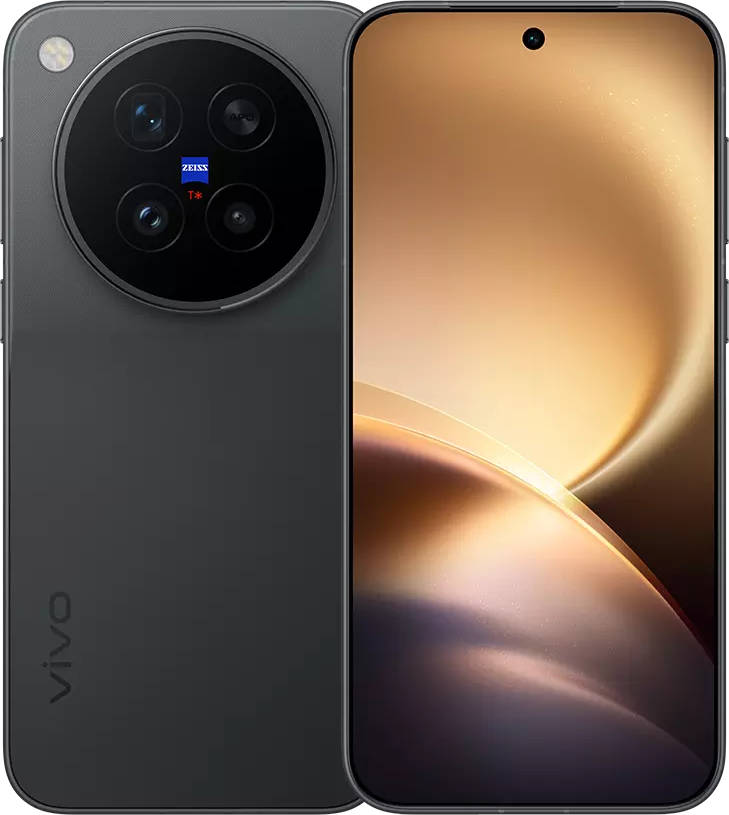
With the introduction of the all-new Vivo X500 Pro Max, the X500 Pro sits right in the middle of the lineup, bridging the gap between the standard X500 and the Pro Max. The handset shares quite a few traits with its Pro Max sibling, and having used it for around 10 days, I believe it deserves more attention than it might initially get. What instantly stood out to me was its form factor, which is considerably more compact than its predecessor, the Vivo X300 Pro. This makes it an appealing choice for those who want a flagship experience without compromising on everyday ergonomics.
But does the smartphone deserve your attention among the sea of flagships out there? While the Vivo X500 Pro excels in certain areas - cameras, obviously- there are a few compromises that make it better suited to specific users. Read our Vivo X500 Pro review for a full analysis.
Table of Contents
Verdict
The Vivo X500 Pro is an appealing option for those seeking a powerful smartphone that remains comfortable to use one-handed, delivers a crisp viewing experience, offers polished software, and impresses with its photography. However, average battery life and the lack of crisp facial details in selfies and portraits may leave some users wanting more.
Cameras: excellent in most areas
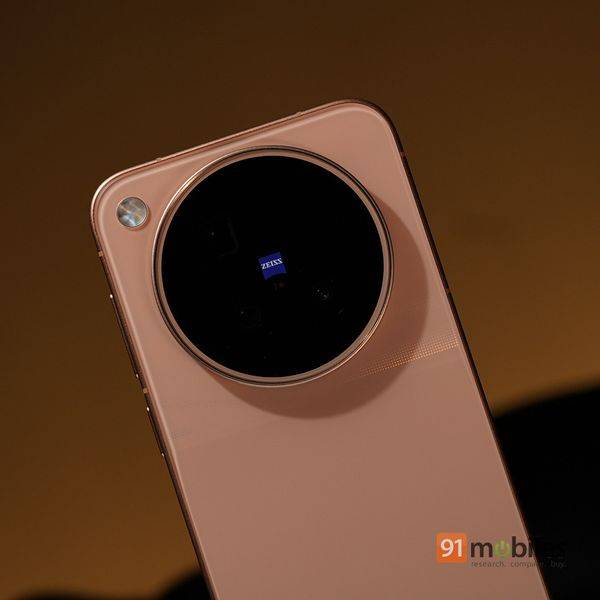
Cameras take centre stage on the Vivo smartphone, and the X500 Pro is no different. The smartphone retains the same triple rear camera setup as its predecessor but upgrades the primary sensor to a 50MP Sony LYT 910 with OIS. It also replaces last year's 200MP telephoto sensor with a new 64MP Sony LYT 610 lens. The 50MP Samsung ultrawide sensor remains unchanged, as does the 50MP front camera housed in the punch-hole cutout.
While the hardware setup is similar to the vanilla X500, the Pro model lets you extend its focal length using an optional teleconverter kit; more on that later. The built-in cameras clearly benefit from the upgraded sensors and the new chipset's ISP, although the phone occasionally takes noticeably long to process images. Shots look naturally sharp, boasting vibrant colours and reliable dynamic range across varying lighting conditions, while the Zeiss lens coating effectively reins in flares from artificial light sources. Although the colour profile defaults to Vivid, Vivo offers plenty of alternate modes to tailor your photos.













On paper, the 64MP telephoto lens might seem like a step down from last year's 200MP sensor, yet the X500 Pro outputs noticeably superior 16MP pixel-binned shots compared to its predecessor's 12.5MP images. We didn't have the X300 Pro on hand for a direct side-by-side comparison, but the telephoto camera's portrait performance stood out, delivering crisp edge detection, DSLR-like subject separation, and punchy colours.
My only real gripe is how the phone processes facial textures, including in selfies. True to Vivo's usual tuning, the X500 Pro applies noticeable skin smoothing that sacrifices authenticity, even if some users prefer the polished look. Switching to the Natural colour profile and dialling down the beauty filters helps, though the results still trail the Pixel 11 Pro, which excels at preserving true-to-life skin tones and fine facial details.
Here's a quick comparison of the Vivo X500 Pro's camera performance in default settings with those of the Google Pixel 11 Pro across scenarios:
Daylight


The Vivo X500 Pro captures sharper, more detailed daylight shots than the Google Pixel 11 Pro, whose strength lies in true-to-life colour accuracy. In its default profile, Vivo favours vivid tones and cooler hues, resulting in contrastier, social media-ready images. While the X500 Pro handles dynamic range well in evenly lit scenes, it struggles to preserve highlight details when shooting directly against harsh sunlight.
Ultrawide


With the ultrawide sensor, the Pixel 11 Pro continues to deliver near-accurate colours. Shots from the Vivo X500 Pro appear slightly flatter in contrast with a hint of oversaturation, though these minor flaws are easy to overlook given its superior detail and minimal edge distortion across the frame.
Portrait


The Vivo X500 Pro excels in portrait photography with impressive edge detection—accurately isolating even stray hair strands against a natural-looking bokeh. Its brighter skin tones and built-in filters also make shots look more flattering. Conversely, while the Pixel 11 Pro preserves natural skin tones and fine detail, it struggles with subject separation and introduces noticeable lens distortion.
Selfie


The Vivo X500 Pro produces noticeably soft selfies, applying slight facial smoothing while struggling to retain background exposure. The Pixel 11 Pro, on the other hand, keeps facial textures realistic and preserves significantly more detail.
Low light (night mode)
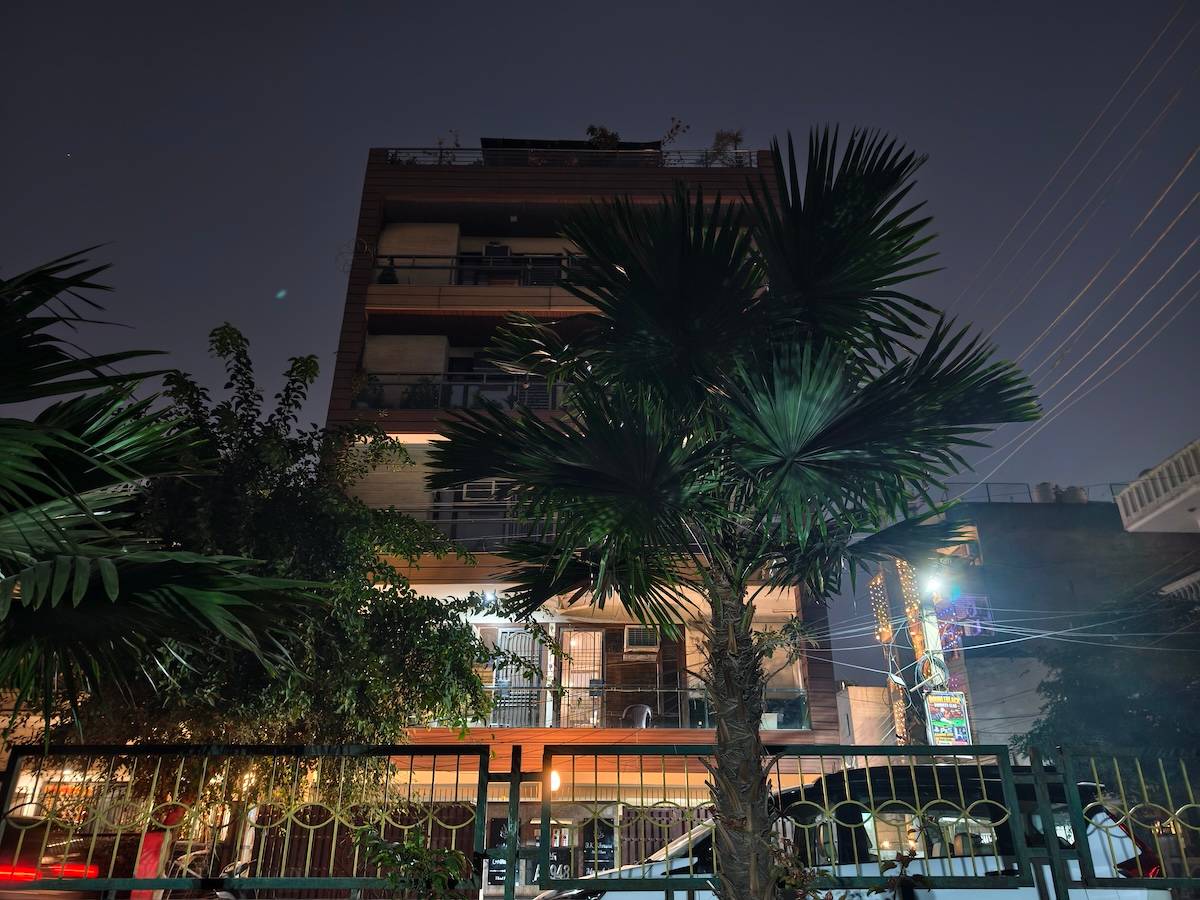

In low light, w/o Night Mode, the Pixel 11 Pro offers a truer representation of the scene's lighting, but falls short of the Vivo X500 Pro's superior detail, cleaner noise control, and better-contained lens flare.
Telephoto Extender kit: good as a concept
Unlike its predecessor, Vivo has only announced the kit accessories for the Pro models, leaving out the base variant. Even on the Pro model, the brand has made a few compromises, reserving the full accessory ecosystem for the Pro Max. The X500 Pro's kit includes just a phone case, a 200mm lens, and a mounting ring, dropping support for the 400mm lens and, like the Pro Max, missing out on a dedicated camera grip.
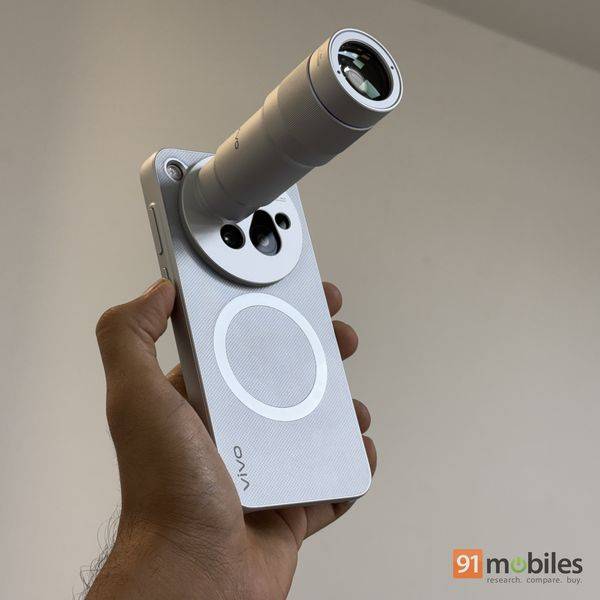
I wish Vivo had retained grip support, as it would have made the setup far easier to handle; with the lens attached, the phone feels noticeably top-heavy. The absence of a bundled wrist strap (though you can attach your own) also makes carrying it feel risky. Worse still, Vivo doesn't include a protective pouch for the lens itself, leaving it exposed to scratches when tossed into a pocket or bag.









If you're willing to look past these ergonomic quirks, the extender kit genuinely elevates the X500 Pro's reach, letting you shoot distant subjects at a native 200mm focal length (equivalent to 8.2x optical zoom). While digital zoom stretches up to 5,600mm, image quality degrades sharply past 400mm, producing overly processed, artificial-looking shots. Sticking to the optical 200mm and digital 400mm focal lengths yields the best results, delivering detailed, vibrant photos that match the main camera's colour science and work well for portraits or wildlife from roughly 15–20 feet away.
However, the sluggish post-processing times I noted in the main camera section are even more pronounced with the extender attached, which can quickly grow frustrating if you want instant results.


OPPO is the only other manufacturer to offer telephoto extender support on its smartphones, but Vivo's implementation is considerably more versatile, with support across different camera modes. Moreover, the kit doesn't obstruct access to the other cameras, unlike the Find X series' extender kit, making Vivo's solution much more convenient to use.
Design: unmistakably a flagship & compact
It's the new colour option and the subtle dual-tone finish around the camera module that set the Vivo X500 Pro apart from the X300 series. The remaining design elements are largely unchanged, and I don't mind that for two reasons: the large circular module adds a distinctive finish and makes it instantly recognisable as a Vivo flagship.
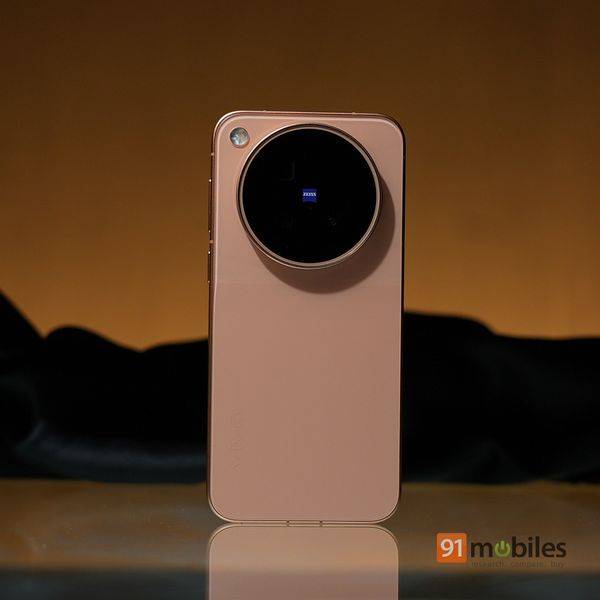
My review unit came in Orange, which is a little too loud for my taste, although bold colours have become a broader trend in the smartphone market lately. While the vibrant finish certainly grabs attention, Vivo also offers the Pro model in Eternal Black for those who prefer something more understated. Globally, the phone is also available in Grey and White, but Vivo has skipped these colour options for the Indian market, which is a bummer.
You might be surprised to find that the frosted glass back doesn't sit completely flush with the frame along the top edge. However, this appears to be intentional. Vivo has curved the edges well for a soft feel, and the gradual slope draws attention to the dual-tone finish, a detail that stands out on the Orange variant thanks to a subtle textured pattern underneath, though it is less noticeable on the other colours.
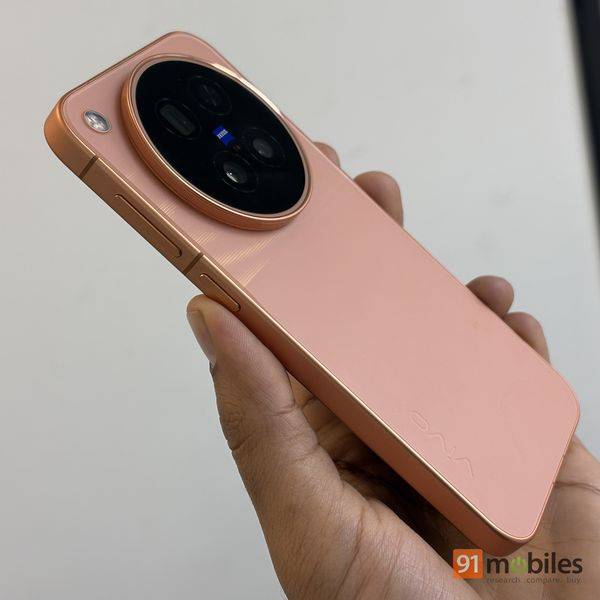
If this quirk bothers you, the matching case included in the box conceals it entirely. Beyond that, the rest of the hardware is impressive, particularly the aerospace-grade aluminium frame, which lends a premium in-hand feel while keeping the weight down to just 192 grams. Measuring 151.8 × 71.9 × ~8.1 mm, its flat edges and compact form factor also make the phone comfortable to hold and relatively easy to use one-handed.
Display: excellent for binge-watching
Fitting within those dimensions is a 6.36-inch LTPO AMOLED display, which dynamically adjusts its refresh rate between 1Hz and 144Hz to improve power efficiency. This higher refresh rate is one of the few notable display upgrades over its predecessor, even though that feels a bit restrictive. Support for 144Hz is restricted to select games, and my current catalogue, which includes COD: Mobile and Subway Surfers, could only run at up to 120fps.
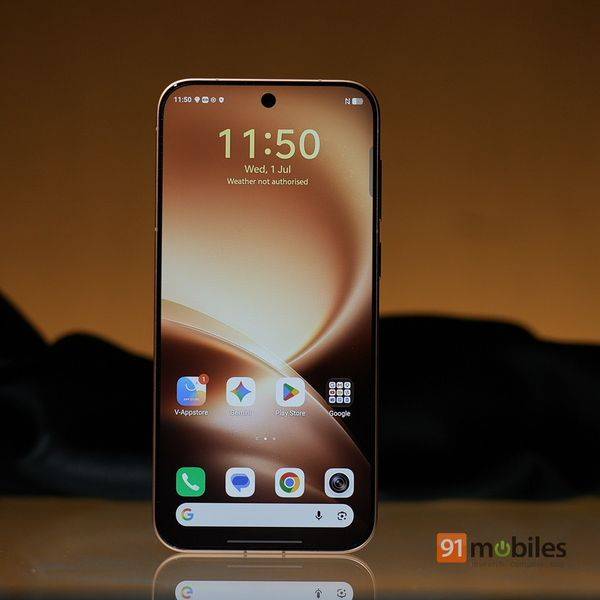
I would have liked to see a QHD+ resolution to deliver a viewing experience comparable to, if not better than, the Samsung Galaxy S26+. That said, a 1.5K resolution, which is almost equivalent to FHD+, is fairly standard for smartphones in this segment. Vivo has also bumped the peak brightness to 6,000 nits from 4,500 nits, which should bring marginal improvement in content legibility outdoors under direct sunlight.
Additionally, the phone supports HDR10+ and Dolby Vision, alongside PWM dimming. Text appears sharp, and images look vibrant without compromising colour accuracy. Combined with razor-thin bezels and an AMOLED panel that preserves colours off-angle, the display makes for a flagship-level viewing experience that is ideal for binge-watching.
Complementing the screen is a dual-speaker setup that delivers loud, crisp audio with solid stereo separation. Finally, a 3D ultrasonic fingerprint scanner ensures quick and accurate unlocking.
Performance: flagship-level
At the core of the Vivo X500 Pro is the MediaTek Dimensity 9600 Pro SoC, paired with 12GB of RAM and 256GB of storage. This is one of the most powerful hardware configurations available in contemporary smartphones, and the synthetic benchmarks back that up—the handset scores over 35 lakh on AnTuTu, while its Geekbench multi-core score hovers around 9,000.



That said, the phone shows some signs of throttling under sustained heavy loads, as seen in the Burnout CPU Throttle test. Even so, its Liquid Thermal Cooling system dissipates heat effectively, preventing the handset from becoming uncomfortably warm during gaming or demanding tasks like 4K video recording, editing, and generative AI workloads—though Delhi's winter weather may have helped as well.
(If you want a closer look at how MediaTek's silicon stacks up, check out our deep dive into the new 2nm Dimensity 9600 Pro SoC.) In day-to-day usage, the X500 Pro's chipset performed remarkably well, launching apps instantly, handling multitasking with ease, and managing everything I threw at it without a hint of stutter.
For gaming, the phone averaged 60fps in BGMI and 39fps in COD: Mobile during 30-minute sessions at the highest supported graphics and frame rate settings, with temperatures rising by just 7 degrees Celsius across both sessions. While it couldn't push games to 144fps, it consistently maintained 120fps in COD: Mobile at Medium graphics and Ultra frame rate settings over a full 30 minutes.
Software: a polished experience
The Vivo X500 Pro boots Android 17-based OriginOS 7 out of the box, with Vivo promising up to five major OS upgrades for the smartphone. Building on OriginOS 6, which replaced Funtouch OS last year, the latest iteration brings further optimisations and several tweaks aimed at enhancing the overall user experience. We have covered all the key OriginOS 7 features in our roundup and also put the software through its paces in our hands-on article for a closer look at what's new.
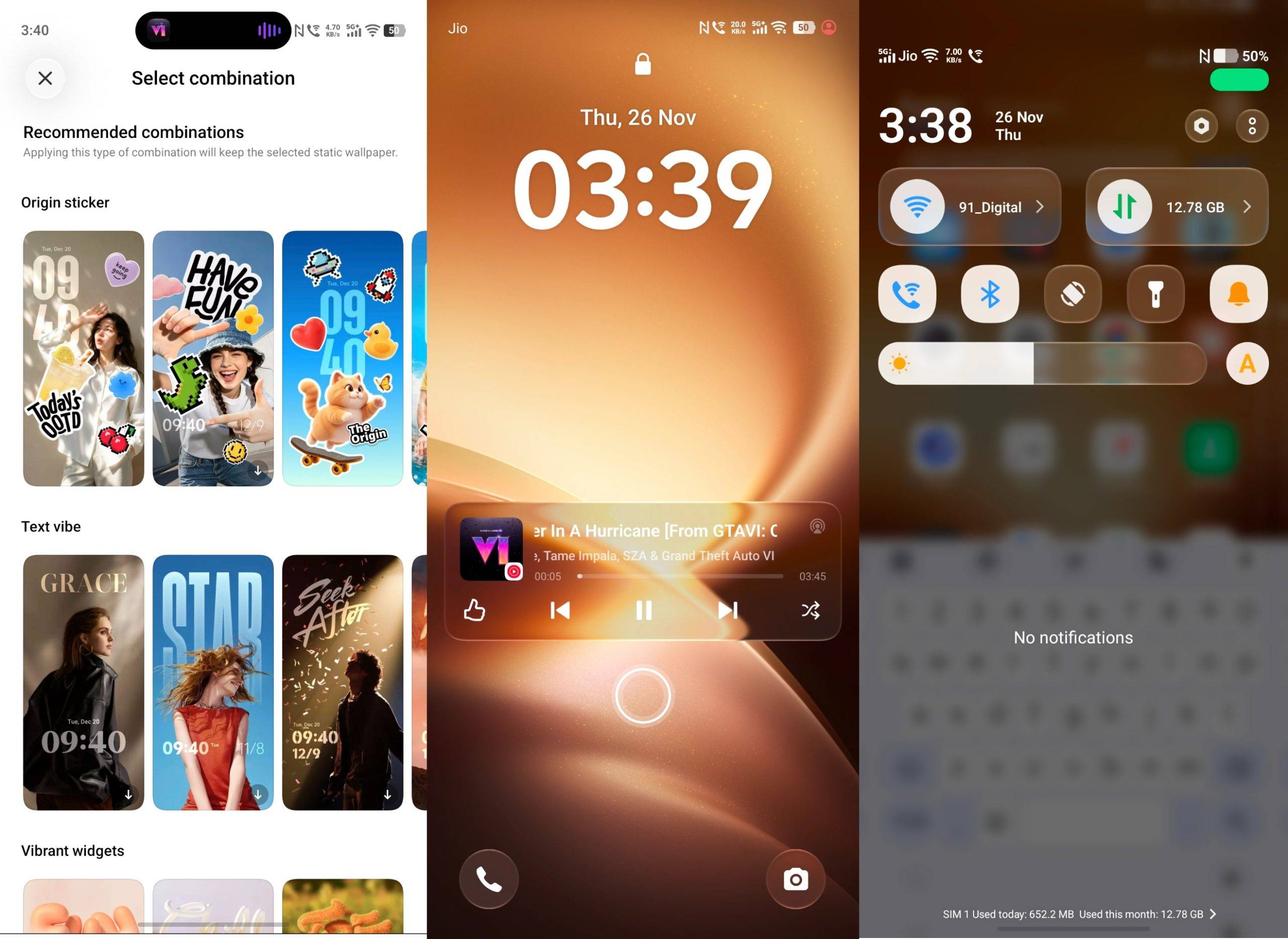
OriginOS 7 runs seamlessly on the Vivo X500 Pro, introducing a fully customisable translucent effect, similar to iOS's Liquid Glass, across quick toggles, the notification shade, and system menus. You also get interactive additions across the lock screen and home screen, including live themes, layered custom sticker layouts, and a water-droplet animation that adds fluidity to UI interactions.
Vivo has also ported over Origin Workbench from its foldables, though the feature feels redundant on a standard slab phone. On the bright side, the upgraded AI suite brings genuinely useful productivity tools: Capture to Note lets you digitise and edit handwritten notes, while call transcription now includes speaker separation and automated summaries. Alongside Gemini, the X500 Pro also includes Vivo's Jovi assistant, which can pull context-aware details directly from your documents and apps.
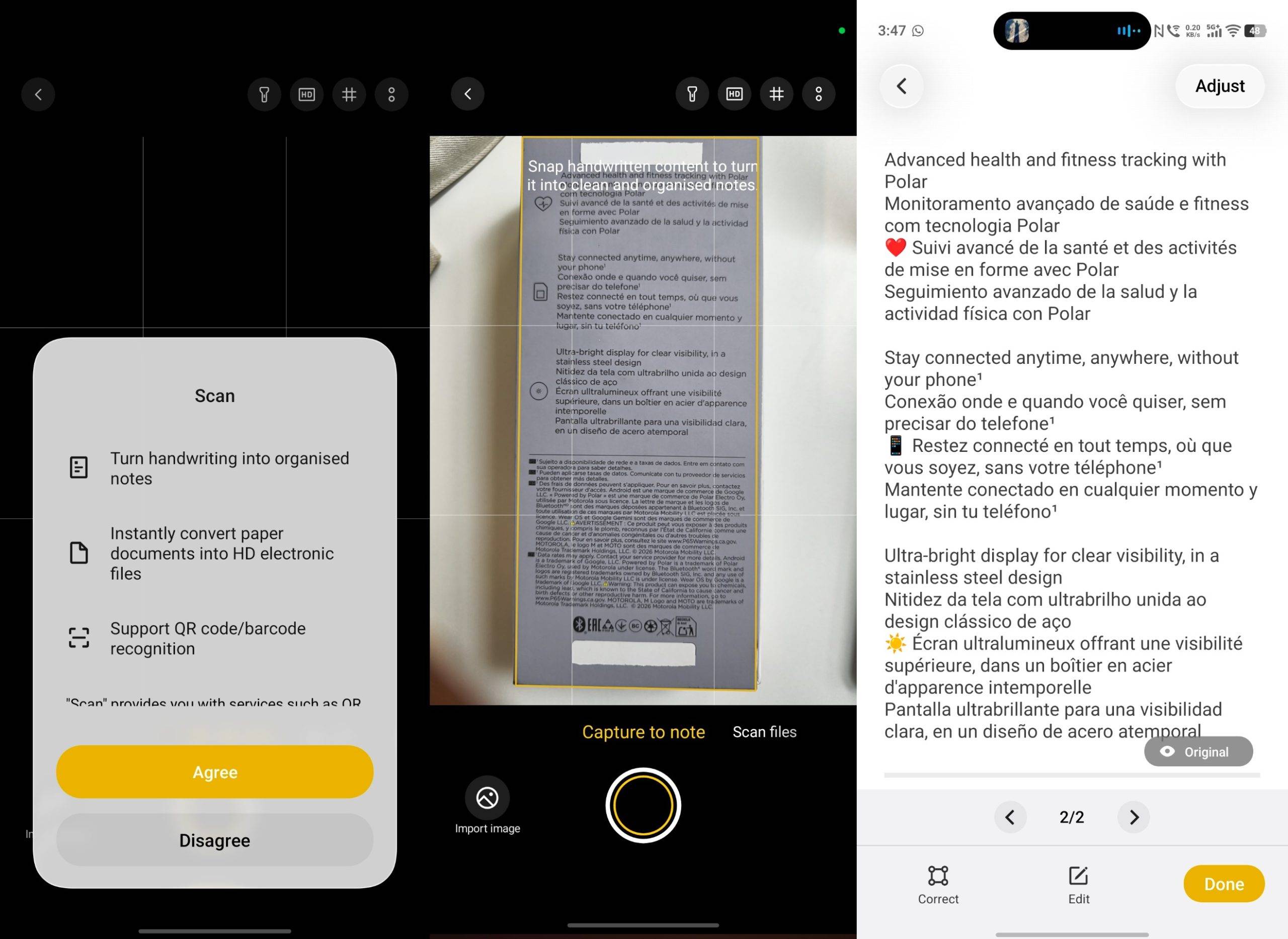
Since the Vivo X500 Pro caters to photographers who frequently transfer files to a Windows PC or Mac, Vivo has significantly expanded its Office Kit. It now supports using the phone as a second display for quick file access, remote PC control, and deeper cross-platform integration for users invested in the Apple ecosystem. While I didn't have Apple wearables on hand to test this firsthand, Vivo claims seamless compatibility with the Apple Watch and spatial audio on AirPods. The phone can even transfer files via AirDrop using Quick Share, an Android 17 feature rolling out to other devices as well.
Battery: impressive charging speeds
The Vivo X500 Pro packs a 6,510mAh BlueVolt silicon-carbon battery, a capacity that might seem modest in a market where 8,000mAh+ phones are becoming increasingly common. In our PCMark battery test, the handset lasted 16 hours and 16 minutes. While that runtime is on the lower side, it is acceptable for a phone with a compact footprint. Vivo backs it up with 90W wired and 40W wireless FlashCharge support, and includes a compatible adapter in the box that tops up the battery from 20 to 100 percent in 50 minutes.
In real-world use, I averaged around 5 hours of screen-on time: enough to last nearly 1.5 days with light usage, or a full day of heavy camera, maps, editing, and multimedia tasks. While an OTA update could improve optimisation, battery life currently feels merely average for a 6,000mAh+ handset.
Final verdict
The Vivo X500 Pro is priced at Rs 1,49,999 (as of November 26th) for its sole 12GB + 256GB variant, while the optional 200mm telephoto extender kit costs an extra Rs 15,999, bringing the combo to Rs 1,65,998. Whether that add-on is worth the premium depends entirely on how often you plan to shoot at extreme focal lengths.
As a compact flagship, the X500 Pro makes a compelling case for itself by packing much of the Pro Max's hardware into a lighter, pocket-friendly form factor. However, it faces stiff competition from the iPhone 18 Pro and Google Pixel 11 Pro (review), both of which follow the same compact formula. Arguably, Apple and Google deliver closer parity with their larger counterparts, whereas Vivo makes noticeable compromises on display resolution and native telephoto resolution.
Where the X500 Pro truly shines is its camera versatility. Against the Pixel 11 Pro, it consistently delivers sharper shots, strong dynamic range, and vibrant colours across lenses, and the optional telephoto extender pushes its reach even further. While facial textures can look overly smoothed, it is hardly a deal-breaker for buyers prioritising an all-round, capable camera system.
The Vivo X500 Pro even makes a strong pitch to Apple users with OriginOS 7, pairing deep customisation and practical AI tools with seamless cross-platform support. Powered by MediaTek's flagship chipset, the phone rarely breaks a sweat regardless of your workload, minor benchmark throttling aside. Battery endurance remains its only middling trait, though fast charging ensures a quick midday top-up is all you need to get through the day.
Given the current industry landscape, the Vivo X500 Pro's price hike over its predecessor is justifiable. While existing Vivo X300 series owners can safely skip this generation, anyone else looking for top-tier cameras and flagship performance in a pocket-friendly form factor will find the X500 Pro an easy recommendation.
Editor's rating: 8.7/10
Reasons to buy
- Compact, lightweight 192g build with a premium aerospace-grade aluminium frame.
- Sharp, vibrant cameras with strong dynamic range and optional 200mm telephoto extender support.
- Vibrant AMOLED display with Dolby Vision and HDR10+ support.
- Smooth OriginOS 7 software with useful AI tools and seamless PC/Apple ecosystem integration.
Reasons not to buy
- Average real-world battery life, hovering around 5 hours of screen-on time.
- Performance throttling under sustained heavy workloads.
 | vs |  |