OLED’s core promise has always been pixel-level control: each of the 8.3 million self-lit pixels on an OLED panel can switch off independently, which is crazy when you put it like that, but also why OLED black is considered genuinely black rather than a backlit approximation. The LG OLED evo AI G6 has taken that foundation and built something considerably more ambitious on top of it using new panel technology, a more powerful processor, and a set of independently verified picture quality certifications that separate it from every other television in the category right now. Don’t believe us? You will by the end of this article.
Table of Contents
What Happens When You Push OLED Brightness Without Losing the Blacks
The LG OLED evo AI G6’s picture quality starts with Hyper Radiant Color Tech, a new Light Boosting Algorithm and Light Control Architecture built into the Alpha 11 AI Processor Gen3 that pushes brightness, colour, and contrast further than any previous OLED generation. The headline output is X3.9 higher peak brightness than conventional OLED, delivering highlights and specular detail at an intensity that changes how the panel handles everything from a sunlit landscape to a candlelit close-up, instantly making it a TV in its own league.
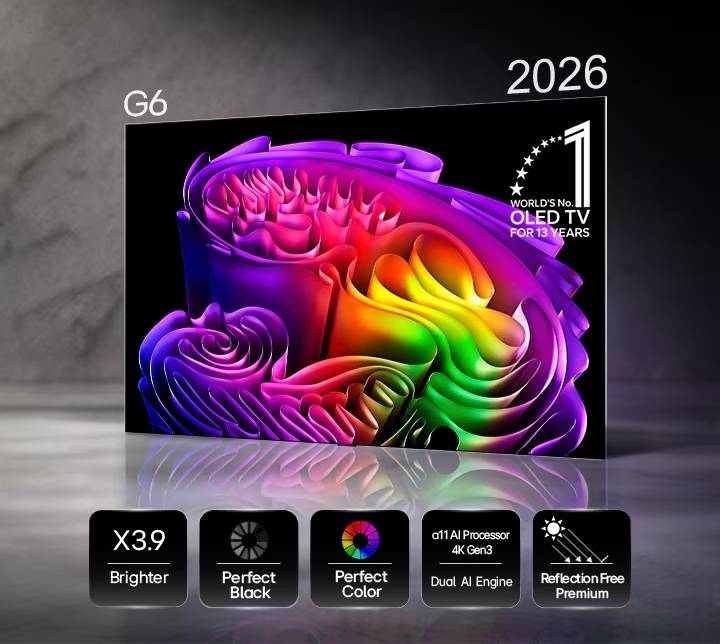
What makes that brightness figure more meaningful is what sits alongside it. The OLED G6’s picture quality has been independently verified by UL Solutions, a global certification body, confirming that the panel holds black levels at or below 0.24 nit and colour consistency above 99% in up to 500 lux, roughly equivalent to a well-lit living room. What does this mean? Most televisions deliver their best picture in the dark, and the LG OLED evo AI G6 is certified to deliver it regardless of what’s happening around it. Intertek has certified 100% colour fidelity measured to CIE DE2000 with 125 colour patterns. Another independent testing organisation has certified the G6 for 100% colour fidelity, meaning every colour the panel produces matches the original source material with no measurable deviation across 125 distinct colour patterns tested against the industry’s standard colour accuracy benchmark.
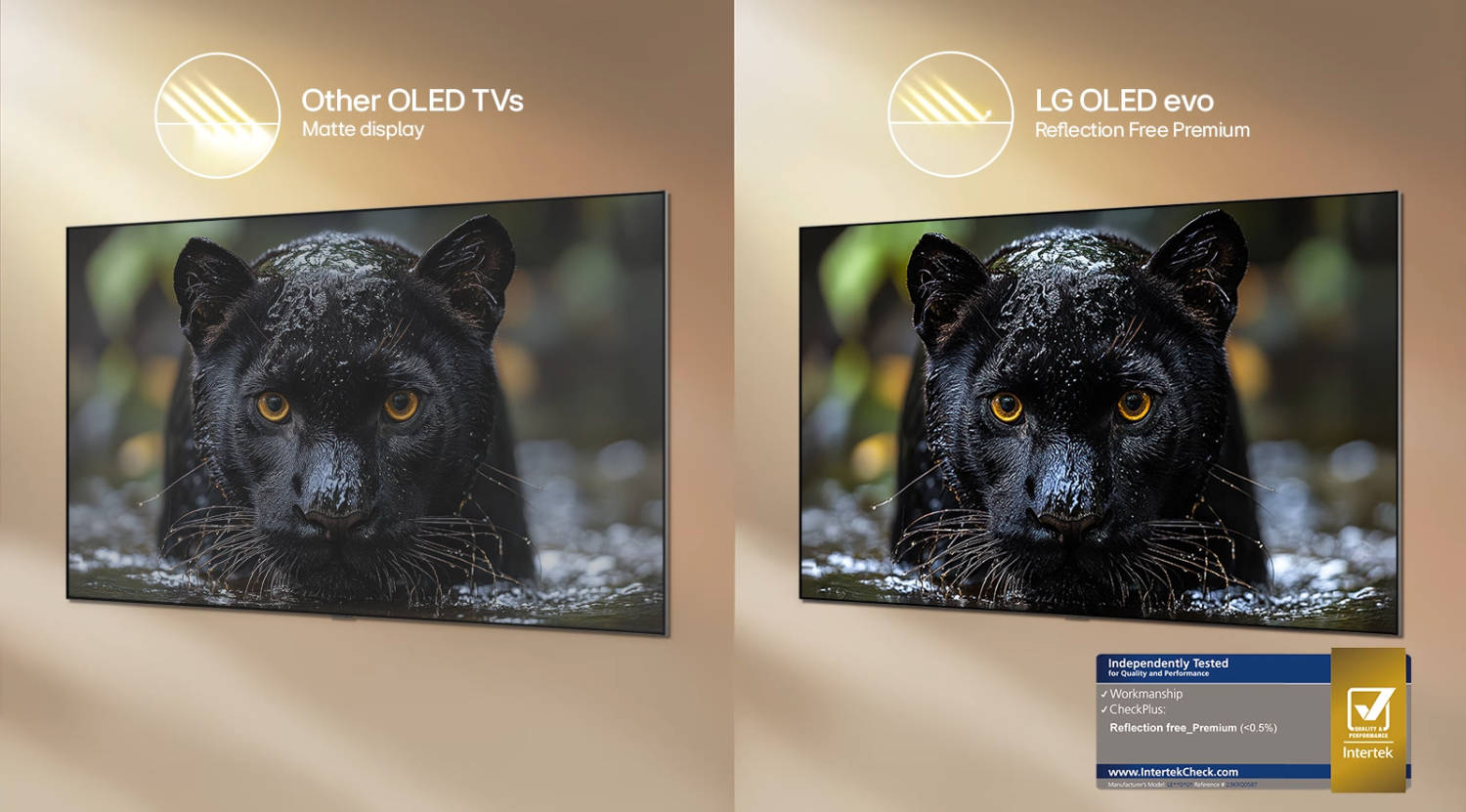
Intertek has also independently certified the OLED G6’s Reflection Free Premium coating, measuring screen reflectance at below 0.5%, which in practical terms means almost no ambient light bounces back off the screen toward the viewer. Most televisions address reflections with a matte coating that scatters incoming light, which works but washes out blacks and softens the picture in the process. The OLED G6 reduces reflectance without that trade-off, so the panel’s contrast and colour hold up in a sunlit room the same way they do at night.
The Processor That Does It All
The Alpha 11 AI Processor Gen3 drives the LG OLED evo AI G6 with a Dual AI Engine, running an NPU that is 5.6 times faster at neural processing, a 2.2 times faster processor, and GPU performance that is 3.6 times more powerful than the 2025 Alpha 9 AI Processor Gen8. What does this mean for users? Simply that the TV is analysing and refining sharpness and texture at the same time rather than one after the other, which is what allows it to handle a football match and a film differently and appropriately without manual input.
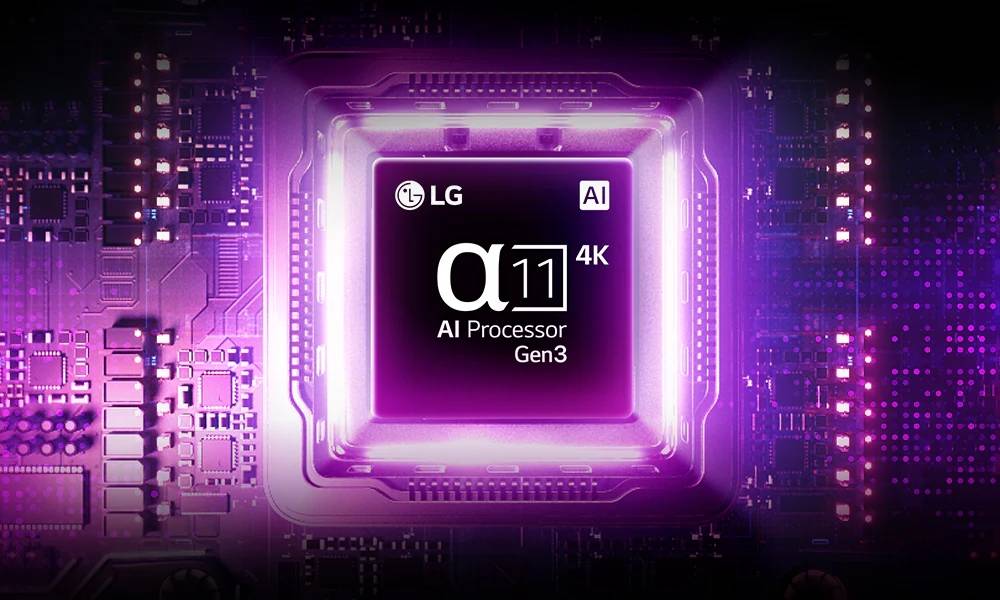
AI Picture Pro handles upscaling through pixel-level analysis across genre, faces, and fine surface detail by pulling lower-resolution content toward 4K quality rather than simply stretching it. The difference shows up in details that usually disappear with cheaper upscaling: fabric texture, the grain on a stone wall, or even the fine lines on a face. AI HDR Remastering takes standard dynamic range content and lifts it toward HDR quality scene by scene, adjusting colour, brightness, and contrast as the footage changes rather than applying a fixed filter across the whole programme. Then manages the full tonal range across Dolby Vision, HDR10, and HLG, ensuring neither the brightest highlights nor the darkest shadows lose the detail they were mastered with.
Audio follows the same logic. AI Object Remastering Ultra separates voices, background music, and sound effects into distinct channels and adjusts each independently, so dialogue stays clear during a loud action sequence without the viewer needing to touch the volume. The speaker system itself is 4.2-channel at 60W, with Alpha 11 AI Sound Pro generating a Virtual 11.1.2-channel upmix that creates a sense of height and surround depth from a flat-mounted television, backed by full Dolby Atmos support.
Built for the Kind of Gaming Performance That Doesn’t Leave Room for Excuses
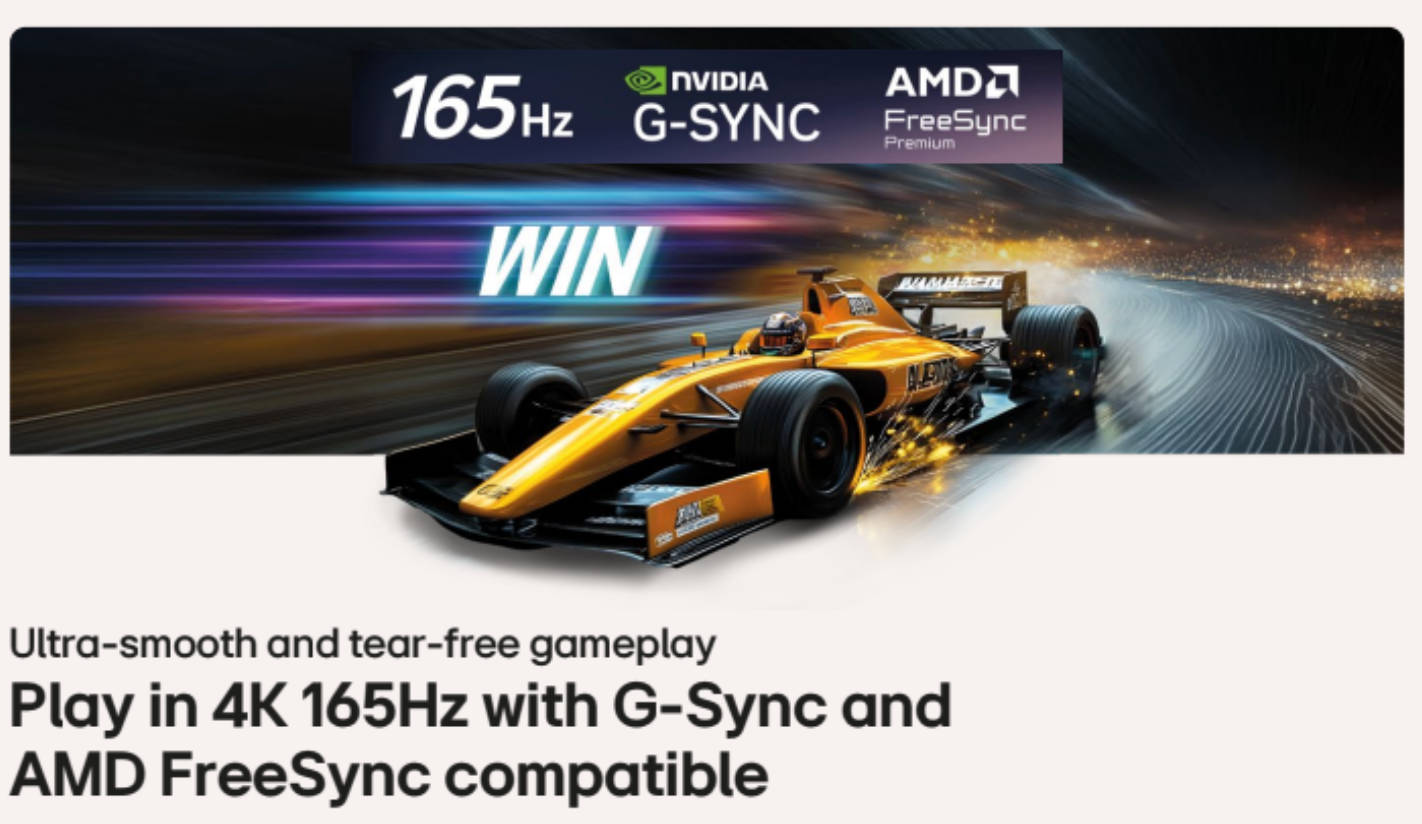
The LG OLED evo AI G6’s gaming credentials are extensive and also independently certified. Every game running on a console or PC outputs frames at a rate that fluctuates depending on what’s happening on screen, and when that frame rate doesn’t match what the TV is refreshing at, the result is screen tearing or a visible horizontal split in the image that makes fast motion look broken. Variable Refresh Rate, or VRR, solves this by letting the TV’s refresh rate adjust dynamically to match whatever the game is outputting, frame by frame. On the G6, VRR runs up to 165Hz in 4K, and it works with both NVIDIA and AMD graphics cards supporting both NVIDIA G-Sync and AMD FreeSync Premium, so PC gamers get the clean, tear-free experience.
Response time is Intertek-certified at less than 0.1ms, which means the screen is keeping up with inputs effectively in real time. ClearMR 10000, the highest tier of VESA’s motion clarity certification, confirms that fast movement stays sharp rather than smearing across frames. HGiG ensures HDR tone mapping in games is preserved exactly as developers intended, so the lighting, shadow detail, and colour a game was built around aren’t quietly altered by the TV’s own processing.
Cloud gaming takes the G6 into different territory entirely. Xbox cloud gaming runs on the G6 at 4K 120Hz HDR. In plain terms, that means playing high-end games at full quality with no console or gaming PC in the room, just the TV and an internet connection. This capability is specific to the G6 and a handful of other LG models, not available across the brand’s broader lineup. The LG OLED evo AI G6 is also the world’s first TV to support Bluetooth Ultra Low Latency Controller connectivity, bringing wireless input delay below 3ms. That’s close enough to a wired connection that the difference disappears during play, one controller at a time in this mode.
The Smart TV Platform That Has Won the Same Award Eight Years Running
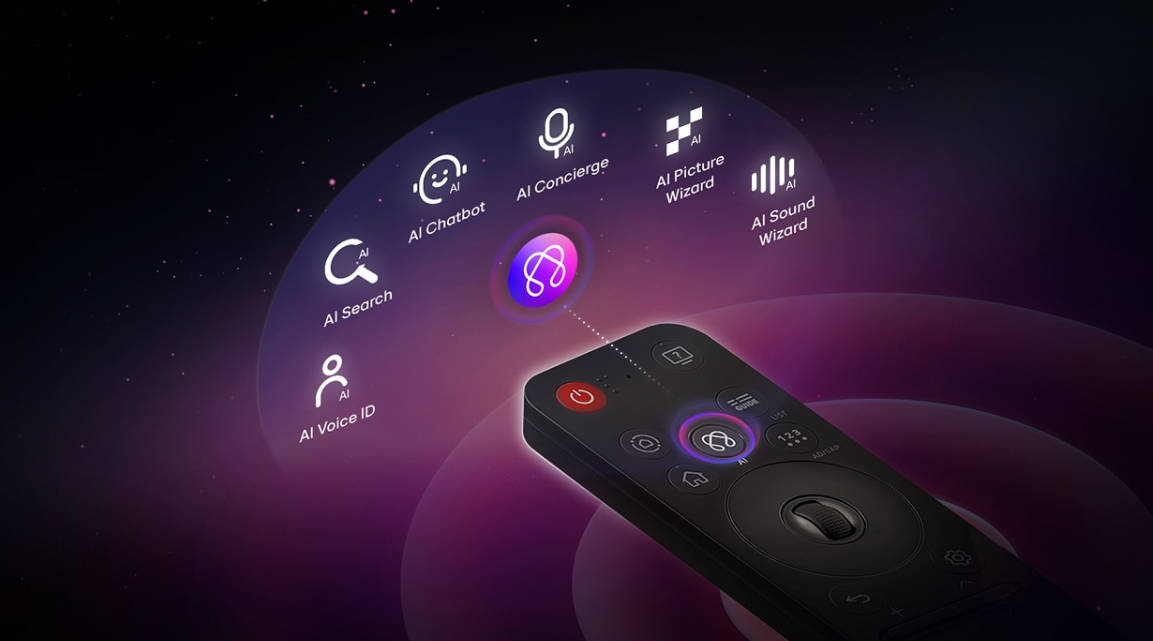
The G6 runs webOS 26, and its Multi AI Search capability connects to both Google Gemini and Microsoft Copilot, letting viewers choose between models depending on the query. In addition, AI Concierge provides personalised content recommendations while In This Scene surfaces real-time contextual information based on what is playing, and Generative AI enables image search and creation directly through the platform. It also has AI Voice ID that recognises individual voices and surfaces each user’s personalised My Page, with weather, calendar, sports scores, and widgets. AI Chatbot detects potential issues with the TV itself and provides step-by-step resolution on-screen before a support call is needed. There’s more! AI Picture Wizard and AI Sound Wizard build personalised profiles from viewer preferences over time.
LG Shield underpins all of this through 7 core technologies: secure data storage and management, cryptographic algorithms, software integrity verification, user authentication and access control, secure data transmission, security event detection and response, and secure update management. This is a CES 2026 Honoree in the Cybersecurity category. The webOS Re:New programme keeps the platform current for up to five years through software upgrades, with the number of upgrades and support duration varying by model and region per LG’s own disclaimer.
A TV Designed to Disappear Into the Room It Lives In
Wall-mounted, the LG OLED evo AIG6 sits 24.3mm from the surface, achieving the flush-fit Gallery Design that removes the visible gap between the screen and the wall. The 65-inch model weighs 22 kilograms without the stand. Carbon footprint reduction is verified by the Carbon Trust for the 83, 77, 65, and 55-inch G6 models.
Why Nothing Else in OLED Right Now Comes Close To LG OLED evo AI G6
The LG OLED evo AI G6’s case rests on a combination that the current OLED market hasn’t replicated: X3.9 peak brightness alongside independently certified Perfect Black and Reflection Free Premium in the same panel, 165Hz VRR with G-Sync and FreeSync and a 0.1ms certified response time, world-first 4K 120Hz HDR cloud gaming through GeForce NOW, Bluetooth Ultra Low Latency Controller support below 3ms, and eight consecutive years of the best-rated smart TV platform in the market. Every performance claim across picture, gaming, and intelligence is backed by third-party certification which matters because it removes the gap between what a television claims on a product page and what it actually delivers in a living room.
Most televisions at this level do one or two of these things exceptionally well and ask buyers to accept trade-offs on the rest. The LG OLED evo AI G6 doesn’t present that choice and is built as a complete system, where the panel technology, the processor, the gaming infrastructure, and the software platform are each operating at the top of what’s available in 2026 and working together rather than pulling in separate directions. For anyone buying a television they intend to keep for several years, that coherence will be a game-changer.
This is a promotional post done as part of a brand collaboration.