OPPO F31 Pro+ and F31 Pro: Power-packed performance for the Indian hustler


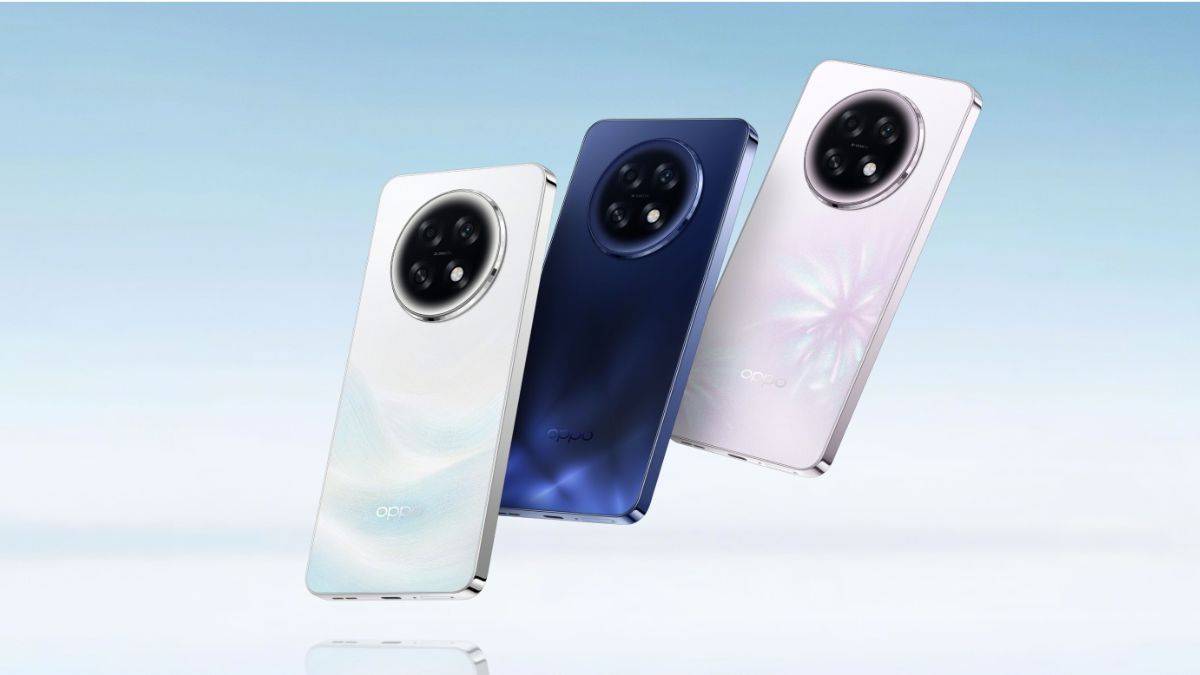
There’s a reason why OPPO’s F31 Pro+ and F31 Pro have caused so much stir in 2025’s smartphone market. Unlike the forgettable parade of mid-range launches, these phones have earned their spot by holding up reliably in the hands of Indian users who push their phones harder than most. Running a shop, managing side-hustles, or staying connected through busy daily routines? The F31 series is designed with actual users in mind rather than just lab tests. Using them in extended weeks of daily grind felt reassuringly different – they’re engineered to last and perform for people powered by their devices.


Performance that doesn’t slow down when you need it most
A truly modern phone isn’t just a communication hub anymore. In fact, it’s the centre of your lifestyle. It’s your office when you’re travelling, your banking desk during errands, your classroom in tutoring sessions, and your entertainment screen late at night. For many, the entire day runs through this single device. Switching between spreadsheets for work, UPI apps for quick payments, Zoom calls with clients, and streaming music or cricket in between is exactly where most mid-range devices expose their weaknesses but with the F31 Pro+, that strain never showed. Powered by Snapdragon 7 Gen 3, built on an efficient 4nm process, it kept pace with everything without blinking: instantly responsive app switching, multitasking that stayed consistent through long hours, and gaming that remained smooth even when pushed hard after work hours. The storage setup of UFS 3.1 with 8GB or 12GB RAM (plus up to 12GB virtual expansion) meant I could leave heavy files and dozens of chat groups open without worrying about lag or reloads. Turning to the F31 Pro, driven by MediaTek’s Dimensity 7300 Energy, the experience felt hardly less practical for everyday hustlers juggling business tools, family apps, and social scrolls late into the night – it handled them all effortlessly. Even the base F31 with Dimensity 6300 Energy proved its point, sailing through lighter multitasking for daily routines like bills, browsing, and calls. Across the board, the phones truly felt like companions designed for people whose entire lifestyle now runs on one dependable device.


The productivity experience gets a significant boost from OPPO’s integration of Google Gemini AI within ColorOS 15. Tools like AI VoiceScribe enable real-time transcription and translation in calls across multiple Indian languages, while OPPO Docs with Gemini AI help users summarise, translate, and rewrite documents instantly, which is perfect for on-the-go professionals and students juggling communication and content creation. The AI Notes Assistant cleans up and structures notes, ensuring quick, polished outputs, and the AI-powered Scan Document tool eases digitising paperwork. This AI integration is seamlessly woven into native apps, making the F31 series not just fast in hardware but also smart in software.
Further enhancing daily productivity, the AI Recording Summary function automatically transcribes and condenses long voice notes into short, actionable items, helping users stay organised. The Dual-Engine Smoothness System combines CPU management and rendering optimisations, ensuring that using these AI-enhanced features alongside other multitasking remains smooth and lag-free.


Displays that don’t wash out in India’s glare
Phones here don’t spend their lives indoors. They face direct summer sunlight, awkward viewing angles on crowded trains, and constant on-the-go strain. That’s why the AMOLED panels on both Pro+ and Pro stood out during daily use. The F31 Pro+’s 6.8-inch screen with 120Hz refresh rate and 453ppi resolution made even casual tasks like flipping between Instagram DMs and Excel sheets feel consistently sharp and smooth, while also surviving outdoor sun glare gracefully. The F31 Pro, with a slightly more compact 6.57-inch AMOLED, proved superbly readable in long usage hours with a flat, no-nonsense panel that’s ideal for reading-heavy users. AGC DT-Star D+ Gorilla Glass ensured durability when sliding the device into jeans or resting it on scratched surfaces at cafes. For all three devices, the difference was clear: the screens don’t just look good, they remain usable without a fight.
ColorOS 15 includes contextual AI optimisations that adapt the screen refresh rate and brightness dynamically based on the content and environment, preserving battery without compromising the smoothness that users notice daily. Features like AI-based adaptive contrast are able to further enhance readability in varying lighting conditions, a practical boon for outdoor use.

Durability and battery
Devices used in India don’t live soft lives; they slip from pockets, survive scooter commutes, and live in gritty shopfronts. Carrying the F31 series day to day gave noticeable confidence thanks to their AM04-grade aluminium alloy frames – there’s no flex, no creaks, no “cheap” feel. Real reassurance came knowing that these are triple IP-rated (IP66, IP68, IP69). Few phones at this price range can genuinely claim resilience to both dust storms and dunks in water, but the F31s actually can. I saw them shrug off water jets and dust-heavy outdoor conditions without hesitation, while still feeling light enough (around 190g) to comfortably carry all day.
Reliability often boils down to whether your phone survives your waking hours without desperate top-ups. With 7,000mAh batteries across the F31 lineup, endurance is the signature. Two-day battery life became the norm for my actual use patterns: GPS commute tracking, media streaming, camera usage, and long business chats. What further added convenience was the charging story – 80W SUPERVOOC Flash Charge constantly bringing 0-58% in under half an hour became a game-changer on days when I only had ten spare minutes before heading out. ON/OFF bypass charging in extended gaming sessions really did keep batteries cooler in the process, while reverse charging meant topping up earbuds or a friend’s phone was effortless. It’s less about numbers here, more about freedom from power anxiety, I didn’t feel tethered to a charging socket anymore.
Battery longevity and charging efficiency are also enhanced by AI-driven power management systems built into ColorOS 15. These systems learn user habits over time and intelligently allocate resources to apps and background processes. This way, real-world usage is beyond what raw battery capacity promises. The AI optimisations also manage thermal load during charging, further preserving battery health and device lifespan.


Heat control that keeps pace with Indian summers
Most devices feel fine until June arrives, and then sudden throttling, stings of heat, and performance drops make them unreliable partners. This is where the F31 series surprised me most. Streaming Netflix in a fanless shop through peak Delhi heat highlighted the F31 Pro+’s serious thermal planning. Its expansive 5,219mm² vapour chamber actively kept heat away from CPU, GPU, and battery hotspots, ensuring no sweaty discomfort while in hand and no throttling even after hours. The F31 Pro and base F31, with vapor chambers of 4,363mm² and 4,300mm² respectively, held up admirably in repeated multitasking and video calls outdoors. The difference in daily practice is clear: the phones remain cool enough to continue working, not force you to take breaks.
Even under sustained loads such as prolonged AI processing during voice transcription or document handling, thermal optimisation ensures the AI features run without performance impacts. This combination of hardware cooling and software thermal management makes the F31 series well-equipped for Indian climate demands and heavy multitasking.
Cameras that are as practical as they are capable
Great cameras don’t just matter to content creators; they matter to working professionals needing crisp shots of inventory, to families capturing festivals, and to students sharing campus reels. That’s where the F31s excel by being straightforward, reliable tools. Photos from the F31 Pro+’s 50MP sensor with OIS consistently turned out steady and detailed even after sundown street use, while AI Clarity Enhancer and live unblur carried enormous real-world convenience, saving casual snaps that normally end in blurs. The Pro and F31, with the same 50MP setup (minus OIS), still impressed with colour-true captures across everyday use. The 32MP front camera delivered clear selfies and group video calls, which in practice meant better Zoom clarity and fewer retakes. Shooting modes like Night, Portrait, and Dual View all felt like time savers rather than gimmicks once you tried them, particularly with quick Google Lens tie-ins for scanning.
The AI-powered camera software adds layers of smart optimisation: Real-time AI Clarity Enhancer sharpens details on the fly, while Eraser 2.0 and live unblur intelligently remove distractions and motion blur post-capture. These AI touches make photography more reliable and suitable for business use cases like product cataloging or instant sharing in chat groups.


Networks and connectivity that stay reliable everywhere
India demands exhaustive connectivity because for many, the phone is the only digital tool they own. Over weeks of use, the F31 series proved consistent with strong signal catch even in dense concrete neighbourhoods. Dual SIM 5G meant singular phones sufficed for both work and personal routines; Wi-Fi 7 readiness meant faster indoor streaming and large file transfers when available. Paired with Bluetooth 6.0 across SBC, AAC, aptX, aptX HD, and LDAC support, it proved equally strong for smart accessories and office peripherals. GPS was rock-solid across Ola rides and intercity passes, locking quickly every time. Simply put, there wasn’t an area where the F31s left me second-guessing their connectivity.
AI-assisted network management helps maintain seamless connectivity by intelligently switching between cellular bands and Wi-Fi networks. This optimises signal strength and reduces dropouts, which is critical for uninterrupted communications in challenging network environments.
Software tuned for clearer, smarter use
ColorOS 15 on these devices took me by surprise with its maturity. It’s less cluttered, lighter on the eye, and more efficient in adjusting to daily patterns. In practice, this meant notification management felt contextual and non-intrusive, scheduling tools adapted to my lifestyle, and “rejuvenation mode” genuinely fixed the build-up lag after weeks of use. Gemini AI tools for translation and live transcription fitted perfectly into freelance writing and cross-language interactions, moving them from novelty to utility. Security layers tailoring to Indian context such as gesture unlock for fast entry, locked app vaults for banking apps, are exactly the practical steps locals value in daily interactions with their phones. Using the F31 series for me became less about learning a new system and more about slotting in seamlessly to routines.
Real-world proof of long-term dependability
At the end of weeks using the F31 Pro+ and Pro, what became indisputable is that they’re built for the chaos of Indian life. Not every device survives long WhatsApp video calls on rooftop networks during power cuts, navigation in midday traffic jams, or marathon shop-computing days without showing fatigue. These ones did, consistently. The Pro+ emerges as the true workhorse for people stretched across projects and commutes, while the Pro strikes the practical balance for steady users, and even the base F31 avoids typical value-tier compromises. No matter whom you hand it to – students, workers, travellers, the emphasis stays clear: smooth heat handling, dependable endurance, and genuine resistance to abuse.
Why OPPO’s F31 series works
In all truth, this series succeeds not because of flashy talk or exaggerated promises, but because in months and years of actual use, they can hold their performance where rivals collapse. OPPO’s F31 Pro+ is the clear fit for high-stress, high-demand environments, while the F31 Pro offers a lighter but no less trustworthy work-lifestyle balance. Even the F31 entry model avoids the usual sloppiness of budget tiers, offering features that matter. If you’re hunting for a phone that will actually last, not degrade within a year under India’s endless usage cycles, the OPPO F31 lineup is a serious answer.
Pricing is refreshingly straightforward: the F31 Pro+ starts at ₹32,999 for the 8GB+256GB model and ₹34,999 for 12GB+256GB; the F31 Pro is available from ₹26,999 (8GB+128GB), ₹28,999 (8GB+256GB) and ₹30,999 (12GB+256GB); while the standard F31 begins at ₹22,999 (8GB+128GB) and ₹24,999 (8GB+256GB). Colour options are equally broad: the F31 Pro+ comes in Gemstone Blue, Festival Pink, and Himalayan White; the F31 Pro is offered in Desert Gold and Space Grey; and the base F31 arrives in Midnight Blue, Cloud Green, and Bloom Red.
During the ongoing festive sale, buyers can get up to 10% instant bank cashback, extra exchange bonuses, and no-cost or zero down payment EMI options. These offers are valid across OPPO’s official online store, Amazon, Flipkart, as well as major offline chains like Croma, Reliance Digital, and partner retail outlets. Certain launch deals drop effective prices to as low as ₹20,700 with applicable bank and exchange offers, along with complimentary device damage cover for early buyers. In the end, these are not showpieces; they are long-term tools designed unapologetically for relentless hustle.