OPPO Reno16 Camera Test: Is this the best camera phone for Gen Z creators?


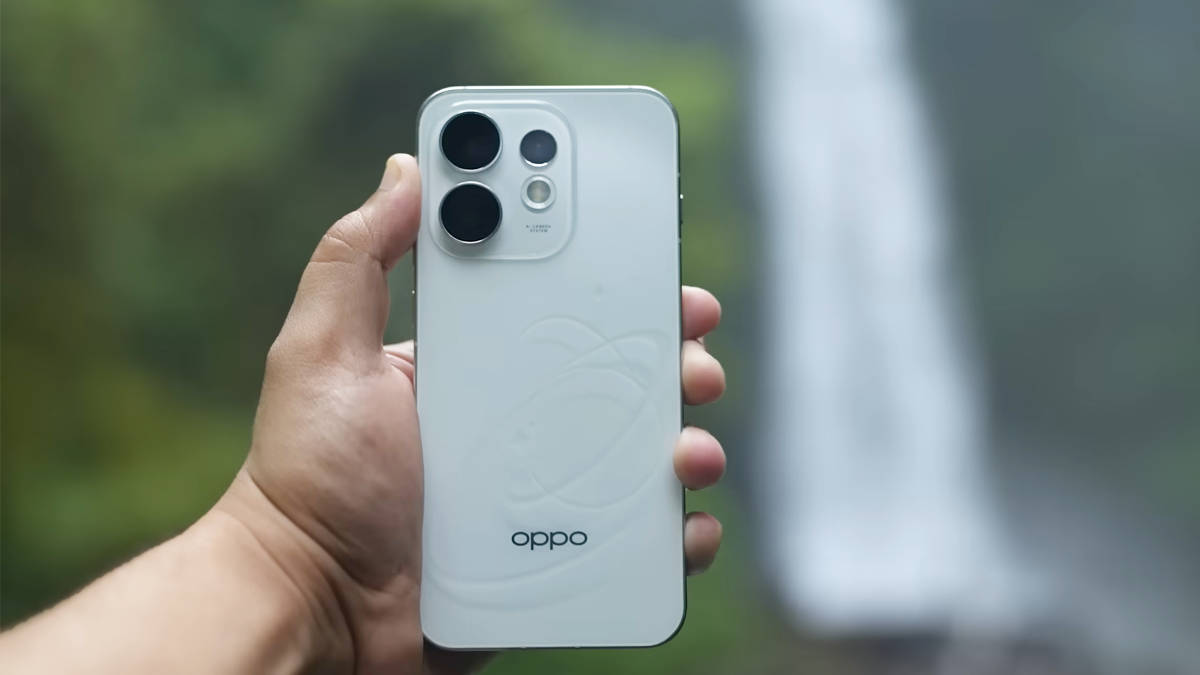
OPPO’s pitch for the Reno16 5G is a straightforward “trend-setting AI ultra-clear camera setup” consisting of a 50MP triple rear camera setup and a 50MP ultra-wide at the front with a 100-degree FOV, designed to fit everyone and every moment into a single frame. But there’s a long history of front cameras only being good on paper. So we decided to put these cameras to the test. Here’s what we found.
Table of Contents
50MP camera setup: Is it the most complete camera for creators?
Before we get to the results, let’s first have a look at the setup. The triple 50MP ultra-clear camera system on the rear gives the Reno16 5G more range than most smartphones in this segment dare to offer.


- Primary camera: 50MP 1/1.95″ Sony LYT-600 with f/1.8 aperture and OIS (26mm focal length)
- Ultrawide: 50MP 1/2.88 with f/2.0 aperture and Auto focus (16mm focal length)
- 3.5x Telephoto: 50MP 1/2.75″ Samsung JN5 with f/2.8 aperture and OIS (80mm)
- Front camera: 50MP 1/2.88″ with f/2.0 aperture and Auto focus (18mm focal length)
We took the 50MP Sony LYT-600 main camera (f/1.8, OIS) for a spin in Bali, and it pretty much handles the bulk of shooting across daylight and low-light conditions. The Sony sensor brings strong dynamic range and controlled noise; skin tones look accurate rather than AI-smoothed, and shadows retain detail without artificial lifting. The upgraded multi-skin-tone algorithm ensures deeper complexions are reproduced without over-whitening, a real differentiator for Indian skin tones that are often mishandled by aggressive beauty processing.
I personally prefer portrait photography more, and having a dedicated telephoto lens makes the job a lot easier. The 50MP 3.5x telephoto portrait camera uses a Samsung JN5 sensor with an 80mm equivalent focal length, the traditional portrait sweet spot.
At 3.5x, the background compression is natural and flattering without looking artificially blurred. Another advantage of the telephoto zoom lens on the OPPO Reno16 is that it lets you push the AI zoom up to 120x, and you’re in surveillance territory, which is useful for capturing stadium moments, text on distant signage, or architectural detail from across a street. Check out the results that speak for themselves.
The 50MP ultrawide camera, with its 15mm focal length, adds another perspective to your pictures, capturing the grandeur of the environment. The 116-degree FOV gives plenty of breathing room in the shot, and with autofocus, the subject stays in sharp focus with plenty of detail.
The 50MP selfie camera on the OPPO Reno16 offers an ultra-wide perspective as it comes with a 100-degree field of view and is wide enough to fit everyone in the frame without a selfie stick. OPPO Reno16 is crafted to empower your creator journey, as it allows you to capture life’s biggest moments effortlessly. The included autofocus capability means close-up ultra-wide shots stay sharp, where a fixed-focus lens would fall apart. Whether it’s a concert, a wedding, or a spontaneous group trip, you’ll always get the perfect shot.
What’s actually interesting is that all three rear lenses, along with the front camera, support 4K 60fps HDR recording. I can switch focal lengths mid-session, and the quality doesn’t take a hit. The enhanced stabilisation system keeps footage smooth on both sides even when you’re moving.
AI Remix Collage: Trend-Ready Content Without Leaving the App
This is, hands down, the coolest feature for those who regularly create social media content. AI Remix Collage lets you extract subjects, moving or still, from photos, motion photos, and videos, then deploy them as reusable stickers across new compositions. Up to five animated stickers can be added in one frame, with layer controls, outlines, text, and doodles to customize the output. The best part is that your creation can be exported as a motion photo too.
The possibilities are endless; you can experiment with the following:
- Scale play (place a tiny version of yourself or a coffee cup),
- Motion-versus-still contrasts (freeze one person against a busy crowd), and
- Travel journal collages that overlay instant film-style shots with doodles and decorative elements.
Pop Cam: Nine Moods, Zero Editing Required
Another really interesting feature that we ended up using a lot is Pop Cam, built right into the camera app; it lets you choose from nine different retro styles, from Digicam, Instant Film, and Light Leak to five signature film-inspired looks. Each style adds a different visual character to your pictures. It works across photos and motion photos, across all focal lengths from 0.6x to 10x, and with the front camera. It’s also integrated with AI Flash Photography 3.0 for better low-light results.
What separates Pop Cam from a filter pack is integration. It works across photos and motion photos, covers all front cameras and every rear focal length from 0.6x to 10x, and pairs with AI Flash Photography 3.0 for better results in low light, the exact conditions where retro-style shooting actually looks its best. The three flash-compatible styles (Digicam, Instant Film, Light Leak) auto-activate the flash in scenes below 400 lux. Neon-lit cafes, concert venues, and late-night city streets, the output holds up to it.
Each style can also be fine-tuned in-camera for a more personalised look, so the aesthetic doesn’t feel identical across every creator who uses the same mode.
Popout 2.0 and Dual-View Video 2.0: Social-First Formats, Built-In
Popout was itself quite a useful feature to make a personalised picture collage, making people and pets literally pop out from the frame. OPPO decided to take it up a notch, popout 2.0 has quietly become one of the more impressive editing tools on any smartphone in this segment. The new version recognises buildings, vehicles, furniture, and a much broader range of subjects and lets the subject break out of the frame in any direction, not just upward. The three-step workflow (snap, collage, and popout) takes under a minute from photo to finished output. Here are a few collages we’ve made; notice how flawlessly it detects objects and makes a perfect cutout of them.
Dual-View Video 2.0 delivers what reaction content demands: simultaneous front-and-rear capture with improved stabilisation on both sides. The front camera now tracks your face steadily even when you’re moving, while tap-to-autofocus works on both cameras independently. Cooking tutorials, travel reactions, and unboxings with genuine emotion in frame have become the default on Reels and Shorts, and the Reno16 5G handles it natively without third-party apps or workarounds.


4K Auto Straighten Video rounds out the video toolkit by correcting up to five degrees of horizon tilt in real time. Walk at a normal pace, pan across a skyline, or shoot handheld through a market; the horizon stays level. It’s the kind of feature that doesn’t announce itself until you compare footage to a phone that doesn’t have it.

OPPO Bubble: The Shot You Couldn’t Take Before
With Reno16, OPPO has introduced a cool new accessory that solves the biggest problem of content creation, i.e., shooting solo. It’s called OPPO Bubble, and it changes how you use the rear camera for self-directed content. Attach it magnetically, hand the phone to a friend, or set it on a small tripod, and Bubble’s 1.73-inch AMOLED screen gives you a real-time rear camera preview, so you can see your pose, check the framing, and trigger the shutter yourself from up to 10 metres away.


The result is rear-camera selfies with full compositional control. No relying on someone else’s framing instincts. No tenth take because you couldn’t see what the lens was capturing. At 27.5g and with IP54 dust and water resistance, it’s light enough to carry everywhere and practical enough to actually use.


Its secondary function, displaying static images, motion photos, or short videos on its AMOLED screen as a wearable digital badge, is the kind of detail that makes Bubble genuinely expressive rather than just functional.
Bottom line: A Camera That’s Built for How People Actually Create
After using the OPPO Reno16 5G’s camera for over two weeks, I must say it holds up where it needs to: capturing pictures or crisp 4K 60fps videos using the triple 50MP rear camera setup or the 50MP wide selfie that fits the whole group. When you need a helping hand to frame your shots better, the OPPO Bubble comes in handy.
The rest of the system Pop Cam, AI Remix Collage, Popout 2.0, Dual-View Video 2.0, 4K Auto Straighten, and OPPO Bubble, builds out a creator toolkit that asks very little of you in return for a lot.
The big moments are ready when you are. The OPPO Reno16 is available on OPPO’s offline and online channels, Amazon.in, and Flipkart starting at Rs. 61,999.