If you’ve been following tech over the last few years and paying attention to how most people are using mid-premium to premium phones (between ₹50,000 and ₹70,000), you would have noticed a pattern. They shoot a clip, trim it, fix the colour, cut out the stranger who wandered into frame, write a caption and post it, often without ever leaving the gallery. The hardware in this range has almost always been excellent, but increasingly, what buyers in this bracket today are really paying for is the absence of friction between capturing something and doing something with it. The camera, the AI, and the operating system have to feel like one product, not three departments that occasionally speak to each other.
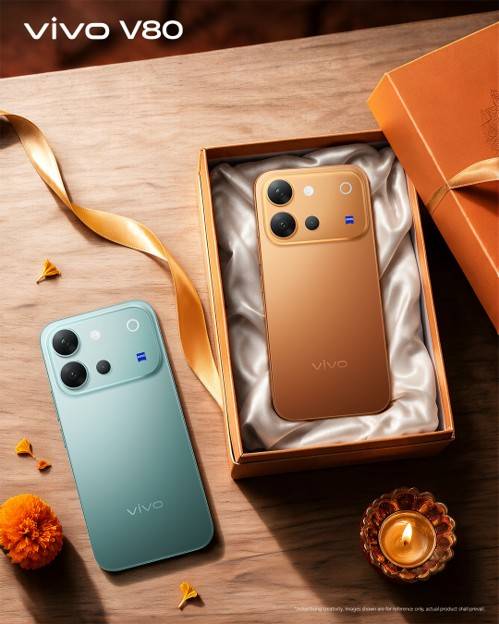
This is the ground vivo wants to conquer with the upcoming V80, which launched in India on October 6th. It is the first V-series phone to ship with OriginOS 7, its new Android 17-based operating system, straight out of the box, and key messaging leans on a single idea: a phone that slides between being a camera, a creative tool without asking you to switch modes or install anything extra.
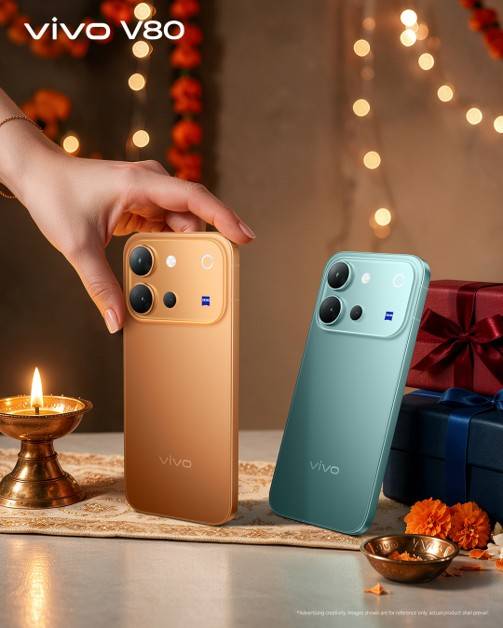
The V-series has spent the last few generations offering flagship-grade features at a lucrative price point. With a 7,200mAh battery, a 144Hz 1.5K OLED panel, and its ‘Next-level AI camera’ at a starting price of ₹62,999, the phone intends to comfortably continue the tradition and offer an exciting option for potential buyers.
Table of Contents
Video is where this premium phone is stands out
If one feature is carrying the V80’s premium imaging claim, it is 4K Cinematic Video. vivo has been unusually specific about what the phrase means: three movie-inspired colour styles, applied as LUTs (lookup tables, the same tool a colourist makes use of in a grading suite) but chosen from a menu in the camera app before you press record.
The three colour styles are called (best suited for outdoor videography), Vibrant and Modern Movie is the restrained one, with natural, true-to-life colour that vivo suggests for daily portraits and travel vlogs. Vibrant pushes saturation and contrast hard and is aimed at nightscapes and celebrations, where a bit of drama helps. Pastel goes the other way, pulling saturation down and adding a soft grey undertone for urban scenes and quieter, everyday footage. The mode also supports widescreen formats, so a clip can leave the phone already framed for something wider than a phone screen.
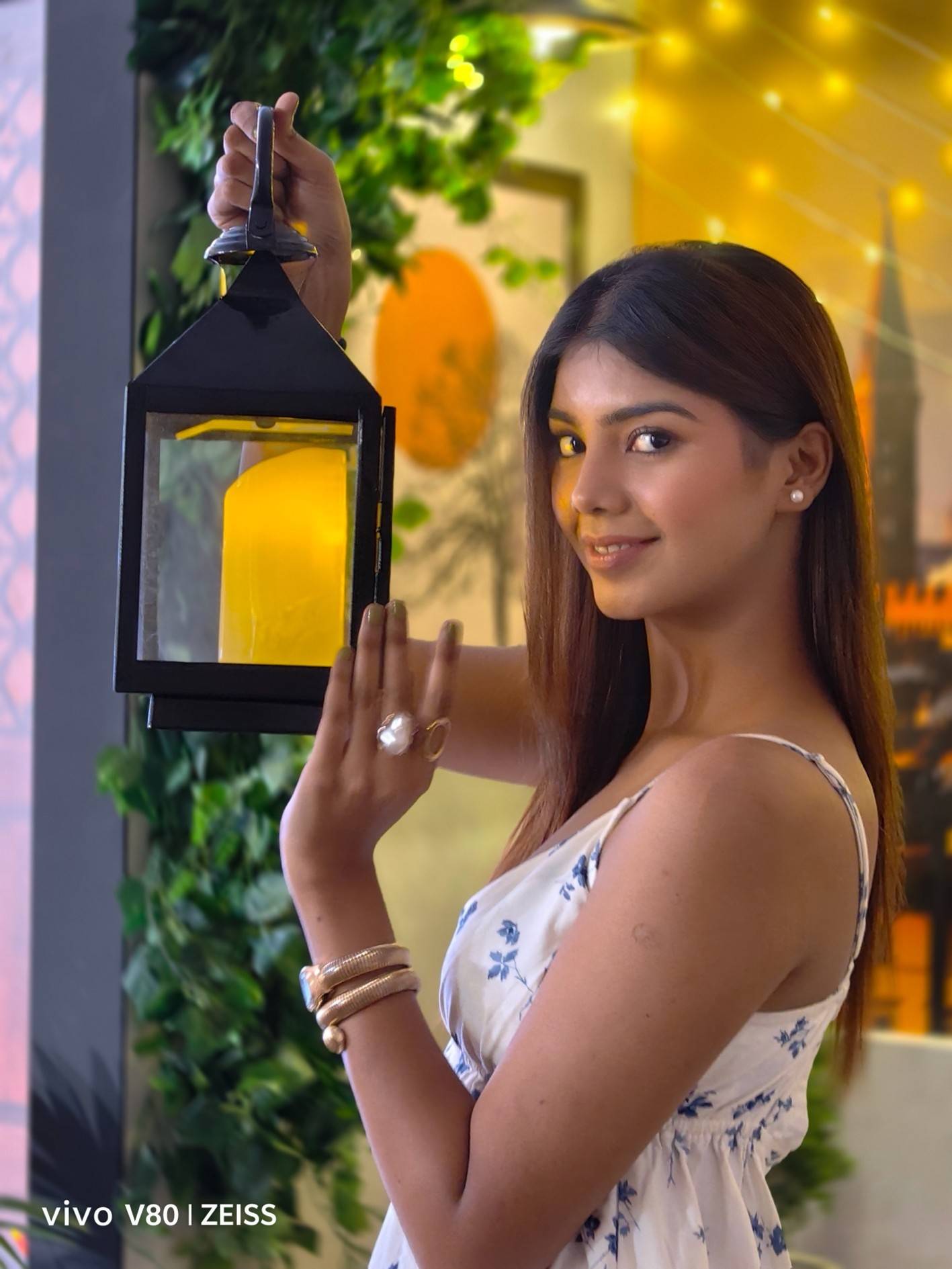
None of this is new to filmmaking. What has changed, at this price at least, is that nobody has to build a workflow around it. The usual route to a graded 4K clip involves shooting a flat footage, pulling this footage into a desktop editor, applying a LUT, and then exporting again. Doing the same thing in a single tap, on the device that shot it, removes most of the reasons a casual creator gives up before they begin.
Alongside the styles, the V80 records 4K at 60fps with optical image stabilisation, which matters for the walking, handheld footage that makes up most vlogs. The higher frame rate keeps motion fluid; the stabilisation keeps it watchable. Together they cover the two complaints people most often have about phone video, jerky pans and shaky hands, without the gimbal that would normally be the fix.
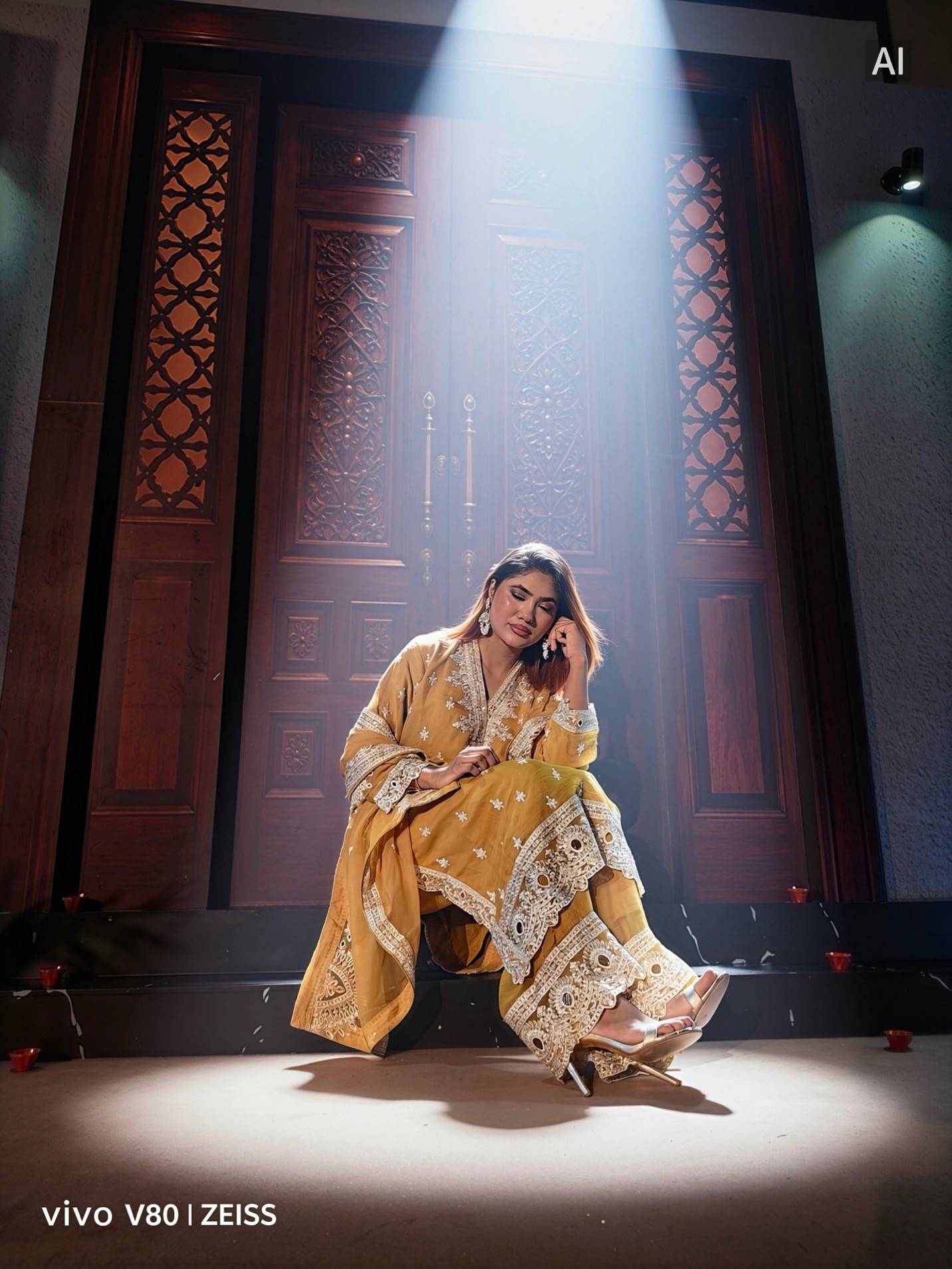
The optics underneath are ZEISS co-engineered, which is now a standard for the series. The 50MP main camera uses Sony’s LYTIA 700V sensor with OIS. Beside it sits a 50MP ZEISS Night Telephoto camera with a Sony IMX882 sensor, OIS and 3x optical zoom, stretching to 10x for what vivo calls Zoom-In Portrait and to 100x digitally. A ZEISS ultra-wide completes the rear, and the 50MP front camera has a 92-degree field of view with autofocus, which is a polite way of saying it is built for group selfies.
The hardware makes the same argument
vivo describes the V80’s rear as flagship one-piece cold-carved glass, topped by a floating camera module, the rectangular island that appears to hover over the panel in the official renders. It is the first thing you notice about the phone, and it is clearly meant to be.
The phone is available in three colours: Sunrise Anthem, an orange-leaning finish that vivo says carries the warmth of first light, Horizon Blue, and Stellar Black. No fourth, cheaper-looking shade, which says something about who the phone is for.
As far as durability is concerned, the phone features IP68 and IP69 ratings for dust and water resistance, the second of those adding protection against high-pressure, high-temperature water jets on top of immersion. This is such a game-changer that it would be almost impossible to go back once you get used to such a protection. Round the front is a 6.59-inch (16.73cm) 144Hz 1.5K OLED, which vivo calls the smoothest display the V-series has had, with 5,000 nits of local peak brightness, 1.25mm bezels and a 1-nit floor for reading in the dark.
From capture to creation
Where the V80 tries to pull away from the pack is in what happens after the shutter. vivo’s umbrella term is AI Creative Camera, and it covers more than 30 AI styles and creative tools that work at 3x zoom as well as at the standard focal length.
The headline trick is lighting. The camera can add light and atmosphere to a frame on its own: vivo’s examples include a warm burst of sunlight, a top-lit studio look and an underwater treatment, each applied in one tap and delivered straight out of the camera rather than through an editor afterwards. The styles stretch across travel, landscapes, stages, portraits and the kind of ordinary moments that would never normally justify a proper edit. Sitting beside them is Live Sticker Collage, which cuts elements out of live photos and turns them into layered sticker compositions, and for the festive season there is a limited-time AI Diwali Portrait 2.0, which warms the tones and adds rangoli, torans and oil lamps to indoor and outdoor portraits.
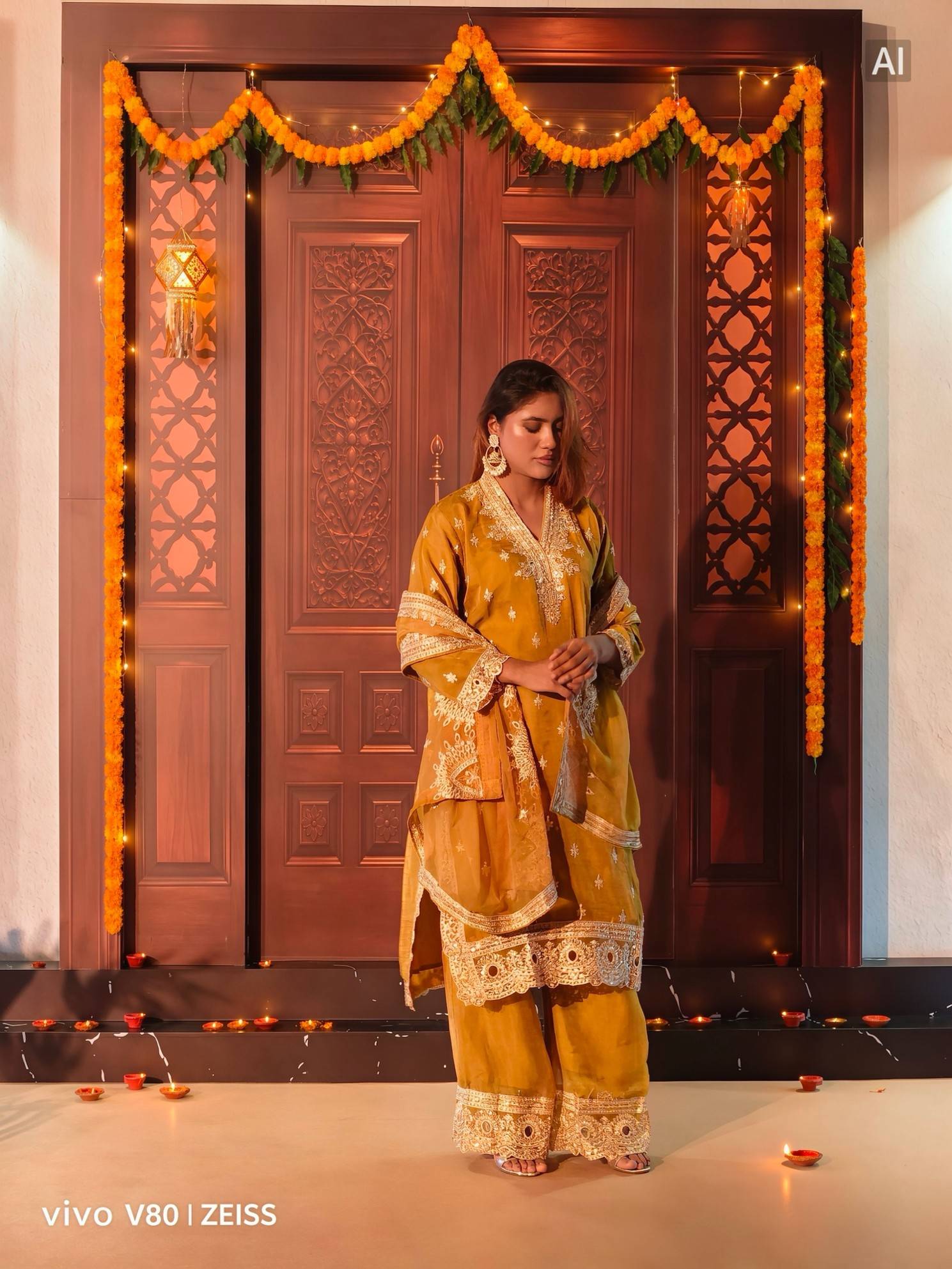
Then there is AI Retouch, the more practical half of the story. It lets you remove distractions from a shot, expand the composition beyond the original frame, reposition a subject within it and enhance the resolution of an image that was shot small or cropped hard. Taken one at a time, these are tools that have lived in desktop software for years and in phones for a generation or two. Taken together, on the device that also shot the picture, they strip out most of the technical effort that used to stand between a decent frame and a polished one. The work still gets done; it simply gets done on the phone, in seconds, by someone who has never heard of a clone stamp.

This is the convergence argument in practice. A creator who once needed a camera, a laptop and a couple of subscriptions can, on paper, run the whole chain from one pocketable object. Although having great hardware and features is crucial for any creator, equally important is how long the device can last on a single charge. vivo V80 shines on this front as it comes with the largest battery ever shipped on a V-series smartphone, which already offered long-lasting battery life to begin with. The 7,200mAh unit is capable of offering you 39.5 hours of local video playback and 14 hours of navigation. And once you are fully discharged, the 90W FlashCharge fuels you back up in no time. You get 50% of charge in mere 30 minutes. These are the aspects of a phone that impact your day-to-day life, and can help you avoid major frustrations in time of need.
OriginOS 7 holds it together
The software matters more than usual this time because it brings along some meaningful updates. OriginOS 7 was unveiled globally on September 21st, built on Android 17, and the V80 is the first phone in the series to carry it from day one rather than pick it up in a later update.
On the personalisation side, the additions are more on the playful side. Wiggle Theme turns a personal photo into an interactive surface on the lock screen that ripples and rebounds when you touch it, with vivo’s new dynamic glow and fluid motion effects running over the top. StickIt cuts your own photos into stickers for the lock and home screens, and Pet Pals puts an interactive virtual pet on the wallpaper that reacts to movement, charging and music. None of it is essential. All of it is the kind of thing that makes a phone feel owned rather than issued.
The update brings efficiency through Snap Note. You can photograph a whiteboard, a page of handwritten notes, or a presentation slide, and the phone turns it into an editable, structured document. Anyone who has ever emailed themselves a blurry photo of a meeting-room wall will recognise the habit this is designed to replace.
Long-term support is the last pillar of confidence. vivo is promising up to six years of extended security updates on the V80, counted from the product’s initial global launch, alongside Security Shield, which screens calls, apps and networks for scams and intrusions. If you’re in market to buy a new phone, this kind of long-term support is not something you can look past.
Where this leaves the V-series
While going through the V80’s feature list on its own, you will realise that the phone is loaded with features. But once you read it against the V60 and V70, you will realise that the series has been steadily shedding its identity as a good-value selfie phone and rebuilding itself around what vivo now calls premium imaging: flagship-grade optics, video that arrives already graded, and AI that finishes the job rather than merely flattering the result.
That shift matters beyond a single launch. The Vivo V80 seems ready to set the expectation for what a sub-₹70,000 phone should do for someone who makes content with it, and that expectation is increasingly about the chain from capture to creation being complete, not about any one sensor. It also hints at what the next generation of smartphones in this bracket will be judged on. For everyday creators, the people posting from a wedding or a road trip rather than a studio, that is the difference between a phone that takes good pictures and one that gets the post out. For now, mark your calendars for October 13th as your next phone is likely waiting around the corner.
This is a promotional post done as part of a brand collaboration.